THE CORNERSTONE
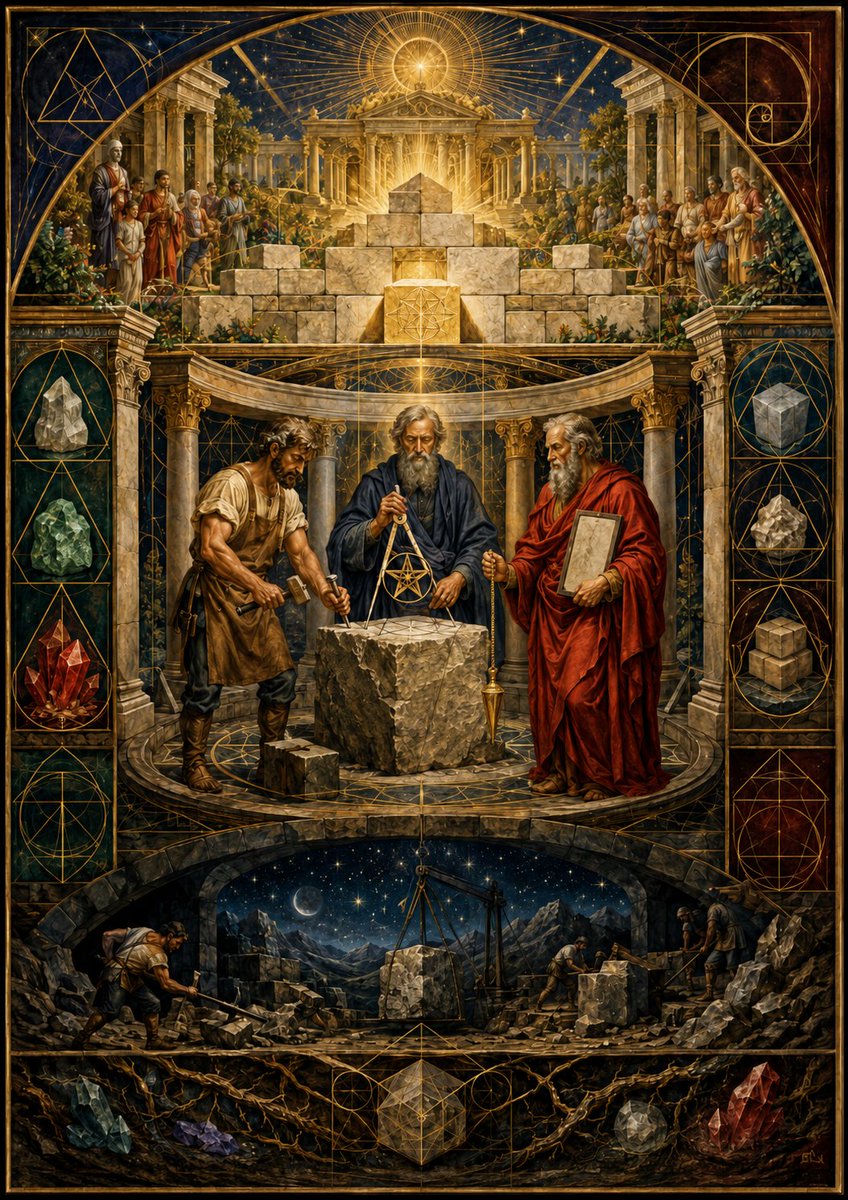
The cornerstone is an emblem of first principles. In sound architecture, the earliest stones establish the lines by which the whole structure rises. If the foundation is laid true, wall, column, arch, and roof may be brought into their proper relation; if the first measure is corrupted, the error is carried upward through every succeeding course.
So it is with the moral life. Convictions accepted without examination, habits formed without discipline, and duties treated carelessly in youth become structural defects of character. As the years advance, these early defects are burdened with the increasing weight of duty and responsibility, until what began as a slight departure from the true line may disturb the proportion and stability of the entire edifice.
The wise builder therefore gives grave attention to beginnings. He tests the line, proves the angle, and lays the first stone according to a trustworthy measure, knowing that every later part of the work will take its bearings from that foundation.
Upon what principles is your life being built?
THE APRON
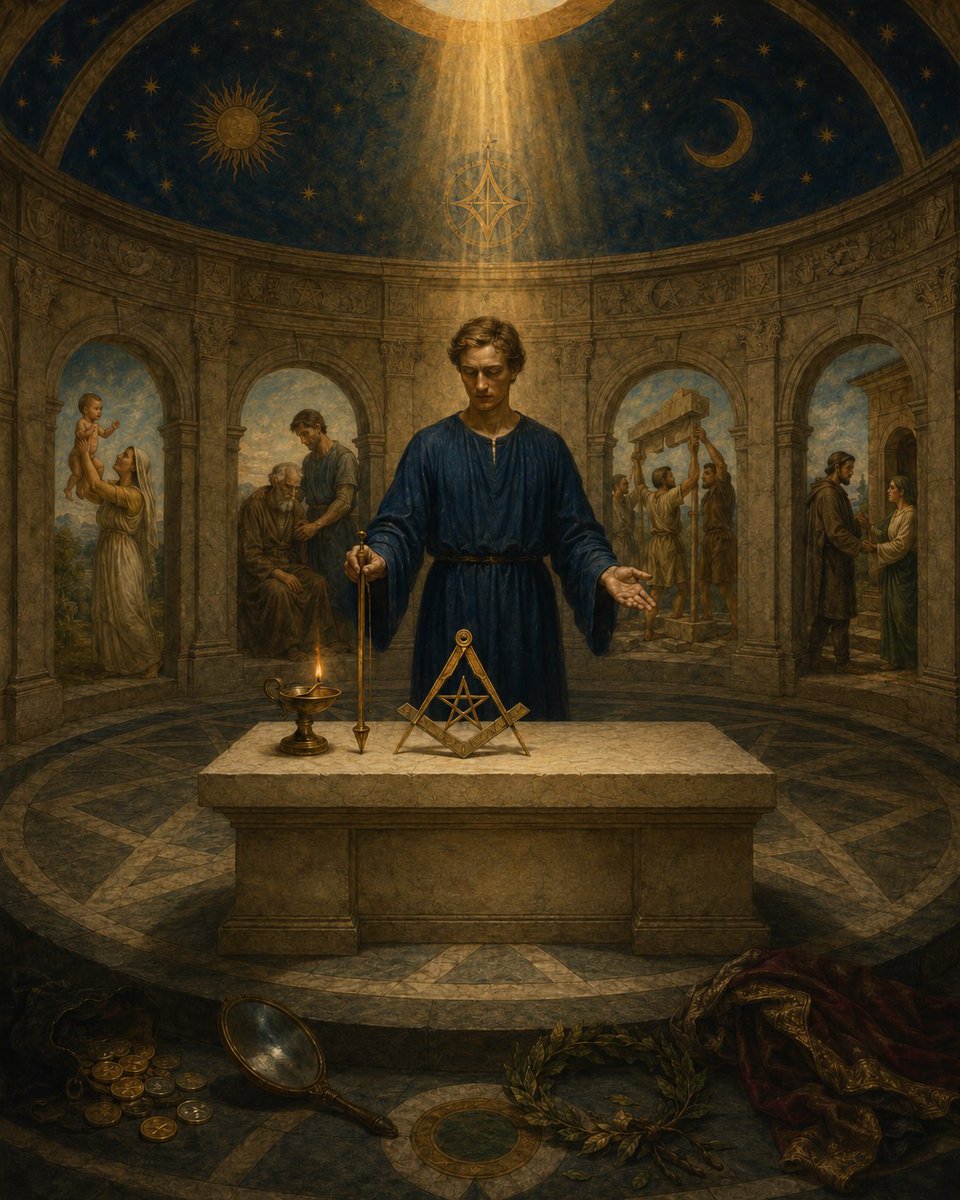
The Masonic apron is the garment of a worker, worn by one whose hands are expected to be useful and whose labor must justify the place he occupies among his fellows.
Its symbolism arises from the dignity of honest work. The apron belongs to the builder, the craftsman, and the laborer who accepts responsibility for what passes through his hands. It therefore teaches that honor rests upon service faithfully rendered and that character must be proved in the workmanship of daily life.
Its white cloth adds a further meaning. White has long signified purity, integrity, and honorable intention, and the simplicity of the garment directs attention toward the moral quality of the wearer’s conduct. The apron covers no rank, profession, wealth, or worldly distinction worthy of greater consideration than the work itself. Before the common labor of building, each person is answerable for the care, discipline, and fidelity brought to the task.
Masonic identity therefore finds its clearest expression in conduct. A Mason gives substance to the emblem through useful service, upright dealing, self-command, and the conscientious discharge of duty.
The apron is thus a public emblem of honorable labor and moral responsibility: white cloth placed upon the worker as a sign that the work of character should be undertaken with clean hands, disciplined purpose, and faithful workmanship.
The builder stands at the beginning of civilization.
Man first established his place in the world by building. He raised a habitation against the elements, an altar for his offerings, a sanctuary for worship, and a cairn above the resting place of the dead. Stone and timber became instruments through which faith, memory, consolation, and social order received visible form.
Architecture therefore belongs to the earliest history of mankind. Long before written chronicles, men recorded their aspirations in walls, columns, tombs, temples, and sacred enclosures. The builder gave enduring shape to the needs of the body and the aspirations of the soul.
Masonry takes this ancient art and makes it the basis of a moral order.
Its great work is the upbuilding of humanity in Faith, Freedom, and Friendship. It sees human life as a temple, continually receiving the labor of successive generations. The common work of man becomes a lesson in human unity, while the tools of the builder become emblems of discipline, proportion, rectitude, strength, and faithful service.
The rough material must be shaped. The foundation must be sound. Each stone must bear its proper weight. Every part must answer to the design.
So also with character and society.
Masonry links its labor with the constructive genius of mankind. Its proper task is to ennoble and beautify life through ordered work, moral truth, and fellowship. While it remains faithful to that Ideal, it continues the ancient labor of the builder, raising within humanity a temple worthy of endurance.
«Cierra tus ojos y verás claramente. Cesa de escuchar y oirás la verdad. Permanece en silencio y tu corazón cantará. No anheles ningún contacto y encontrarás la unión. Permanece quieto y te mecerá la marea del universo. Relájate y no necesitarás ninguna fuerza».
— Lao Tsé
"Si quieres construir un barco, no empieces por buscar madera, cortar tablas o distribuir el trabajo. Evoca primero en los hombres y mujeres el anhelo del mar libre y ancho".
Antorine de Saint -Exupéry
Every outward act has an inward root. Even when we say that we acted without thought, an older thought has usually acted through us. Words spoken in haste, judgments formed too quickly, injuries returned in kind, and fears allowed to govern conduct all arise from tendencies long permitted to grow within.
Thought, therefore, is not a harmless private mist. It is a moral instrument. To govern it is not to become rigid or lifeless, but to take responsibility for the causes from which speech and action spring. Resentment, envy, fear, pride, and cruelty do not remain forever concealed. If nourished inwardly, they will seek expression outwardly. In the same manner, goodwill, patience, courage, reverence, and benevolence prepare the ground for noble conduct.
The mind is a workshop. What is repeatedly laid upon its bench is eventually fashioned into character. A cruel thought refused is not a small victory. A suspicious thought corrected by fairness, an irritated thought quieted by calm, a selfish thought displaced by consideration—each is real work upon the unseen foundation of life.
Public virtue begins in private discipline. The world sees the deed, but the deed has roots beneath the surface. If we would improve the visible life, we must tend the invisible one. The wise person watches thought carefully, not from fear, but because a powerful instrument has been placed in human hands, and power carries duty.
Thought is a force. Prayer is a force. Love, faith, will, aspiration, and disciplined contemplation are forces of the soul. They move silently, yet they shape the world more deeply than noise and violence. The unseen life of man is not idle; it is the hidden furnace in which conduct is prepared.
Yet contemplation must not remain suspended above the earth. Wisdom earns its name when it becomes action. Prayer becomes fruitful when it deepens conscience. Meditation becomes honorable when it strengthens restraint. The search for Light becomes real when the hand grows more just, the tongue more truthful, the heart more courageous, and the will more faithful to duty.
The spiritual life is not an escape from labor. It is the consecration of labor. It teaches the worker to see every act as part of the temple: the word spoken with care, the anger governed, the promise kept, the ignorant instructed, the distressed relieved, the weak defended, the young guided, the old honored.
There is a false contemplation that leaves the world untouched and the self unchanged. There is also a living contemplation that descends into bread for the mind, strength for the hand, and justice in the public square.
The soul that truly seeks the Light must become useful under it.
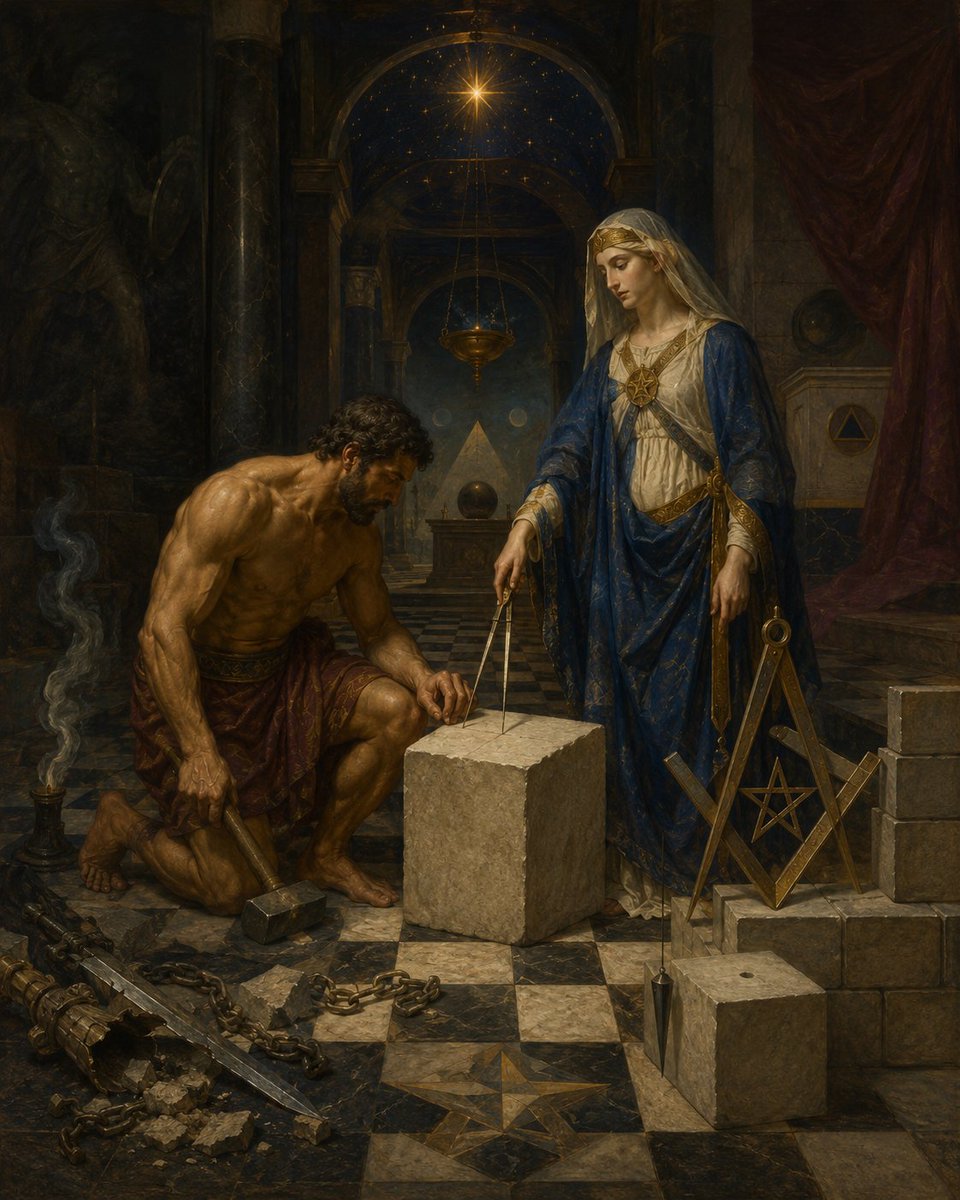
The rough stone is worthy before it is perfected. Its irregular surface is not a condemnation, but a summons. It lies before the craftsman bearing the marks of quarry, pressure, accident, and nature. Within it there is form, but form must be won by labor.
So it is with the human being. So it is with society. Raw strength, unshaped intelligence, noble feeling, popular energy, inherited custom, and generous aspiration are not yet architecture. They are material. They must be measured, corrected, balanced, and set in relation to a greater design.
The perfected stone is not made by contempt for the rough one. It is made by patience. The tool does not hate the stone. The rule does not insult it. The blow of the gavel, rightly given, is an act of confidence: it declares that something within the stone is capable of order.
A commonwealth also must be shaped. Its powers must be balanced. Its laws must speak the public will. Its authority must rest upon consent. Its visible frame must be animated by liberty, equality, and fraternity, or else it becomes a lifeless wall.
The quarry is full of promise. The work is to draw from it a form fit for building.
A life cannot be rightly measured by comfort, profit, or the applause of others. These may attend a useful life, but they cannot govern it. The lower question asks what will please the personal self. The higher question asks what will make the soul more fit for duty, more faithful to truth, and more serviceable to mankind.
This change of measure is the beginning of moral intelligence. The self is no longer treated as the center around which all things must turn. Pleasure, convenience, reputation, and advantage are brought under judgment.
The man or woman who would live nobly asks first whether a thought, feeling, or action tends toward unity or toward separation; whether it strengthens compassion, reverence, and benevolence, or feeds pride, envy, fear, and cruelty.
No good can be complete if it is purchased at the expense of the common good. What is truly good for one must be capable of standing in harmony with the welfare of all. Thus the path of character leads away from selfish calculation and toward a larger fidelity. This does not require withdrawal from the world. It requires a more conscious entrance into it.
Every duty, every relationship, every ordinary choice becomes part of the building of the inner temple. The higher measure of a life is not what it gathers to itself, but what it helps awaken, strengthen, and bless in others.
Force, left to itself, is a blind giant. It strikes before it sees, spends itself before it understands, and often returns upon the hand that wielded it.
In the soul, in the Lodge, in a people, in a nation, power becomes fruitful only when Wisdom holds the rule above it. The common error is to mistake energy for strength. Anger has energy. Appetite has energy. Crowds have energy. Ambition, resentment, fear, zeal, and pride all have energy.
Yet energy without measure scatters itself like steam escaping into the air. It shakes, burns, bruises, and vanishes. It builds no temple. The true work begins when force consents to law. The hammer must answer to the line.
The will must be governed by reason. Courage must be joined to justice. Strength must be made obedient to Truth and Love. Then the same power that might have destroyed becomes labor, protection, endurance, and progress.
This is one of the first lessons of moral architecture: the force within us is not to be worshiped, wasted, or feared. It is to be disciplined. The hand grows noble when it learns to strike only where Wisdom has marked the stone.
«Si antes vivías en el tiempo y hacías breves visitas al Ahora, establece tu residencia habitual en el Ahora, y haz breves visitas al pasado y al futuro cuando tengas que resolver los asuntos prácticos de tu vida».
— Eckhart Tolle
THE PLUMB
The plumb is a simple instrument, severe in its simplicity. Suspended from above, it declares the vertical law by which a wall is judged. Beyond flattery, negotiation, and convenience, its office is truth in one direction.
As a Masonic emblem, the plumb teaches uprightness of life. Uprightness concerns the hidden alignment between conscience and conduct. Reputation may rise and fall with public opinion; temperament may vary with weariness, praise, injury, or fear. The plumb concerns the inward line that must remain true while all outward weather changes.
To contemplate the plumb is to ask where the soul has leaned. Has speech inclined toward advantage? Has judgment leaned toward resentment? Has service bent toward display? Has silence become complicity? The emblem gives no drama and offers no ornament. It asks for vertical honesty.
A life built by the plumb acquires a quiet authority. Its strength comes from the agreement of the inner and outer person. The upright builder seeks the same law in private thought, public duty, and fraternal relation: one line, held steadily, from conscience to deed.
“Quien piense que los pájaros son libres porque pueden volar, está equivocado.
Si no tuvieran un lugar para aterrizar, y si no hubiera una rama en la que descansar, sus alas serían malditas.
La verdadera libertad radica en tener un lugar al que pertenecer.”
Alejandro Jodorowsky