For the international crowd shocked at Ireland’s president:
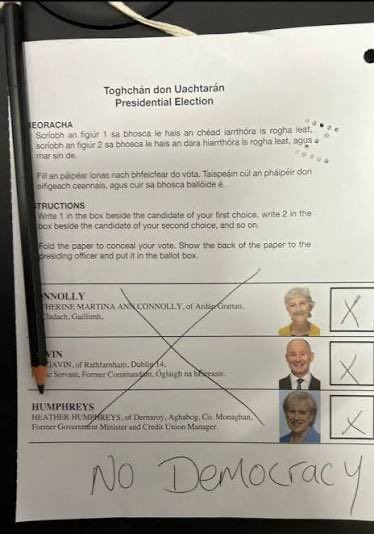
She was elected in a presidential race where 45% of the electorate turned out, and 13% of all votes were intentionally spoiled.
No right wing candidate was allowed onto the ballot.
Most spoiled votes in 🇪🇺 history.
Last year, an Irish politician asked about crime statistics by nationality of those convicted.
The Minister of Justice answered that "data regarding nationality and ethnicity are not considered suitable for publication"
This is preposterous.
@Helios_Movement Makes absolute sense what you’re saying and it’s an incredible loss of respect what that guy was requesting.
Have paid for some of your programs and regularly enjoy your thorough emails.
Have to say I thought the amount of free content was excessive relative to the paid content.
Studie: Fast jeder zweite Muslim in Deutschland tendiert zum Islamismus - liegt es vielleicht daran, dass der real existierende Islam fast deckungsgleich mit dem sog. Islamismus ist? https://t.co/vd2lOUYyQA via @DrDavidBerger
@pl_european@EmployRightsIE The obvious problem to that is the self-imposed regulatory burden. Deregulate and lower taxes and costs along the whole chain first, then open.
@Sildal4@Helios_Movement It is naive thinking that elsewhere people don’t work more than 8 hours regardless of legislation. In Argentina now at least it is acknowledged that you have the right to work less next day.
NEW: Dutch Parliament Member Michel Hoogeveen explains how the 36% unrealized capital gains tax, just passed by the House of Representatives, will work.
Here is a more detailed example:
Step 1. Starting position
You own 500 shares.
Value on Jan 1, 2028: €50,000
Value on Jan 1, 2029: €100,000
So the paper gain is:
€100,000 − €50,000 = €50,000 unrealized profit
You did not sell. But for tax purposes, that €50,000 is treated as income.
Step 2. Apply exemption
You are married, so you get a €3,600 exemption.
€50,000 − €3,600 = €46,400 taxable amount
Tax rate: 36%
€46,400 × 36% = €16,704 tax bill
That bill is due in May, even though you never sold anything.
Step 3. Market falls before you pay
Now suppose by May the shares drop in value.
New total value: €60,000
So your portfolio is no longer worth €100,000. It’s worth €60,000.
But the tax bill is still €16,704, because it was calculated based on the January 1 valuation.
Step 4. You must sell shares to pay tax
To raise €16,704, you sell part of your shares.
After paying the tax, you’re left with:
€60,000 − €16,704 = €43,296
Originally you had 500 shares.
Now you have 360 shares left.
You were forced to sell 140 shares.
140 ÷ 500 = 28% of your shares gone.
Step 5. What happened economically?
Before the correction:
Paper gain was €50,000.
After the correction:
Portfolio is worth €60,000.
Original cost basis was €50,000.
Real gain is only €10,000.
But you paid €16,704 in tax.
So instead of being up €10,000, you are now:
€43,296 − €50,000 = €6,704 below your original starting value.
You turned a €10,000 real gain into a €6,704 net loss.
And you lost 28% of your shares permanently.
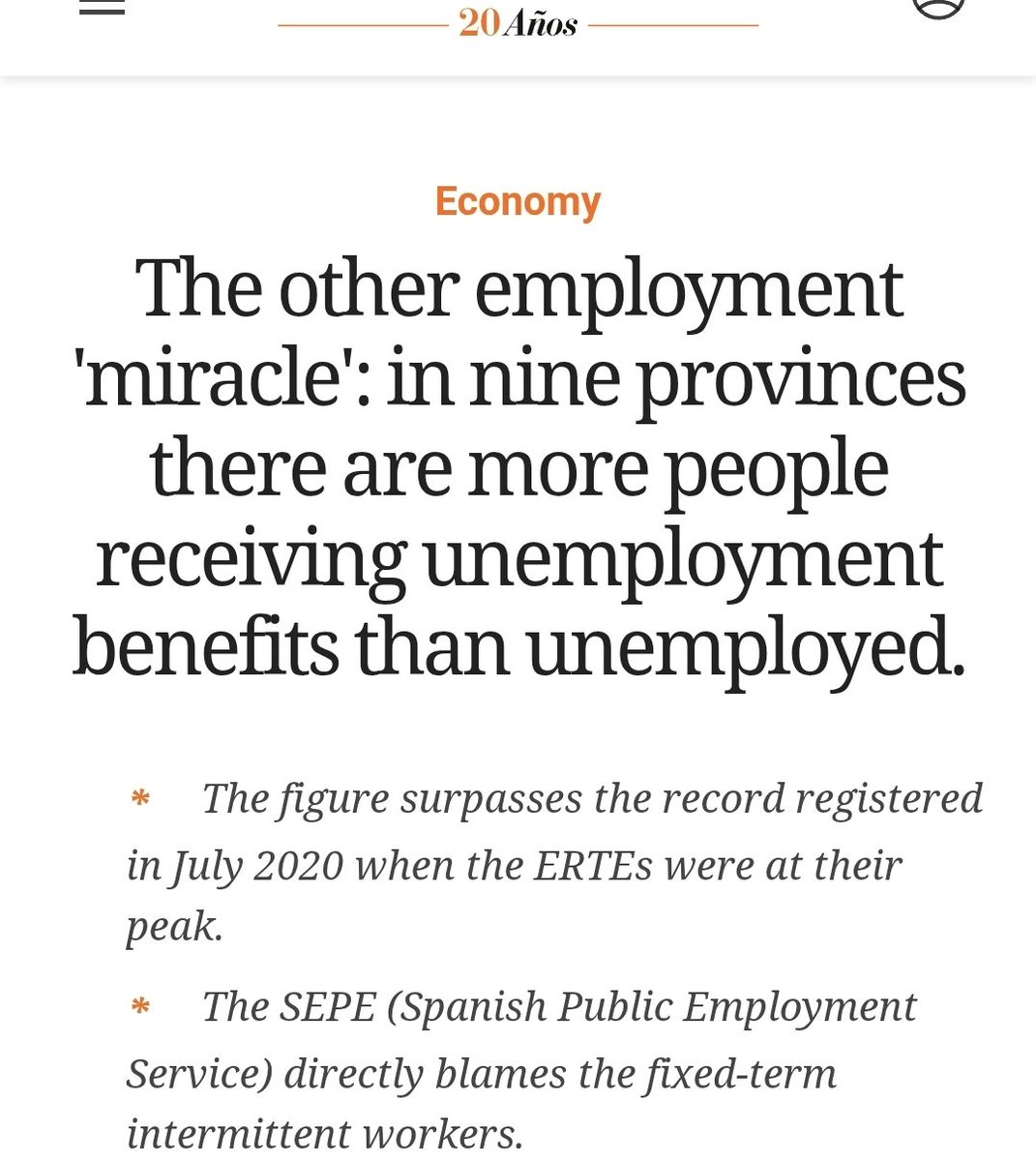
Spain is not an economic miracle. It is a statistical mirage.
Hidden unemployment, "inactive" jobs that do not appear in the official unemployment figure, exceeds 900,000, highest since 2020, showing that effective unemployment has barely improved since 2019.
There are nine provinces with more people receiving unemployment benefits than officially unemployed.
@0x445352 This is more than what many researchers get paid without as much annual leave and with all the career instability. All after years of studying for a PhD. Great.