A Russian biophysicist spent 30 years proving that shining red light on a cell could double its energy, and almost nobody believed her until a tech billionaire named Bryan Johnson made her work the most searched biohack on the internet.
Her name was Tiina Karu.
She worked in a Moscow lab through the 1980s and 1990s, and the discovery she defended for decades sat in journals nobody read while the rest of medicine ignored her.
The whole thing started by accident.
In 1967, a Hungarian doctor named Endre Mester was trying to use a new device called a laser to burn tumors out of mice. His laser was broken. It did not have enough power to burn anything. He used it anyway. The mice grew their hair back faster than the control group. Their wounds healed faster too. He had no idea why.
Tiina Karu picked up his work and asked the question that mattered. Why does this happen.
She ran experiments for 20 years. Different wavelengths. Different doses. Measuring what happens inside the cell when red light hits it. The answer she landed on was almost too specific to be true.
The thing in your body that responds to red light is one enzyme. Cytochrome c oxidase. It sits inside your mitochondria.
Mitochondria are the part of your cell that makes energy. They take oxygen and food and turn it into a molecule called ATP, which is the fuel your cells run on. Your body makes 40 to 70 kilograms of ATP every single day just to keep you alive. If your mitochondria slow down, you age faster, heal slower, lose hair, lose muscle, and get inflamed easier.
Cytochrome c oxidase does most of the work. It contains copper and iron atoms. Those atoms happen to absorb light at very specific colors. Red light at 630 to 670 nanometers. Near-infrared light at 810 to 850 nanometers.
Other colors do almost nothing. Blue does not work. Green does not work. The biology is locked to those two windows because that is what the metal inside the enzyme can physically catch.
When a red photon hits that enzyme, three things happen.
The enzyme runs faster. ATP production jumps 30 to 40% within minutes.
Nitric oxide gets released. Blood vessels widen. More oxygen and nutrients flow in.
A small stress signal goes off inside the cell that tells it to repair itself. The same signal it gets after exercise.
Red light is not adding anything to the cell. It is just unlocking work the cell was already trying to do.
For 30 years almost nobody outside her field cared. Red light therapy lived inside dental clinics for mouth ulcers and physical therapy offices for tendonitis. Medical schools did not teach it. The science sat in obscure journals.
Then the evidence started piling up.
A 2024 review of 18 trials confirmed red light speeds up wound healing.
Another 2024 review found it lowered inflammation markers by 38% over 4 weeks.
Athletes using red light before training had 45% less muscle soreness the next day.
Seven separate trials on hair loss showed visible regrowth in every single one.
A 2024 study found 15 minutes of red light before a meal cut blood sugar spikes by 27.7%.
In March 2026, Nature published a 4,000 word feature on red light therapy. The most respected scientific journal on Earth officially admitted there was real biology under the hype. That was the moment the field crossed from fringe to mainstream.
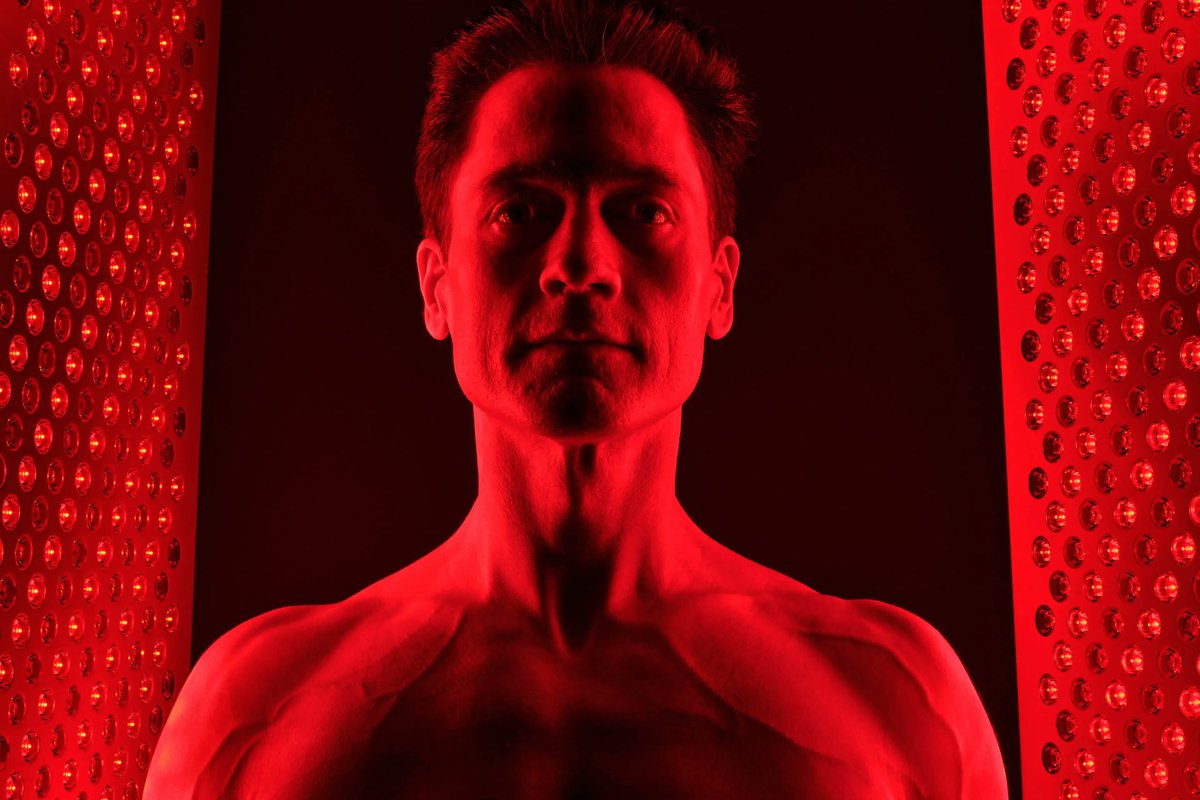
Bryan Johnson is the reason the average person now knows any of this exists. He uses a red light cap on his scalp for 6 minutes daily and a full-body panel three times a week. He posted his hair regrowth photos and his skin scans, and the algorithm did the rest. Red light masks went from biohacker forums to Sephora shelves in two years.
Tiina Karu died in 2019. She did not live to see Nature validate her. She did not live to see a billionaire turn the enzyme she identified into a billion dollar industry.
Every red light mask, panel, cap, and bed on the planet right now is just a way to deliver the photons she proved mattered.
The wavelengths were always there. The enzyme was always there. The biology was always real.
It just took a Hungarian doctor with a broken laser, a Russian scientist nobody listened to, and one tech billionaire willing to stand in front of a glowing panel for the world to finally pay attention.
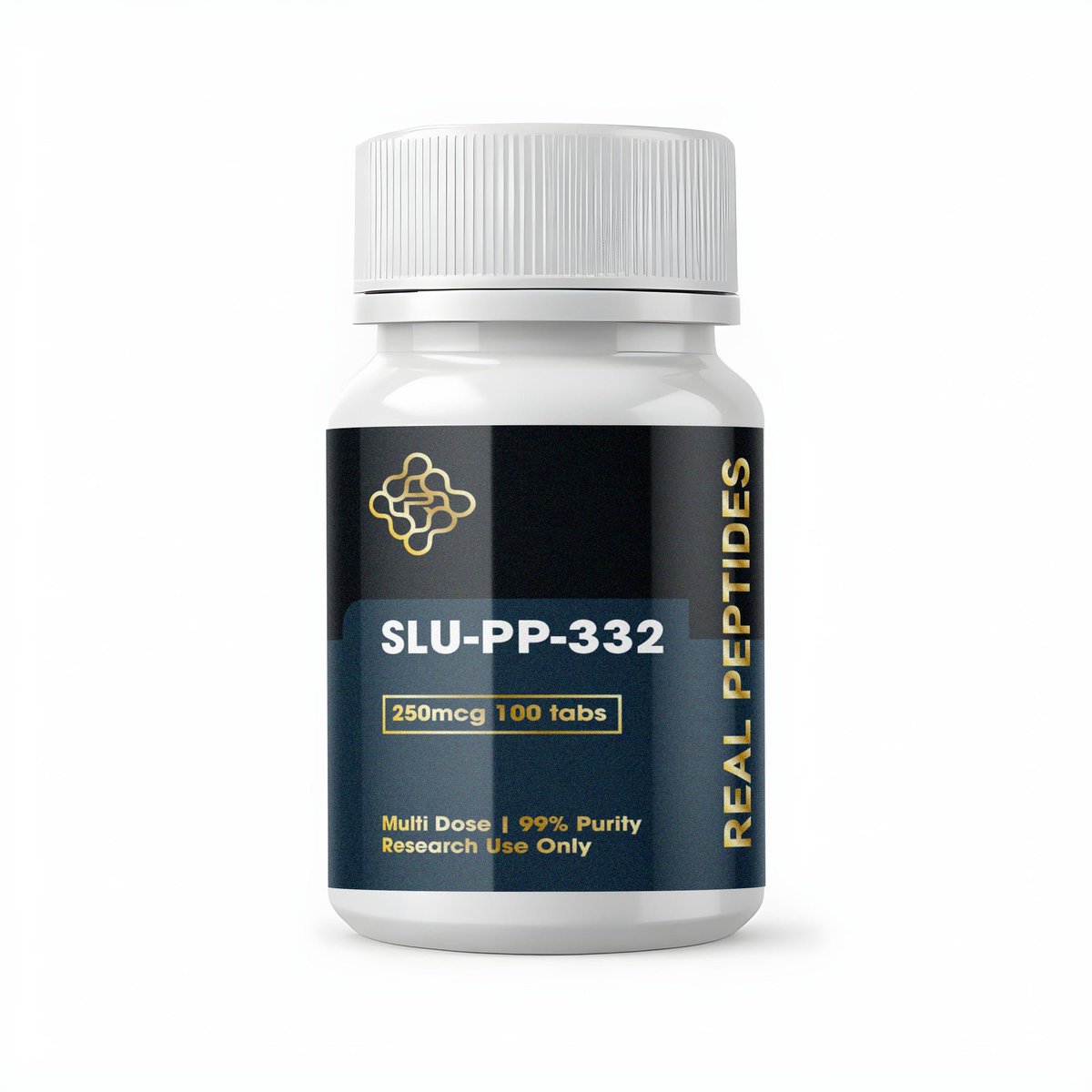
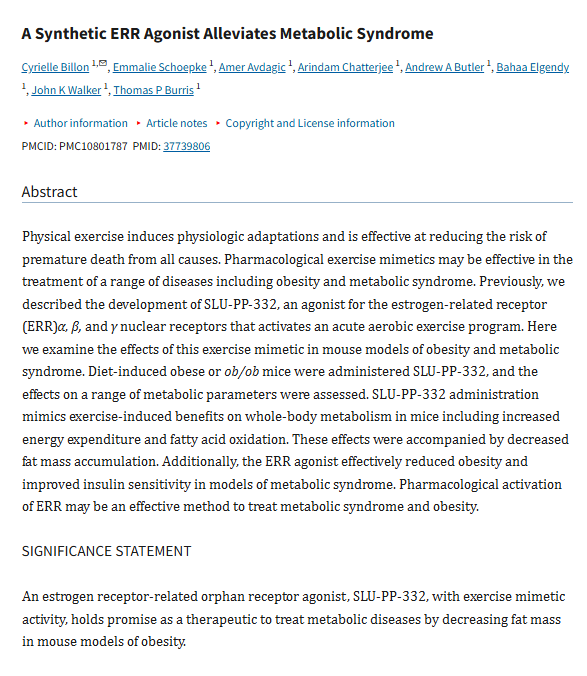
SLU-PP-332 peptide is the closest thing currently available to an exercise pill.
It works by activating the same nuclear receptors (specifically ERRα, β, and γ) that endurance training does.
This process tells skeletal muscle to function as if it’s been performing consistent cardiovascular work.
In mouse studies, a single daily dose increased running time by about 70%. In obese mice, it led to a 12% loss in body weight over 28 days.
These results happened without any changes to appetite or food intake.
The body simply shifts its metabolism to burn fatty acids, as it does during fasting or intense training.
In practice, I've found SLU-PP-332 most useful as a bridge compound when I'm cycling off GLP-1s like retatrutide.
I run it at 1mg/day alongside 5-amino-1MQ. I usually rotate it with tesofensine (one or the other, not both), but I'm planning to stack them together on my next off-cycle to see what happens.
It is important to keep the current status of this research in perspective. All of these results come from animal data. There have been no human trials yet.
Also, while it's often grouped with peptides in online discussions, it's actually a small molecule.
Even with those caveats, it's the most interesting fat loss compound I've come across in a while.
This is it.
Everything learned spending millions on longevity.
From: Your Immortal Unc and Auntie.
To: Our Immortal nieces and nephews.
0. Sleep is the world's most powerful drug.
1. Be in your bed for 8 hours
2. Same bedtime every night, any time before midnight
3. Don’t eat right before bed
4. Calm foods for dinner
5. No screens 1 hour before bed
6. Avoid added sugar (be aware it’s in everything)
7. Avoid all things in an American convenience store
8. Avoid fried foods
9. Shoes off at the door
10. Eat whole foods, particularly veggies fruits nuts legumes berries
11. Walk a little after meals or air squats
12. Get your heart rate high routinely
13. Lift heavy things
14. Stretch daily
15. Water pik, floss, brush, tongue scrape, morning and night
16. Make an effort to drink water
17. Get sunlight when you wake up (UV is low)
18. Protect skin in midday sun
19. Stand up straight
20. See at least one friend once a week
21. Avoid plastic where you can (in all things)
22. Circulate air in rooms
23. When stressed, breathe, learn to calm your body
24. Go to the dentist
25. Avoid sitting for long times
26. Protect your hearing, the world is too loud
27. Alcohol is bad for you
28. Finish coffee before noon
29. Avoid bright lights after sunset
30. If obese, look into a GLP
31. Sleep in a cold room
32. Texting while driving is dangerous
33. Turn off all notifications
34. Limit social media use
35. Don’t smoke anything
36. If you struggle to sleep, read a physical book before bed
37. 1 hour before bed have a calm wind down routine: bath, read, light walk, listen to music
38. The body is a clock and loves routine. Have a daily morning and evening schedule.
39. Avoid long distance travel where you can
40. Baby steps first: incorporate new things slowly
41. Do less… most things don’t work.
Bonus points if you get your blood checked.
Start here, it will change your life.
Scientists gave old mice a peptide. Their running capacity DOUBLED.
Not a drug. Not a stimulant. A 16-amino-acid peptide your mitochondria already make.
MOTS-c. The closest thing to exercise in a needle.
(PMID: 25738459 — Cell Metabolism)
Wait — it gets crazier.
Young mice. Middle-aged mice. OLD mice. Every group ran further. The old mice performed like they were YOUNG again.
Then they tested HUMANS. One bout of exercise. MOTS-c in skeletal muscle shot up 11.9-FOLD. Your body ALREADY produces this. It just stops making enough as you age.
Here’s what MOTS-c does:
→ flips the master metabolic switch (AMPK)
→ burns FAT directly
→ reverses INSULIN resistance
→ reversed OBESITY in obese mice
→ enters the nucleus and REPROGRAMS your genes
Your mitochondria encode a peptide that mimics exercise. By 40 your levels have dropped. By 60 they’re CRASHING.
That’s not “getting out of shape.” That’s a signal your body stopped sending.
You’ve been told you’re lazy. You lack discipline. Just move more.
Nobody told you the exercise signal itself was DYING.
MOTS-c doesn’t replace exercise. It restores the signal that makes exercise WORK.
I found this at 2am on PubMed. Changed everything.
The fiber super supplement you've never heard of:
Psyllium husk.
It reduces insulin resistance almost as much as Ozempic but without the side-effects, muscle loss and gaining the weight back.
Here's how it works, its health benefits (and how to use it properly): 🧵
@HealthyAlfred Shoulder injury from weightlifting. Been about two months now. Doctor recommended physical therapy, but that didn’t help much.
I think I also need to pause any training that involves heavy shoulder movement
@HealthyAlfred Okay I was originally doing 500 mcg at night and got frustrated from not seeing immediate effects (got spoiled from Reta and MOTSc)
I’ll go back to 500 mcg morning and evening
Only been running it about a week now. Didn’t realize it was a 2 to 3 months cycle.
Shoulder injury