Fractional AI Advisor for mid-market CEOs | Deploy AI without wasted spend or headcount loss | Founder @CEOAIAdvisor | Practical AI for real growth. CDO | CMO
I’ve been working in Claude code mostly. This gives me a great reason to get into Claude coworker and play around some more.
I already have Claude coworker running daily briefs for me.
Let’s see what else we can do with it that maybe I don’t need to do in Code.
Consumers use AI to save minutes.
Businesses use AI to save thousands of hours.
One rewrites an email. The other runs lead intake, routing, CRM, and reporting in a single workflow — no human touching it.
Same technology. Completely different architecture.
Are you prompting — or building?
I work with mid-market CEOs on building AI fluency that scales through the organization, not just the C-suite.
If that's the conversation you need to be having, find me at https://t.co/8L1mvdUh42
#AIStrategy#FractionalCAIO#AILeadership
Leaders who figure this out in the next 18 months will have organizations that are genuinely hard to catch.
The ones who don't will be one leadership transition away from starting over.
Officially launching the firm I've been working toward for years.
Strategy Partners AI — Fractional CAIO engagements for CEOs navigating AI strategy.
If you've followed my work across the internet, fintech, and AI waves, this is what it's all been building toward.
Strategy Partners AI is officially live.
The firm I've built for mid-market CEOs who know AI is reshaping their industry but don't yet have a strategy that holds up.
Audit → 90-day sprint → Fractional CAIO retainer.
Full story: https://t.co/kJ0X9sYRoR
In the last 6 months at @Ahrefs, we analyzed over 1 billion data points across 14 studies. Here's what we learned about AI search optimization:
1) "Best X" blog listicles are the single most prominent content format cited by AI chatbots. They make up 43.8% of all page types cited by ChatGPT specifically.
2) 67% of ChatGPT's top 1,000 citations come from sources marketers can't influence: Wikipedia (29.7%), homepages (23.8%), app stores (6.6%). Only 32.3% are influenceable content like educational pages, reviews, news, and blog posts.
3) 28.3% of ChatGPT's most-cited pages have zero Google organic visibility. These pages get cited repeatedly by ChatGPT despite not ranking in Google at all. A completely separate discovery layer.
4) ChatGPT only cites about 50% of the URLs it retrieves. It fetches dozens of pages per query but uses half as background context without attribution. This means that being retrieved and being cited are very different things.
5) Adding schema markup had zero meaningful impact on AI citations. AI Overviews actually dipped −4.6%, while AI Mode (+2.4%) and ChatGPT (+2.2%) showed changes indistinguishable from zero.
6) YouTube mentions have the highest correlation (0.737) with AI brand visibility out of all the factors we studied (including all the conventional SEO metrics like backlinks, page count, DR, etc). This held true for both Google-owned and OpenAI products.
7) AI Overviews reduce clicks to the #1 result by 58%. That’s up from 34.5% just 10 months earlier. The trend is accelerating.
8) 99.9% of AI Overviews appear on informational intent queries. Transactional, navigational, and local searches are almost entirely AIO-free. Shopping triggers AIOs just 3.2% of the time.
9) For a given search query, Google’s AI Mode and AI Overviews reach the same conclusions 86% of the time — but cite almost entirely different sources (only 13.7% citation overlap).
10) AI Overviews change every 2.15 days on average, with 70% of content differing between consecutive observations. But semantic similarity stays at 0.95. The words, sources, and entities constantly shuffle, but the actual meaning barely moves.
I spent $0 on a minimum $10,000 project this weekend.
By noon today, I had a full brand identity: website, 5 executive portraits, booking flow. Much of it is AI-generated with a base theme. All consistent.
A year ago: $10k to 15K and 6 weeks. Today: one person, one weekend.
AI didn't just get cheaper. It got faster.
Think about what's sitting on your desk right now that AI could collapse from weeks to hours.
You just rolled out AI across your company.
Your newest hires secretly don't want to use it.
36% of 2026 grads use AI daily, but many don't trust it, don't believe in it, and resent being forced to use it.
Adoption ≠ alignment.
You can mandate tools. You can't mandate trust.
The fix isn't more training. It's better leadership.
What are you hearing from the newest people on your team?
I almost bought a SaaS tool today.
Then I built it with AI in under an hour.
Claude Code for the logic. Another AI for the UI.
$200/month saved. $2,400/year back in my pocket.
How do SaaS companies compete with this?
#AIStrategy
Fair point Eddy, and honestly a good one.
Build vs. buy got faster, not free. That's the right framing.
The Sunday morning problem is real. So is compliance debt.
But here's what I'm watching closely
The gap is closing faster than most people realize. Not because build got easier — but because the cost of not owning your own workflows is showing up in ways that don't appear on a SaaS invoice.
Plus — I enjoy building it myself to work exactly the way I like. 😄
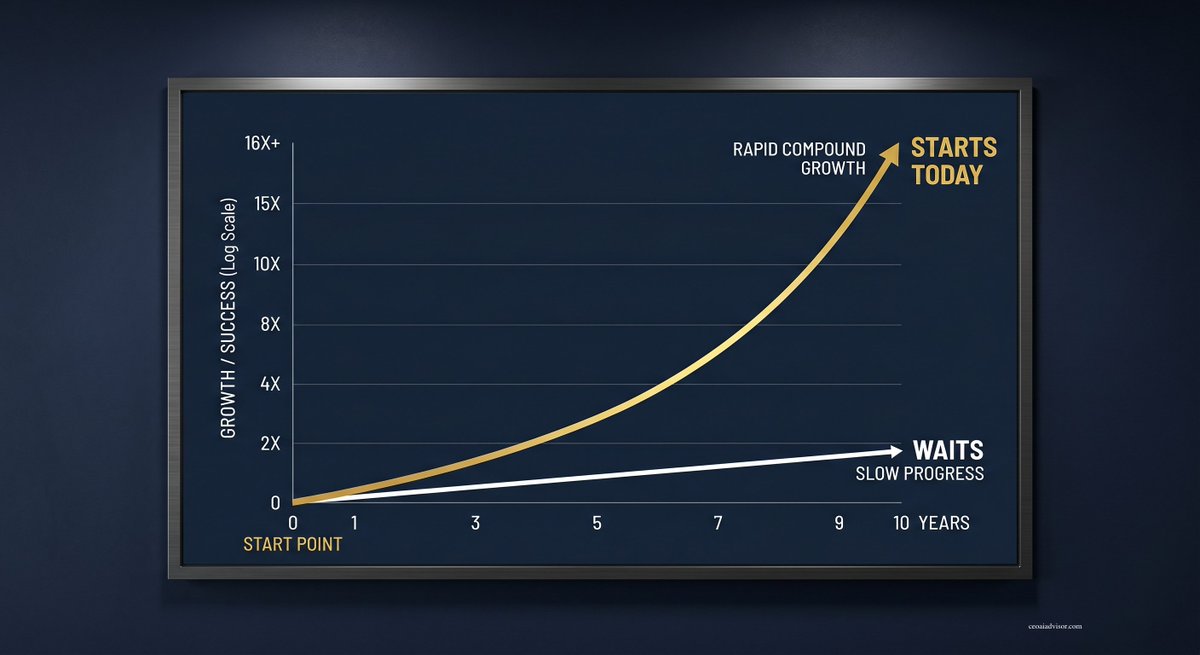
Money likes speed.
Most CEOs know that.
Here’s what they’re missing
AI likes speed, too.
The CEO who starts today, even imperfectly, builds something the late mover can never buy back:
→ Prompts refined from real use
→ Workflows built around your team, improving with each new model.
→ Institutional knowledge competitors can’t replicate, and its impact on ROI
→ A team that adopts and learns early.
That gap isn’t 12 months behind.
It’s 12 months of compounding advantage.
AI rewards speed. Specifically — the speed of getting started.
#AIStrategy #CEOLeadership