What if you could explore an entire brain at nearly the scale of individual cells? Researchers including UCLA neuroanatomist Hong-Wei Dong created a 3D mouse brain atlas with 1-μm resolution, mapping 916 brain structures in remarkable detail. The atlas could help researchers more precisely locate cells and connections throughout the brain. More 👇 https://t.co/rDVc66iXC4. #UCLA #Neuroscience #BrainMapping #Neuroanatomy
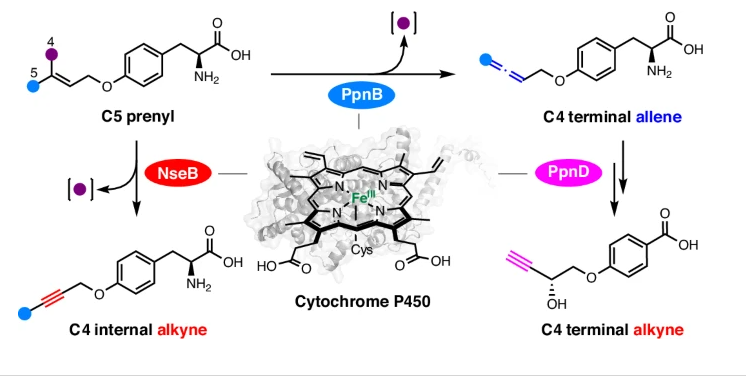
Allenes and alkynes can be biosynthesized via oxidative C(sp2)-demethylation of a prenyl group by fungal cytochrome P450s, expanding the catalytic repertoire of P450 enzymes
https://t.co/42k6Vh0TpA
CRISPR screens are great at telling you what a gene is doing inside your cells. But what if you're interested in what's happening to its neighbors?
Today, I'm excited to share match-seq, a new method that deciphers cell-cell interactions using barcoded RNA transfer.
1/9
Weekend reading from the archive. Open access.
Bioisosteres for Drug Hunters: Part I - Background, Carboxylic Acids, and Amides
Bioisosteric replacement is a powerful strategy in medicinal chemistry, enabling the optimization of key molecular properties such as potency, selectivity, solubility, membrane permeability, and metabolic stability, while mitigating off-target toxicity.
By mimicking the size, shape, and electronic properties of original functional groups, bioisosteres can enhance drug-like characteristics and contribute to novel intellectual property in drug discovery.
In this first installment of our bioisosteres series, we delve into the critical role of carboxylic acid and amide bioisosteres—two of the most extensively studied functional groups in drug design.
Through real-world insights and case studies, we examine how these substitutions influence drug properties, improve oral bioavailability, and reduce potential liabilities, ultimately shaping the success of modern therapeutics.
Read the full article now: https://t.co/tdACtr7oqe