AI is taking over TikTok.
Creators are cashing in big with revenue and product sales.
I dug through 2 hours of trends so you don’t have to.
Here are the top 10 AI trends dominating TikTok right now:
1) Natural disasters (this video has over 100M views)
I appreciate that reply because the last point is transparent and honest, that's fair play to you.
I think large sites should have to adhere to stricter topical authority guardrails than average sites because their link profiles over time and generally perceived level of "expertise, authority, and trust" in the eyes of Google allows them to brute force their way into any category they want unless there is another massive player already in that space.
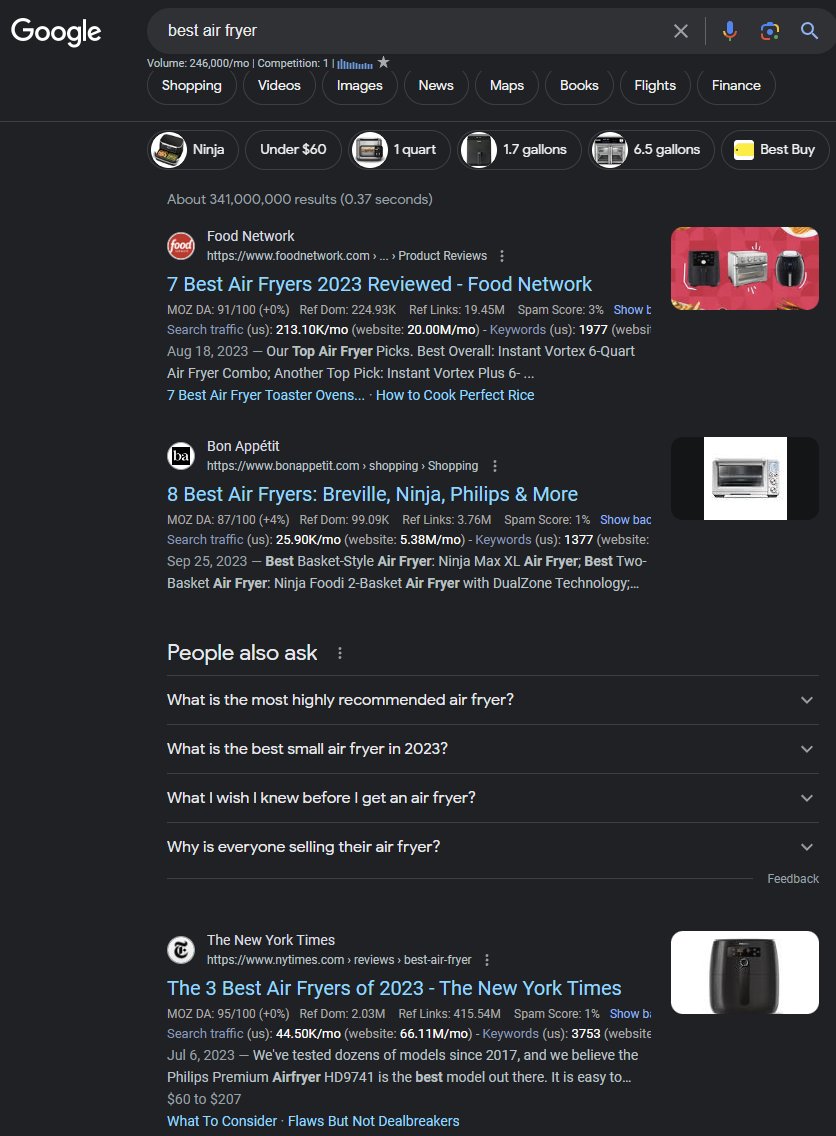
Google can't say that the New York Times should be able to rank basically at the top of everything related to political and current international events because of its pedigree as a news organization, but then simultaneously be one of the most authoritative sources on air fryers.
What should happen is that their "authority and trust" shouldn't carry over outside the domain in which it was largely acquired. That seems pretty reasonable.
Forbes is a trusted source on business and finance news, fair play to them, they've earned that position over years of investment and effort.
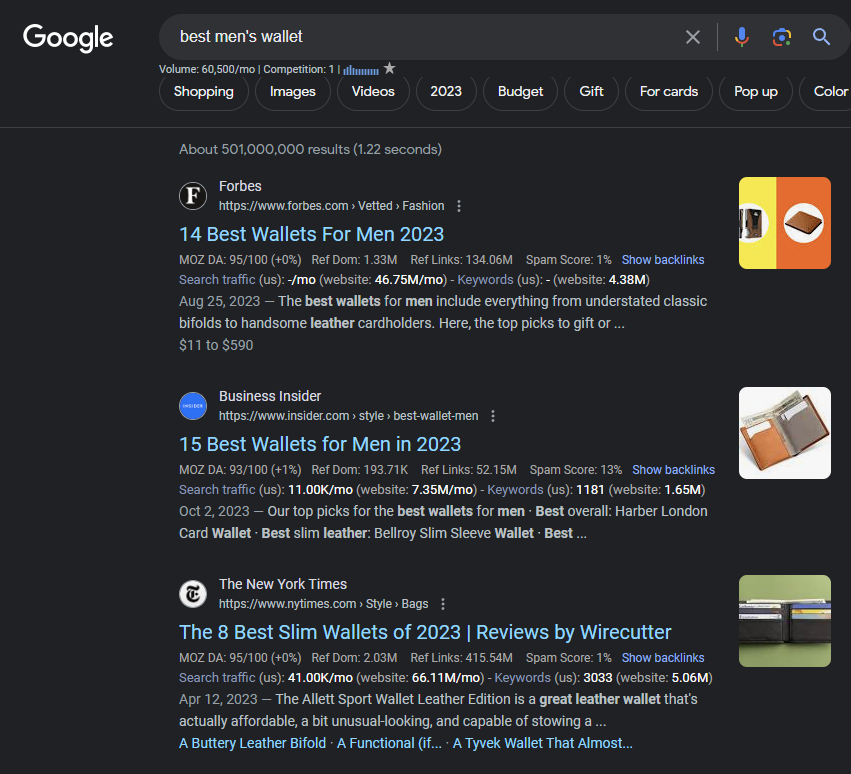
They shouldn't be able to parlay that into the #1 spot for "best men's wallet"... LOL. They have ZERO "experience, expertise, authority, or candidly trust" in that area, but Google's algorithms, deem them to be a "trusted source" for essentially EVERYTHING.
Ok, here's a good example of how this doesn't work.
One of the best sites on the internet for BBQ information is (foodfirefriends dot com - FFF). For clarity, I'm not affiliated with or have any stake (ha, pardon the pun) in that site.
It's quality+++.
They get the barbecues, they get the pellets, they buy the meat, and they do the work.
Then there is the term, "Best Portable Grills".
FFF ranks behind CNET, the NYT, Popular Mechanics, Wired, and People Magazine (LOL).
This is laughably bad - in particular, the CNET article is farcically bad. The article is a listicle of listicles with affiliate links. This is Google at its worst.
For that term, another good site that specializes in this space, Smoked BBQ Source, ranks second which is a good result - this is Google SERPs reflecting what Google defines as EEAT.
How can you punish small and medium-sized sites for some content deeming that its intent is to rank in Google and is therefore unhelpful while large publishers are swamping those small publishers in their own areas of expertise by breaking the rules you're talking about?
Why shouldn't a big site like CNET get absolutely nerfed into the ground for doing this? People Magazine writes celebrity gossip, why are they ranking for BBQs?
The "punishment" for being "unhelpful" should be commensurate with your size - those bigger sites have more capacity to abuse the rule you're championing to the smaller publisher and when you punish the smaller publishers for that, the bigger sites profit EVEN MORE.
And nobody searching thinks, "I need to get some information about a portable grill, I wonder what CNET and People Magazine think about that" so the defence about their authority and brand falls apart - people click those links because of how Google ranks them.
And using that same keyword phrase/search term, what about this gong show below?
You have Food & Wine at #1, Seriously Eats #3 and The Spruce Eats at #7 and #9 - so four of the top ten results are from DotDashMeredith. They use basically the same "unique images" and the individual "reviews" are VERY similar.
These big publishers are breaking all the rules while you punish smaller publishers for "writing for search engines rather than people" and the "punishment" these big sites receive for DOING THE SAME THING is more traffic and more profit from affiliate commissions and ad spots.
Make it make sense. LOL.
Genuine question - why are large sites like New York Magazine, CNN, Tom’s Guide, CNET, Forbes, and Business Insider not deemed unhelpful in the extreme when they write unrelated content purely targeting search engines.
Let me give you my logic.
Presumably Google ranks these sites highly for a lot of terms because they are deemed to be authoritative and present a lot of high quality information on their chosen topics.
That makes sense a search user - if I wanted to read an article on the impact of Work From Home on small business owners, I think Forbes is a pretty good source consistently over time for that type of content so you can assume Google gives them the benefit of the doubt ahead of “SmallBusinessRandy dot net” who is sharing experience working from home since 2020.
If I’m looking for why my iPhone battery is draining fast, CNET is presumably a more trusted source than Lindsay from Omaha who wrote a blog post about her phone battery draining when she was at the dog park.
So, that seems legit and reasonable.
But are Forbes and CNET also well known experts in air fryers, BBQ Grills in 2023, and coffee makers?
Surely not.
They are writing mountains of these articles to rank for valuable affiliate keywords on Google. Period.
These are sites who because of their pedigree and history in specific categories, Google has deemed they are extremely trustworthy and therefore worthy of a “benefit of the doubt” but they use that to do THE EXACT THING Google has just punished smaller site owners for and has said for over a decade it doesn’t want.
Logically speaking, that’s a far greater breach of trust than the guy who runs a BBQ site writing about the “Bear 7 BBQ Pellets for Beginners” - but if he writes enough of that kind of content, he’ll be deemed “unhelpful” at an entire site level.
If writing content for search engines is a “no no” shouldn’t the sites Google trusts the most be punished the hardest for abusing Google’s “Prime Directive” in this area?
It’s impossible to take this line of reasoning about “helpful” content seriously when the New York Times, Forbes, and New York Magazine (LOL) rank in the top 5 spots terms like “Best Espresso Machines for Beginners”, “Best Wallets for Men”, and “Best Baby Wifi Monitor”.
There’s not a Mommy Blogger in sight for wifi baby monitors, a coffee connoisseur for best espresso machines for beginners, or a male fashion influencer for best wallets for men.
So, that double standard undermines your entire argument.
It says that small bloggers can be deemed unhelpful for writing for search engines but the biggest online media empires in the world are rewarded for it.
Google is slowly killing blogging.
Blogging used to be about providing off the cuff updates, sharing unique perspectives, and interacting with blog comments!
Now Google has forced bloggers to make everything SEO optimized, long form, and tightly focused around a single keyword. If you don’t bow to Google’s will, you don’t get traffic!
Now, with the Helpful Content Update, they’ve gone so far as to say that “unhelpful” articles on your site can penalize your ENTIRE site! This is ludicrous.
If you wrote about a personal update or something just “fun”, does this now make your entire site “unhelpful”?
So, we have moved “blogging” in the traditional sense away from our site and onto social media. Twitter, LinkedIn, Facebook, or wherever is now where you get the real “blog” updates.
You no longer get that on blogs, no more true insights, because heaven forbid Google deems a post as unhelpful and penalizes your entire site.
The ironic thing? Google ranks Reddit extremely well BECAUSE people are providing off the cuff comments and doing what bloggers used to do!
So, Google is killing the individual bloggers, but sending tons of traffic to a major corporation (Reddit) instead, because Reddit users are doing what bloggers used to do.
Thanks for crushing traditional blogging, Google.
(PS - what you just read is the type of thing I used to write on my blog, but I can’t do that anymore…).
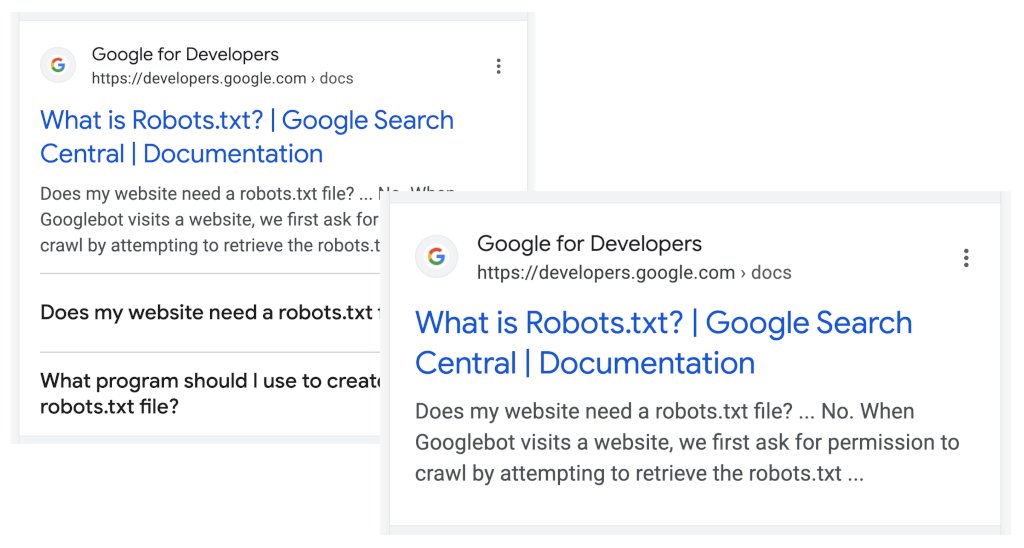
To provide a cleaner and more consistent search experience, we're changing how some rich results types are shown in Google's search results, and reducing the visibility of FAQ and HowTo rich results. Find out more: https://t.co/xYY3qBMLN3
This is SUPER interesting...
I bought an expired domain last month.
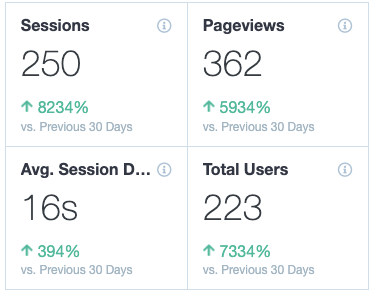
I soon realised that the site had many relevant links and was popping on Pinterest before it's demise. So when I fired it all up, it was getting visits.. but to 404s as the pages didn't exist (hence session duration)
I headed over to Wayback Machine to recreate those pages and improve them ASAP.
I installed Jetpack and learned something even more interesting...
Jetpack stores historical data IF the site was on Wordpress and had Jetpack on it before. After recreating the major categories and pages,
I could see the site's most popular areas and how many views they were getting each month and year!
Still many more pages to recreate, but it is currently just soaking up that social traffic as the new pages index.
On top of that, GSC shows me more missing pages as it shows them in the error section so I quickly run and make those pages as I go, too 😬
I didn't just want to forward the missing pages to a random landing page; I had my VA scrape Wayback, wrote some prompts and recreated and improved those pages using BPAI
I think this is a win.
Need to find more domains like this!