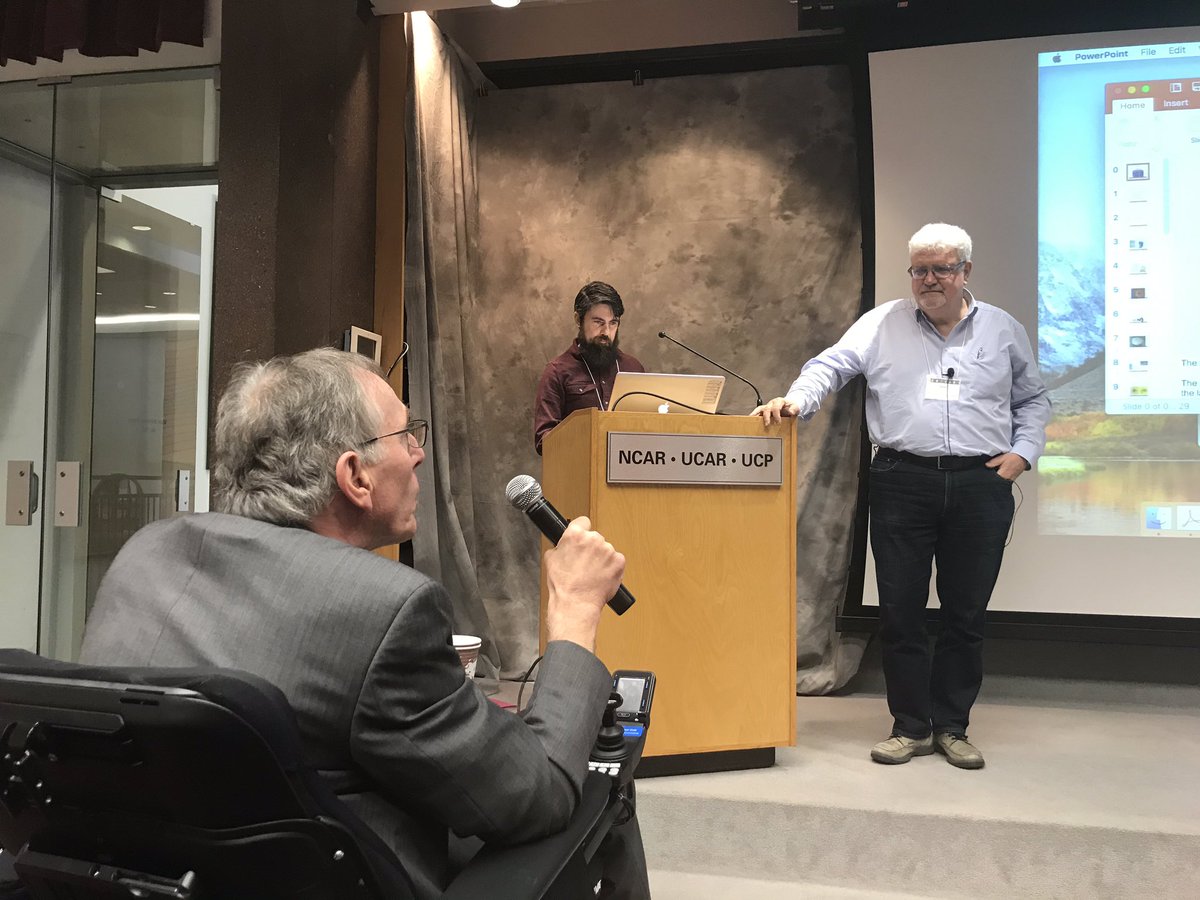
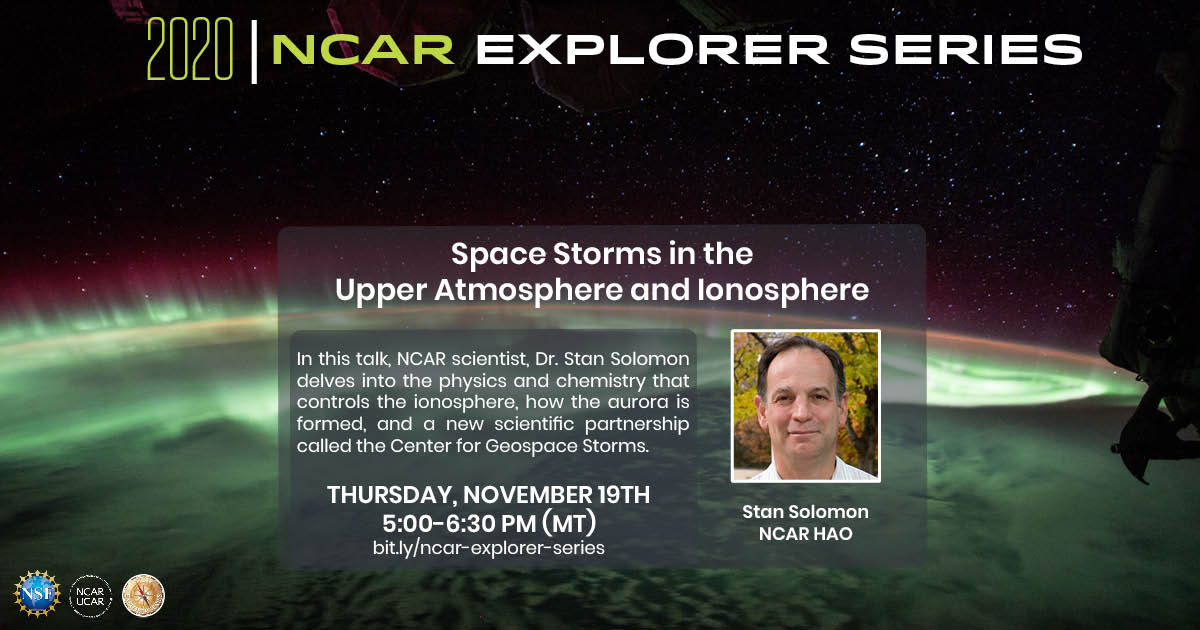
What on 🌎 is space weather? Join NCAR scientist Stan Solomon this Thursday for a talk about the physics and chemistry behind space weather, storms, and the aurora!
Register today for the event on 11/19: https://t.co/MkoNSCkzbA
#spaceweather#NSFstories
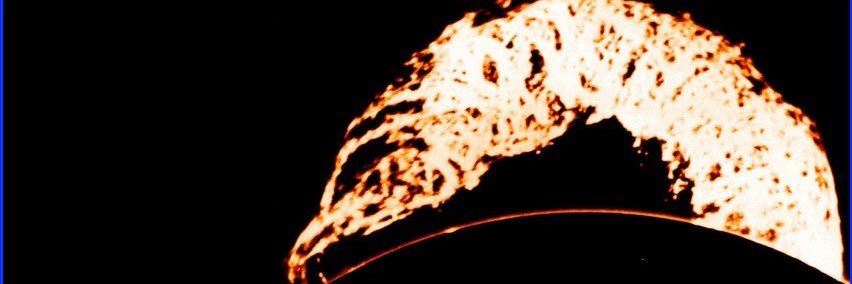
While a transit of Venus across the Sun's face is incredibly rare (the next is not due until 2117), the planet occasionally travels through the corona, as it did in early June.
A coronagraph at NCAR's observatory on Hawaii captured the uncommon passage.
https://t.co/4l2DTWjKrp
What time is it?
Solar storm o'clock on the dot.
Scientists have created an elegant Sun clock that shows that solar activity starts and stops on a much more precise schedule that many researchers thought.
https://t.co/NELHFQqowb
@swmcintosh@leamonrj#AGUpubs@warwicknewsroom
When will it be flare time on the Sun? “By devising a new, regular 'sun clock', researchers have found that the switch on and off of periods of high solar activity is quite sharp, and are able to determine the switch on/off times.” https://t.co/x0zqBm75n9
@RyanJFrench1 Thank you for your earlier tweet about this! FYI, these movies are from two-minute averages that give better signal to noise than what is available from the MLSO website.
HAO's K-Cor coronagraph instrument at Mauna Loa Solar Observatory captured a rare close approach of Venus to the Sun as seen from Earth. Venus can be seen as a small black dot above the north pole as it transits the faint solar corona in these images of polarized white light.
Almost 8 years ago exactly, Venus passed across the face of the Sun, in what would be the last Venus transit of our lifetimes. Yesterday we had a ‘near miss’, with Venus passing less than a solar radii above the Sun’s northern edge. (Image credit, MLSO K-Cor) 1/6
HAO scientist @MausumiDikpati presented on how Magnetic Rossby Waves in the Sun's interior shape and drive space weather to our friends at @NWSSWPC . See the recorded presentation here: https://t.co/5XQvL4tz4k
@MausumiDikpati presenting on how [Magnetic] Rossby Waves in the Sun's interior shape and drive space weather to our friends at @NWSSWPC ! Awesome!!!! @NCAR_Science
Mauna Loa Solar Observatory observer Allen Stueben along with @whearobotics kids are producing Personal Protective Equipment with 3D printers, while wife Mary makes cloth masks. Great job Stuebens, thanks for helping the community! @somegoodnews https://t.co/GNAExYKDgE
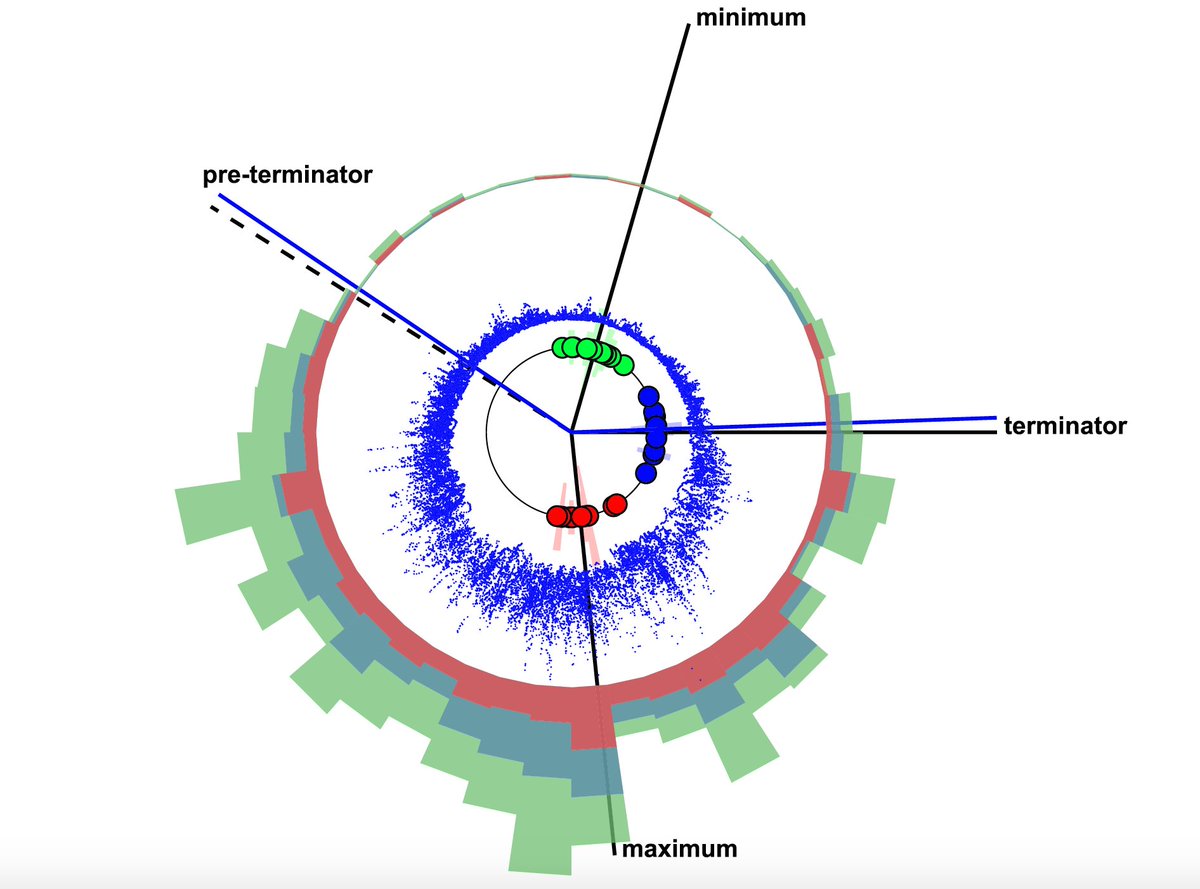
Terminator Watch: The southern activity band definitely growing in strength and clarity - the band is lagging but definitely getting more pronounced. Both centered on +/- 30 degrees, but south has more spread. #Terminator2020
Every Friday at @HAOSunEarthLab we have donuts and coffee with colleagues & visitors. Today we kept the tradition going with a virtual donuts on Google Hangouts. Definitely nice to see some familiar faces after a week at home.
Hey Northern Colorado: HAO scientists will be in Fort Collins tomorrow (Feb 29) at the Colorado State "Little Shop of Physics." Stop by our table to learn about solar magnetism, space weather, and more! https://t.co/UirwJG4ADV
Today HAO begins a celebration of the work and achievements of former director and now Senior Scientist Emeritus Michael Knoelker with a symposium "From Solar Physics to Exoplanets" held in his honor.
Info & Agenda: https://t.co/FF4JqTy9hD
LIVE webcast: https://t.co/pX83JjiYHz







![swmcintosh's tweet photo. @MausumiDikpati presenting on how [Magnetic] Rossby Waves in the Sun's interior shape and drive space weather to our friends at @NWSSWPC ! Awesome!!!! @NCAR_Science https://t.co/gwcC8jCnnq](https://pbs.twimg.com/media/EYjvC-4UYAAcf_X.jpg)