Today Physical Superintelligence PBC is announcing a proof of the Aaronson-Ambainis conjecture, one of the central open problems in quantum complexity, with major implications for quantum computing speedup.
https://t.co/sAewkKdSOu
Thread 👇
Hi all, I have a new result I'm excited to share. It turns out that *all existing implementations* of softmax and cross-entropy (that's JAX, PyTorch, textbooks, etc) have a subtle bug --- two bugs, actually. A simple rewrite fixes both, and eliminates "slingshots" when grokking:
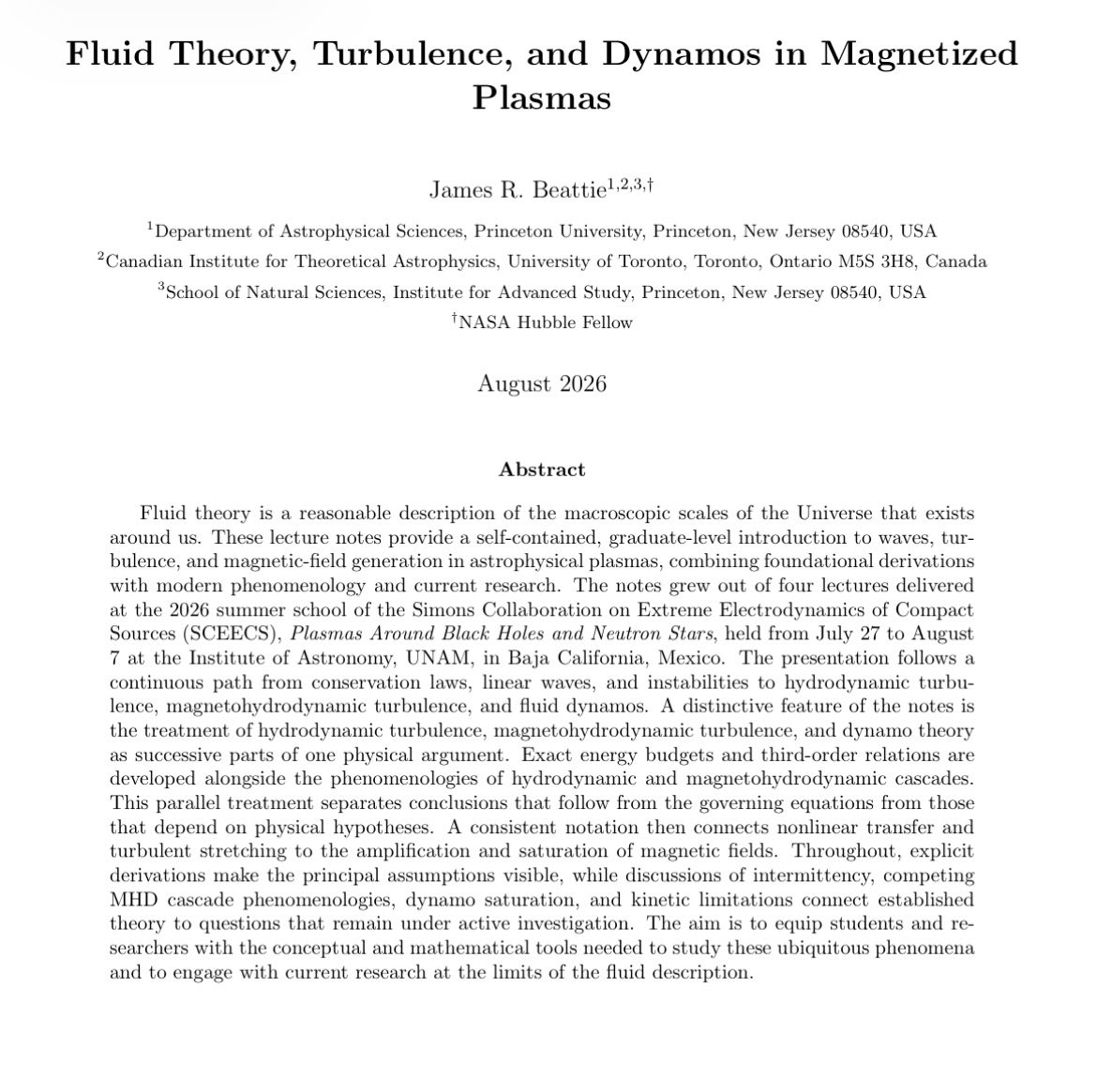
I lectured over the first three days on fundamental plasma processes in the fluid framework, including HD and MHD turbulence, and fluid dynamos. You can find all 100 pages of my lecture notes here: https://t.co/j5NeY2rzQi
We taught a brand-new mini-series this year at @SCSatCMU on Modern GPU Programming for ML Systems, as part of the ML Systems course, touching on fun questions like what data layout swizzling is, how to use 3D TMA, and state-of-the-art Blackwell programming. We released a curated online book based on the materials: https://t.co/5ZJg2lySNO check it out
The Pope just quoted Gandalf: “It is not our part to master all the tides of the world, but to do what is in us for the succour of those years wherein we are set, uprooting the evil in the fields that we know, so that those who live after may have clean earth to till.”
Judging by my tl there is a growing gap in understanding of AI capability.
The first issue I think is around recency and tier of use. I think a lot of people tried the free tier of ChatGPT somewhere last year and allowed it to inform their views on AI a little too much. This is a group of reactions laughing at various quirks of the models, hallucinations, etc. Yes I also saw the viral videos of OpenAI's Advanced Voice mode fumbling simple queries like "should I drive or walk to the carwash". The thing is that these free and old/deprecated models don't reflect the capability in the latest round of state of the art agentic models of this year, especially OpenAI Codex and Claude Code.
But that brings me to the second issue. Even if people paid $200/month to use the state of the art models, a lot of the capabilities are relatively "peaky" in highly technical areas. Typical queries around search, writing, advice, etc. are *not* the domain that has made the most noticeable and dramatic strides in capability. Partly, this is due to the technical details of reinforcement learning and its use of verifiable rewards. But partly, it's also because these use cases are not sufficiently prioritized by the companies in their hillclimbing because they don't lead to as much $$$ value. The goldmines are elsewhere, and the focus comes along.
So that brings me to the second group of people, who *both* 1) pay for and use the state of the art frontier agentic models (OpenAI Codex / Claude Code) and 2) do so professionally in technical domains like programming, math and research. This group of people is subject to the highest amount of "AI Psychosis" because the recent improvements in these domains as of this year have been nothing short of staggering. When you hand a computer terminal to one of these models, you can now watch them melt programming problems that you'd normally expect to take days/weeks of work. It's this second group of people that assigns a much greater gravity to the capabilities, their slope, and various cyber-related repercussions.
TLDR the people in these two groups are speaking past each other. It really is simultaneously the case that OpenAI's free and I think slightly orphaned (?) "Advanced Voice Mode" will fumble the dumbest questions in your Instagram's reels and *at the same time*, OpenAI's highest-tier and paid Codex model will go off for 1 hour to coherently restructure an entire code base, or find and exploit vulnerabilities in computer systems. This part really works and has made dramatic strides because 2 properties: 1) these domains offer explicit reward functions that are verifiable meaning they are easily amenable to reinforcement learning training (e.g. unit tests passed yes or no, in contrast to writing, which is much harder to explicitly judge), but also 2) they are a lot more valuable in b2b settings, meaning that the biggest fraction of the team is focused on improving them. So here we are.
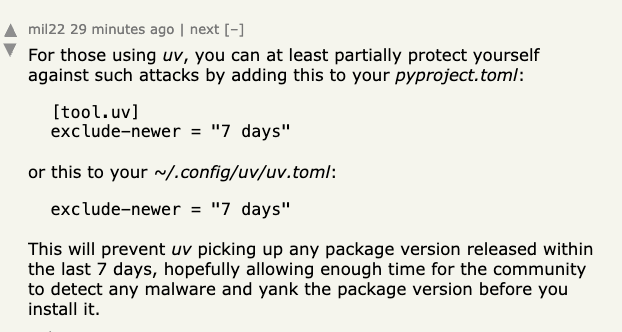
For my friends who are still using UV and might be a little weary about recent compromises to PyPi packages, stick this in your pyproject.toml.
You can let all of those pip users find and report the compromises...
I am searching for postdocs interested in developing a deeper scientific understanding of any aspect of AI and using this understanding to improve AI systems. If interested please email me materials by Jan 10th 2026: a CV, 3 letters of reference, and a statement of research interests (can be short, just indicating what you would like to work on).
The positions are generously funded by grants from @schmidtsciences and @SimonsFdn. You will have the opportunity to collaborate with many labs across @StanfordHAI and also the Simons Collaboration on the Physics of Learning and Neural Computation (https://t.co/TfOKlQxCrE).
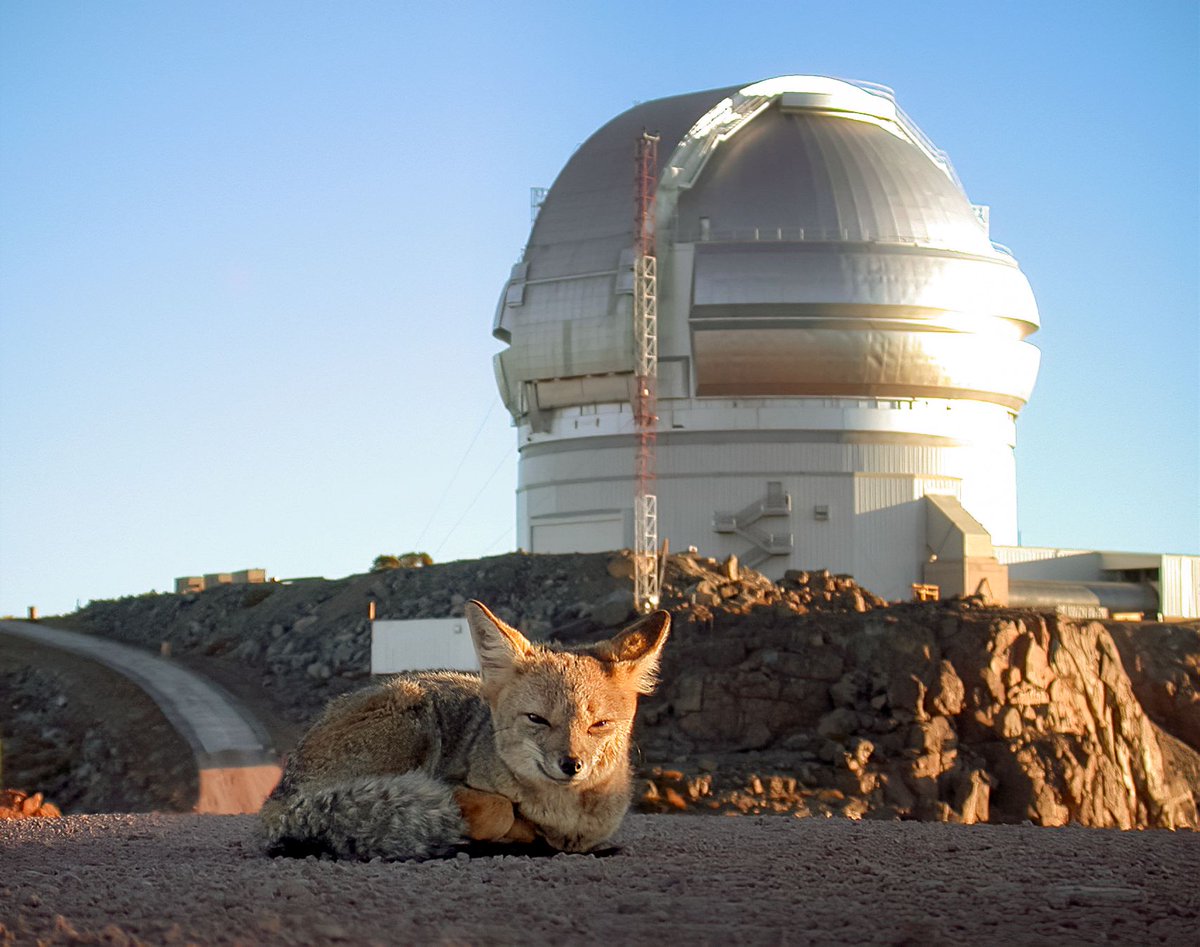
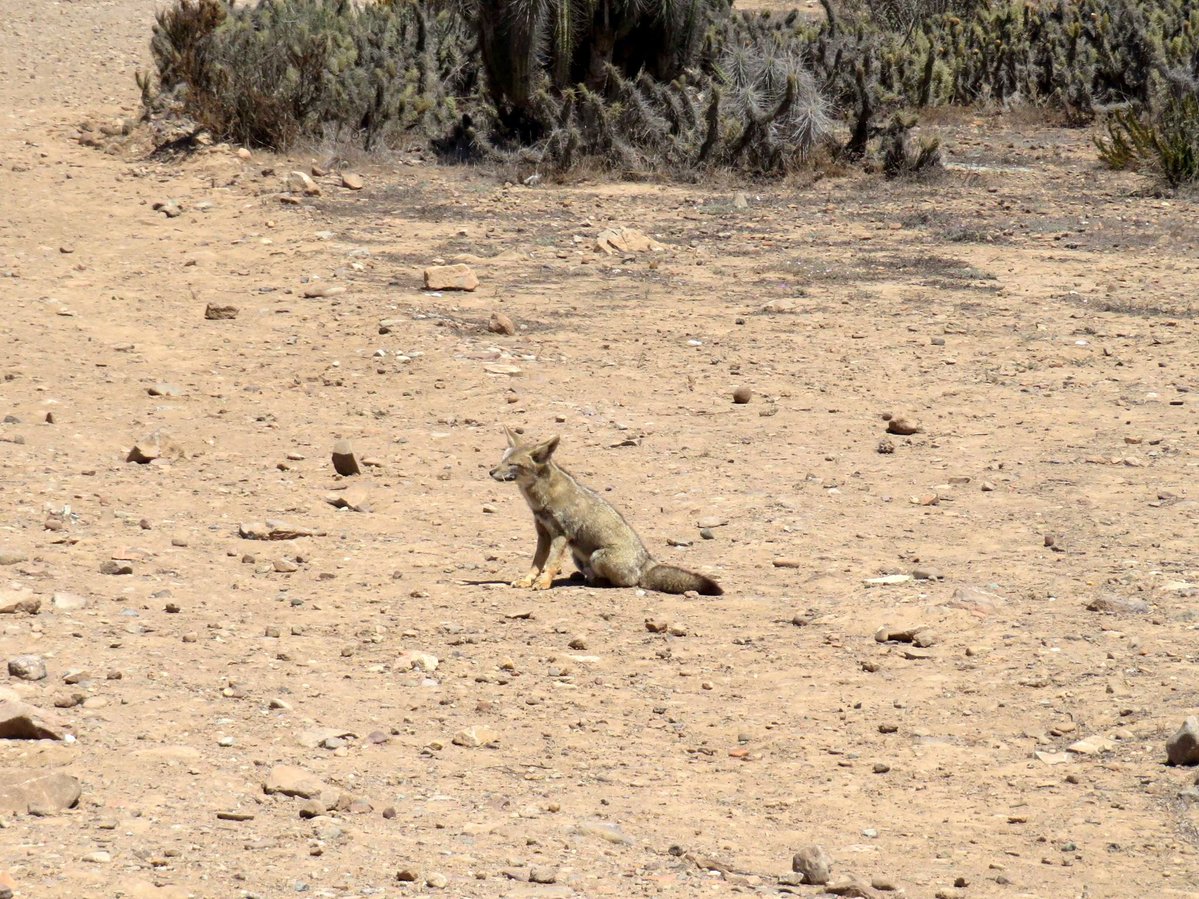
Today, we’re showing off our favorite pictures of culpeo foxes we’ve spotted around Cerro Pachón, home of NSF–DOE Rubin Observatory. 🦊 📸
💡Fun fact: While these little guys look like foxes (and are called foxes), they’re actually more closely related to wolves and jackals!
🚀We’re looking for 2026 interns at @PolymathicAI (NYC)!
Want to work on scientific foundation models + ML for physics, biology, astronomy, & more?
Want to contribute to frontier research with a brilliant, fun, and friendly team?
Please sign up on our interest form 👉 https://t.co/KpBwT7UIPf
#Hiring #Internship #MachineLearning
Susumu Kitagawa, Richard Robson and Omar M. Yaghi have been awarded the 2025 #NobelPrize in Chemistry for the development of a new type of molecular architecture.
In 1989, chemistry laureate Richard Robson tested utilising the inherent properties of atoms in a new way. He combined positively charged copper ions with a four-armed molecule; this had a chemical group that was attracted to copper ions at the end of each arm.
When they were combined, they bonded to form a well-ordered, spacious crystal. It was like a diamond filled with innumerable cavities.
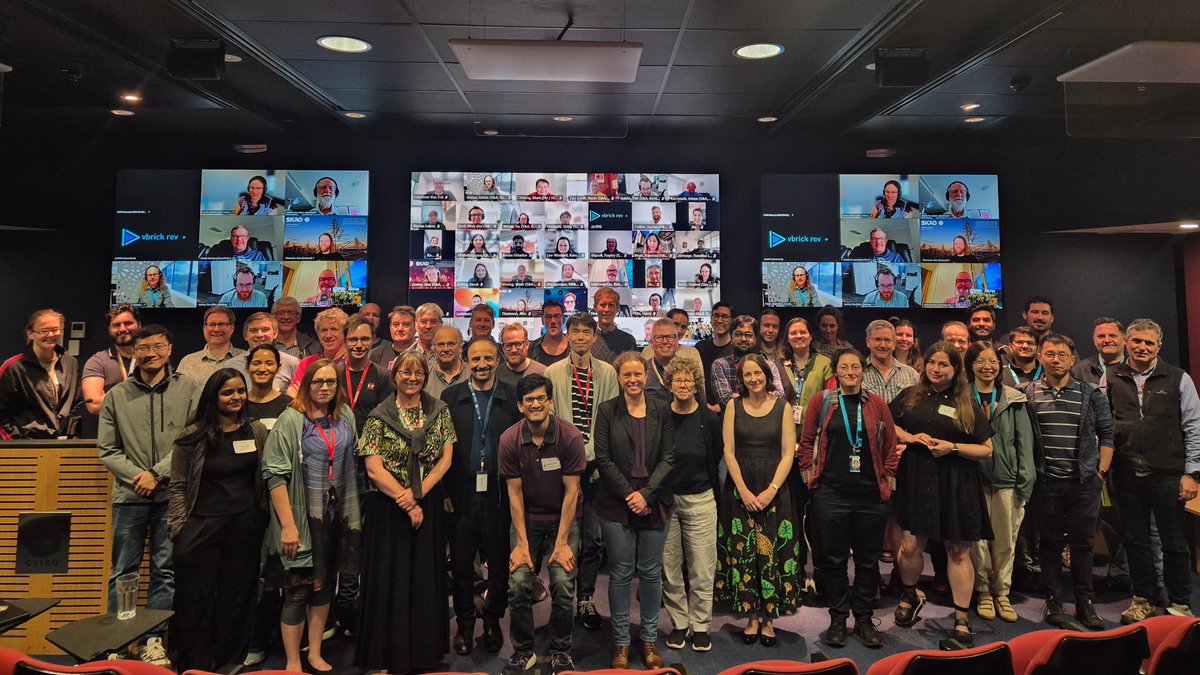
Registrations are now open for our next Australia Telescope User Committee meeting (ATUC). ATUC is a chance to discuss issues that impact users of the ATNF.
16 September, online and in-person in Sydney.
Register: https://t.co/0Msd3s0PL3
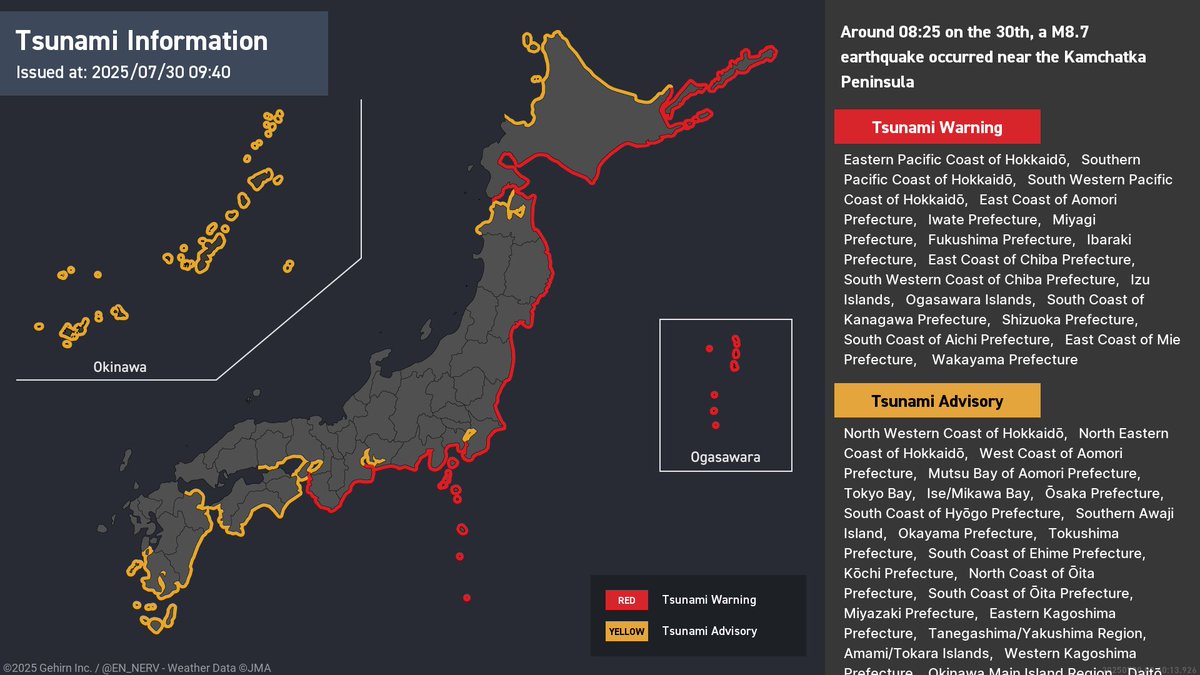
⚠️ Tsunami Warning: Japan’s East Coast
A powerful magnitude 8.7 earthquake struck off the Russian coast, north of Hokkaido, this morning. Tsunami waves are now moving south across the Pacific and may impact Japan’s eastern coastline.
If you’re in the affected regions, stay away from the sea. Follow official evacuation advice for your safety.