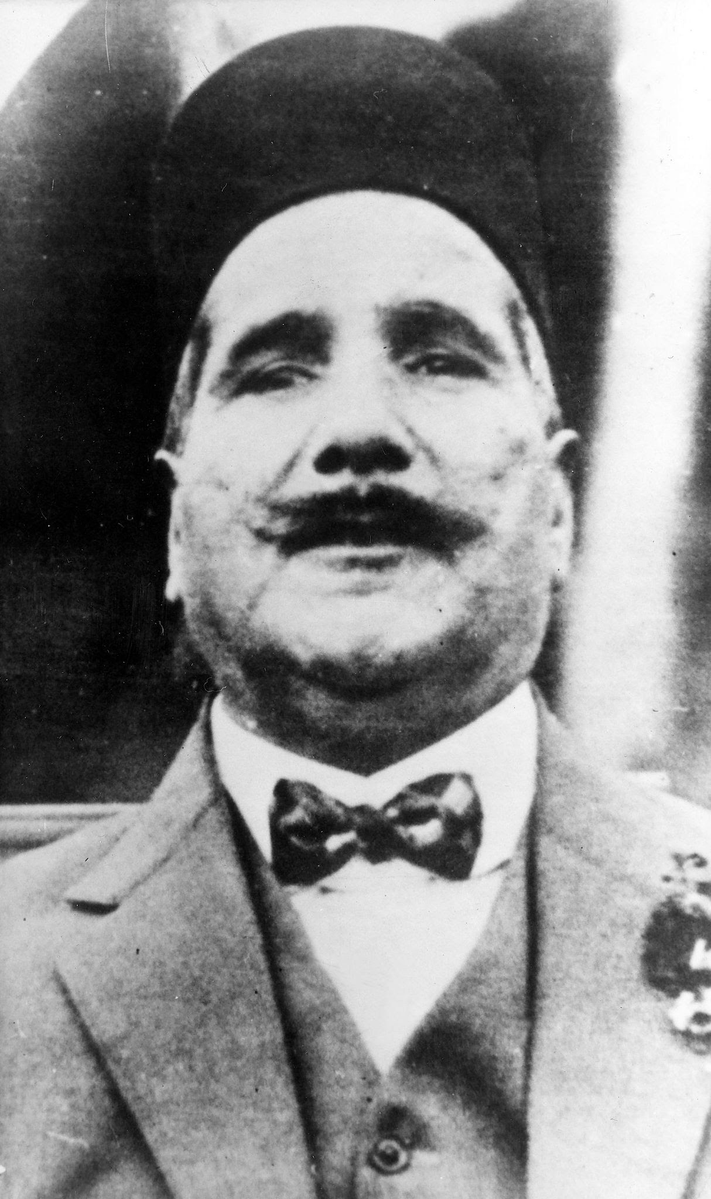
He was dying when he wrote the letters.
Throat infection. Kidney disease. Heart failure.
He had lost his voice.
He wrote to Jinnah anyway.
Come back from London. Lead the Muslim League. There is no one else.
Jinnah came back.
Allama Muhammad Iqbal. Sialkot. Born November 9, 1877.
Son of a tailor. Grandson of a Kashmiri shawl trader.
Lower-middle class family in Kashmiri Mohalla, Sialkot.
His father Sheikh Noor Muhammad could not read.
But he told his young son one thing while he watched him read the Quran.
Read it as if it is being revealed directly unto you.
Iqbal never forgot it.
Scotch Mission High School, Sialkot. Government College Lahore.
First class. Top rank in Punjab University.
Then Cambridge. Trinity College.
Then Lincoln's Inn. Called to the Bar in 1908.
Then Munich. Ludwig Maximilian University. PhD in Philosophy.
Dissertation: The Development of Metaphysics in Persia.
He came home a barrister, a philosopher, and a poet.
He had left for Europe as an Indian nationalist.
He returned as something else entirely.
What he saw in Europe changed him.
Western civilization was technically brilliant and morally hollow.
Secular nationalism would swallow minorities whole.
The Muslim could not survive inside it without his own ground to stand on.
1915. Asrar-i-Khudi. Secrets of the Self. In Persian.
The most important philosophical poem written in South Asia in the 20th century.
Khudi. Selfhood. Dynamic personal agency. The opposite of passive resignation.
He told Muslims to rise.
1930. Allahabad. President of the All-India Muslim League session.
He stood before the assembly and said what no one had said directly before.
I would like to see the Punjab, North-West Frontier Province, Sindh and Baluchistan amalgamated into a single state.
That sentence. In that room. In 1930.
Is where Pakistan was first spoken aloud.
Jinnah was in London in semi-retirement when Iqbal began writing to him in 1936.
Letter after letter. Urgent. Clear.
A separate federation of Muslim provinces is the only course.
Why should not the Muslims of North-West India be considered as nations entitled to self-determination.
He was on his sickbed writing these letters.
Voice gone. Body failing.
Jinnah came home in 1934.
The Muslim League was reorganised.
The Lahore Resolution was passed in 1940.
Pakistan came in 1947.
Iqbal died on April 21, 1938.
Nine years before the country he had imagined existed.
70,000 people attended his funeral at the Badshahi Mosque.
He is buried outside its entrance.
In the city he never left.
Jinnah said after his death: He was a friend, guide and philosopher, and during the darkest moments through which the Muslim League had to go, he stood like a rock.
A tailor's son from Sialkot.
Knighted by King George V in 1923.
Buried at the gate of the Badshahi Mosque in Lahore.
Poet of the East. Thinker of Pakistan. Physician of the Ummah.
He did not live to see what he had built.
Allama Muhammad Iqbal.
Pakistan Zindabad. 🇵🇰
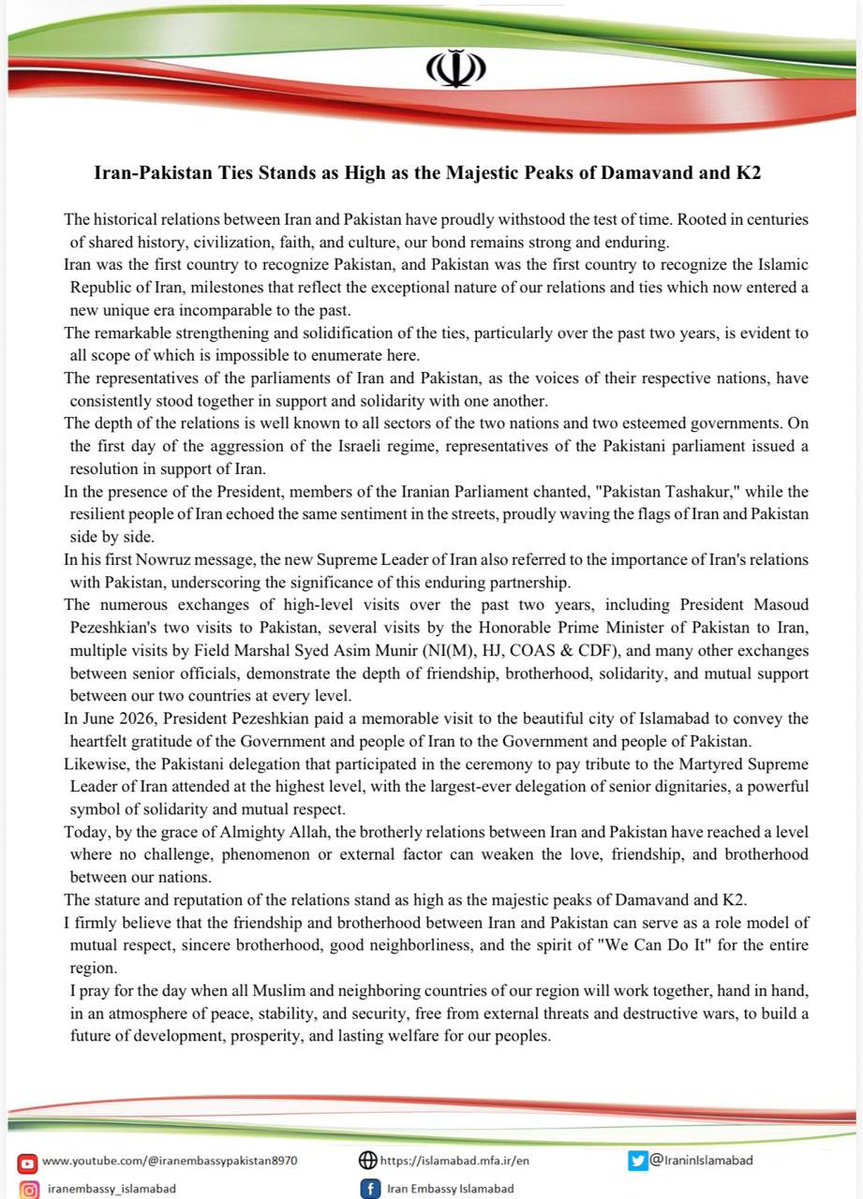
تفاهمنامهای که امضا شد حاصل خرد جمعی اعضای شعام بود و همه اعضا با آن همدلاند. باور دارم این تفاهمنامه مرکز ثقل روابط خارجی ما در آینده خواهد بود. باید بکوشیم دشمن را وادار کنیم به آنچه امضا کرده پایبند بماند. امنیت کشور، منطقه و همپیمانان ما با این تفاهمنامه ارتقا مییابد.
آج پاکستان نے انسانی ہمدردی کے بنیاد پر ایک افغان جوڑے اور موت و حیات کے کشمکش میں مبتلا انکے بچے کو پاکستان میں علاج کرنے کے غرض سے
پاکستان میں داخلے کی اجازت دی،
جواب میں ایک آفغانی دہشتگرد نے سوات میں خودکش حملہ کر کے 14 بیگناہ پاکستانیوں کو شہید اور 20 سے زائد کو زخمی کر دیا 🤨
ان لوگوں کو ہم نے علاج کیلئے کراچی کے ضیا الدین ہسپتال اور آغا خان ہسپتال تک رسائی دی ہے،
جواب میں انہوں نے نہ ہمارے فورسز کو بخشا ہے نہ سویلین کو
نہ انہوں نے ہمارے مسجد کا احترام کیا ہے نہ ہمارے امام بارگاہوں کا
نہ انہوں نے ہمارے تھانے بخشے ہے اور نہ بازار بخشے ہے
جب جس جگہ موقع ملا ہے پاکستانیوں کو نقصان پہنچایا ہے،،
1974: ISI engineers an 'Islamist United Front' to counter the hostile kabul regime of daud khan. Efforts succeed after 20 years in the form of taliban takeover.
2001: America invades afghanistan and installs karzai who's hostile to pakistan. ISI covertly engineers "Talib United Front" which results in a taliban takeover of kabul in 2021.
2026:
One can conclude that despite all attempts at engineering, whoever takes the throne in kabul is bound to project hostility to Pakistan.
@Mushahid: Why be so apologetic on this issue? Prof. MaRandi has hurt the sentiments of many Pakistanis, yet he has neither apologised nor clarified what exactly he meant by his cynical remarks. If his personal rebuke was not directed at the "wonderful people of Pakistan," then what was it directed at? By implication, it could only have been aimed at Pakistan's leadership, its institutions, or the State itself.
We understand your personal affinity with Iran's clerical rulers and therefore contest your claim that "good sense has prevailed" and that "all this controversy is thankfully behind us" following Prof. MaRandi's clarification. No, Sir. He continues to bully Pakistan's trusted Gulf Arab and Muslim allies, including Saudi Arabia, the UAE, Qatar, Bahrain, Kuwait, Oman, Türkiye, Jordan, and Egypt. That alone makes him worthy of condemnation by informed Pakistanis who value our nation's strategic, economic, and security interests in the Gulf and the wider Middle East.
Please correct yourself as well. You want us to "move on with the good news" that 93% of the people of Pakistan supported Iran during the war, making Pakistan the world's NUMBER ONE nation in this regard. This is a FABRICATION. I have checked the "global public opinion survey" conducted by Gallup Pakistan in April 2026. It states that 93% people supported Pakistan's exceptional diplomatic role in facilitating the ceasefire—not Iran during the war.
Moreover, could you kindly clarify what "solid, substantive & strategic support" Pakistan provided to Iran during the Israel-Iran conflict last year, of which, you claim, "the top leadership in Tehran is well aware"? We rely on evidence, and we have yet to see any. Many of us who regularly participate in global X Spaces, where we seek to correct misconceptions about Pakistan, understand how important it is to preserve Pakistan's hard-earned role as a neutral arbiter in the Iran conflict. Unsubstantiated claims of this nature risk undermining that credibility, particularly when our military and political leadership went out of its way to accommodate Iranian interests during the diplomatic process.
You mention some instances of what Pakistan has done for Iran, as if we owe an explanation to this IRGC loudmouth. Could you kindly also cite some examples of how Iran has responded to Pakistan's goodwill since 1979? Yes, you are kind enough to mention, albeit vaguely, how Tehran tried to implicate Pakistan in nuclear smuggling back in 2003, but what about the rest?
The list is too long. In fact, we can hardly recall a year, let alone a decade, over the past 47 years in which this clerical regime has done anything genuinely friendly towards Pakistan. Here are some notable examples:
♦️Within a year of its establishment, the state-run Tehran Radio broadcast false news claiming that the Holy Kaaba had been captured by the Jews, inciting QAU students to burn down the US Embassy. The so-called revolution also fuelled the million-strong sectarian zealots' dharna at Islamabad's D-Chowk against Zia's Islamisation in 1980.
♦️In the 1980s, Iran competed with Pakistan by supporting its own sectarian groups during the US-led Afghan jihad against the Soviets (though its role in the Iran-Contra affair and Israel's attack on Iraq's Osirak nuclear facility is a separate subject).
♦️In the 1990s, Iran was an active participant in the regional proxy war, collaborating with India and supporting the Northern Alliance, while sparing no effort to undermine Pakistan's strategic interests in Afghanistan and on broader Muslim causes such as Kashmir, Bosnia, Cyprus, and Nagorno-Karabakh.
♦️Throughout the War on Terror, Iran aligned itself with the Karzai and Ghani regimes and, together with its local sectarian affiliates and India as a foreign backer, further undermined Pakistan's regional strategic interests.
♦️Indo-Iranian collaboration extended to the development of Chabahar Port as a strategic counterweight to Gwadar Port, the flagship of the China-Pakistan Economic Corridor (CPEC). More concerning for Pakistan was India's use of Iranian territory to support the BLA insurgency in Balochistan, a claim reinforced by the capture of alleged RAW operative Kulbhushan Jadhav in 2016.
♦️India continued to operate the Chabahar project in the months preceding the war. Even amid the India-Pakistan crisis following the Pahalgam incident in April last year, Iranian Foreign Minister Abbas Araghchi visited New Delhi, where both sides signed MoUs on trade facilitation and the expansion of bilateral cooperation.
This is the bitter reality that provides the proper context for assessing what Pakistan has done for Iran and what Iran has done to Pakistan over the past 47 years. The gap between Pakistan's consistent goodwill and Iran's deceitful conduct is simply too wide to justify the claim that "Pakistan remains a reliable rear for Iran."
I endorse @Mushahid when he says, "All countries act according to their national interests, or, sometimes, compulsions." So let there be no doubt that Pakistan stands only with those countries whose strategic interests and priorities are compatible with its own—not with a regime that has turned out to be a major source of militancy, discord and instability in the Muslim neighbourhood.
ڈوب مریں جو کہتے ہیں کہ فوج ڈالروں کے لیے لڑتی ہے۔۔
شمالی وزیرستان میں شہید ہونے والے میجر حافظ احسان الٰہی کے جسدِ خاکی سے لپٹی ان کی ننھی بیٹی کا منظر دل دہلا دینے والا ہے۔ 💔🇵🇰
@IqbalMahsud6 By that logic we shouldn't pursue any structural reforms until every institution is perfect. That's not how states evolve. Administrative reforms and democratic reforms can happen together.
Establishment: We'll create 32 administrative units and devolve power to local governments so grassroot leadership can emerge from the middle and lower middle classes, and people can finally get their rights.
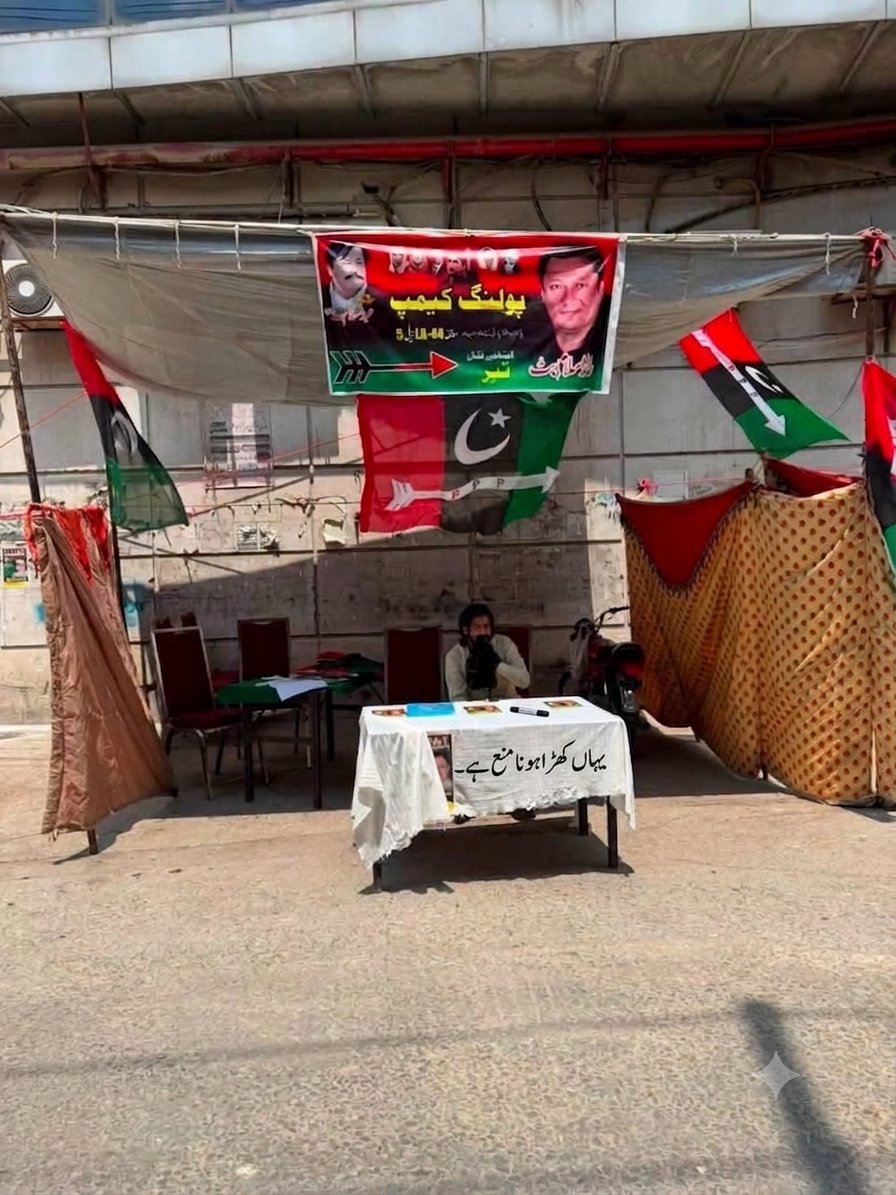
Le PPP:
So if you see fierce opposition, ask who benefits from preserving the status quo.
Chances are the loudest protests will come from those protecting the interests of the two dominant political families, not the interests of ordinary Pakistanis.
Who has the most at stake with new provinces?
Certainly not the average Pakistani. If anything, governance has the potential to become more accessible and representative.
The ones with the most at stake are the political dynasties whose monopoly over power would be weaken.
Who has the most at stake with new provinces?
Certainly not the average Pakistani. If anything, governance has the potential to become more accessible and representative.
The ones with the most at stake are the political dynasties whose monopoly over power would be weaken.
PM Shehbaz Sharif is in office. The Interior Minister reports to his government. If he's truly done something so unacceptable, remove him ASAP. If you can't, then accept that the real power doesn't lie with the beneficiaries of Form 47, it lies with those who created it.