A new @WHO study in @LancetGH suggests that one in four adolescents worldwide, some 240 million young people aged 11–17, did not reach 60 minutes of moderate-to-vigorous #physicalactivity on any day of the previous week.
The analysis drew on 389 surveys covering more than 3.2 million adolescents in 140 countries. On average, adolescents were active on 2.7 days a week, the same as in 2010, and only 14% were active every day. Girls were less active than boys: 28% of girls reported no active days, compared with 22% of boys.
Physical inactivity is a major risk factor for heart disease, type 2 diabetes, #obesity and some cancers. Being active also supports #mentalhealth, with fewer symptoms of anxiety and depression and better attention and memory.
Active habits formed early protect health for life. That calls for safe, accessible places for young people to move at school, on the way there and in their free time.
https://t.co/6d32CvgGhD
A new modelling study in @Nature Health suggests that a simple switch in the salt 🧂 we use could save millions of lives.
Research modelled what would happen if 193 countries replaced regular salt with #potassium-enriched salt, which swaps part of the #sodium chloride for potassium chloride.
A full switch could prevent an estimated 2.96 million deaths and 10.17 million new cases of #cardiovascular and chronic kidney disease every year. Replacing household salt alone could avert around 1.85 million deaths.
Even the narrowest scenario, limited to people with treated hypertension, would still prevent roughly half a million deaths. The largest gains would be in China (about 1.08 million deaths) and India (almost 400,000).
The substitute lowers blood pressure by cutting sodium and raising potassium intake at the same time. People with advanced #kidney disease, or on drugs that raise potassium, need caution because of the risk of hyperkalaemia.
@WHO recommended lower-sodium salt substitutes in 2025. This is a low-cost, population-wide tool for #NCDs noncommunicable diseases prevention.
https://t.co/rHL4ai8PIS
Scientific Reports on hold in PubMed while NLM reevaluates journal
Scientific Reports, published by Springer Nature, has around 50 full-time deputy, senior and associate editors, and more than 11,000 editorial board members. Its article processing charge is $2850.
https://t.co/KACcWd9hKL
"Its results need to be interrogated carefully to check the sources and evidence used. This requires knowledge and practise in thinking."
In praise of human teachers: universities must resist outsourcing everything to AI https://t.co/ExrE6reHcz
IARC has published the new fourth edition of the International Classification of Diseases for Oncology (ICD-O-4) tables on the @WHO Classification of Tumours Online website.
View them today!
https://t.co/x1ta6JOC6j
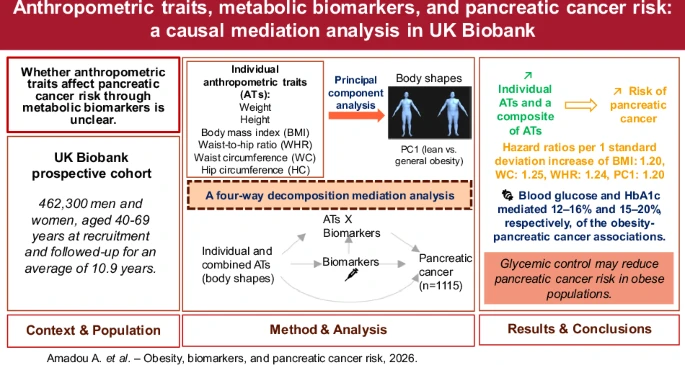
🆕study from IARC & @CLCCLeonBerard provides novel evidence on how excess adiposity may increase risk of #PancreaticCancer.
Study in the @BrJCancer finds higher blood glucose levels explain ~20% of increased pancreatic cancer risk associated with obesity.
https://t.co/ihn0psXfFp
IARC & partners identify blood proteins linked to how #cardiometabolic diseases & #cancer develop together over time.
Findings could help improve early detection & prevention of #multimorbidity.
https://t.co/4g1NRelYE9
Scientific progress depends on more than discovery. This editorial, published in Considerations in Medicine, makes the case for recognising replication, transparency, and methodological rigour as essential components of impactful research. Read it here: https://t.co/OtxEAtII3A
🔥#IARC60 is coming!
⏩Want to bring yourself up-to-speed beforehand?
📰A great place to start would be our article on
Nutritional epidemiology🥦🍔 & cancer aetiology
in the special IARC@60 edition of @JNCI_Now Monographs!
https://t.co/DbU40Cpqxf
Register https://t.co/oX8KiuOYDg
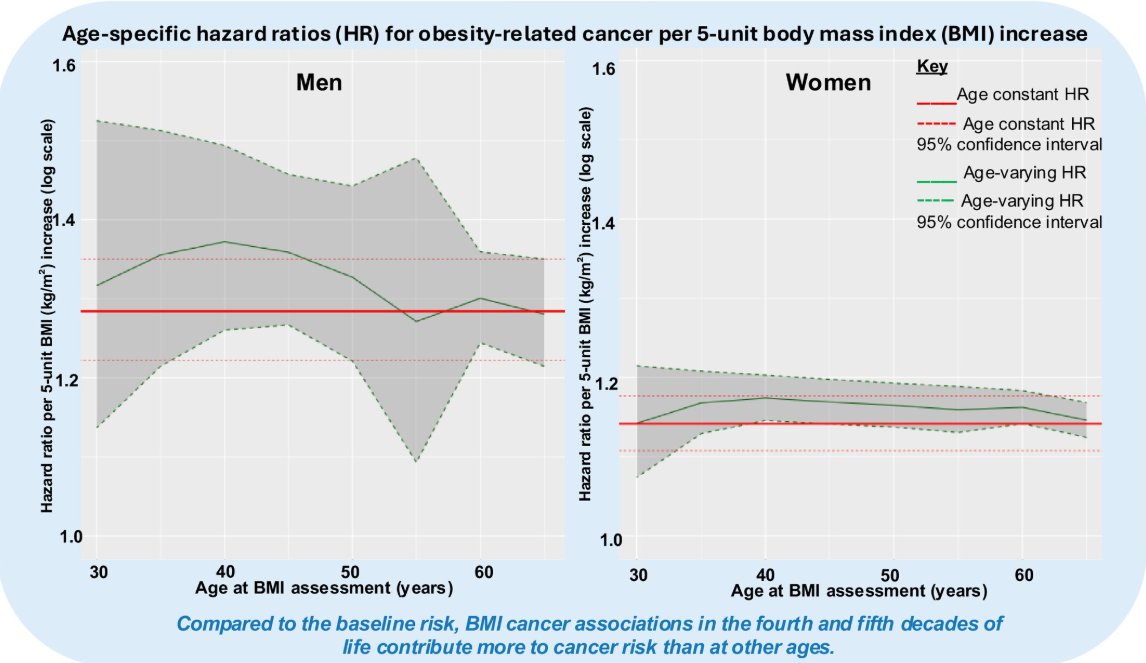
👉Higher BMI raises obesity‑related cancer risk at all ages 30–65.
👉BMI in midlife (40s–50s) may matter most, but excess adiposity anytime in adulthood increases cancer risk.
@NadinHawwash et al #ABAcus#ARIC#EPIC#WHI#PLCO#AARP@IARCWHO
https://t.co/XsDgtTh2Qa
Excess weight by degree and duration and cancer risk: a cohort study and IPD meta-analysis
Adulthood degree and duration of excess BMI were associated with cancer risk. Both factors should be considered in cancer prevention strategies and policies
https://t.co/ilIkbUi84l