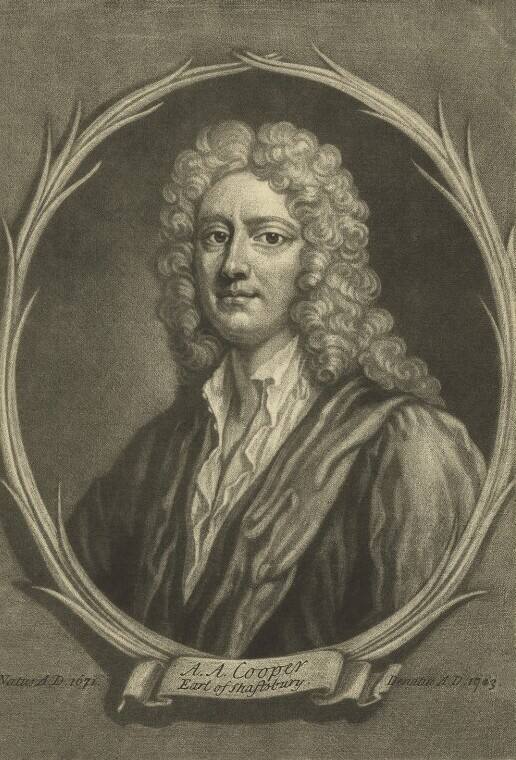
A história intelectual da modernidade europeia tem uns britânicos obscuros que ninguém mais lê hoje em dia como Shaftesbury e os platonistas de Cambridge mas que então influenciaram meio mundo e colocaram em circulação ideias depois atribuídas ao espírito "francês" ou "alemão".
In Western understanding the fruit was an apple, because that is our sacred fruit in the times before Christianity.
In Celtic myth there is Avalon, Emain Abhlach, the magical apples that never diminish, and a god called Abello in Gaul.
Norse myth has Iðunn and the golden apples of immortality that sustain the gods.
The Greeks had the Apples of the Hesperides which grant immortality.
This seems to suggest an Indo-European origin for the divine apple myth.
It was therefore the natural candidate for the forbidden fruit when Christianity spread in the west. It is one of many influences that paganism had on Christianity as it localized in Europe.
"The area of German does not coincide with that of the Germanic. There are other peoples who participate in the Germanic. But wherever German reaches a historical climax, the Germanic element comes through with particular strength. Such highlights include the time of the Saxon, Frankish, and Swabian emperors; the Lutheran Reformation; and the meeting of Bismarck and Nietzsche in the 19th century."
— Alfred Baeumler
Psychoanalyst Carl Jung wrote this article in 1930, and it would have gotten him cancelled and de-personed in 2026.
I recommend you read the whole piece. Linked below.
The Laxdæla saga mentions Skofnung had a lyfsteinn, healing-stone, which would stop bleeding if rubbed on wounds it made.
Migration Period sword beads were often made of quartz, which is naturally piezoelectric, and can stimulate circulation; and with it, speed vascular repair.
Our word ‘arctic’ derives from the Greek word for ‘north’ meaning ‘the bear’s place.’
The Latin word for North, 𝘴𝘦𝘱𝘵𝘦𝘯𝘵𝘳𝘪𝘰𝘯𝘦𝘴, incorporates the number seven, meaning literally ‘seven oxen' which reflects the number of stars in Ursa Major.
Inevitably in a country with an architectural tradition in stone dating back to Urartian times, the craftsmen who so carefully carved blocks of stones for walls, fortresses, and sanctuaries had acquired the skill to sculpt stone as relief decorations for buildings or as independent works of art. Little sculpture has survived, however, from the pre-Christian period because of the excessive zeal of St. Gregory and the newly convert royal court of Armenia in destroying all vestiges associated with earlier pagan religions. The major exception is a series of extremely large carved monolithic stones found in various parts of Armenia and often associated with water sources. They resemble large tailless whales. On them are fish-like designs, but they are know as vishap-k'ar, dragon stones. They date from 2nd-1st millennia BC.
Excavations have uncovered a miscellany of sculptures from the Artaxiad and the Arsacid periods, roughly 2nd Century BC to 4th Century AD. The famous bronze head of Aphrodite, found at Satala near Erzinjan, now in British Museum, or the small female torso in white marble dug up at Armavir, testify to popularity of Hellenistic sculpture in Armenia. Other stone heads, anonymous but no doubt of Armenian nobility, display a static pose far removed from classical style. Nearly a dozen boundary markers of king Artaxias I (Artashes) from early 2nd Century BC have also been uncovered in various areas of Armenia, but these are more important for their Aramaic inscriptions than for their art. Temple of Garni from 1st Century AD offers an enormous repertory of sculpted lion heads, acanthus friezes and geometric and floral reliefs associated with Ionic order of Hellenistic temple architecture.
There is a relative paucity of wooden and ivory sculpture perhaps because these materials were precious commodities in Armenia in historical times; furthermore, stone, especially the easily carved tufa, was very plentiful. The most important piece of ivory carving preserved in Armenia is the binding, with upper and lower plaques, each in five fitted sections, of Etchmiadzin Gospels. These were probably carved in 6th Century in Byzantine workshop and later imported into Armenia. The upper cover shows shows the Virgin with Christ with scenes from her life, including the Presentation of the Magi at the bottom. The lower cover has a beardless Christ in the central panel with scenes from His life.
There are also a number of finely carved ivory bishop's crosiers often with twin dragon heads. Wood was a much more fragile medium than stone or metal and much of what must have been produced has been burned or otherwise destroyed. We know, however, that wood carving was as favored a craft in ancient times as it is today in modern Armenia.
What remains of sculpted or carved wood from medieval Armenia are church doors, capitals used on columns of a 9th Century church, an important carved plaque of the Crucifixion, and a few miscellaneous items including lecterns. Most important carved wooden doors are dated by inscriptions: 1) 1134, double paneled door, Monastery of the Holy Apostles, Mush, now in Erevan, Armenian Historical Museum; 2) 1176, single panel door, Monastery of the Holy Apostles [ 26], Sevan, Erevan, Armenian Historical Museum; 3) 1253, single panel door, Monastery of Tat'ev; 4) 1327, double paneled door, Church of the Nativity, Jerusalem; 5) 1355/6, double paneled door, entrance to Chapel of St. Paul, Armenian Patriarchate, Jerusalem; 6) 1371, double-paneled door, from Armenian church in Crimea, now in the Hermitage, Leningrad; 7) 1486, single panel door, Church of Holy Apostles, Sevan, now in Erevan, Armenian Historical Museum. Borders or frames of all of these are covered with geometric bands or vine scrolls. Those of Mush show mounted warriors at top either fighting or hunting exotic animals; on sides there are rows of animals, too.
📷 : One of doors of 9th Century AD, Sevanavank Monastery Complex, Armenia.
#archaeohistories
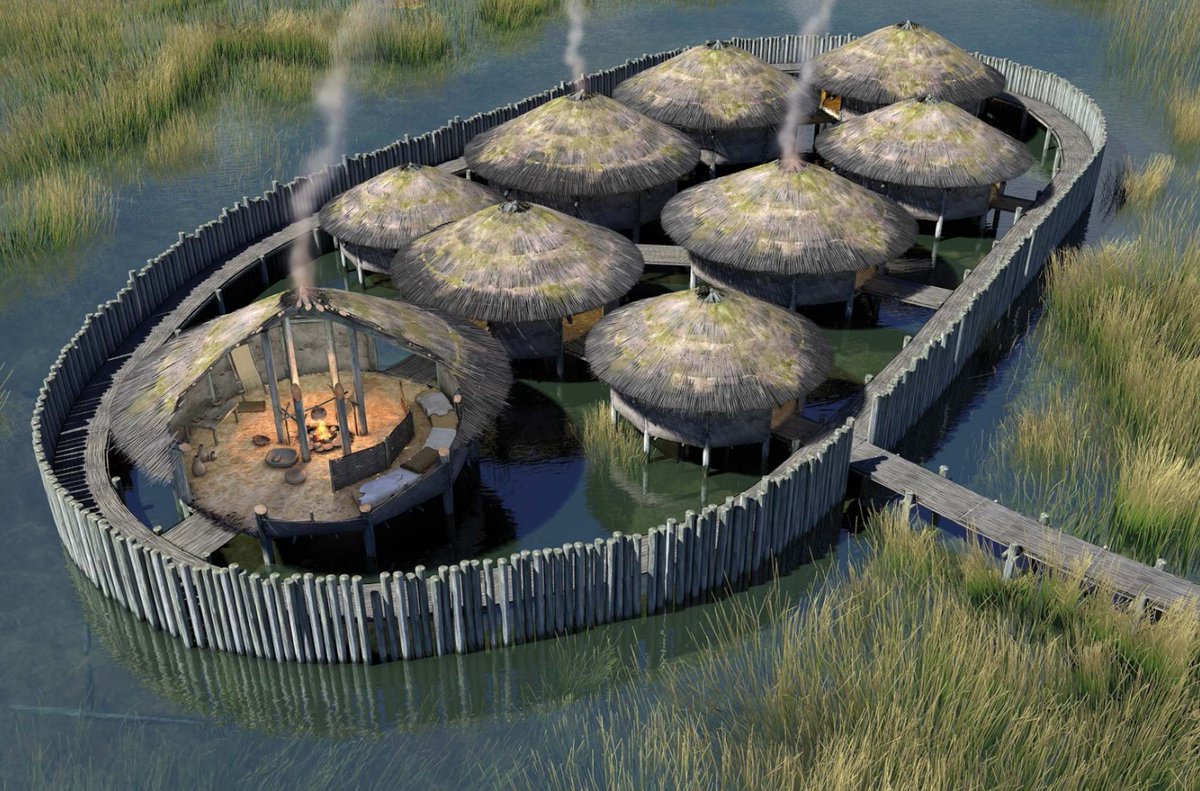
England aka southern Britain also had wetland settlements, man made or modified islands, and pile dwellings.
In fact, these existed throughout Europe from the Neolithic to the Iron Age, most famously in the Alps and the Balkans).
Think of Must Farm in the Fens, Meare Lake Village and Glastonbury Lake Village in the Somerset Levels for example.
Because they're not usually called "crannogs" in England they don't appear on this map of crannogs.
It's likely there were no fewer sites in England than in the rest of Britain, however it is somewhat to do with geography - areas with more lakes have more sites. And the English wetlands where many were sited have been extensively drained for centuries and evidence for these settlements and artificial lakes has likely been obliterated in many cases.
Nevertheless there is extensive evidence for wetland and lakeshore living and modification in England, with artificial islands and pile bridges between dryland islands in wetlands, in tidal estuaries, and rivers from the Neolithic to the Iron Age.
Viking gold spur, only one of its kind known from the Viking Age in Scandinavia, circa 900 AD.
Spurs are attached to boots and used to control horses while riding.
Found in 1887 at Rød farm in Rygge, Norway, during plowing.
Thoughts are real, yet no man has ever seen a thought with his eyes.
A thought has no colour, no mass, no shape, yet it moves armies, raises temples, creates mathematics, and builds empires. Every visible thing begins first within the unseen world of Mind. Speech is only the echo of thought, and matter only its shadow.
You cannot weigh justice, touch memory, or place reason beneath a microscope, yet entire civilisations have risen and fallen through invisible ideas moving within the soul.
The greatest mystery is that the unseen not only exists, but governs all that is seen.
@Kweklos95@Michssspp82096 They are all orion, Shiva with lingam , the cosmic dancer..., phallic Min, Hercules, Cernunnos deer as mrigashira nakshastra, so many. @idjnyx
“In the Hermetic and Platonic tradition, PROMETHEUS is another name for the inner man of light, Phos (which means “light”), as opposed to Epimetheus (the outer man) who is caught by fate and trapped in the material world. Our purpose in both the Hermetic and the Platonic tradition is to ascend to the higher dimensions of consciousness beyond fate, “without the use of any other aid, save the observation of the appropriate moment” (καιρός kairos).This ascent culminates in the realization of the anthropos, that is, the man of light who as above fate and beyond entrapment in the material world and its attachments and aversions. This man of light is what the Orphic Hymns refer to in the lines ““I am a child of earth and of starry heaven, but my race is of heaven.” The “race,” here, is the race of light. Hence once again we find twins: earthly man below, and the man of light above.”
ARTHUR VERSLUIS
Entering the Mysteries
Art: Carl Bloch, Prometheus Unbound, 1864
Europeans are indigenous to Europe because they descend from four different populations of Hunter-Gatherers, all of which inhabited Europe during the stone age.
1. Western Hunter-Gatherers (WHG) - a genetic profile that emerged in Western Europe 15,000 years ago but which has its roots in Europe's earlier ice age populations, mainly the Epigravettian culture which emerged in South Eastern Europe 21,000 years ago, coming out of earlier Gravettian culture people which formed some 33,000 years ago.
2. Eastern Hunter-Gatherers (EHG) who formed a genetic cluster in Eastern Europe 13,000–15,000 years ago. They descended mainly from Ancient North Eurasians from Siberia who themselves descended from Upper Paleolithic Europeans of 40,000 years ago.
3. Anatolian Hunter Gatherers who learned to farm and began to colonise Europe 8000 years ago mixing with the WHG.
4. Caucasian Hunter Gatherers who first came down from the mountains to mix with EHG in South Russia some 8000 years ago, but did so again in the Eneolithic.
With such astonishing continuity and undeniably deep roots, anyone denying our indigenous status is both morally and intellectually bankrupt and should be publicly shamed.
fun fact for schizos (like me)
tooth formation begins at the 7th week in utero
baby teeth erupt at the 7th month
permanent teeth emerge at 7 years
coincidence?
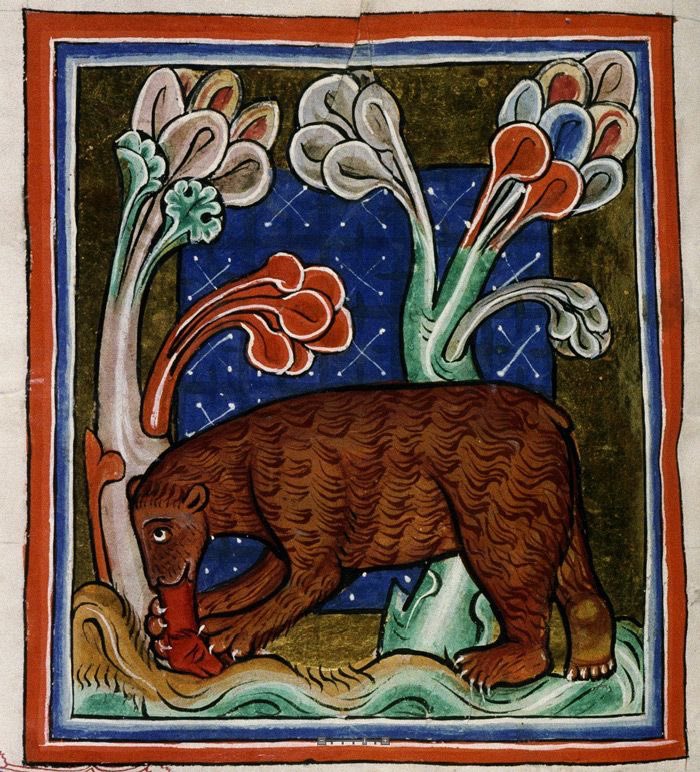
In ancient European folklore, the bear was said to give birth to shapeless lumps of flesh which she would lick into shape. This was integrated into medieval Christian folklore as a metaphor for God creating mankind in his own image.












![archeohistories's tweet photo. Inevitably in a country with an architectural tradition in stone dating back to Urartian times, the craftsmen who so carefully carved blocks of stones for walls, fortresses, and sanctuaries had acquired the skill to sculpt stone as relief decorations for buildings or as independent works of art. Little sculpture has survived, however, from the pre-Christian period because of the excessive zeal of St. Gregory and the newly convert royal court of Armenia in destroying all vestiges associated with earlier pagan religions. The major exception is a series of extremely large carved monolithic stones found in various parts of Armenia and often associated with water sources. They resemble large tailless whales. On them are fish-like designs, but they are know as vishap-k'ar, dragon stones. They date from 2nd-1st millennia BC.
Excavations have uncovered a miscellany of sculptures from the Artaxiad and the Arsacid periods, roughly 2nd Century BC to 4th Century AD. The famous bronze head of Aphrodite, found at Satala near Erzinjan, now in British Museum, or the small female torso in white marble dug up at Armavir, testify to popularity of Hellenistic sculpture in Armenia. Other stone heads, anonymous but no doubt of Armenian nobility, display a static pose far removed from classical style. Nearly a dozen boundary markers of king Artaxias I (Artashes) from early 2nd Century BC have also been uncovered in various areas of Armenia, but these are more important for their Aramaic inscriptions than for their art. Temple of Garni from 1st Century AD offers an enormous repertory of sculpted lion heads, acanthus friezes and geometric and floral reliefs associated with Ionic order of Hellenistic temple architecture.
There is a relative paucity of wooden and ivory sculpture perhaps because these materials were precious commodities in Armenia in historical times; furthermore, stone, especially the easily carved tufa, was very plentiful. The most important piece of ivory carving preserved in Armenia is the binding, with upper and lower plaques, each in five fitted sections, of Etchmiadzin Gospels. These were probably carved in 6th Century in Byzantine workshop and later imported into Armenia. The upper cover shows shows the Virgin with Christ with scenes from her life, including the Presentation of the Magi at the bottom. The lower cover has a beardless Christ in the central panel with scenes from His life.
There are also a number of finely carved ivory bishop's crosiers often with twin dragon heads. Wood was a much more fragile medium than stone or metal and much of what must have been produced has been burned or otherwise destroyed. We know, however, that wood carving was as favored a craft in ancient times as it is today in modern Armenia.
What remains of sculpted or carved wood from medieval Armenia are church doors, capitals used on columns of a 9th Century church, an important carved plaque of the Crucifixion, and a few miscellaneous items including lecterns. Most important carved wooden doors are dated by inscriptions: 1) 1134, double paneled door, Monastery of the Holy Apostles, Mush, now in Erevan, Armenian Historical Museum; 2) 1176, single panel door, Monastery of the Holy Apostles [ 26], Sevan, Erevan, Armenian Historical Museum; 3) 1253, single panel door, Monastery of Tat'ev; 4) 1327, double paneled door, Church of the Nativity, Jerusalem; 5) 1355/6, double paneled door, entrance to Chapel of St. Paul, Armenian Patriarchate, Jerusalem; 6) 1371, double-paneled door, from Armenian church in Crimea, now in the Hermitage, Leningrad; 7) 1486, single panel door, Church of Holy Apostles, Sevan, now in Erevan, Armenian Historical Museum. Borders or frames of all of these are covered with geometric bands or vine scrolls. Those of Mush show mounted warriors at top either fighting or hunting exotic animals; on sides there are rows of animals, too.
📷 : One of doors of 9th Century AD, Sevanavank Monastery Complex, Armenia.
#archaeohistories](https://pbs.twimg.com/media/HHo2ki3asAAsaWX.jpg)