What people aren’t realizing about the rescinded red card is that the issue isn’t whether it was the right call or not. It’s that Trump is seen as having called in a favor. Whatever the outcome, FIFA’s reputation has been tarnished, and the U.S. team will be viewed by many as cheaters.
When adults are thrown out of pee wee football games for acting like fools, I’m never mad at the players or the coaches or the refs. I’m angry at the adults who couldn’t control themselves and ruined a good time. This tweet is about FIFA
@cmclymer I don’t think he deserved the red card. But the president should have NEVER intervened and then bragged about it. That’s what I’m pissed about. Not at him (I think this will hurt him) or the coaches or even the ref. It looks shady AF.
I hope the US players and coaches decide to play the game as if the red card is still imposed. I hope the US coach has already called Belgium and told them that. I hope this corruption is nullified by sportsmanship.
Everything, EVERYTHING he touches dies.
@cornycharles@electionsjoe And Jay Rockefeller - yes, THOSE Rockefeller’s. Don’t get me started on the democratic history of WV, the Tea Party of the early 2000’s, and the abandonment by the DNC.
“Billionaires already pay more taxes than you ever will” is one of the most financially illiterate arguments on this app because it confuses nominal dollars with effective burden.
A billionaire paying $500M in taxes sounds enormous until you remember they gained $20B in asset value while doing it. The relevant metric is percentage, not raw dollars. A teacher paying 22% of a $60k salary is carrying a heavier proportional burden than someone paying 8% while their wealth compounds tax-deferred through stock appreciation.
And this “their money was already taxed” line is mostly fiction at billionaire scale.
Middle-class wealth is usually income that got taxed, then saved. Billionaire wealth is overwhelmingly unrealized appreciation. Tesla stock going vertical did not mean Elon “earned” $100B in taxable salary. The shares appreciated. Under current law, that appreciation can sit untaxed for decades, get borrowed against for liquidity, then receive stepped-up basis treatment at death that can erase the embedded gains entirely.
That is not “double taxation.” In many cases it is functionally zero taxation on the primary mechanism of wealth accumulation.
People also weirdly talk about billionaires like they emerged from the forest carrying capitalism on their backs with no public inputs involved.
Their companies rely on:
public roads
public courts
public contract enforcement
public utilities
public universities
public research grants
public internet infrastructure
public IP law
public military-protected trade routes
public education systems producing labor
The modern corporation is not built in isolation. It operates inside an enormous state-supported framework.
And no, asking whether someone should contribute proportionally to maintaining the system that enabled $100B fortunes is not “greed.” That framing is emotional theater designed to avoid discussing the actual structure of tax law.
The real debate is simple:
Should labor income be taxed continuously while massive asset appreciation can compound largely untouched for generations?
That’s the argument. Everything else is distraction.
@omgsidewalks Wash clothes in this order - anything that’s hard to sort or fold 1st (Tshirts, socks). You’re not going to have that energy by load 4. Wash towels last - you’ll be excited that you only have like 6 things to fold.
@RepMcClellan As one of your constituents, head back to DC regardless of what Johnson does. Stand on the steps of the Capital. Don’t waste time waiting for the phone call. Remove the madman
Opposing war isn’t siding with Iran. It’s siding with human life.
Caring about the lives of soldiers and innocent civilians doesn’t make you loyal to another nation…it’s refusing to treat war like the first solution.
Peace isn’t treason.
Dear @AGPamBondi and @DAGToddBlanche:
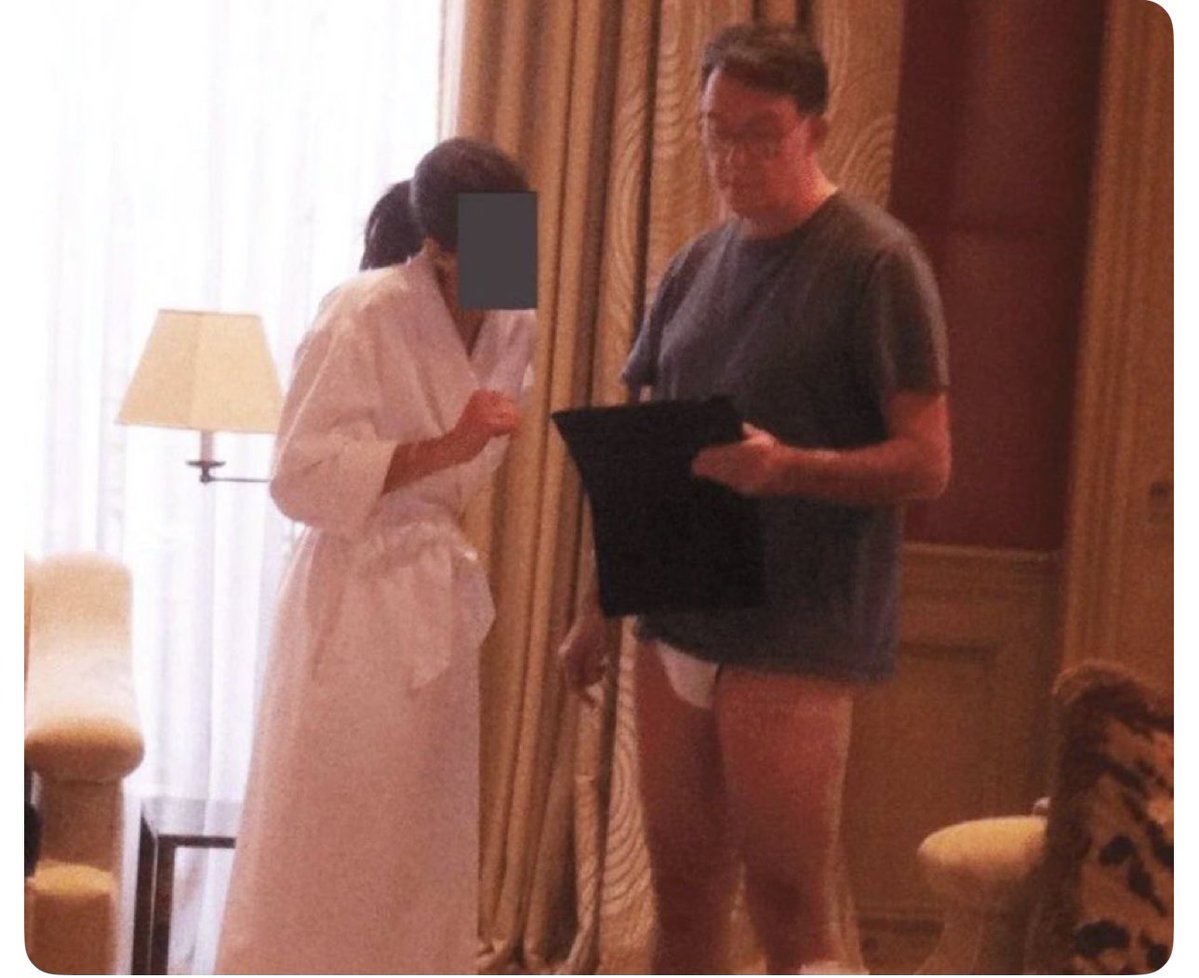
Under the Epstein Files Transparency Act, you can only redact if the person is a “victim.” You redacted this photo, which means diplomat Peter Mandelson is standing next to a victim with his pants down.
Why haven’t you prosecuted him?
This video should unsettle anyone who takes the United States seriously as a nation.
Because it exposes something dangerous: the trivialization of the world's most consequential office. It shows how carelessly the power, credibility, and accumulated moral authority of a superpower can be squandered for a few seconds of viral attention.
In any other major democracy, this behavior from a head of state would trigger a constitutional crisis. Paris would burn. Berlin would convene emergency sessions. In the Nordic countries, resignation would follow within hours. Across functioning democracies, the public, institutions, and political class would recognize this for what it is: an assault on the dignity of the state itself. Leaders are not free to perform as entertainers without consequence. National honor is not personal property, it's held in trust.
But the United States is not just another country with a provocateur in charge. It is the linchpin of global order. It maintains formal alliances and security guarantees with forty to fifty nations. It underwrites the financial architecture, trade systems, and diplomatic frameworks that billions of people depend on daily. When the American president speaks—or posts—it doesn't land as satire, meme, or personal whim. It reads as a signal about what the country is becoming.
American power has never relied solely on carrier strike groups or economic output. It has rested on something more fragile and more valuable: trust. The belief that beneath domestic turbulence lies institutional seriousness, predictability, and a baseline commitment to dignity. That belief is now disintegrating in real time.
Millions of American companies operate globally. They negotiate multibillion-dollar contracts in environments where reputation is currency. Boardrooms in Frankfurt, Singapore, and Dubai aren't debating whether a post was clever—they're asking whether the United States remains a reliable partner. Whether agreements signed today will be honored tomorrow. Whether American leadership has devolved from institutional to purely theatrical.
Consider tourism, which sustains millions of American jobs—airlines, hotels, restaurants, museums, entire regional economies. Soft power isn't an abstraction. It materializes in flight bookings, conference locations, study-abroad programs, and decades of accumulated goodwill. A quiet, decentralized boycott doesn't require government action—only a collective sense that a nation no longer respects itself.
Now picture this image being studied by foreign ministers, central bank governors, defense strategists, and sovereign wealth fund managers. Picture them asking a coldly rational question: How do we write binding thirty-year agreements with a country whose public face will be this, relentlessly, for years to come? How do we plan for the long term when the tone is impulsive, mocking, and unbound by the gravity of office?
This is where the real calculus begins. Trillions in foreign capital depend on confidence that America is stable, credible, and rule-governed. That confidence is now being traded for what, exactly? Applause from an online mob? A dopamine rush from manufactured outrage? Content designed to dominate the news cycle rather than serve the national interest?
Every serious nation eventually confronts this choice: burn long-term credibility for short-term spectacle, or safeguard the reputation previous generations bled to build. The United States spent eighty years constructing an image of reliability, restraint, and leadership under pressure. That image wasn't born from perfection—it came from a visible commitment to standards that transcended impulse.
This isn't a partisan issue. Europeans who value democratic norms recognize something ominously familiar here. Americans—Democrat and Republican alike—who believe in responsibility and restraint should see it too. Power attracts scrutiny. Leadership demands discipline. A superpower cannot behave like a reality TV contestant without paying a price.
The presidency is not a personal broadcast channel. It's a symbol carried on behalf of 330 million people and countless international partners who never voted but whose lives are shaped by American decisions anyway. Every post either reinforces or erodes the idea that America can be counted on when it matters most.
So the question is no longer whether this is offensive. The question is whether this is who America chooses to be: a nation that trades a century of hard-won reputation for viral moments. A country that replaces statecraft with content creation. A republic governed like a season of reality television.
History offers a harsh lesson here. Great powers don't fall because enemies mock them. They collapse when they begin mocking themselves—publicly, proudly, and without grasping the cost until it's far too late.
Stay connected,
Follow Gandalv @Microinteracti1
"You bring a gun into DC, mark my words you're going to jail. I don't care if you have a license in another district and I don't care if you are a law-abiding gun owners somewhere else. "
Any word yet from 2A-defending Republicans? If there's even any left at this point...
We hope the good people of #SanFrancisco will forgive us for adapting a song about their city in 1967 to address the shocking and tragic events in #Minnesota in recent weeks. This is dedicated to Renée Good and Alex Pretti, and in solidarity. Our version is called "Minnesota" ❤️