Hashem Pesaran is the John Elliott Distinguished Chair in Economics at USC, Emeritus Prof. of Economics at Cambridge University, and Fellow of Trinity College.
NEW WP by @HPesaran & Y. Xie: Robust inference with binary treatments requires enough treated and untreated clusters. We offer theoretical insights & practical guidance to correct inference when treated or untreated clusters are few.
➡️https://t.co/HTfLNokWvJ #econtwitter
Iran's economy faces a pivotal moment. New research examines the impact of war and 47 years of sanctions which has produced a siege economy with currency crises and persistent and high inflation.
Professor Pesaran’s new WP examines what could happen next: https://t.co/XDDiXjSkuc
Economic sanctions and embargo are effective as prelude to wars. Israel and US attacks on Iran provide further evidence that sanctions as political tools do not succeed and often lead to wars. Negotiations accompanied by trust and mutual respects are the only way forward.
We show that mean-variance portfolio need not be efficient when risk premia of a traded risk factor differs from the factor’s mean. See my recent paper with Ron Smith published last week:
https://t.co/UfTebOuxXL
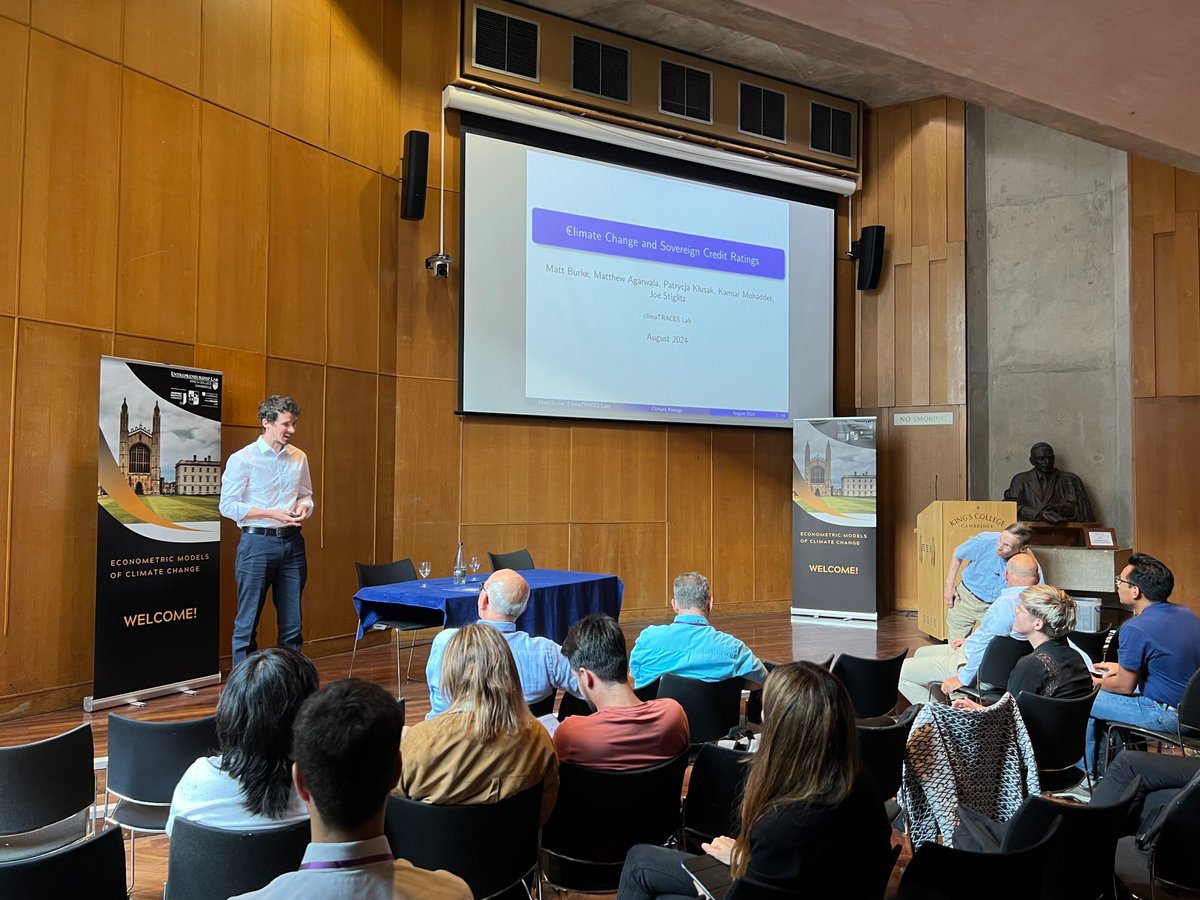
The very last presentation of our three day EMCC-VIII conference is by my brilliant co-author @matt_burke1 on #ClimateChange & Sovereign #Credit Ratings.
In our latest work with Matt, @JosephEStiglitz (@Columbia) @MatthewAgarwala (@BennettInnovate) & @PatrycjaKlusak (@HeriotWattUni) we link #climate science with sovereign #risk assessment to produce a single measure of country-level climate change risk.
More specifically, we integrate climate change scenarios from integrated assessment models with an analysis of sovereign creditworthiness to simulate the impact of climate risks on credit ratings, cost of debt and probability of default. In our sample of 48 countries, a Fragmented World scenario yields an average downgrade of 2.5 notches, a mean increase in the cost of debt of 61 basis points and an increase in the probability of default of 4.7%, by 2050.
Stay tuned for the working paper which will be out at the end of this month!
The Econometric Models of Climate Change (EMCC) VIII Conference, is taking place at @Kings_College, and is organised by @Cambridge_Uni #climaTRACES Lab in collaboration with @janewayinst, the @KingsELab, and the Cambridge Endowment for Research in Finance (CERF) at the @CambridgeJBS.
@Gates_Cambridge | @CRASSHlive | @CamEcon | @BennettInst
Cutting investment in infrastructure is not the best way to reduce UK debt-output ratio. We find debt-output ratio to be much more responsive to fiscal shocks as compared to technology/investment shocks.
https://t.co/k2ZrWHQBBK
There is a lot of talk this weekend about the impact of #Brexit on the UK economy. The process not only damaged us directly but most probably exacerbated the impact of #Covid and #energyprice shocks.
@NIESRorg analysis from Nov 2023:
🎩 @NiGEMmodel
https://t.co/LjFyiWHof7
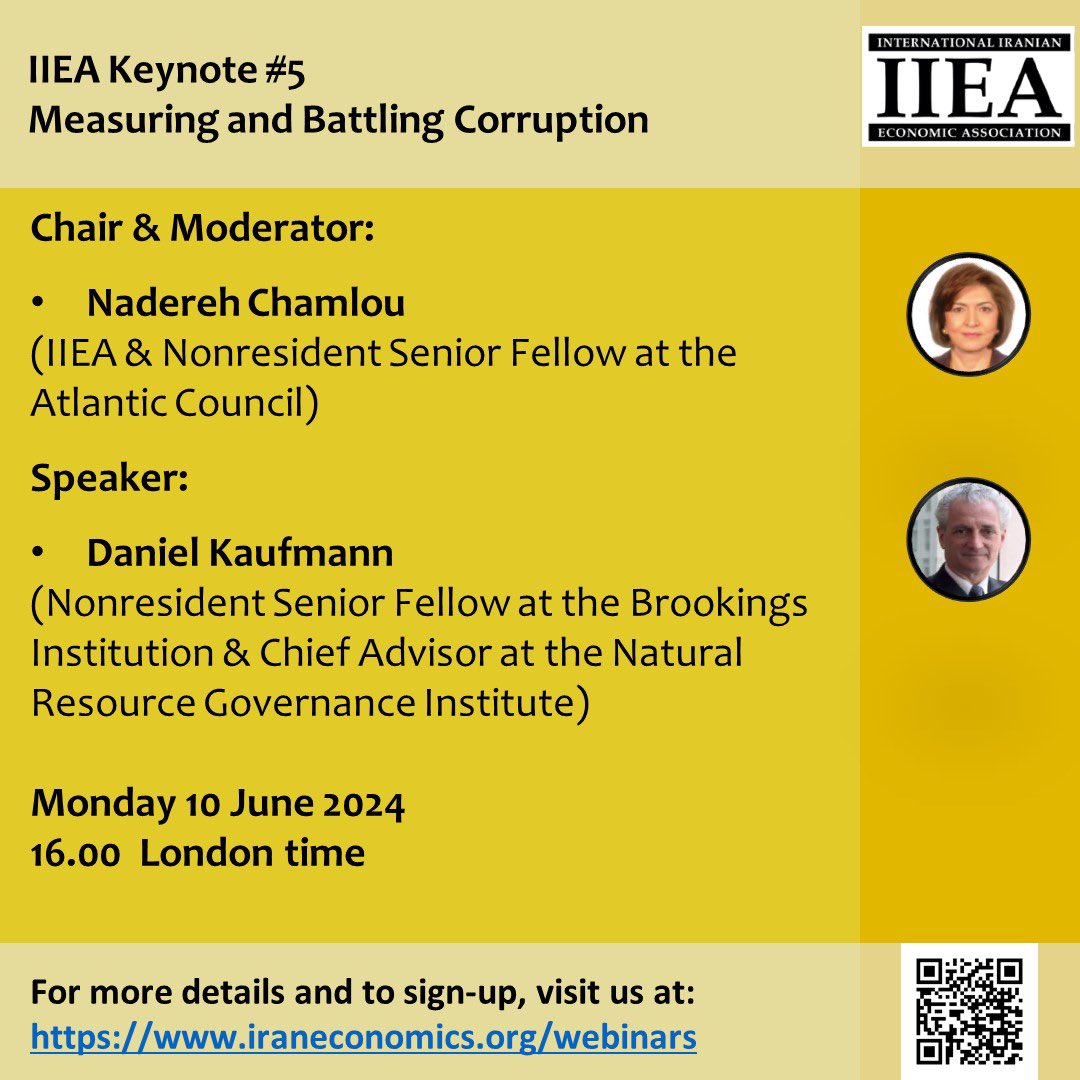
Our next monthly International #Iranian Economic Association Webinar is on Measuring and Battling #Corruption with Daniel Kaufmann (@kaufpost, Nonresident Senior Fellow @BrookingsInst & Chief Advisor @NRGInstitute) and Nadereh Chamlou (@nchamlou, IIEA & Nonresident Senior Fellow @AtlanticCouncil).
Join us on Monday 10th of June at 16.00 UK time: https://t.co/YjBIMPw23y
NOTE: this is happening on Monday as opposed to the usual Wednesday #IIEAWebinar.
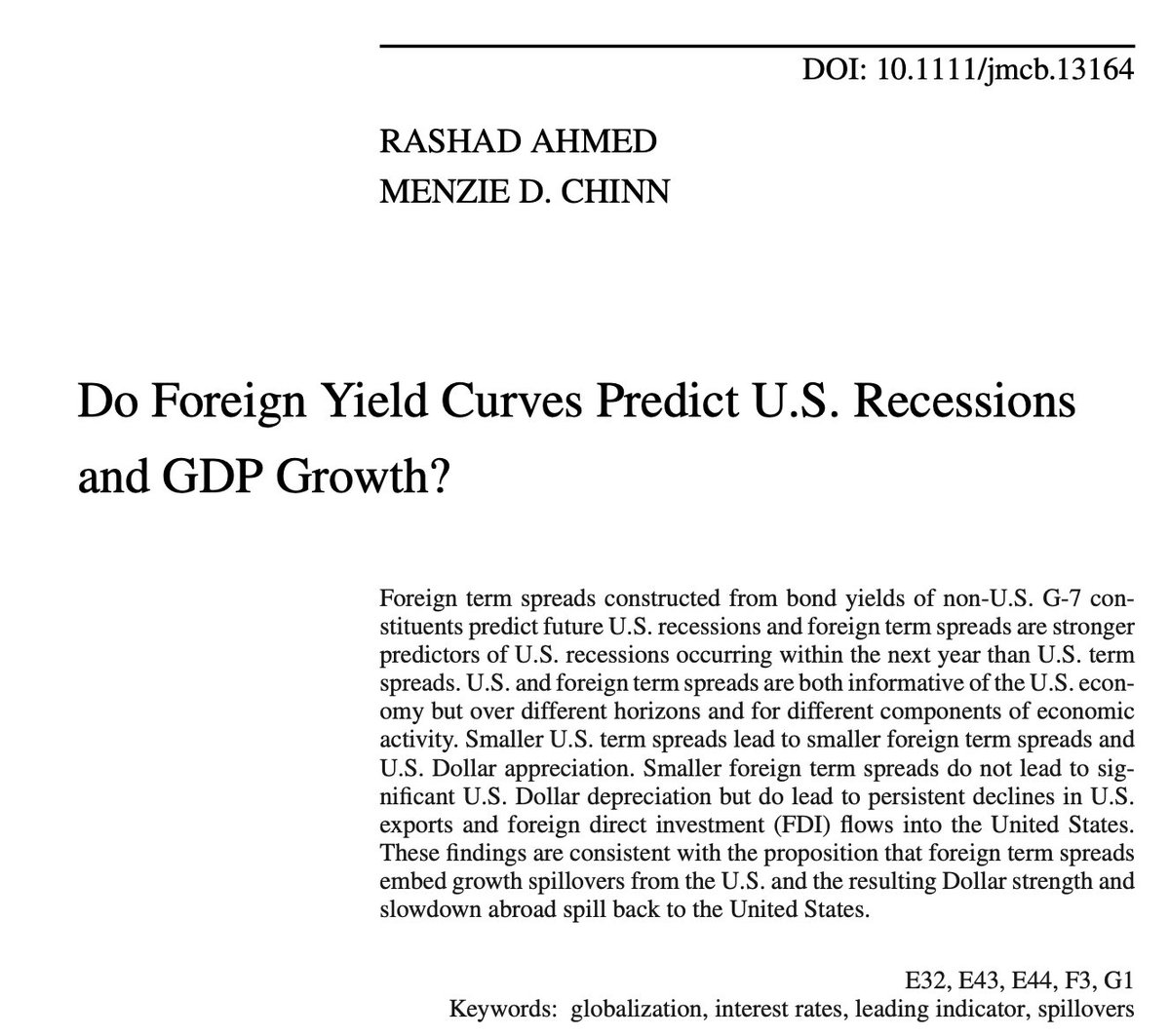
Our paper (@menzie_chinn) showing that foreign yield curves contain information about future US economic activity is officially out in the Journal of Money, Credit and Banking!
link: https://t.co/w8Il42M37d
WP version: https://t.co/7gvISBiUT9
In a paper just released
paper: https://t.co/A6ip19LwXW
code/data: https://t.co/nbMFTDuydH
we propose a new estimator for autoregressive panel data models with individual-specific effects and heterogeneous autoregressive coefficients that allow for unit roots. #EconTwitter
It was a pleasure to present my paper (with Ron Smith) on high-dimensional multi-step ahead forecasting discussing Lasso and OCMT at CalPoly, and meet Cyrus Ramezani, Hamed Ghoddusi, Mahdi Rastad and many others. Enjoyed the discussion and the amazing location. #EconTwitter
Data and codes available for the paper wit Timmermann & Pick on the trade off between estimation uncertainity and parameter heterogeneity in panel forecasting with large number of units and a short T. A combination forecast is proposed. #EconTwitter
https://t.co/N8MigrJfAR