National Institute of Economic and Social Research
@NIESRorg
All the latest from NIESR, Britain's longest established independent research institute. For our Review, follow @NIESRreview.
Find us on BlueSky @niesrorg
How worried is the MPC about the risk of ‘sticky’ inflation?
Following this week’s decision by the Bank of England to raise Bank Rate to 4 per cent, our latest blog from David Aikman and @JamesSmithNIESR digs into the November Monetary Policy Report to examine what it reveals about the MPC's stance on 'sticky' inflation.
https://t.co/AGi2P7l5Td
The Bank of England today raised interest rates by 25 basis points to 4%, its first increase in more than three years. Whilst the move is a necessary step in response to renewed inflationary pressures, it's our assessment that it still leaves them behind the curve.
Next week we'll be releasing our latest Economic Outlook, which will discuss this and other issues affecting the UK economy, in more depth.
Will the MPC raise interest rates tomorrow? Our Monetary Policy Dashboard suggests the case for a shift is mounting and we expect there to be a rise in Bank Rate by 25 basis points to 4.00%.
However, will this be enough to contain second-round effects and anchor expectations? Our Autumn Economic Outlook, released next week, will explore this question in more depth.
Explore the dashboard here: https://t.co/uXiOcsVFHT
How is the UK’s deficit reduction plan (actually) likely to proceed? In his blog this week David uses historic records of borrowing forecasts against out-turns to assess how fiscal plans are likely to be revised:
https://t.co/WQHmWpzbzf
Our response to today's Budget.
This was a Budget designed to buy some breathing space, but it is also a Budget that is betting on future good fortune. Deferring major fiscal decisions until the 2027 Spending Review is not a credible fiscal strategy.
https://t.co/DKYGSXpOcN
Our comment on today's #Budget: a missed opportunity to put the public finances on a stable footing. Debt ends the forecast higher than today, on plans for belt-tightening that are unlikely to be delivered.
What is the biggest macroeconomic challenge facing the Chancellor today? What is the essay question? Senior Economist, Peter Dixon, speaking to @_tom_nunan_ this morning on @TimesRadio
The CfM-NIESR survey from April also explored this question (https://t.co/pop7WxXzI4) with panel members concluding that war-bonds was not the solution.
It is widely anticipated that the Chancellor will use the Budget on Wednesday to set out the government's path to fully funding their existing defence commitments. Our earlier blog https://t.co/dic3j4izx2 explores the economics of how this should be financed.
What is the minimum credibility test for next week's Autumn Budget? Our latest blog considers whether a quiet Budget that expands borrowing is the right macroeconomic call. It asks, assuming that this happens, what the minimum credibility test would be?
https://t.co/uoHBUT0UsV
Latest #inflation analysis by @Econdixon warns that headline inflation could push past the 5% mark as persistent pressures take their toll, particularly energy and global supply shocks.
Read the #blog here⤵️
https://t.co/KiCXiiGz7d
The latest #CPI Tracker has just been published and suggests another #CostOfLivingCrisis might be around the corner⚡️
Tensions in the Middle East push oil prices up near its five-month high, gas prices to their highest level since 2022 and diesel prices to surpass £2 per litre for the first time.
This will likely keep #inflation higher for longer, passing through to supply chains, food prices and household energy bills.
Read more here⤵️
https://t.co/v1RufNuWat
⚡️Chancellor's #Budget Dilemma: High Borrowing Costs Restrict Household Relief As Inflation Surges⚡️
Our reaction to the latest #inflation figures is out now⤵️
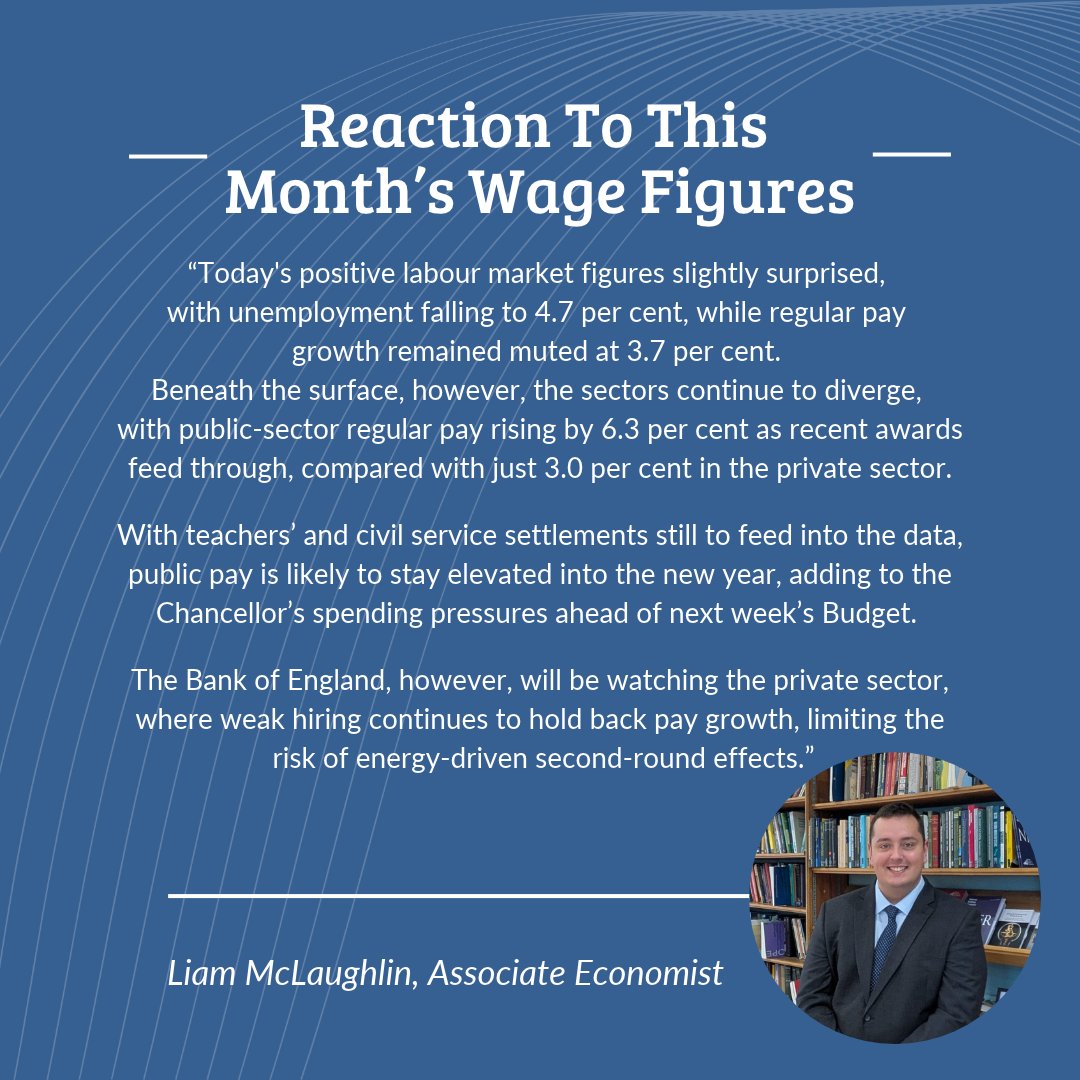
UK Labour Market Defies Expectations Ahead of the #Budget ⚡️ Today's figures surprised positively many, although beneath the surface the picture is more complex.
Our wage tracker suggests the #Chancellor faces the risk that the public-sector pay bill rises faster than planned, just as he prepares next week’s Budget.
Read more here⤵️
https://t.co/Vr10KmjHjE
In the latest #inflation blog by @Econdixon with Jane Binner, Jon Tepper and Barry Jones, the MRN forecast approach gets refined, with Bank Rate forecast alongside CPI for the first time.
Read here how they analyse the return of the #energy shock ⤵️
https://t.co/HysPOGmEd5
Our latest Discussion Paper uses #NiGEM to model how different contractionary fiscal policies can ripple through the economy. It quantifies UK fiscal multipliers and examines how factors like policy instruments, economic expectations, and monetary reactions change the outcome.
https://t.co/sQkwZU1bQU
How do decisions made in the UK #Budget impact Scotland, Wales, and Northern Ireland?
In the latest NIESR #Budget2026 explainers, Economist Liam McLaughlin looks at the complex web of block grants, funding adjustments, and what fiscal changes mean for devolved public services.
Read here in full⤵️
https://t.co/k5VAIsroW4
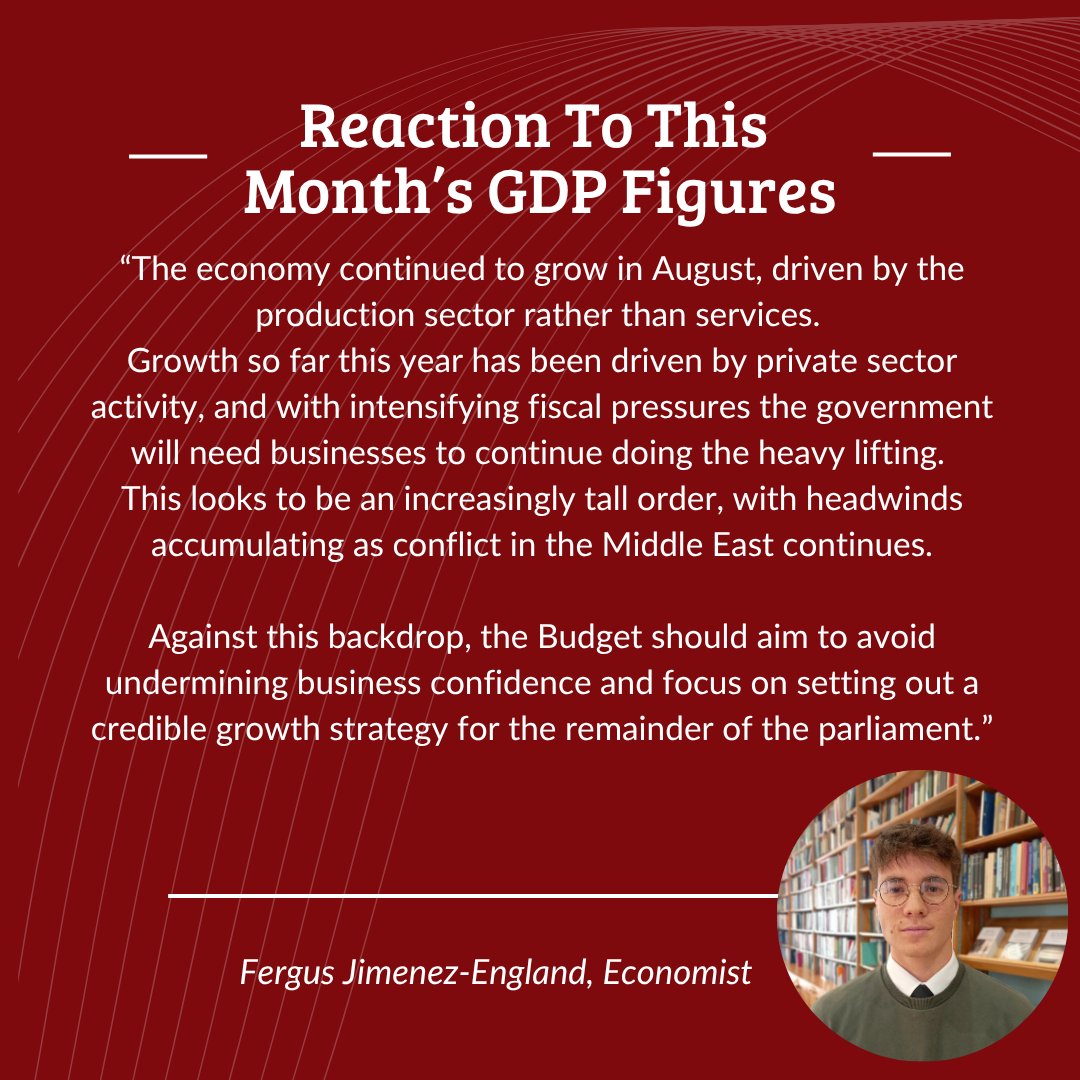
The latest NIESR #GDP Tracker suggests that, despite today's relatively good news in the data and a strong third quarter, the economy will slow in the final quarter of the year, with growth of around 0.2% 📊
Read more here⤵️
https://t.co/CFiHdVd5Du