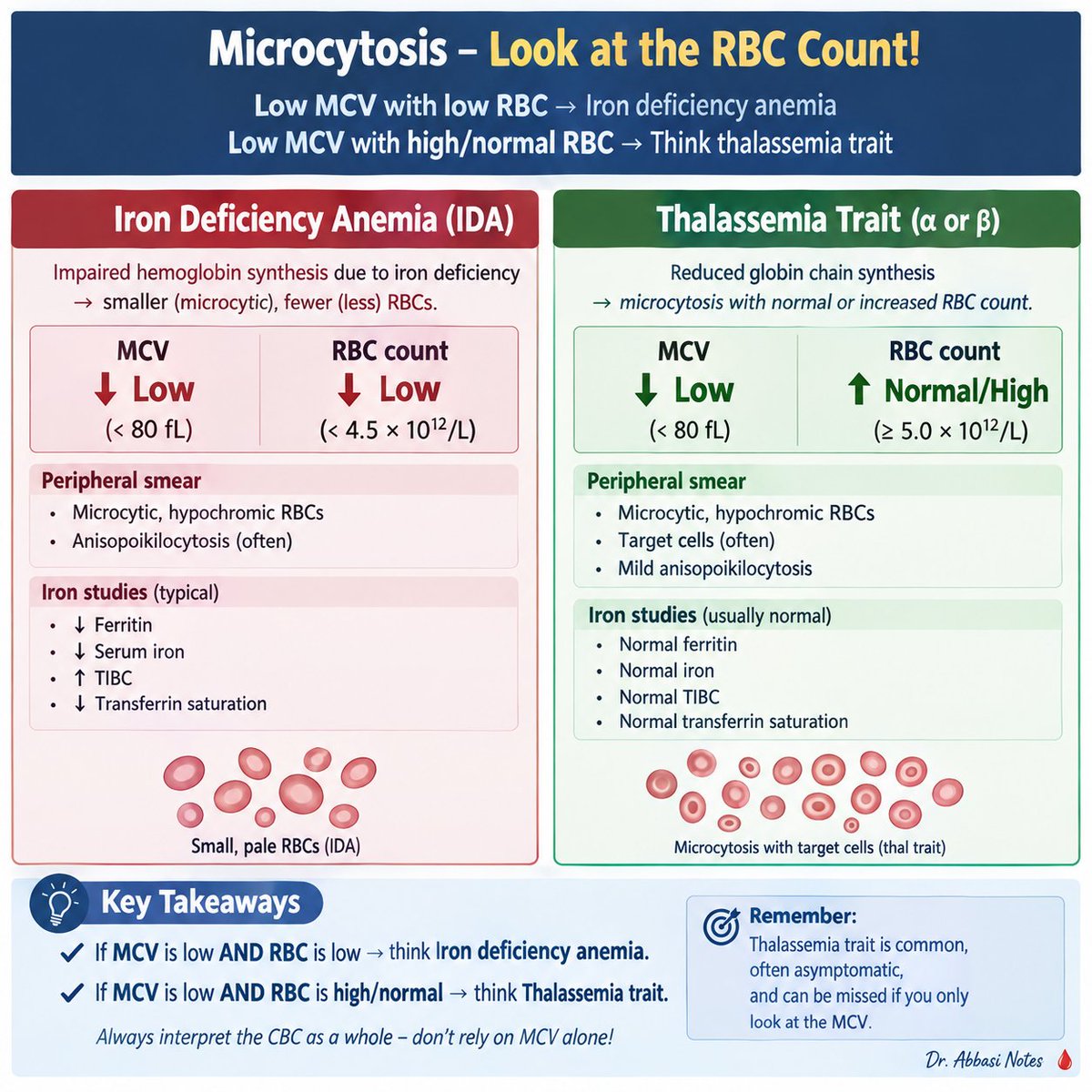
I cannot stress more on this one single image. Every physician should emboss in their mind. You ll pick a lot of undiagnosed thal minors.
#x#medx#thal#cbc#ida
No es la primera vez que vemos como el sistema inmune se chinga a un tumor.
En radioterapia han documentado cosas como el efecto abscopal, irradian un tumor y “mágicamente” existe regresión de otro tumor a distancia. Es raro, pero ocurre.
La cosa es así,
La radioterapia no solo destruye células dentro del campo irradiado. También puede convertir ese tumor en una especie de alarma inmunológica:
Radiación → muerte tumoral → liberación de antígenos → activación de células dendríticas → expansión de linfocitos T → ataque de lesiones fuera del campo de radiación.
Eso hace que, en casos excepcionales, el sistema inmune recibe el mensaje en todo el cuerpo. Y aquí está lo interesante: probablemente el tumor irradiado no es solo la víctima. Puede convertirse en el lugar donde se inicia la respuesta contra los demás.
Raro, impredecible y difícil de reproducir clínicamente. Pero muestra como el sistema inmune es capaz de hacer cosas increíbles.
Simplemente no hay evidencia para prescribir espironolactona en personas en diálisis, aquí los ensayos clínicos que no demostraron beneficio:
•SPin-D❌
•MiREnDa❌
Y con más detalle👇🏻
•ALCHEMIST ❌
•ACHIEVE ❌
AJKD 2026
10.1053/j.ajkd.2026.04.020
Efectos de fumar marihuana a en el cuerpo.
Si le gusta hágale, los internistas, neumólogos, cardiólogos y psiquiatras tendrán más pacientes. Pero no endiose eso.
Disfunción en Cateter de Hemodiálisis 🫤
✔️Causa importante de tratamientos sub-optimos y problema común en unidades de HD
✔️Temprana < 7 dias luego de inserción
✔️Tardía > 1 semana luego inserción
✔️Causas 👀👇🏼
Lazarus et al. JASN. 2025
#NephX#MedEd#MedTwitter
@SirD___ Salbutamol induced lactic acidosis.
High dose β₂ stimulation increases glycolysis and lipolysis, driving more pyruvate toward lactate production. The resulting lactate can mimic worsening sepsis, while tachycardia and tremor are typical β₂ agonist effects.
Si el azucar se baja, lo primero que aparecen son sintomas neurogenos (ansiedad, palpitaciones diaforesis, etc). Luego de esto vienen los neuroglicopenicos usualmente con valores de 40s o menos, aqui hay mas debilidad, confusion somnolencia, diastria, stroke mimic, etc
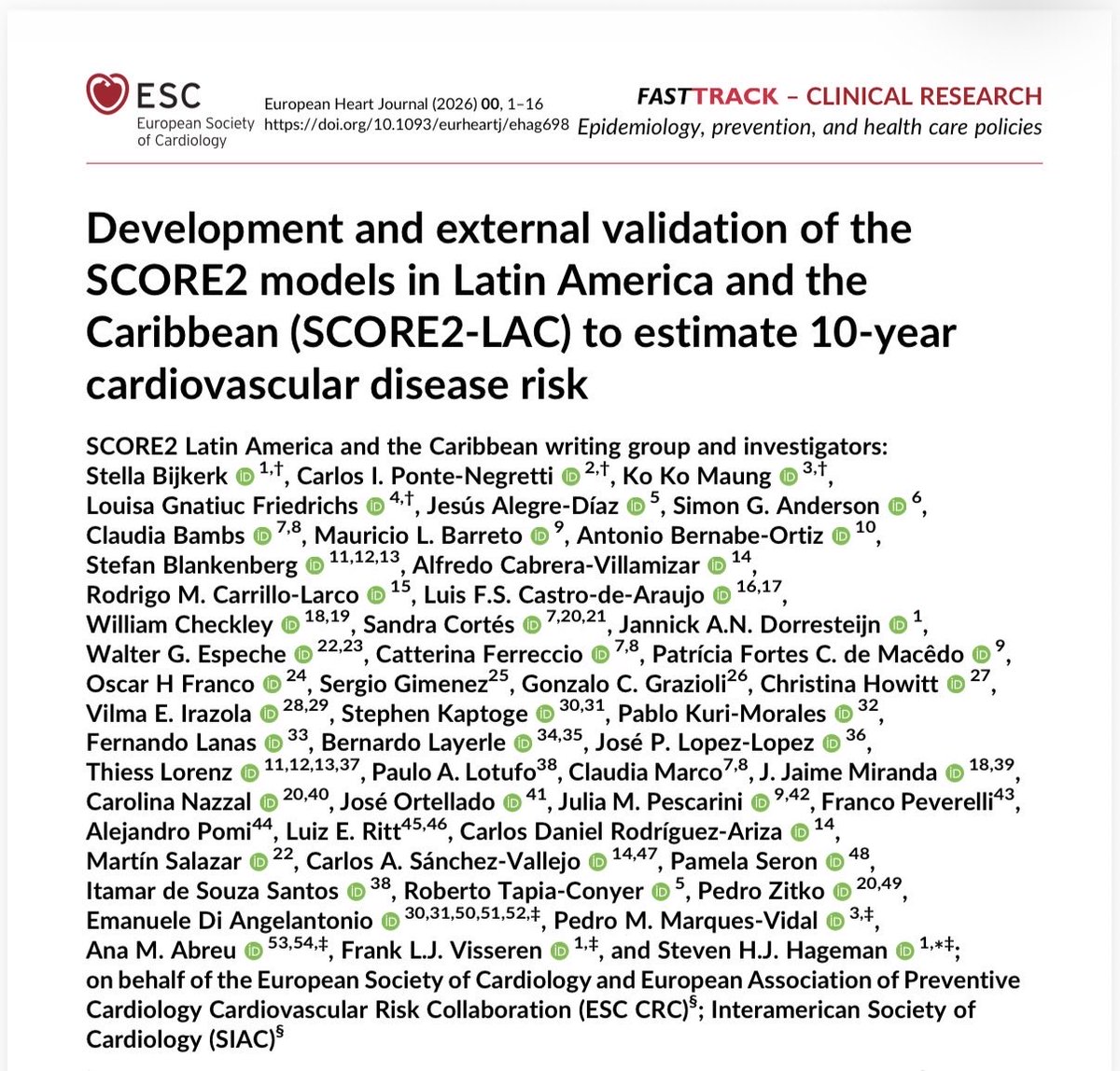
Con orgullo presentamos el SCORE2-LAC, la herramienta más robusta para estimar el riesgo cardiovascular en América Latina y el caribe.
Calibración:
- >40 millones de individuos
- > 1 millón de eventos
Validación externa:
- > 100.000 pacientes
Debe utilizarse a partir de ahora.
Recuerda que cuando pienses en sarcoidosis debes buscar compromiso pulmonar (>80% casos).
Menos comunmente pero "frecuente" piel y corazón.
De ahi para alante (sistema nervioso por ejemplo) como unica manifestación es entre raro y anecdotico.
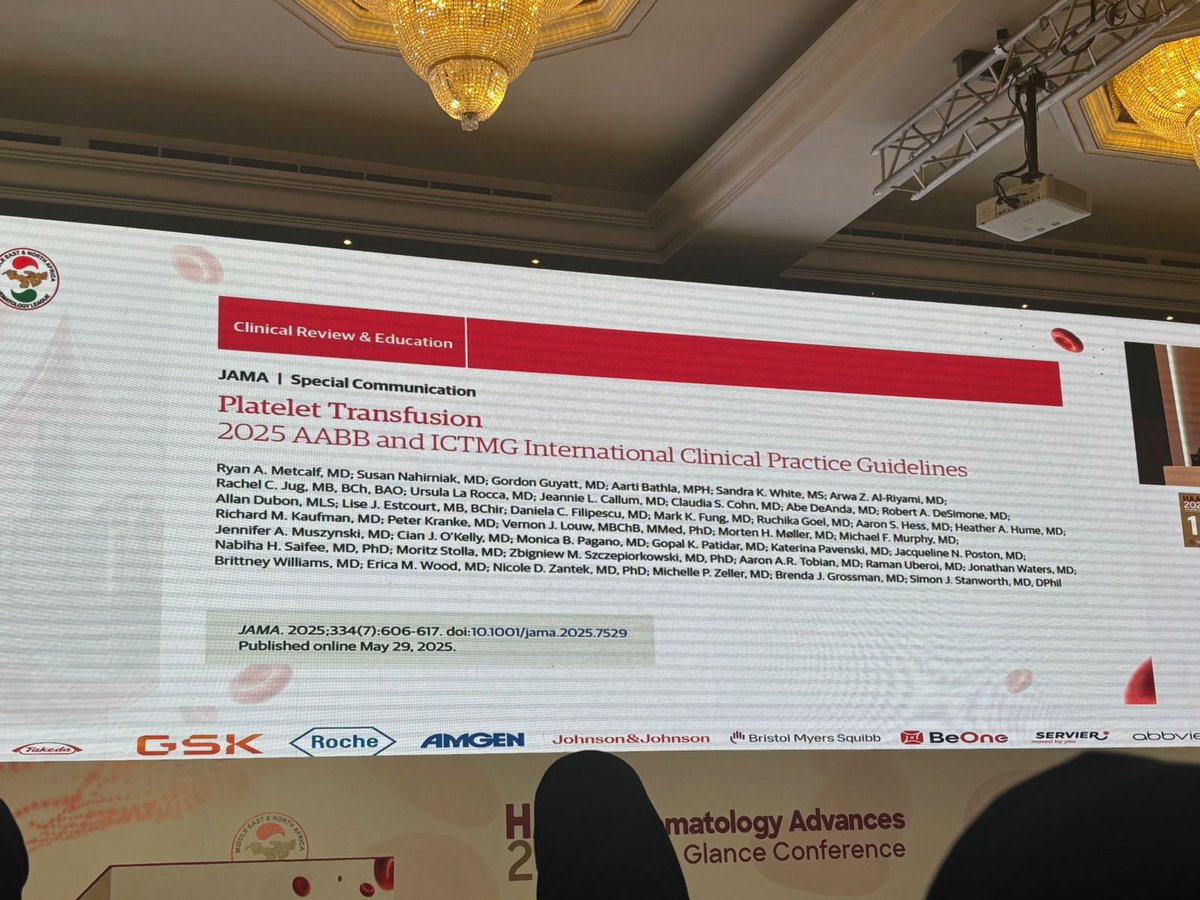
🩸 Platelet Transfusion in 2025: Less Can Be Safer!
Key messages from the AABB/ICTMG international guideline 🧵👇
1/12 🎯 The central principle
Adopt a restrictive platelet-transfusion strategy whenever clinically appropriate.
✅ Similar bleeding and mortality outcomes
✅ Fewer transfusion reactions
✅ Less alloimmunization/refractoriness
✅ Better preservation of a limited resource
✅ Lower cost
Platelet count is important—but never the only decision-maker. 🧠
2/12 💪 Strong recommendations
🧬 Nonbleeding hypoproliferative thrombocytopenia during chemotherapy or allogeneic HSCT:
➡️ Transfuse when PLT <10 ×10³/µL
📚 Moderate-certainty evidence
A routine liberal threshold above 10 ×10³/µL provides no proven benefit in otherwise stable patients.
3/12 👶 Preterm neonates without major bleeding
➡️ Transfuse when PLT <25 ×10³/µL
📚 High-certainty evidence
Avoid the historical liberal threshold of 50 ×10³/µL—it offers no benefit and may cause harm.
4/12 💉 Lumbar puncture: a major practice-changing recommendation
➡️ Administer platelets when PLT <20 ×10³/µL
💪 Strong recommendation
📚 Moderate-certainty evidence
This is considerably more restrictive than the traditional 50 ×10³/µL threshold used by many centers.
⚠️ This is a transfusion trigger—not proof that every patient must achieve a post-transfusion count ≥20.
5/12 🧠 Why is the LP threshold lower?
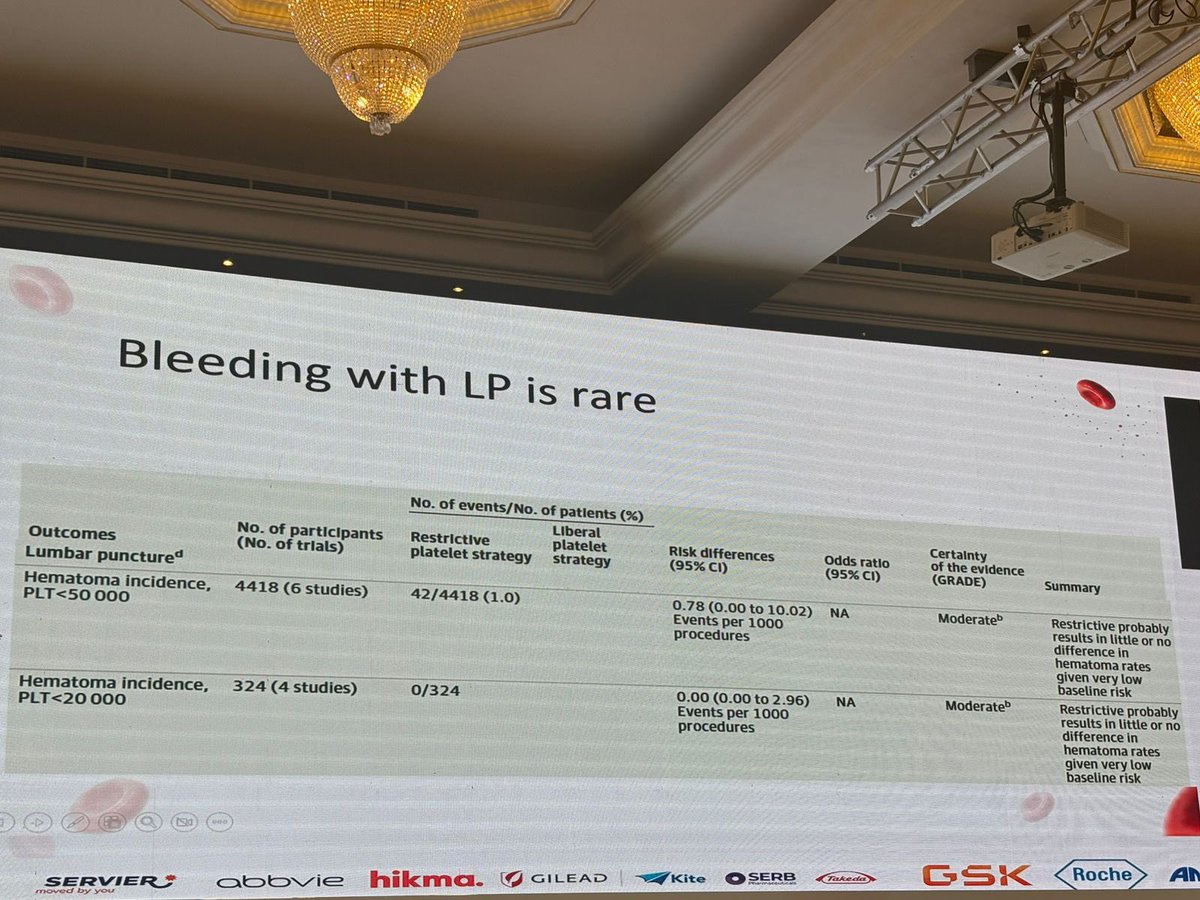
Bleeding after lumbar puncture is remarkably rare:
📊 PLT <50 ×10³/µL: 42 hematomas among 4,418 patients across six studies
📊 PLT <20 ×10³/µL: 0 hematomas among 324 patients across four studies
The baseline risk is very low, although much of the procedural evidence remains observational.
6/12 🦟 Dengue thrombocytopenia without major bleeding
🚫 Do not transfuse platelets prophylactically—even with marked thrombocytopenia.
💪 Strong recommendation
📚 Moderate-certainty evidence
Trials show no clinical benefit and suggest possible harm. Treat the patient and bleeding—not the number.
7/12 🧫 Autologous SCT and aplastic anemia
For stable, nonbleeding adults:
➡️ Consider a no-prophylaxis strategy
⚖️ Conditional recommendation
📚 Low to very-low certainty
This requires careful clinical monitoring and may not suit patients with fever, infection, mucositis, coagulopathy or additional bleeding risks.
8/12 🏥 Critically ill adults
Consumptive thrombocytopenia without major bleeding, excluding dengue:
➡️ Transfuse when PLT <10 ×10³/µL
⚖️ Conditional recommendation
📚 Very-low certainty
Avoid reflexively transfusing merely because the patient is in ICU.
9/12 🩺 Central venous catheter placement
For adult CVC insertion at an anatomical site amenable to manual compression:
➡️ Transfuse when PLT <10 ×10³/µL
⚖️ Conditional recommendation
📚 Moderate to very-low certainty
📌 Prefer ultrasound guidance, experienced operators and a compressible site.
⚠️ Do not automatically extrapolate this threshold to noncompressible or technically difficult access.
10/12 🩻 Interventional radiology procedures
🔹 Low-risk procedure: transfuse if PLT <20 ×10³/µL
🔸 High-risk procedure: transfuse if PLT <50 ×10³/µL
⚖️ Conditional recommendation
📚 Very-low certainty
Procedure-specific bleeding risk, anatomy, operator experience and the possibility of compression remain crucial.
11/12 🔪 Major non-neuraxial surgery
➡️ Transfuse when PLT <50 ×10³/µL
⚖️ Conditional recommendation
📚 Very-low certainty
This recommendation does not define thresholds for neurosurgery or other especially high-risk anatomical procedures.
12/12 ❤️🧠 When platelets should not be given routinely
🚫 Nonthrombocytopenic cardiovascular-surgery patients without major hemorrhage—including cardiopulmonary bypass
🚫 Adults with spontaneous or traumatic nonoperative intracranial hemorrhage and PLT >100 ×10³/µL, including those receiving antiplatelet therapy
There is no established benefit, and transfusion may cause harm.
🚨 𝗣𝗢𝗟É𝗠𝗜𝗖𝗔 𝗘𝗡 𝗟𝗔𝗦 𝗡𝗨𝗘𝗩𝗔𝗦 𝗚𝗨Í𝗔𝗦 𝗘𝗦𝗖 𝟮𝟬𝟮𝟲 𝗗𝗘 𝗜𝗡𝗦𝗨𝗙𝗜𝗖𝗜𝗘𝗡𝗖𝗜𝗔 𝗖𝗔𝗥𝗗𝗜𝗔𝗖𝗔
La nueva ESC 2026 de IC agrupa MRA esteroideos y no esteroideos en HFpEF:
➡️ 𝗖𝗹𝗮𝘀𝗲 𝗜 | 𝗡𝗶𝘃𝗲𝗹 𝗔
Pero… ¿𝗹𝗮 𝗲𝘃𝗶𝗱𝗲𝗻𝗰𝗶𝗮 𝗲𝘀 𝗲𝗾𝘂𝗶𝘃𝗮𝗹𝗲𝗻𝘁𝗲? 🤔
🟢 𝗙𝗜𝗡𝗘𝗥𝗘𝗡𝗢𝗡𝗔 | 𝗙𝗜𝗡𝗘𝗔𝗥𝗧𝗦-𝗛𝗙
✅ Ensayo positivo
✅ FE ≥40%
✅ ↓ eventos de empeoramiento de IC / muerte CV
🟠 𝗘𝗦𝗣𝗜𝗥𝗢𝗡𝗢𝗟𝗔𝗖𝗧𝗢𝗡𝗔
❌ TOPCAT → objetivo primario neutral
❌ SPIRIT-HF → sin beneficio
⚠️ Señal desfavorable de hospitalizaciones y eventos adversos
Entonces…
¿𝗘𝘅𝗶𝘀𝘁𝗲 𝗿𝗲𝗮𝗹𝗺𝗲𝗻𝘁𝗲 𝘂𝗻 “𝗲𝗳𝗲𝗰𝘁𝗼 𝗱𝗲 𝗰𝗹𝗮𝘀𝗲 𝗠𝗥𝗔” 𝗲𝗻 𝗛𝗙𝗽𝗘𝗙?
La evidencia sólida es de 𝗙𝗜𝗡𝗘𝗥𝗘𝗡𝗢𝗡𝗔.
Extrapolarla a los MRA esteroideos parece, como mínimo, 𝗴𝗲𝗻𝗲𝗿𝗼𝘀𝗼. 👀
Las 𝘀𝗼𝗰𝗶𝗲𝗱𝗮𝗱𝗲𝘀 𝗰𝗶𝗲𝗻𝘁í𝗳𝗶𝗰𝗮𝘀 tenemos una responsabilidad: cuestionar y debatir las recomendaciones cuando la evidencia no parece respaldarlas plenamente.
Porque las guías trasladan la evidencia a la práctica clínica y deben ayudarnos a ofrecer 𝗲𝗹 𝗺á𝘅𝗶𝗺𝗼 𝗯𝗲𝗻𝗲𝗳𝗶𝗰𝗶𝗼 𝗮 𝗻𝘂𝗲𝘀𝘁𝗿𝗼𝘀 𝗽𝗮𝗰𝗶𝗲𝗻𝘁𝗲𝘀.
Spironolactone Outcomes RCTs in the Last 20y
#TOPCAT (HFpEF) ❓❌
#SPIRITHF (HFpEF) ❓❌
#CLEAR (Post-MI) ❌
#BARACKD (CKD) ❌
#ALCHEMIST (ESKD) ❌
#ACHIEVE (ESKD) ❌
One day we will hopefully have a positive RCT
to elevate eminence based medicine to evidence based medicine!