Private markets. Frontier economies. Real yield in a tokenized world.
Ex–corporate banker decoding how UHNW capital reallocates in a new world order
↓ Subscribe
The real reason UHNW investors are shifting away from traditional private equity
→ Frontier credit
→ Hard-yield tokenization
→ Opportunistic global diversification
I break down what private capital isn’t saying out loud, weekly, at Habari Capital.
↓
https://t.co/RlyCajt5d5
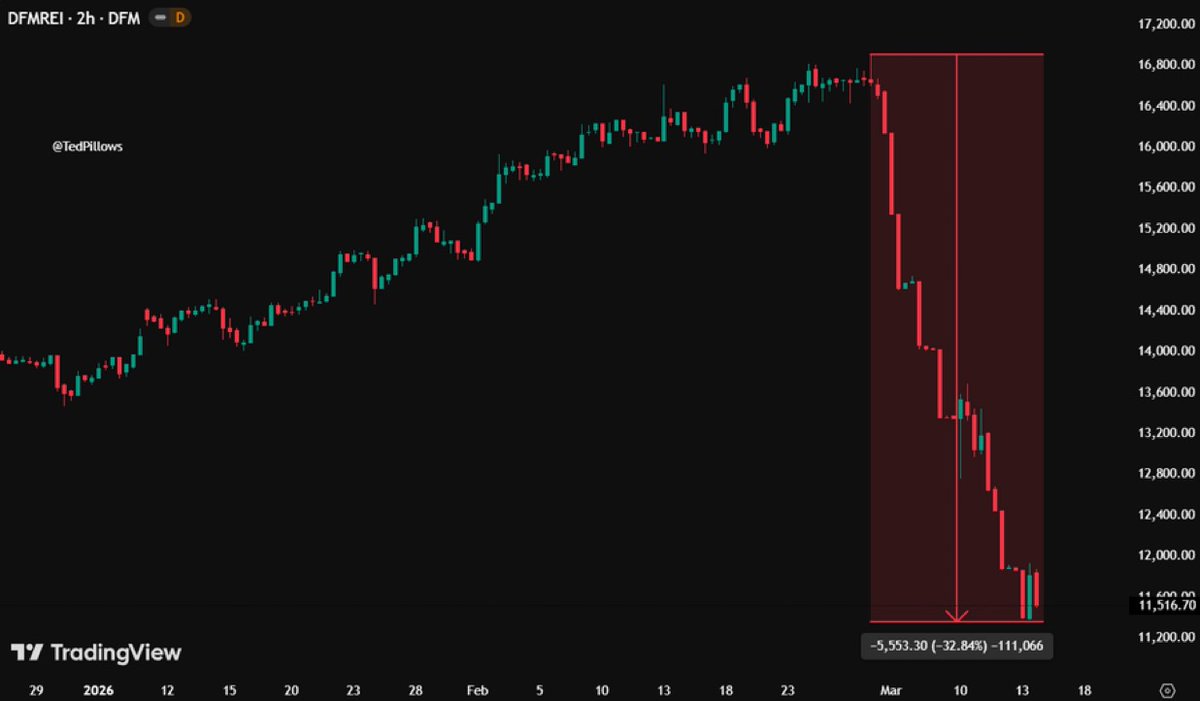
The dramatic plunge in the DFM Real Estate Index, down roughly 30-33% from its February 2026 peak (around 16,700-16,900 points) to recent levels near 11,500, has wiped out all 2026 gains and more, triggered by the escalation of the Iran conflict, including strikes impacting UAE infrastructure and regional stability.
This is a stark reminder of how geopolitical shocks can trigger rapid risk repricing in markets perceived as "safe havens." Dubai's real estate sector, heavily reliant on foreign capital inflows, developer stocks (e.g., Emaar, Aldar, Deyaar), and sentiment-driven demand, saw listed developer shares and bonds sell off sharply, as investors fled emerging market exposure amid oil volatility and uncertainty.
This is the kind of strategic pivot Africa needs: moving up the value chain from raw exports to processed/finished products, capturing more margin domestically while building industrial depth. If executed well (strong governance, ESG standards, local content), this could position Ethiopia as a serious mining contender alongside SA, Mauritania, etc. 🇪🇹
PrimeEnergy Resources (NASDAQ:PNRG) just reaffirmed its $115M borrowing base and slashed interest rates by 50 basis points.
https://t.co/PUP5iIgrR3
This Houston-based oil & gas player has zero borrowings outstanding, full liquidity available, and more cash than debt.
For those diving into energy banking, borrowing bases are key. They're the max credit limit tied to the value of a company's assets, like proved oil/gas reserves. Lenders redetermine them based on reserve evaluations, commodity prices, and engineering reports.
Aspiring bankers, here's what you need to know:
-Determination: It's not fixed—volatility in oil prices can shrink the base, forcing repayments or covenant tweaks.
-Risks: Watch for hedging covenants (PrimeEnergy updated theirs), operational hiccups, or market downturns that erode collateral value.
-Importance: They provide flexible working capital but enforce discipline.
A reaffirmation like this re-affirms financial health and lender confidence.
In energy lending, mastering borrowing bases can make or break deals. #EnergyFinance #BankingTips #OilAndGasEnergy
Mozambique is back. 🇲🇿
Subsea contracts are the first tell, but most investors won’t notice until the LNG tankers are loading.
New piece: Africa’s offshore capital cycle is quietly restarting.
https://t.co/DP47n5aqVP
@davis_chirchir@lapsset If Lamu meaningfully reduces dwell time and congestion, the biggest beneficiaries could be importers managing working capital cycles.
Port efficiency feeds directly into SME liquidity timing, especially for businesses operating on thin FX buffers.
AfCRA plans to directly rate and grade SMEs themselves (SME Grading and Due Diligence), plus support local-currency instruments like corporate bonds, commercial papers, and bank facilities that smaller businesses can tap into.
This means:
-More accurate, Africa-contextual credit scores → easier to prove creditworthiness to local banks, fintechs, or regional investors.
-Potential access to new funding channels: SME-focused bonds, green/social bonds, or securitized products that global agencies often overlook or under-rate.
-Less FX risk & longer-term capital: By boosting local-currency ratings, it encourages domestic/pan-African investment, reducing dependence on expensive dollar loans.
In short: fairer visibility for SMEs in capital markets → broader, cheaper, and more diverse funding options over time.
Africa has officially launched its own credit rating agency to lower borrowing costs and challenge bias from global rating firms.
The agency aims to reduce reliance on the “Big Three”, Fitch, Moody’s and S&P by offering fairer and more accurate assessments of African risk.
This is a major step toward independent, balanced credit ratings for African governments, local authorities, and companies, better reflecting real economic conditions across the continent.
When evaluating East African SME credit deals, I prioritize these 5 signals ahead of financials:
-Mobile money velocity – Real cash flow proxy in informal setups
-FX exposure vs revenue currency – Hidden killer in import-dependent businesses
-Informal supplier credit – Often the true working capital backbone
-Tax behavior (signals > strict compliance) – Reveals governance & owner mindset
-Sponsor optionality – Exit paths and skin in the game
Financials come last, too easy to polish.
Adani lost the JKIA deal due to U.S. bribery indictments + public backlash over opaque terms: skewed 18% IRR guarantee, heavy risk on Kenya/taxpayers, weak holdbacks/performance bonds, no competitive bidding. Classic project finance pitfalls—unbalanced risk allocation (most performance and revenue risks onto the Kenyan government and taxpayers) & transparency failures.
Now multilateral funding (JICA, AfDB, EIB) + Beijing Construction Group shifts to lower-cost debt with stricter milestones & governance. Better safeguards, but execution oversight key to avoid debt traps.
Construction of Kenya's $2 billion Jomo Kenyatta International Airport expansion set for May 2026. Kenya will not fund this project alone but along with Japan International Cooperation Agency, AfDB and European investment bank. Additional passenger terminal and a 4.8km runway all included.
After Adani Airport Holdings limited lost the contract, Beijing Construction Group is now the company to take on the job.
Borrowers underestimate "cross-collateralization" clauses, where one asset covers multiple debts. This is likely a complex corporate facility, possibly tied to project finance for the hotel or related ventures.
Wambui argues the bank is unfairly targeting Glee Hotel (her security) while ignoring assets of the principal borrower (potentially a linked entity like Purma Holdings or another firm).
In Kenyan banking, loans of this scale often use layered collateral (e.g., real estate + guarantees), but enforcement favors liquid assets like hotels due to high resale value.
Kenya Airways (KQ) is in deep trouble, it's basically broke, with huge losses and debts making the government's books look bad.
Singapore's Temasek offer: They want to buy most of it (government left with just 10%), put in $500M needed soon, and run it properly like Singapore Airlines, cut costs, update planes, fix routes. Quick help for Kenya's money problems, but it means giving up control of the national airline.
Qatar Airways offer: No ownership, they want to partner, share future profits, help manage, and connect flights through Doha. Safer politically, brings real know-how. But less cash now (money comes later if it works), so slower fix for debts.
Well done to the latest cohort of CFA Level 2 candidates who passed! Respect for the discipline and effort it takes. Proud of East Africa's growing community of investment pros.
Interesting data, top-tier banks run tighter lending rates but benefit from lower funding costs (cheaper deposits, stronger CASA ratios) and often higher NIM in the 7-8% range despite rate cuts.
Mid-tier players (Equity/KCB) offset with higher volumes, better fee income (transaction fees, forex, agency banking), and more aggressive deposit pricing.
Premium banks lean less on fees.
Lower headline rates signal competition and CBK easing, but real profitability hinges on deposit mix, cost control, and non-funded diversification. Watch who sustains margins best into 2026.
Fair point, Becky. Quick clarification: no Chinese loans or direct ties fund KPC itself—it's been self-financed via pipeline revenues (no major foreign debt on its books per the IPO docs). Kenya's overall debt story has Chinese elements, but new loans from China are at 8-yr lows in 2025.
This IPO divests 65% to raise ~KSh 106B for infra/debt relief, with strong local focus: 20% retail, 20% inst, 20% regional, 15% OMCs—spreading ownership at home. Governance matters to keep benefits Kenyan. Appreciate the insight, what concerns you most?
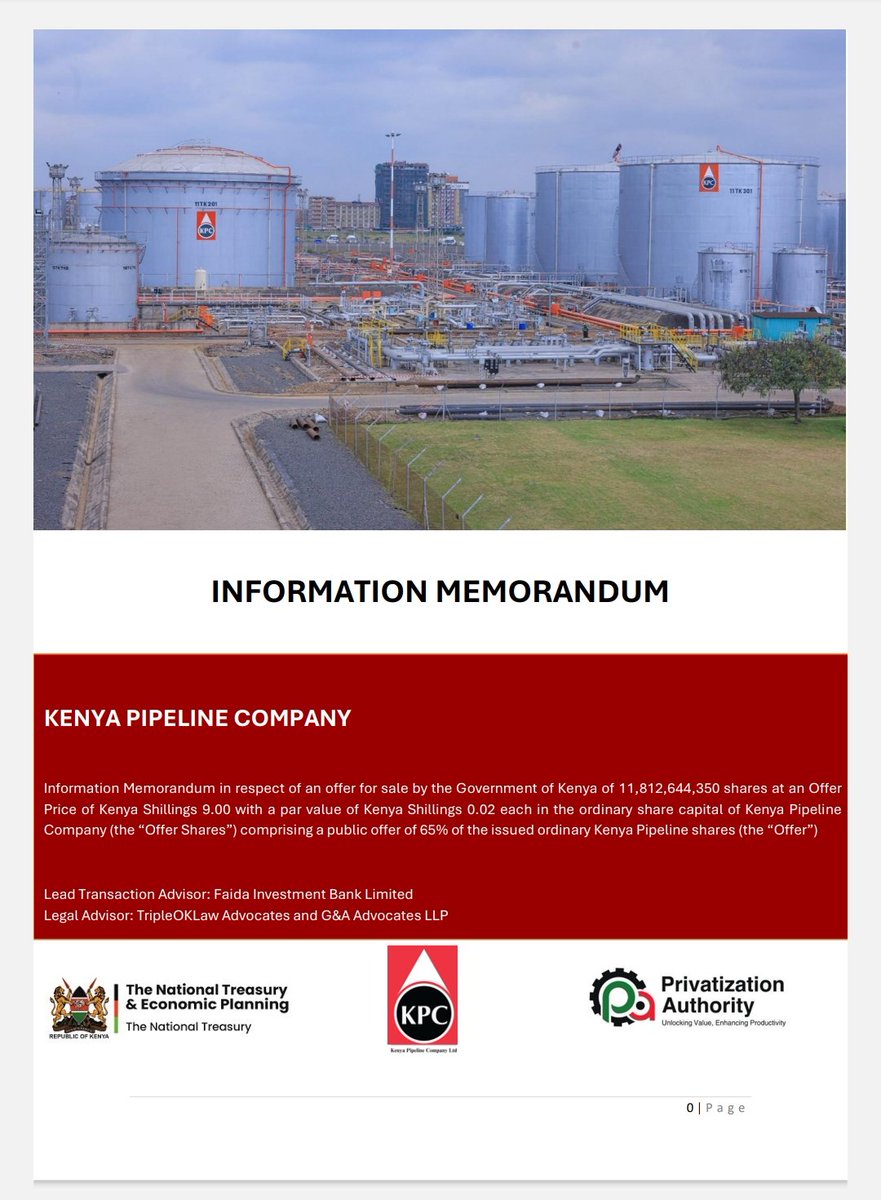
The Kenya Pipeline IPO is live.
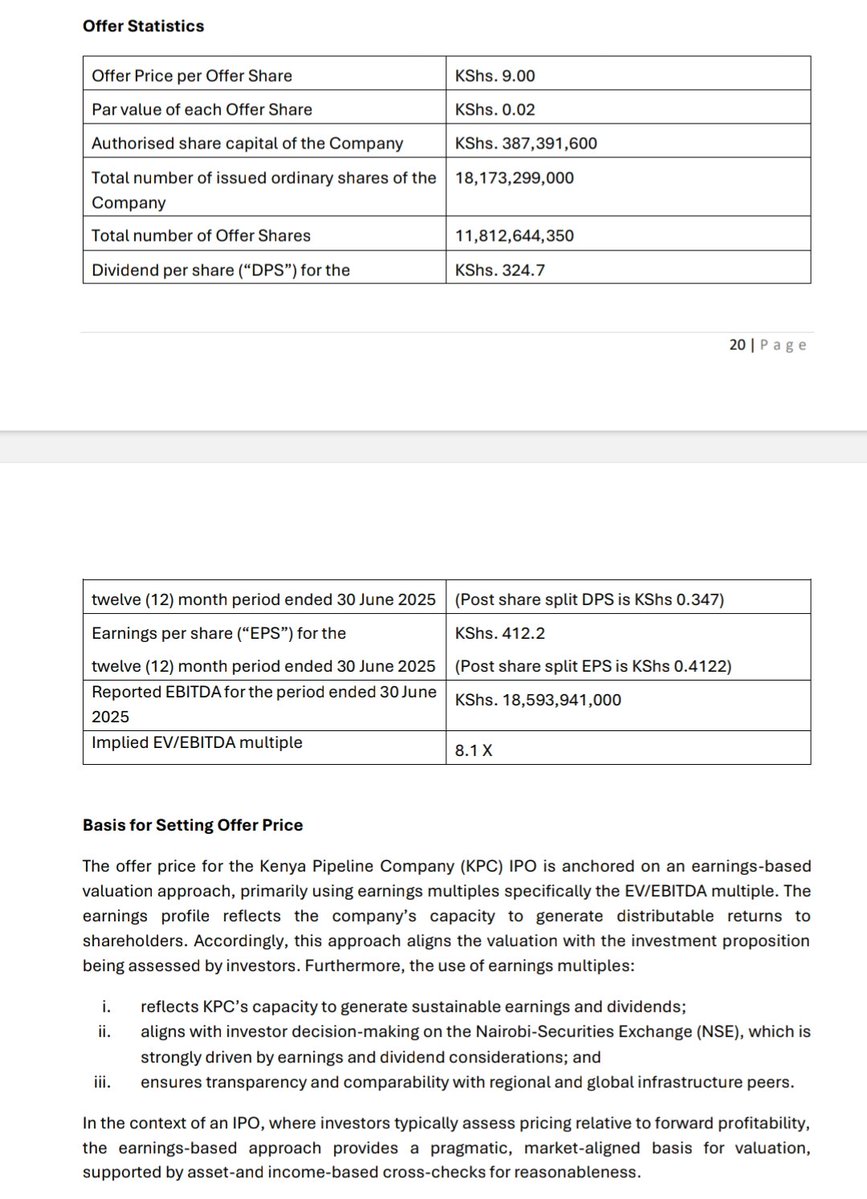
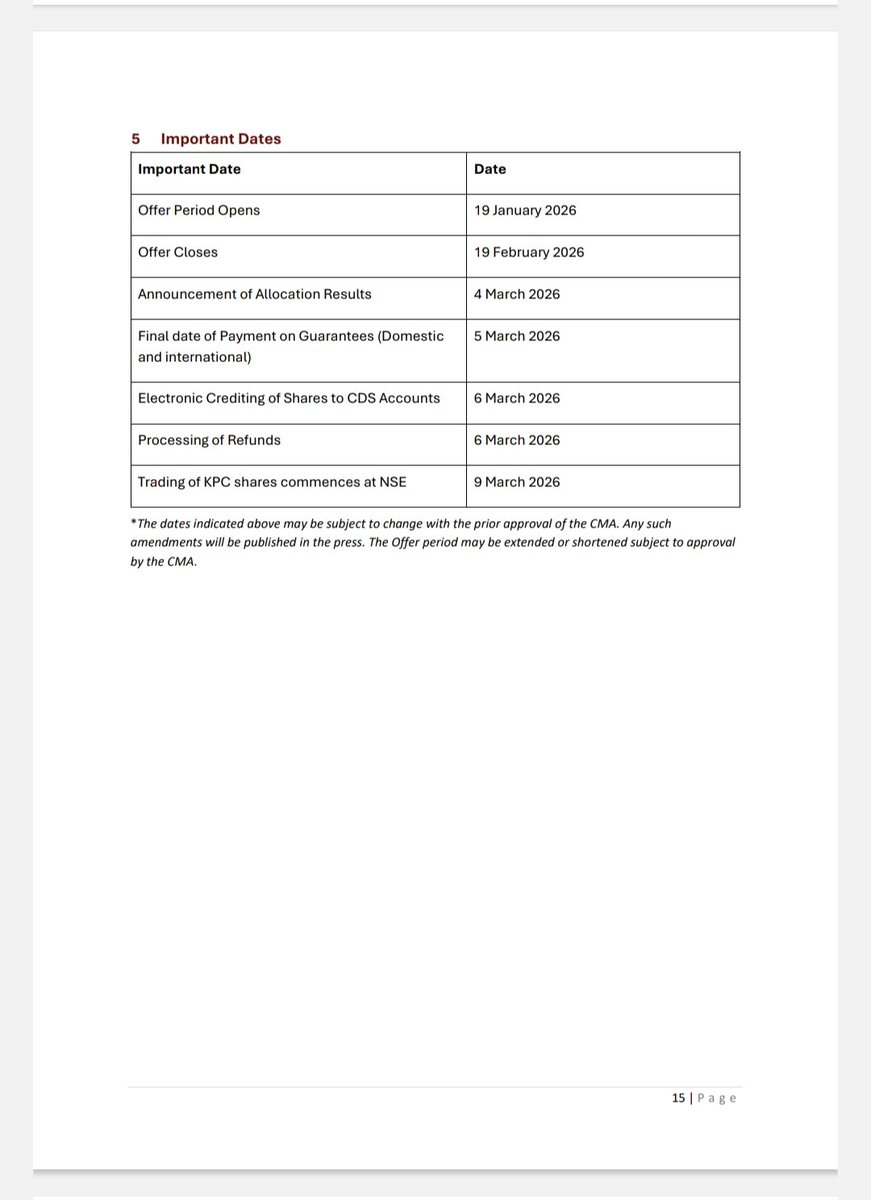
-GOK is offering 11.8 billion shares (65% stake) at KSh 9 each, targeting roughly KSh 106 billion in proceeds. That puts the full company valuation at about KSh 163.6 billion. It's a bold number for East Africa's biggest IPO in years, and the month-long offer window (Jan 19 to Feb 19) signals they expect it to take time to build momentum.
-Allocations feel balanced: 20% retail, 20% institutional, 20% regional/EAC, and 15% to oil marketing companies. A solid step toward wider ownership of key energy infrastructure.
-For everyday investors, this is a rare chance to own a piece of Kenya's fuel backbone—steady revenues, monopoly-like position in pipeline transport, and strong recent profits.
But at this pricing, the valuation looks premium compared to other energy plays on the NSE. Will be watching demand, subscription levels, and any post-listing performance closely.
If you're considering applying, do your homework on the prospectus and think long-term. More thoughts as details unfold.
Kenya Pipeline IPO is here!
What do we know so far?
1. GOK is floating 11,812,644,350 shares translating to a 65.0% divestiture
2. The offer price is Kes 9.0/share implying GOK is looking at Kes 106.31 billion capital raise through this divestiture. It's indeed an ambitious raise
3. This means the GOK placing the valuation of the company at Kes 163.56 billion
4. Offer opens Jan 19th & closes on Feb 19th. The length of this offer period suggests to us GOK appreciates how ambitious that capital raise is
5. Retail, Institutional & Regional/EAC have each been designated 20.0% allocation, OMCs have been allocated 15.0%
More details later...
Spot on, KSE-100's ~50% USD return in CY25 was stellar, led by banking sector (top performer, ~29% index weight) on rate cuts & strong NII. But note: private credit contracted and loans are shrinking. Earnings growth may slow in '26 from high base. Sustained rally needs real private lending pickup! #KSE100 #PakistanStocks @MSCI_Inc
Manufacturing generally offers higher average net margins because:
1. Higher value addition, turning raw materials into finished products.
2. Better potential for branding, innovation, efficiency scales, and export premiums. Establishing high barriers to entry in the process.
The "dukawala" model can scale to big retail like Naivas, but the economics remain volume-driven with slim profits per shilling of sales. And without the scale, the intense operating costs and competition eat up profits.
If the goal is real wealth creation through higher returns on capital, manufacturing usually wins.
With failed rains causing a near-term maize supply crunch in East Africa, we'd expect backwardation: spot/near-term prices bid up high due to immediate scarcity, while deferred futures (next harvest cycles) trade lower, betting on eventual recovery. That's a classic signal of short-term supply shock, buyers pay a premium for maize now, not later. If the curve flips to contango later (abundant future supply expected), it could ease prices, but right now, this structure reinforces upward pressure on food inflation. Ties perfectly to the non-core inflation spike we're seeing. Tough for CBK's easing path!