My previous post inadvertently became a case study.
Rather than explaining the concept, many chose one of three escapes:
Quote another narration.
Redefine the terminology.
Debate the translation.
None of those explain the metaphysical issue that was raised.
This is exactly why philosophy exists.
Some people spend their lives condemning philosophy, yet can’t explain one of the opening narrations of al-Kāfī:
“The first thing Allah created was the Intellect.”
Ask them whether “first” refers to temporal succession or ontological priority.
Their answer will usually reveal whether they’re defending tawḥīd… or an anthropomorphic deity who exists within time. #salafism
Christians are often quick at pointing out Islam appropriated the pre-Islamic pagan traditions, and there is nothing wrong in that.
At the same time, the apologists never agree with the academic scholarship that OT is highly affected by NE Paganism. YHWH's image is of Baal.
Why do so many people hate philosophy?
It’s not just about the ideas, it’s about the effort.
Philosophy demands deep thinking, and that’s exhausting for many. Years of indoctrination make questioning beliefs feel uncomfortable.
Ever felt that fatigue when faced with critical thinking?
#philosphy #islamicphilosophy #indoctrination #psychology
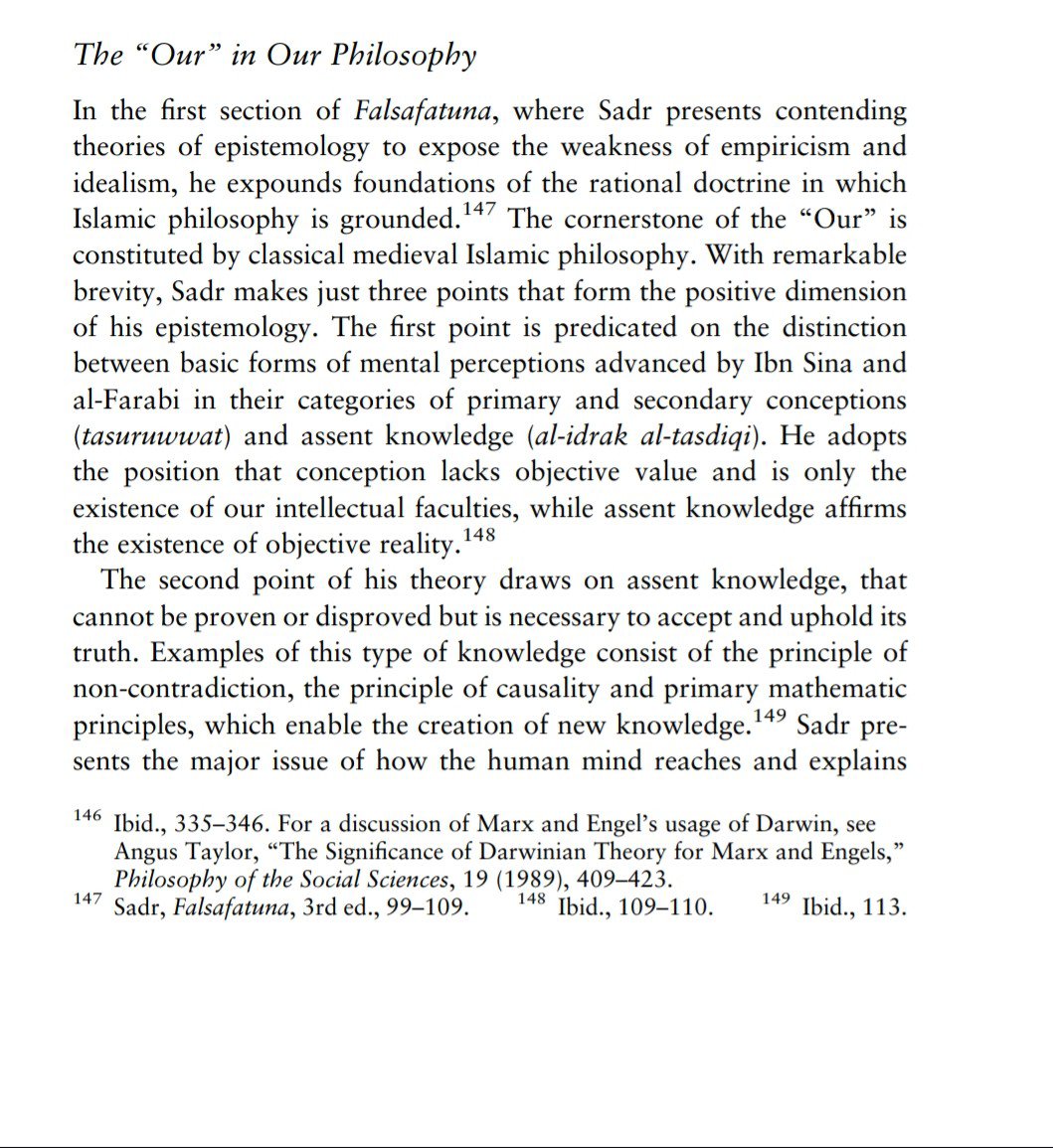
Here is Ayatollah Khomeini praising these sages, and asking logical people to refer to their works. Ahl al-Bayt are not historical black holes. They came in esoteric continuity to a Tradition and that tradition continues. Wisdom is not confined to an identity.
Shīʿism has long placed the intellect (ʿaql) at the center of religious life. This is reflected in one of its foundational ḥadīth collections, al-Kāfī, which opens not with ritual law, which certainly does feature later in the collection, but with Kitāb al-ʿAql wa al-Jahl (The Book of Intellect and Ignorance). The placement is clearly deliberate and aims to teach us something fundamental about the faith. Before discussing law, worship, or even ethics, the tradition first establishes the faculty by which they all these dimensions are to be understood.
It is, therefore, unsurprising that Shīʿī seminaries became some of the last institutions to preserve philosophy, logic, theology, and the rational sciences in the Muslim world. In our tradition, reason is not viewed as a rival to revelation, but as one of the means through which revelation can be understood, defended, and articulated.
This is also why true philosophical and mystical Shīʿī scholars never felt compelled to reject an idea simply because it originated outside the Islamic tradition or their sectarian identity. From Aristotle to Ibn Sīnā, ideas were examined on their merits, retaining what was true and discarding what was false. Such openness is the clear effect of the wisdom-based teachings of the Ahl al-Bayt.
For centuries, people across cultures reported the same terrifying experience:
They awoke unable to move.
They sensed a presence in the room.
They felt pressure on their chest.
The explanations differed.
Medieval Europeans blamed an incubus.
Japanese folklore called it kanashibari.
Many Muslim traditions attributed such encounters to jinn or divs.
This Safavid Persian miniature gives visual form to that belief: a sleeping woman visited by a nocturnal supernatural being.
Modern neuroscience calls it sleep paralysis.
The experience remained remarkably consistent.
Next post: How did medieval Muslims believe these nocturnal encounters could be prevented? The remedies are stranger than you might expect.
This Persian miniature from the Khawāran Nāmah depicts Imam ʿAlī slaying a dragon with Dhū al-Fiqār.
Composed in the 15th century, the Khawāran Nāmah recasts Imam ʿAlī as the hero of a sacred epic, confronting dragons, jinn, divs, and sorcerers across a mythical eastern realm.
These stories reflect how Persianate Islam imagined the Imam’s authority extending beyond human history into the cosmic struggle against chaos.
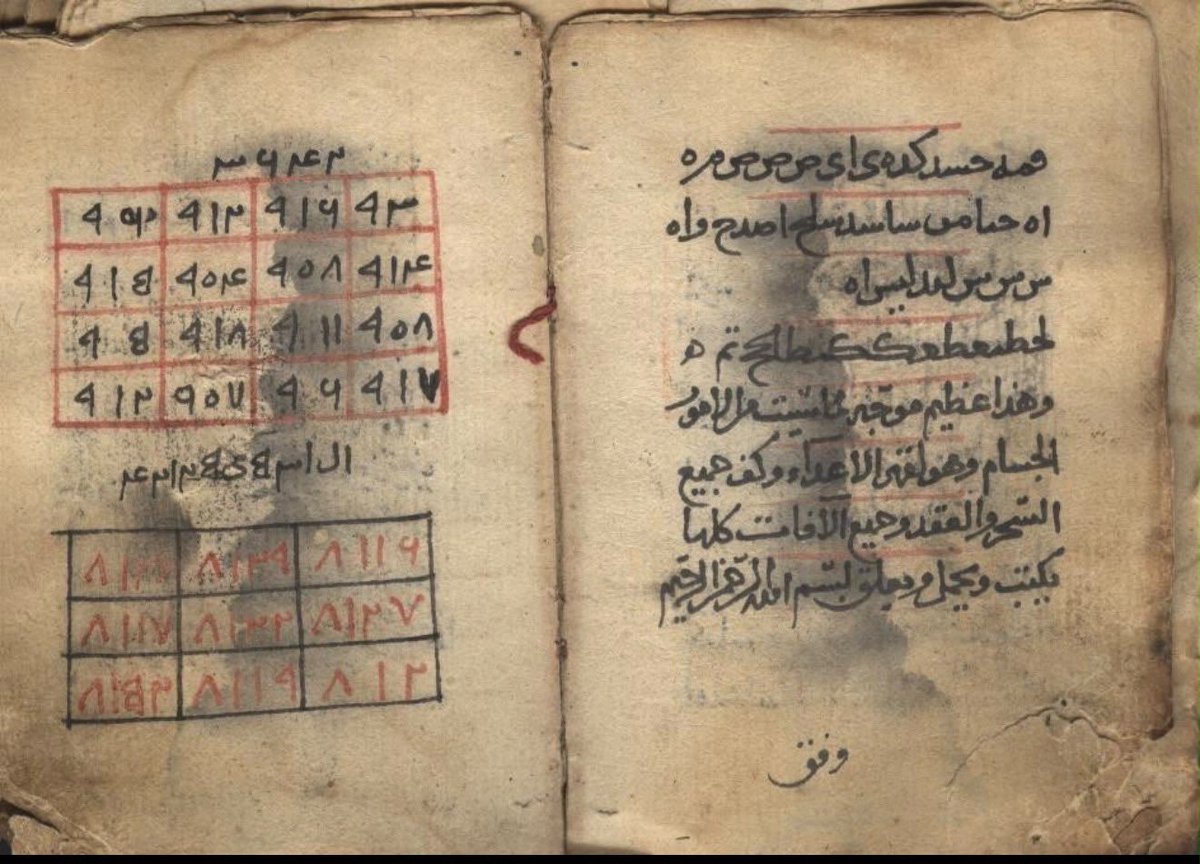
One of the more curious passages attributed to Abū Ḥāmid al-Ghazālī concerns a 3×3 magic square.
In al-Munqidh min al-Ḍalāl (Deliverance from Error), he mentions a talisman bearing the square which, when placed beneath a woman experiencing a difficult childbirth, was said to ease delivery.
The episode offers a reminder that medieval Islamic intellectual history was not neatly divided into “theology” and “the occult.” For many scholars, the Divine Names, sacred geometry, and talismanic practices occupied the same intellectual universe.
PLEASE ASK YOUR HEALTHCARE PRACTITIONER ABOUT STARTING ANY NEW REGIMEN.
Everyone talks about black magic.
Almost nobody talks about how to break it.
For years I searched for answers because I experienced these symptoms myself. Most of the advice I received never addressed what came next.
Watch the entire video before you judge it.
Come think about this with me.
#BlackMagic #Ruqyah #Spirituality #IslamicPhilosophy #remedy
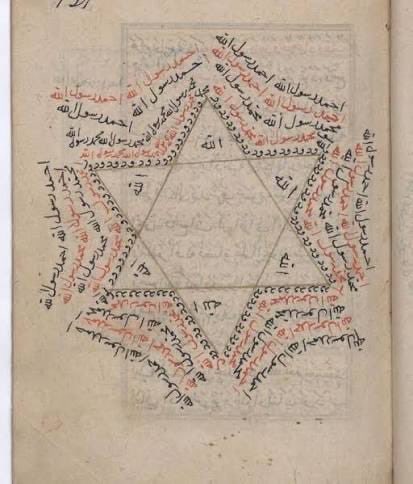
One of the lesser-known aspects of the Islamic intellectual tradition is the use of the Qur’an as an instrument of theurgy.
Medieval scholars wrote Qur’anic verses on amulets, inscribed them onto rings, dissolved the ink into water to be drunk, and combined them with the Divine Names in works concerned with healing, protection, and spiritual efficacy.
For them, revelation was not merely something to be interpreted. It was something that acted.
The “third eye” appears in traditions separated by thousands of years and thousands of miles.
Coincidence?
Or were different civilizations trying to describe the same human experience with different symbols?
I explore one possible answer below.
In Islamic occultism, every Divine Name possesses a distinct power. Its specific remembrance and repetition may awaken different capacities in the reciter, some even enabling one to capture the jinn.