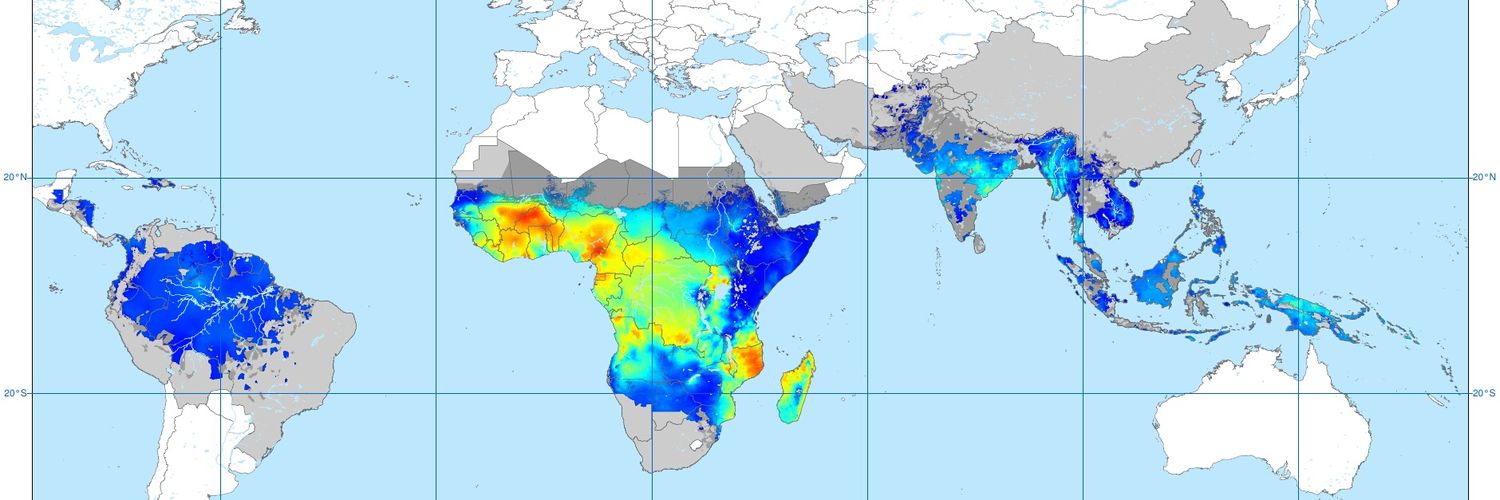
Research Scientist: Epidemiology | Residual malaria, mosquito behavioural resilience, elimination/eradication, new tools/strategies @swissTPH...my own views
Late morning biting behaviour of Anopheles funestus is a risk factor for transmission in schools in Siaya, western Kenya | Malaria Journal | Full Text https://t.co/eOJbgRuCx4
@SkyNews believe one shouldn’t apologise for a wrong done if they also done some good things. You know, like a philanthropist shouldn’t be condemned too hard just for a simple murder here another there once in a while. Right? https://t.co/JT7FKXIqNw
The School are delighted to announce the appointment of Professor Fredros Okumu (@Fredros_Inc), Professor of Vector Biology. Professor Okumu is a leader in Global Health who is internationally renowned for his research on African malaria vectors. Welcome Professor Okumu!
One weekend in August, 2023, Seline Omondi led our team to find out how late malaria transmitting mosquitoes were actively biting in school. We see peak biting between 6-7am when kids are just getting to school and biting continuing until 11am. https://t.co/Xr13dpitPZ
🦟MALARIA:
Spike among schoolchildren raises concerns despite progress in elimination
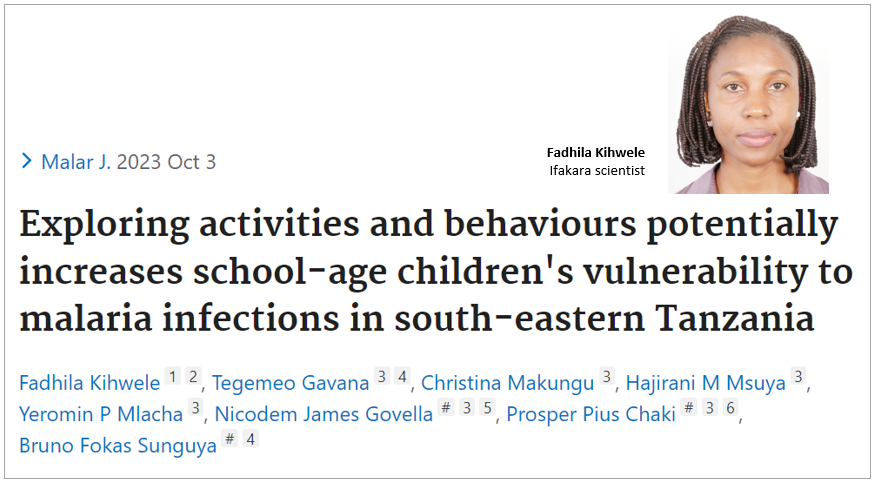
Scientists @Ifakarahealth and @muhimbiliuniver have raised concerns over increasing shifts in malaria cases among school-age children in Tanzania🇹🇿, despite significant progress in #malariacontrol efforts in the country.
In their study, published in the @MalariaJournal, they identify several factors that seem to increase children's risk of contracting #malaria, stressing the importance of understanding and addressing these risks to protect children's health.🧒
They also emphasize the need for further research 🔬to quantify the risk associated with the factors contributing to increased #malariainfection among the age group and their impact on malaria strategies to control infection.
>> https://t.co/vpmHBrXdqx
>> #IFAKARAnews #MalariaResearch
🦟MALARIA CONTROL:
Targeting breeding sites to prevent mosquito growth
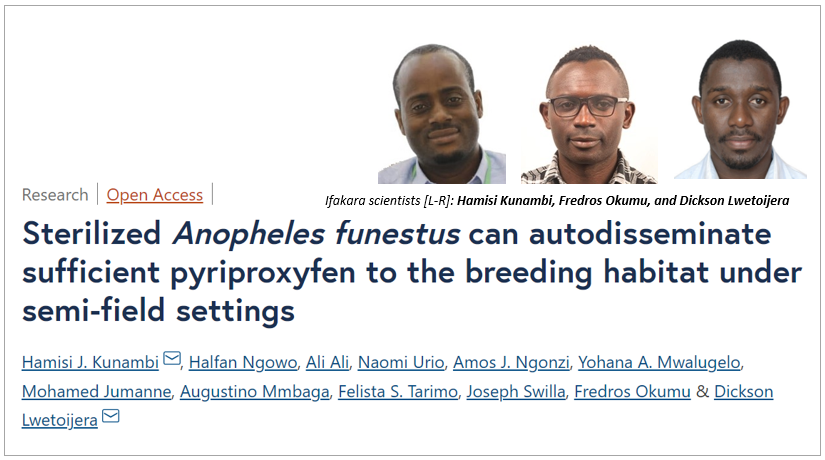
Scientists at @ifakarahealth are now targeting breeding sites to prevent #malaria mosquitoes from growing up and spreading the disease, which claims an estimated 600,000 lives globally🌍– with Africa carrying a disproportionately high share (over 96%) of the burden.
The scientists – led by @HamisiKunambi, the lead author, under the supervision of @Fredros_Inc and @DLwetoijera – apply a technique known as “autodissemination” that takes advantage of the female mosquito's habit of laying eggs to transfer #pyriproxyfen – which mimics a natural hormone in a mosquito and disrupts growth to the breeding sites and thereby prevent young mosquitoes from growing up and spreading #malaria📈
>> https://t.co/tKLhpEeewZ
>>#IFAKARAnews #IFAKARAresearch #IFAKARAscience
@Fredros_Inc One thing, taking antimalarials on an empty stomach (if you can even get the antimalarial) can be pretty traumatic. Poverty alleviation and food security will need to be a key component to interrupt malaria deaths.
A spider that feeds on human blood by choosing female [blood-fed] mosquitoes as prey.
~
Here is some very interesting research from 20 years ago, when the jolly good Prof. Robert Jackson arrived in western Kenya to study spiders. Prof. Jackson and I (a fresh high school graduate) briefly shared space in Dr. @KnolsMosquito team at @icipe Mbita campus (long story); and I can still say confidently that few people write simpler science than the Professor. Here is their PNAS story of the vampire spider, Evarcha culicivora.
~
A small jumping spider in East Africa called Evarcha culicivora has a unique way of indirectly feeding on vertebrate blood. Instead of biting and sucking blood directly, it chooses female mosquitoes that have recently fed on blood as its preferred prey. Surprisingly, experiments have shown that this spider can identify these blood-fed mosquitoes just by looking at them or smelling them. When given a choice between different types of motionless prey, the spider consistently selects blood-fed female mosquitoes over other options like male mosquitoes or female mosquitoes that haven't fed on blood. Interestingly, the spider's preference for blood is more important than the size of the prey. Young spiders tend to choose smaller prey, while adults and larger juveniles prefer larger prey. However, to get a blood meal, even the smaller spiders go after larger prey, and the larger spiders sometimes choose smaller prey. Additionally, when given the scent of different prey types, the spider is more likely to approach the odor of blood-fed female mosquitoes compared to prey that don't have blood
~
Sub-note: Those who study malaria mosquitoes know that they sit on walls at 45 degree angles, with their blood-fed abdomen elevated. I remember Prof. Jackson saying then that the vampire spiders would creep under this elevation and basically bisect the mosquito, throwing off the head and thorax then devouring the bloody abdomen.
~
Jackson et al: https://t.co/ym4mrVy8W9 (image from National Geographic)
At the annual general meeting, our members elected Manuel Hetzel from the @SwissTPH as new president. We warmly welcome Manuel to his role and look forward to working with him. Read the full announcement on our website: https://t.co/8b6AyxexpA
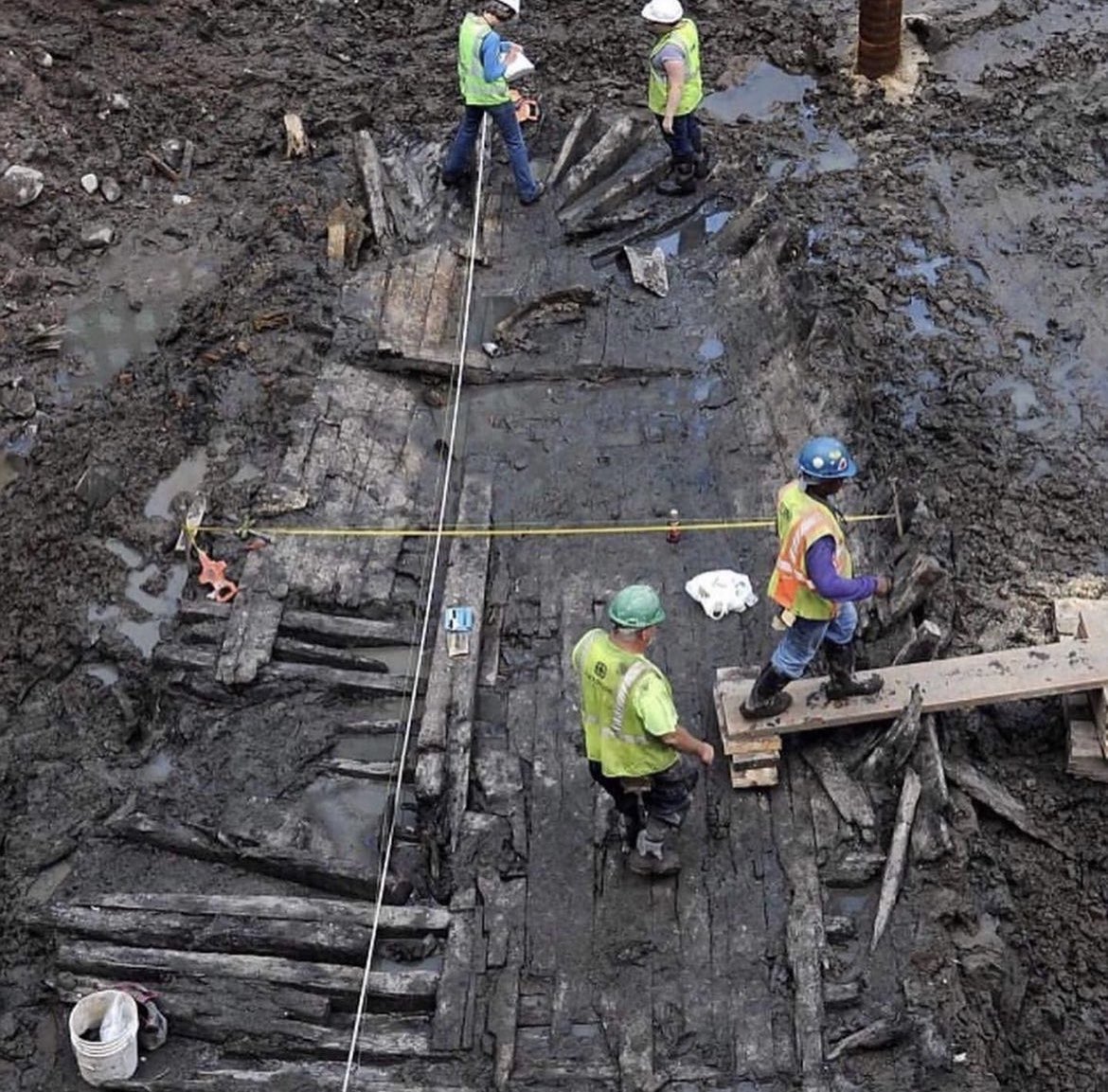
While cleaning up the aftermath of the World Trade Center's collapse, crews discovered a shipwreck located 7 feet below the foundation. This shipwreck was found to date back to 1773.
In 2010, excavators in New York City's Lower Manhattan unearthed the remains of a wooden ship buried deep in the ground. A study revealed that the ship was constructed using timber sourced from old-growth forests in southeastern Pennsylvania around 1773. Interestingly, Independence Hall and other buildings from the Revolutionary era in Philadelphia were also built using timber harvested from the same region and during the same period. Edward Cook, a tree ring scientist at Columbia University, confirmed this connection.
The concept of using tree rings to determine time is based on how trees grow. Each year, they form a new ring of wood around their trunk. In favorable conditions, trees grow well, resulting in wider rings, whereas narrow rings indicate unfavorable or challenging years. Scientists primarily use tree rings to study weather patterns and observe changes over time.
The ship in question, a sloop—a type of sailboat—was likely constructed in a small shipyard in Philadelphia soon after the timber was harvested. Approximately two decades later, in the 1790s, the ship was considered to be junk, leading to its remains being repurposed as landfill material. This landfill was used to extend the banks of the Hudson River and create additional land in the rapidly growing city of New York.
Zero Malaria Now: Join us at @SwissTPH on #WorldMalariaDay2023 as we chart possible ways to stage a tougher fight against malaria going into the future
✋🏾🛑🦟
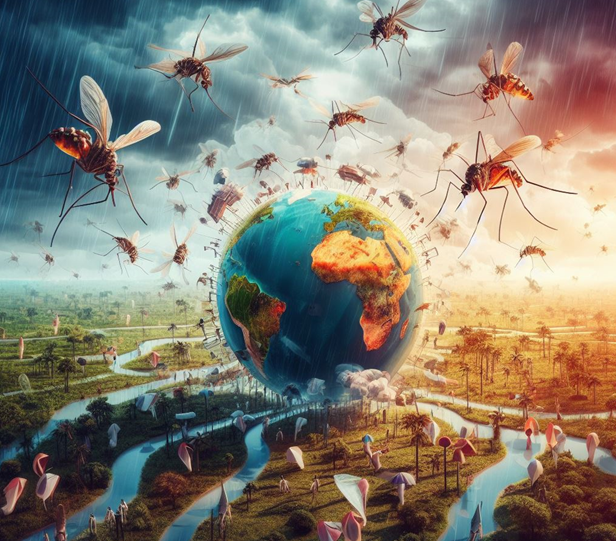
In my final analysis of the global health ecosystem, I conclude that unfortunately [and sadly], there is currently no room, or if you like, no real interest in making meaningful progress towards zero malaria. Everything is private interests. Interests and nothing more. We're all just seeking jobs, cash and kudos. I wish I were wrong. Hopefully I am.
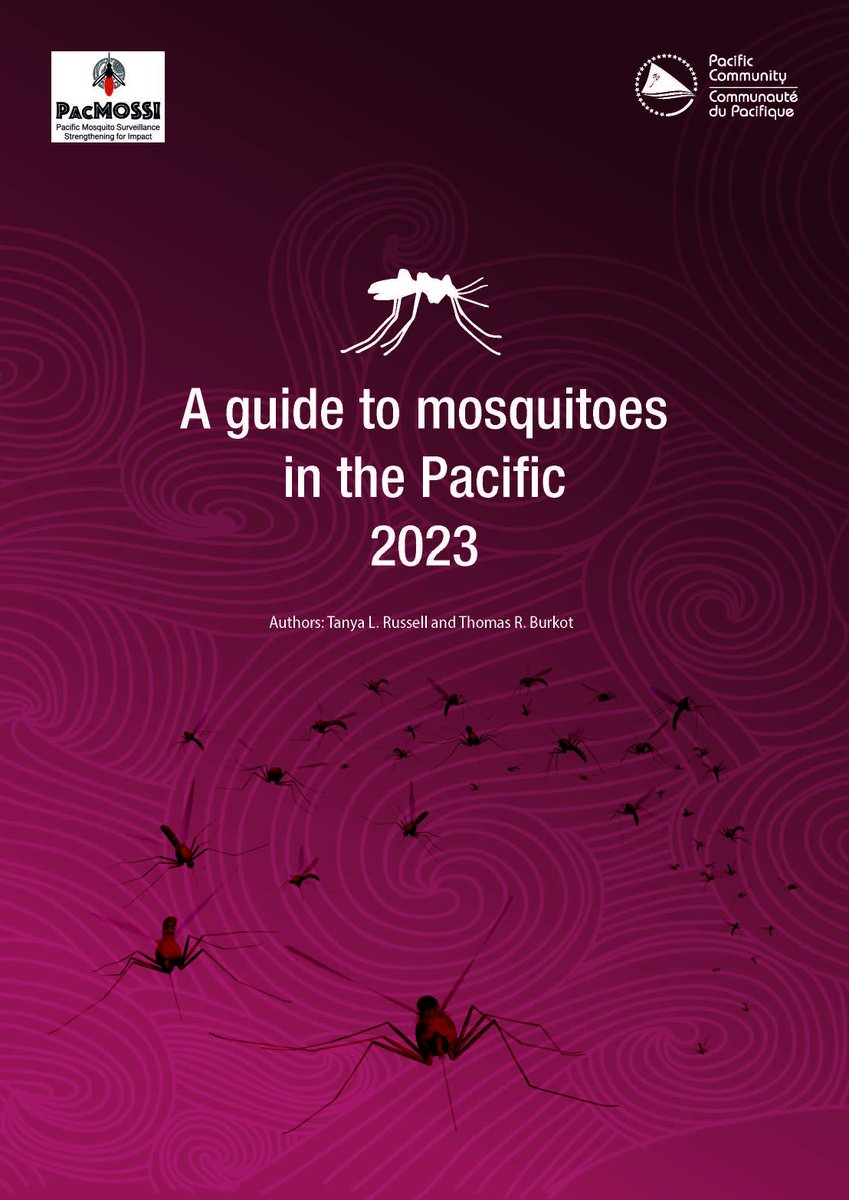
📢A guide to mosquitoes in the Pacific is finally online!
Thanks to everyone in our amazing vector community that provided input and insight. Also big shout out to the Pacific Community @spc_cps for providing open access publishing.
🦟🦟🦟👇
https://t.co/Ymej0eytjO
@tomburkot
Swiss Government Excellence Scholarships (ESKAS) offer foreign students an excellent opportunity to do a PhD in 🇨🇭. But is a #scholarship of CHF 1920/month enough? Not always easy for hosts to find top-up funds to allow students a decent life & studies in Switzerland @SBFI_CH
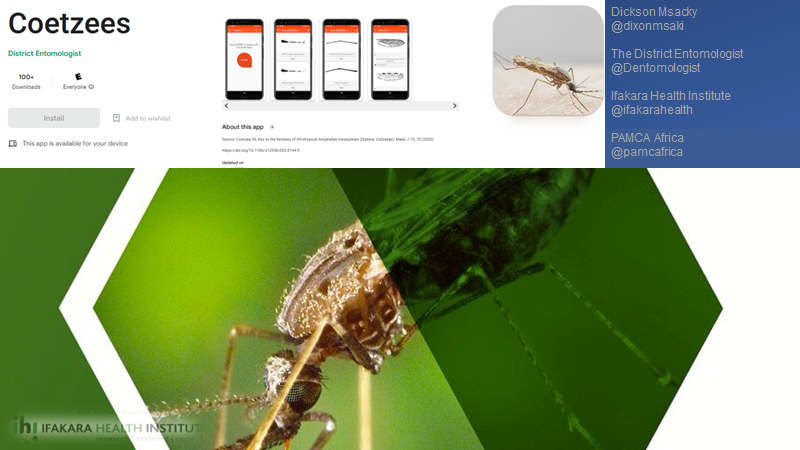
Here is a mobile app that my colleagues at @ifakarahealth & @pamcafrica have created for identification of Afro-tropical Anopheles mosquitoes. We named it Coetzees, in honor of the legendary African medical entomologist, Prof. Maureen Coetzee (now retired but not tired), whose taxonomic keys form the basis of the app. Try it out and let us know what you think.
~
The app, created for the @DEntomologist program, is available for downloads from on Google Playstore. And of course, just like Maureen's 2020 publication (https://t.co/5QIWNzR46t), the Coetzees app also includes Anopheles stephensi, An. amharicus etc. Key contact is @dixonmsaki
~
Msaky et al: https://t.co/AIqg0MJkqy by @DEntomologist@dixonmsaki@Betweljohn@Rukymohammad@WITS_Malaria@LLKoekemoer








![Fredros_Inc's tweet photo. A spider that feeds on human blood by choosing female [blood-fed] mosquitoes as prey.
~
Here is some very interesting research from 20 years ago, when the jolly good Prof. Robert Jackson arrived in western Kenya to study spiders. Prof. Jackson and I (a fresh high school graduate) briefly shared space in Dr. @KnolsMosquito team at @icipe Mbita campus (long story); and I can still say confidently that few people write simpler science than the Professor. Here is their PNAS story of the vampire spider, Evarcha culicivora.
~
A small jumping spider in East Africa called Evarcha culicivora has a unique way of indirectly feeding on vertebrate blood. Instead of biting and sucking blood directly, it chooses female mosquitoes that have recently fed on blood as its preferred prey. Surprisingly, experiments have shown that this spider can identify these blood-fed mosquitoes just by looking at them or smelling them. When given a choice between different types of motionless prey, the spider consistently selects blood-fed female mosquitoes over other options like male mosquitoes or female mosquitoes that haven't fed on blood. Interestingly, the spider's preference for blood is more important than the size of the prey. Young spiders tend to choose smaller prey, while adults and larger juveniles prefer larger prey. However, to get a blood meal, even the smaller spiders go after larger prey, and the larger spiders sometimes choose smaller prey. Additionally, when given the scent of different prey types, the spider is more likely to approach the odor of blood-fed female mosquitoes compared to prey that don't have blood
~
Sub-note: Those who study malaria mosquitoes know that they sit on walls at 45 degree angles, with their blood-fed abdomen elevated. I remember Prof. Jackson saying then that the vampire spiders would creep under this elevation and basically bisect the mosquito, throwing off the head and thorax then devouring the bloody abdomen.
~
Jackson et al: https://t.co/ym4mrVy8W9 (image from National Geographic)](https://pbs.twimg.com/media/F0OgfEYWIAEt69-.jpg)


![Fredros_Inc's tweet photo. In my final analysis of the global health ecosystem, I conclude that unfortunately [and sadly], there is currently no room, or if you like, no real interest in making meaningful progress towards zero malaria. Everything is private interests. Interests and nothing more. We're all just seeking jobs, cash and kudos. I wish I were wrong. Hopefully I am.](https://pbs.twimg.com/media/Fsu7VeNWAAAfFK-.png)