🎉🎉🎉 Excited to introduce our recent project FigMirror - a very interesting and useful tool with a simple workflow for making any paper-style figures.
- See a beautiful figure in a paper
- Screenshot it
- Add your own data
- Get a new Matplotlib figure with the same visual style
FigMirror learns the quiet details that make paper figures look polished:
- typography
- spacing
- line weight
- color restraint
- layout rhythm
The key mechanism is Grounded Measurement.
Computer-use AI can point to coordinates inside the reference figure. Code then inspects the pixels, colors, spacing, and layout around those points. This gives the system concrete visual evidence to iterate on.
Our FigMirror draws a candidate figure, compares it with the reference, keeps what works, and improves what still feels off.
Outputs:
- editable Matplotlib code
- camera-ready PDF
It works as both a local Web UI and a Codex / Claude Code skill.
Open source:
https://t.co/zCVM0aAyxp
Try it before your next deadline!
This could have covered the entire budget of the National Science Foundation for 10 years.
Instead, Trump wants to reduce the NSF budget by 50% ($5B a year instead of $9B), which would decimate the American scientific research ecosystem, dramatically reduce the number of PhD graduates, and destroy the technology innovation flywheel.
Getting blocked by stupid KOL like this is honestly an honor.
RL is still a great path. And if you feel your math talent is being wasted, there is a lot of deep work waiting in policy gradients, optimization theory, etc.
It is always strange to see people with unclear credentials lecturing MS and PhD students about their future, as if studying math or physics makes you second class while importing packages or vibe coding is somehow the peak of computer science.
PhD level research is a completely different game from MO, PhO or OI.
I was also one of the many people who "failed" at OI, but that never stopped me from doing well in regular academics comparably. It also made me realize that I was never that interested in qr/qd for its own sake.
In some sense, the current research environment is naturally much more ADHD friendly than school or standardized testing. Hyperfixation, jumping across ideas, working on many agentic workflows, and chasing unusual connections can actually become an advantage if you learn how to direct it.
What I actually enjoy is math itself, and the feeling of doing AI research. Well thanks my supervisor, he found me.
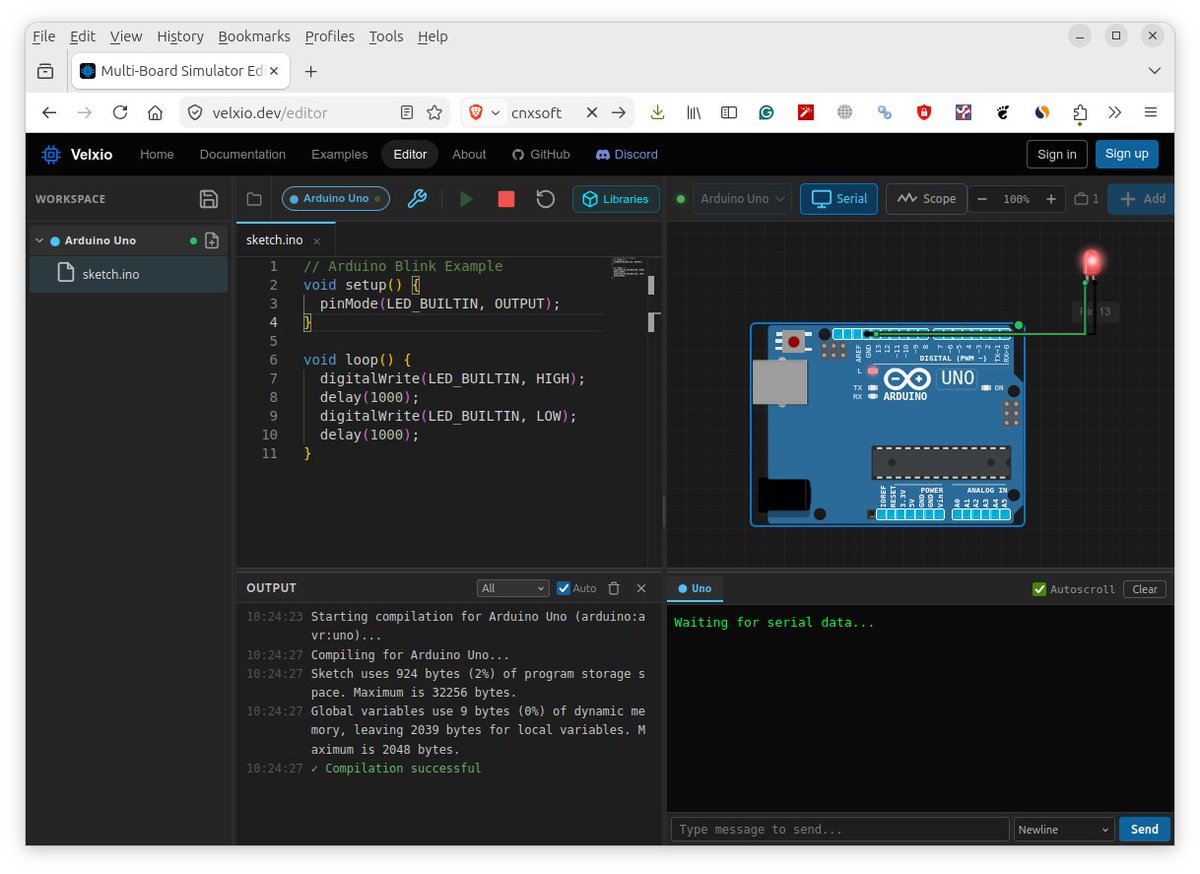
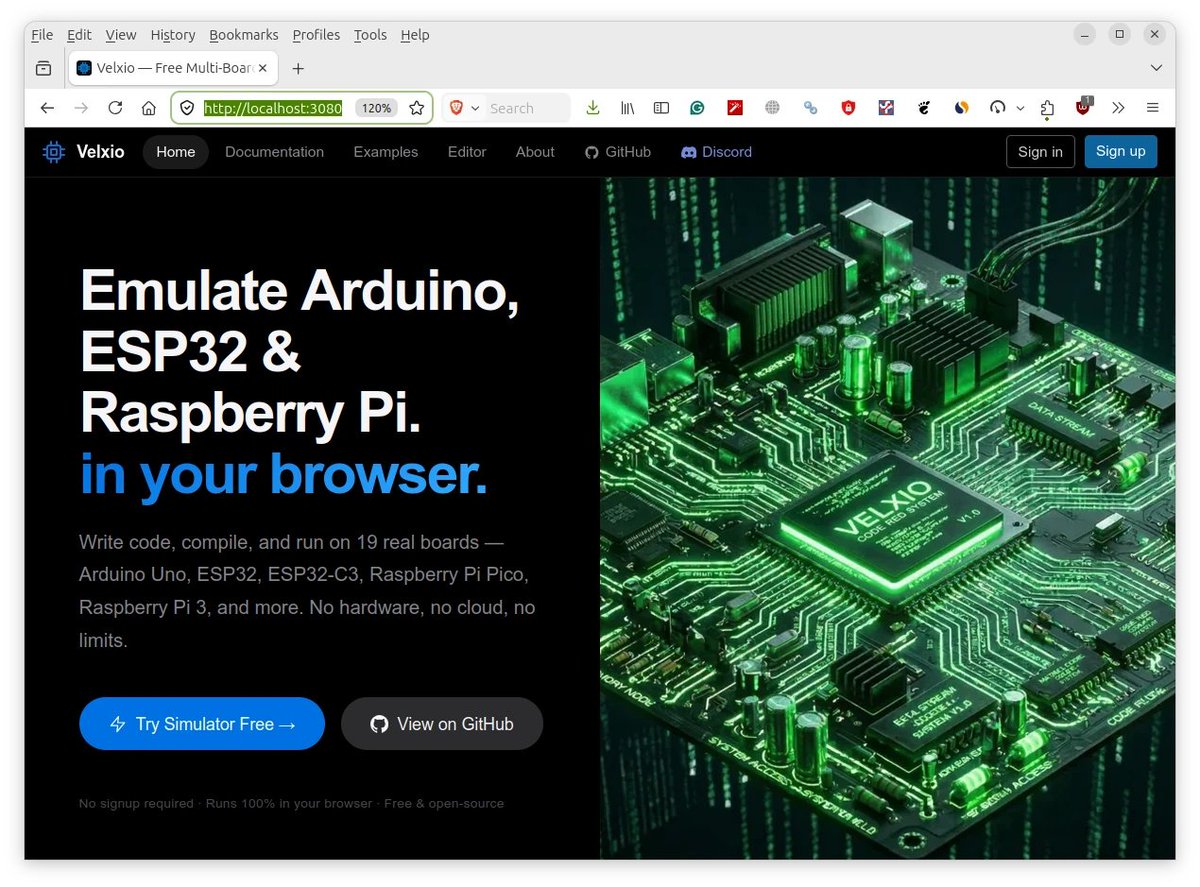
Open-source, self-hosted Arduino, Raspberry Pi, and ESP32 simulator.
https://t.co/8w5RClkdYp
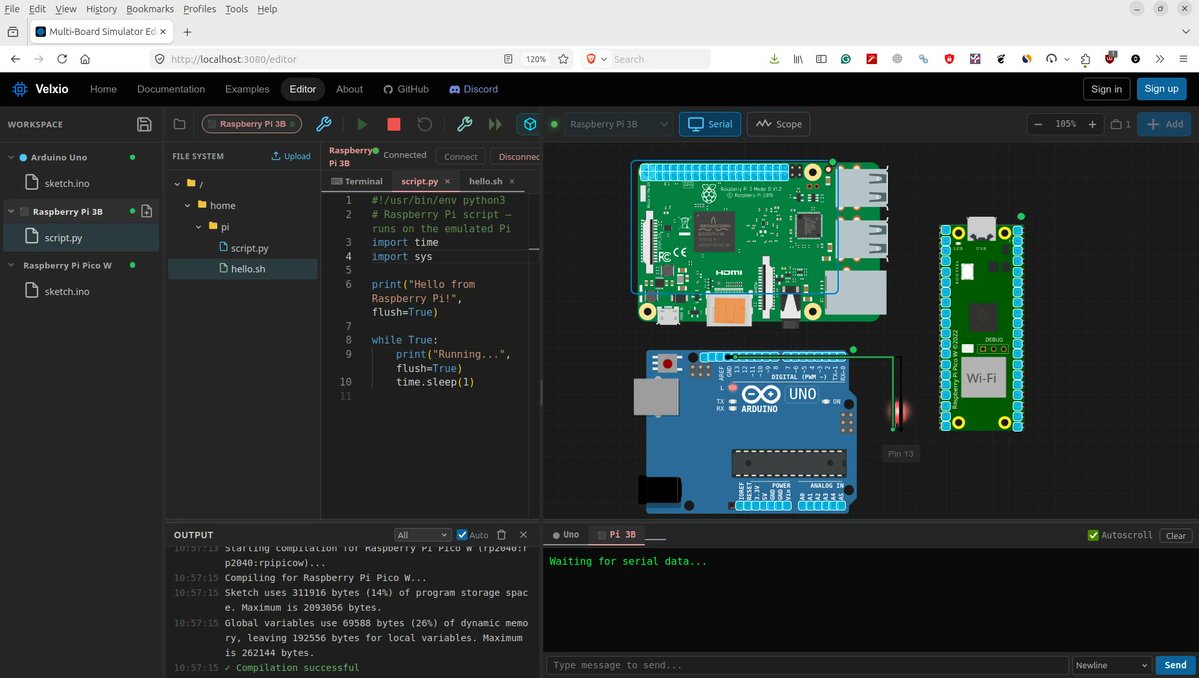
Like the Wokwi project, Velxio simulates popular development boards right in your web browser. But the difference is that the open-source project can be self-hosted, running on your own machine.
The project currently supports 19 boards and 48 components. Other highlights include support for multiple boards (e.g., Arduino connected to ESP32) and full QEMU emulation support for ESP32 and Raspberry Pi 3 (Linux).
帮转:在 X 上被大吹特吹的 Google TurboQuant,实际上剽窃了我朋友重要的科研成果 RabitQ
并且发表在今年的 ICLR 上,有充足证据证明 Google 团队知情并且隐瞒了他们先前论文的成果和贡献
因为我遇到过 paper、idea 被同组师兄剽窃的经历,三年过去了,那篇 paper 至今还是他们 Google Scholar上引用最多的成果
虽然我依旧保留着证据等合适时间给他们致命一击出口恶气。但当时没有任何人为我发声,导师只说了一句对不起,这种学术不端的行为让人非常反感
https://t.co/khxG2iBjKQ