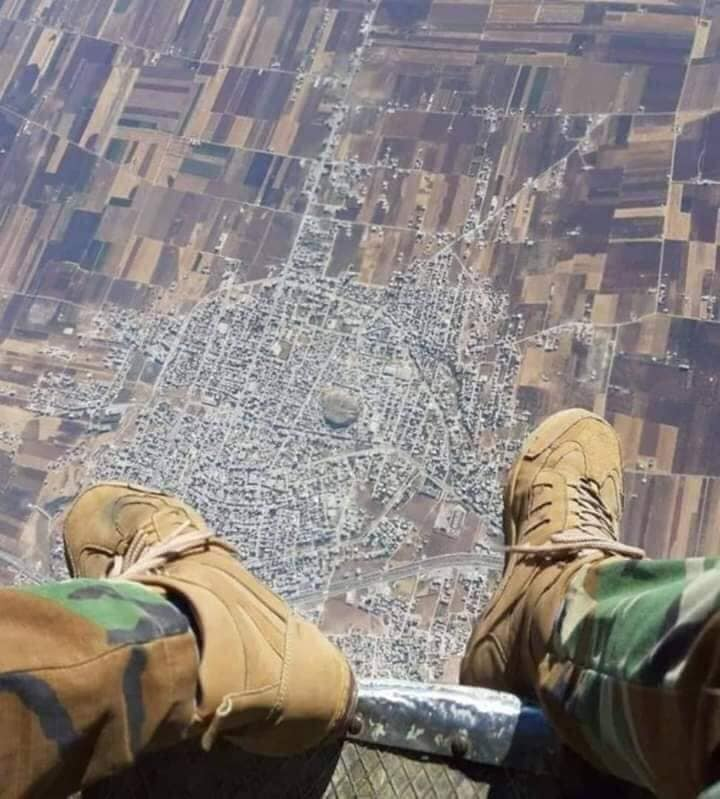
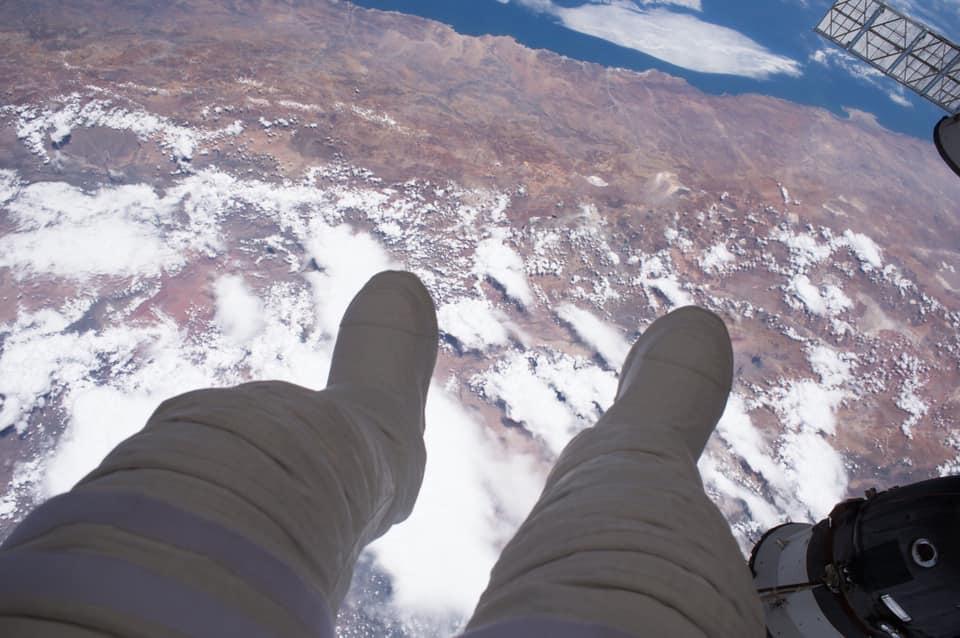
- On the left: an astronaut doing maintenance work to ISS.
- On the right: Assad regime soldier proudly sharing the picture of a barrel bomb falling over civilian homes.
This widely shared video, which has now been viewed over 14 million times, claims to show "genuine and verified" footage of multiple strikes targeting Tel Aviv today.
The video is AI-generated, and features multiple errors consistent with AI clips. It's not real.
According to local sources, 4 people were killed and several others injured in the city of Suwayda after debris from an Iranian missile, intercepted by Israeli air defenses, fell onto a residential building.
S. #Syria: 100s of buildings were torched and burned in #Suwayda province past 3 days.
Retaliations and counter-retaliations wrecked havoc on the residential areas.
Miscommunication in Baku: The road to escalation in Suwayda
Syria in Transition has learned from well-placed sources that the recent escalation in Suwayda is the result of a consequential misunderstanding between Syrian and Israeli officials during a face-to-face meeting in Baku last Saturday that centered on the possibility of a future peace agreement.
In that meeting, the Syrian transitional authorities proposed the restoration of the 1974 Ceasefire Agreement alongside a series of under-the-table confidence-building measures (CBMs) to lay the groundwork for a comprehensive peace deal over a five year period.
Israel reportedly rejected this framework, insisting that the 1974 agreement was now null and void. It demanded a new security arrangement that would include an Israeli military presence beyond the Golan Heights for a five-year transitional period. Israel also pushed for a “warm normalisation” modelled on its agreement with the UAE, including the opening of embassies and business ties. The transitional authorities flatly rejected these terms.
Despite the impasse, the Syrian delegation suggested that further progress could be made if Israel reciprocated the CBMs already offered by Damascus, including the transfer of intelligence files on executed Israeli agent Eli Cohen, and the withdrawal of heavy weapons from Syria’s south. They specified that Israel should greenlight the transitional authorities to fully integrate Suwayda into Syrian state structures. Israel reportedly agreed.
Syrian transitional authorities understood (or wanted to believe) that this was a green light by Israel to take over the whole of Suwayda. Damascus quickly moved to exploit the ongoing Druze-Bedouin tensions as a pretext to send General Security forces into Suwayda as peacekeepers and impose a fait accompli takeover of the city.
President Sharaa is said to have believed that strong US backing, particularly following recent remarks by Special Envoy Tom Barrack on the future of the SDF and rejection of federalism, would shield him from Israeli backlash. He also appears to have overestimated the strength of pro-government Druze factions while underestimating support for anti-government Druze leader Sheikh Hikmat Hajari. Some insiders suggest Sharaa may have been poorly advised by his defence and foreign ministers, both eager for quick wins in their respective portfolios.
The operation backfired almost immediately. General Security, largely composed of inexperienced new recruits, entered Suwayda without coordination with Hajari’s militia and walked straight into an ambush. Many were killed or captured. The ensuing bloodshed triggered calls for revenge by government loyalists. HTS’s military wing may have ignored any instructions from Sharaa to commit to a political solution.
Israel had a far narrower reading of what was agreed in Baku. From the Israeli perspective, the green light referred strictly to implementation of pre-existing arrangements: restoring state services and establishing a minimal, locally-manned security presence. Damascus’ push for a full military takeover was seen by Tel Aviv as a violation of the verbal understanding and an act of aggression. Public comments by Marco Rubio describing the crisis as a “misunderstanding” appear to lend support to this reading of events.
Repeated Israeli warnings to pull back were ignored in Damascus, where Sharaa reportedly feared that a withdrawal would be perceived as a humiliating climbdown. Instead, he doubled down. And Israel, in turn, retaliated.
Despite the military setback, President Sharaa has emerged as a hero in the Sunni street. His defiance of both Israel and Hajari – whom many perceive as an Israeli puppet and traitor – has boosted his popular standing. It has also ignited unseen sectarian hate against the Druze community, with even calls for economic boycotts of Suwayda.
However, the image of infallibility that once surrounded Sharaa after a string of foreign policy coups is now visibly cracked. Within armed circles, especially among the HTS military leadership and allied factions, Sharaa is seen as a weakened leader. He now faces the difficult task of restraining calls for sectarian revenge after the deaths of hundreds from the army and the security forces.
The crisis has also exposed the limits of Sharaa’s state-building project. His strategy of integrating minorities not through political means but by coercion is drawing international scrutiny. What was intended as an assertion of sovereignty has instead damaged his credibility abroad. The SDF’s already deep skepticism of Damascus has only hardened further. And in Ankara, frustration is mounting: Turkish officials view Sharaa’s misstep as having handed Israel a pretext to expand its political and physical footprint inside Syria.
In 7 months, #Israel has done the following in #Syria:
- 987 air & artillery strikes
- 421 ground incursions
- Occupied ~180sqkm of land
In response, #Syria's govt has done:
- 0 attacks
- Filed x2 UNSC complaints
- Seized 49 #Hezbollah weapons shipments headed to #Lebanon
S. #Syria: clashes continue in the city in #Suwayda where local militiamen refusing to surrender are using in several areas - mostly outskirts -guerrilla tactics and snipers on rooftops to target Damascus forces.
Number of casualties, worsened by Israeli airstrikes (Police HQ bombed moments ago), is very important while local hospitals are overwhelmed.
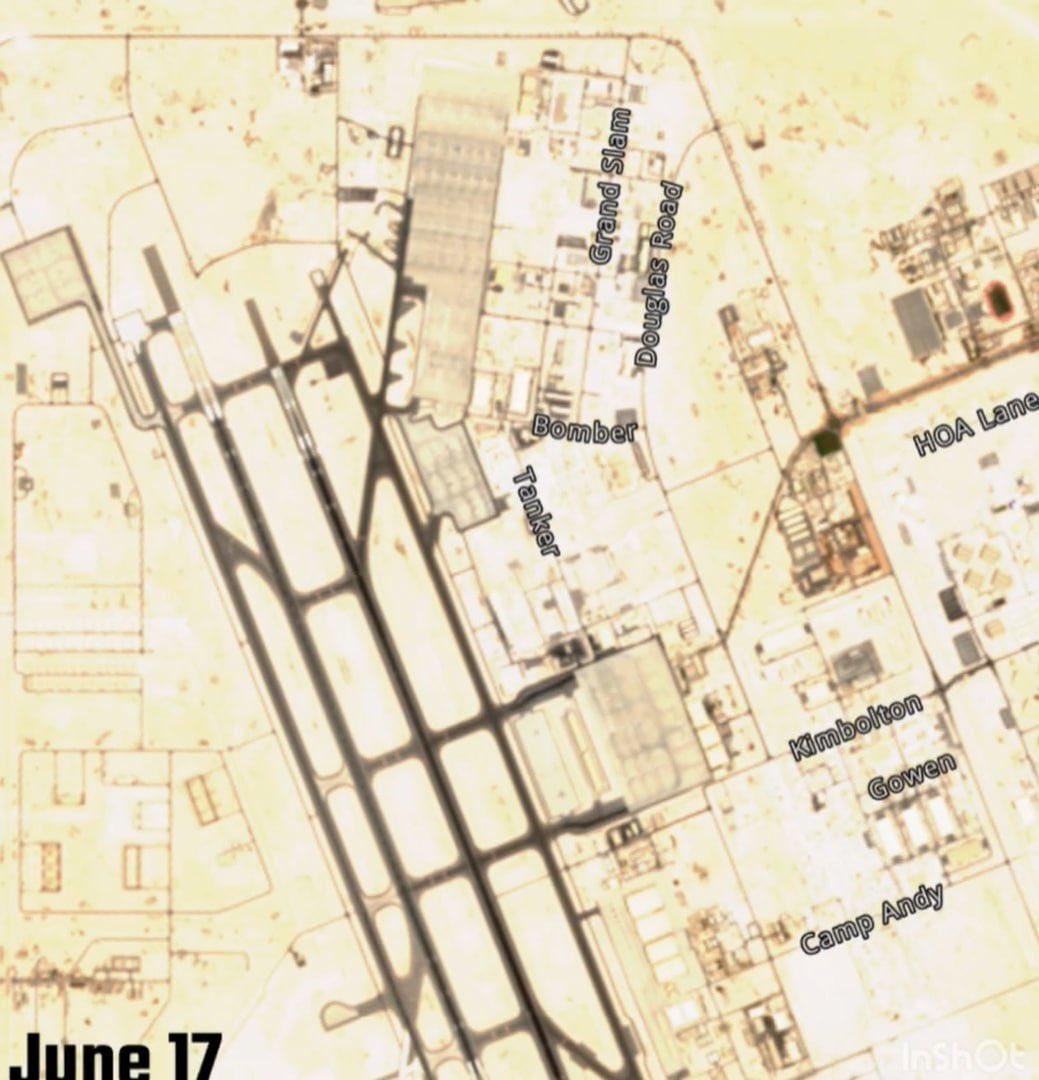
Very interesting: Low-res satellite images show Qatar’s Al-Udeid Air Base nearly empty, with aircraft parking areas cleared.
U.S., UK, and Qatari jets appear to have been relocated over fears of possible Iranian strikes.
Israel, the West Bank and Gaza: Given the security situation and in compliance with Israel Home Front Command guidance, the U.S. Embassy in Jerusalem will be closed tomorrow (Wednesday, June 18) through Friday (June 20). This includes the Consular Sections in Jerusalem and Tel Aviv. We have no announcement about assisting private U.S. citizens to depart at this time. The Department of State is always planning for contingencies to assist with private U.S. citizens’ departure from crisis areas. We will alert the U.S. citizen community if there is additional information to share regarding departure options. U.S. citizens should enroll in the Smart Traveler Enrollment Program at https://t.co/yQT0FfcCKN to receive the latest updates. More at https://t.co/LwKR0Hhlj5