Historian of Civil War/Reconstruction. History of experience/emotions and senses. Avid book reviewer! Podcast and blog in the works; the good, bad, ugly, & fun.
At the 11th hour of the 11th day of the 11th month in 1918, the armistice took effect, bringing an end to the fighting on the Western Front in World War I.
The following year, President Woodrow Wilson proclaimed November 11 as Armistice Day to honor those who served in the war. Congress made it a federal holiday in 1938.
After World War II and the Korean War, there was a push to recognize veterans of all wars, not just World War I. Raymond Weeks, a World War II veteran from Birmingham, Alabama, helped lead that effort. In 1954, President Dwight Eisenhower signed legislation officially changing Armistice Day to Veterans Day.
Congress briefly moved the holiday to a Monday in October in 1971, but after opposition from veterans’ groups and several states, it was moved back to November 11 in 1978.
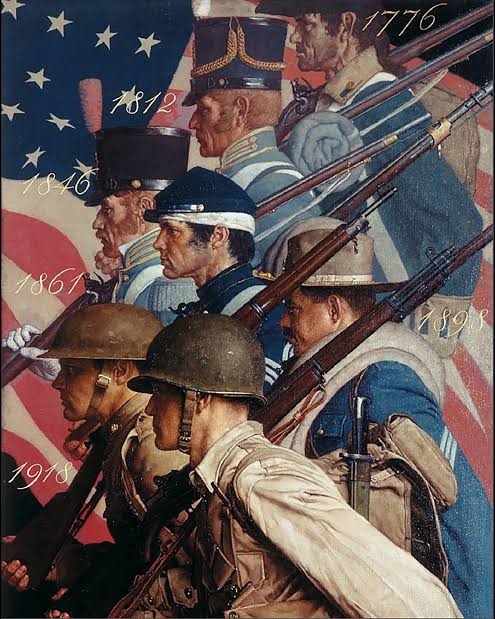
Today, we honor all veterans from all the American wars. Happy Veterans Day! 🇺🇸
#VeteransDay
November 11, 1620: The Mayflower Compact was signed by 41 passengers aboard the Mayflower in Provincetown Harbor, Cape Cod.
The Pilgrims had landed outside their intended destination, Virginia, so this compact established governance and laws for the new colony.
The compact remained in effect until 1691 when Plymouth Colony became part of the Massachusetts Bay Colony.
#OTD 1918: The World War I armistice was signed inside a private railway carriage belonging to Allied Commander Marshal Ferdinand Foch, located in the Compiègne Forest. Hostilities officially ended on the 11th hour of the 11th day of the 11th month.
#WWI#VeteransDay
Warren Harding once choked a man inside the White House. Honestly, he had it coming.
His name was Charles Forbes.
Forbes had met Harding and his wife on a trip to Hawaii years earlier. He was charming, fun, and a great poker partner, which mattered a lot to Harding. When Harding became president in 1921, he made Forbes head of the brand new Veterans' Bureau.
It was one of the biggest jobs in Washington. Hundreds of thousands of men had come home from France wounded, gassed, or shell-shocked. The bureau had a huge budget to build hospitals, buy supplies, and care for them.
Forbes treated it like a personal piggy bank.
He toured the country picking sites for new veterans' hospitals, and the contractors who wanted those jobs knew who to take care of. Forbes partied with them, traveled with them, and steered contracts their way in exchange for kickbacks. Hospital construction costs ballooned.
Then there was the warehouse.
At a massive government depot in Perryville, Maryland, the bureau had stockpiles of supplies meant for veterans' hospitals. Sheets, towels, blankets, gauze, medicine. Forbes declared huge amounts of it surplus and sold it off to a private company for a tiny fraction of what it was worth. Trainloads of brand new goods went out one gate while the bureau was buying replacements at full price through the other.
At the same time, the bureau was buying some things at wildly inflated prices. It bought so much floor cleaner that, by one estimate, it would have taken a hundred years to use it all.
Meanwhile, veterans were waiting for care that didn't come.
Word eventually reached Harding, and he did not take it well.
Forbes was called to the White House. Harding grabbed him by the neck and shook him the way a dog shakes a rat, calling him a "double-crossing bastard." The only thing that saved Forbes was the President's next appointment walking in on the two of them. Whoever that poor visitor was, they walked into the Oval Office and found the President of the United States throttling a member of his own administration.
Forbes was out. He sent in his resignation in early 1923.
Things got darker from there. A few weeks later, the bureau's top lawyer, Charles Cramer, took his own life. Then Jess Smith, a close aide to Harding's attorney general, did the same. Washington was buzzing about how deep the rot in the Harding administration went.
Harding knew it was coming. Around that time he told a journalist that his enemies weren't the problem. It was his friends who kept him up walking the floor at night.
That summer, during a trip out West, Harding fell ill and died in San Francisco on August 2, 1923.
After his death, the scandals came pouring out. Teapot Dome got the headlines. But Senate investigators dug into the Veterans' Bureau too, and the numbers they put on waste and fraud ran into the tens of millions, with some estimates far higher.
Forbes's life fell apart. His wife divorced him. Then, in 1925, he was convicted of conspiracy to defraud the government and sentenced to two years in the federal penitentiary at Leavenworth, Kansas.
The man trusted to take care of America's wounded soldiers ended up behind the walls of one of the most famous prisons in the country, a few miles from Fort Leavenworth and the Army he'd been robbing.
It's called the Veterans' Bureau scandal, and almost nobody learns about it.
162 years ago today the burning of Atlanta began in earnest, and almost everything most Americans think they know about it comes from a movie. The real story of what Sherman's men destroyed, and what they did not, is more disciplined, more deliberate, and more interesting than the legend.
The popular image, burned into memory by Gone with the Wind, is of a whole city consumed in an orgy of destruction, a magnificent Southern metropolis wantonly annihilated, its people fleeing a wall of flame. It is a powerful image. It is also largely a myth.
What actually happened, starting around November 11, was a methodical military demolition, not a wild burning. Sherman's orders, carried out under his skilled chief engineer Orlando Poe, had a specific target: everything in Atlanta that could help the Confederacy make war. That meant the railroad depots, roundhouses, and machine shops, the foundries and rolling mills, the arsenals and munitions works, the factories and warehouses that had made Atlanta one of the great industrial and supply centers of the South. Poe's engineers used battering rams to knock down the sturdiest brick and stone buildings, and torched the rest of the military works.
Fires did spread beyond their intended targets, as fires in a crowded 19th-century city always did, and some private buildings were consumed. But the destruction was far from total. By most estimates only around 40 percent of Atlanta was left in ruins. Sherman's men did not systematically burn homes and did not target churches, and much of the residential city survived. This was not the leveling of an entire population's dwellings. It was the deliberate gutting of a war-making machine.
None of this is to soften what it was. It was still hard war, the calculated destruction of a city's capacity to sustain the Confederate cause, and for the people of Atlanta, who had already been ordered to evacuate weeks earlier, it was a trauma and a humiliation. The sight of their industrial district in flames was devastating, and the psychological blow was immense, which was precisely the point.
But the distinction matters, because the myth and the reality teach different lessons. The myth is of senseless, total vengeance. The reality is of something colder and more modern: a disciplined, targeted campaign to destroy the infrastructure of war, carried out by engineers with battering rams and controlled fire, aimed at railroads and factories rather than at the homes of civilians. Sherman was waging a terrible kind of war, but he was waging it with precision, and understanding exactly what he did, and did not, destroy on these days is the first step to honestly judging it.
This Veterans Day, the Sons of Union Veterans of the Civil War honors all who answered the call to serve our nation. We remember the sacrifice of the Boys in Blue and every generation of American veterans who have defended liberty and preserved our Union. 🇺🇸 #VeteransDay#SUVCW
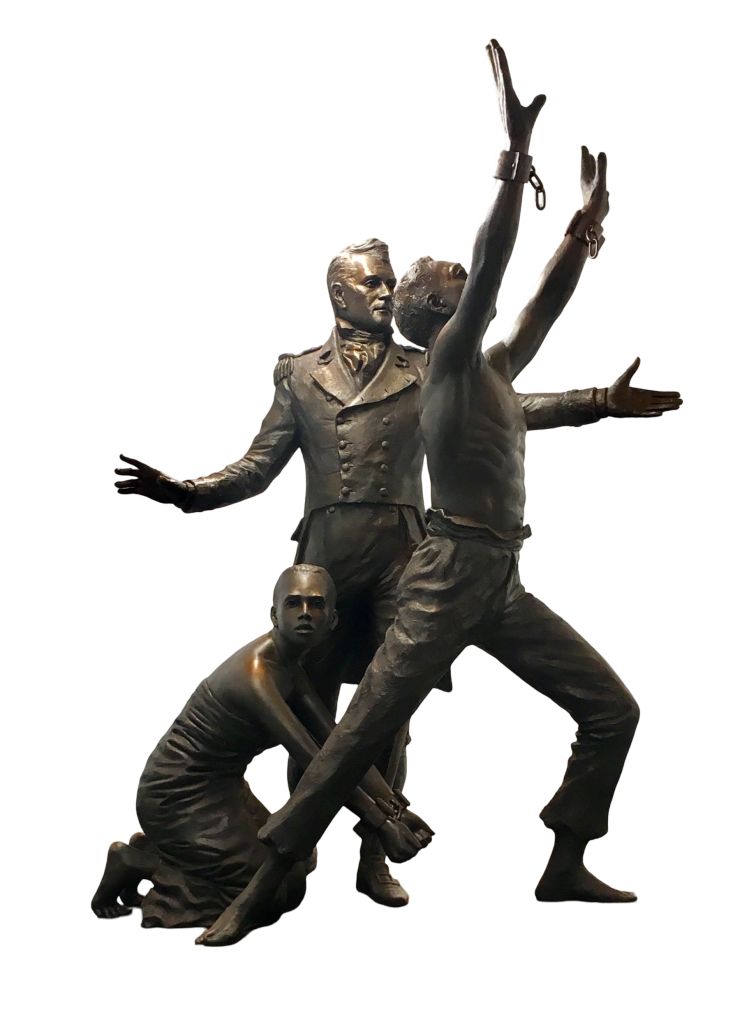
Should the sailors who helped disrupt the Atlantic slave trade be commemorated?
In “The West Africa Squadron Memorial Fund”, Tim Bouverie highlights the work of the Royal Navy’s West Africa Squadron, which operated from 1808 to 1867, intercepting an estimated 1,600 slave ships and rescuing 150,000 Africans destined for slavery in the Americas.
The article also highlights the search for a permanent home for a memorial honouring the 1,700 sailors who lost their lives during the Squadron's operations.
Read the article: https://t.co/eCT75f9O7A
#HistoryReclaimed #WestAfricaSquadron #RoyalNavy #BritishHistory
Veterans Day has special meaning for us at the National Archives where we hold millions of Official Military Personnel Files and records of the men and women who have served in the U.S. military. Thank you to our nation's veterans for their bravery, dedication, and sacrifice.
This Veteran’s Day, join us as we reflect on the legacy of our nation’s first veterans, whose service helped secure American independence. Learn more about the experiences of the Revolution's veterans: https://t.co/eYgKu3ZuWp
The Last to Fall – Who Were World War One’s Tragic Final Casualties
“Of the war’s untold millions of casualties, a staggering 11,000 were killed or wounded during that last morning of fighting.”
https://t.co/WPRb78ja6j
#RemembranceDay#LestWeForget#ArmisticeDay2026
On this Veterans Day, I’m thinking about all the people who’ve worn the uniform, including members of my own family.
Today we honor every veteran for their service and sacrifice.
If you’re a veteran, thank you. If you know one, reach out and say thanks! Their stories matter.
The Colonial Marines, predecessor to the United States Marine Corps, was founded #OnThisDay November 10, 1775, under the Continental Marine Act of 1775. Their primary duty was to serve as the Navy’s infantry arm, providing security, making amphibious assaults, repelling boarders, and sweeping enemy decks with musket fire. Marines allowed the fledgling Colonial Navy to raid targets of opportunity and capture British merchant shipping. https://t.co/GGnWYRf1uE
Nov 10, 1782. The Ohio country. A year after Yorktown, George Rogers Clark leads around 1,000 Kentucky riflemen across the Ohio River in the last major American offensive of the Revolutionary War.
In the East, the war was basically over. On the frontier it was not. Shawnee, Lenape, Wyandot, and other Native nations, backed by the British at Detroit, were still fighting to drive American settlers out of Kentucky and keep them from crossing the Ohio.
In August 1782 they handed the Kentuckians a devastating defeat. At the Battle of Blue Licks, a large force of Native warriors and Loyalist rangers ambushed about 180 Kentucky militia. Dozens were killed in minutes. Daniel Boone was there. His son Israel was shot and killed beside him.
Kentucky was furious and frightened. They turned to Clark.
Clark was the frontier hero of the war. In 1778 and 1779 he'd led a small force into the Illinois country, captured British posts at Kaskaskia and Vincennes, and taken the British commander, Henry Hamilton, prisoner after a brutal winter march through flooded country. Kentuckians trusted him.
In November he gathered about 1,050 mounted men at the mouth of the Licking River, near present-day Cincinnati, and crossed the Ohio. Daniel Boone rode with him.
They headed for the Shawnee towns along the Great Miami River in western Ohio. On Nov 10 they reached the main town, a Shawnee settlement called Chillicothe. Warned they were coming, most of its people had fled. Clark's men burned the town and several others nearby, along with a British trading post, and destroyed the stored corn and crops the Shawnee needed to get through the winter. A handful of people were killed or captured on each side.
It was a punishing raid, but not a decisive battle. The Shawnee and their allies kept fighting for years after the Revolution officially ended, until Anthony Wayne's victory at Fallen Timbers in 1794.
For Clark it was his last campaign of the war. He'd spent much of his own money supplying his troops, and Virginia never fully paid him back. He spent the rest of his life in debt.
His younger brother did a little better. His name was William Clark, of Lewis and Clark.