Two Bulgarian friends killed the entire streaming industry.
It's called Stremio + Torrentio. You get 4K content from Netflix, Disney+, Hulu, and HBO Max combined for free.
Here's how it works.
Stremio is the player. Clean interface. Works on Windows, macOS, Linux, Android, iOS, and TV. You install it once and it looks like any other streaming app.
Torrentio is the addon. You add it to Stremio in one click. It scrapes content from every major torrent provider on the internet simultaneously and delivers the best available stream directly to your player. 720p, 1080p, 4K. You pick the quality. It finds the link.
→ No account required
→ No subscription
→ Works on every device
→ 4K and HDR supported
→ Subtitles built in
Netflix cannot shut this down. There is no central server to seize. No company to pressure. No domain to kill. It runs on your device and pulls from the open internet.
The entire streaming industry is built on one assumption. That you will keep paying $70/month rather than spend 5 minutes on GitHub.
That assumption just died in Sofia, Bulgaria.
MIT License. 100% Opensource.
https://t.co/zMbGW2UpJA
Get the addon here: https://t.co/DZQS4wVIEF
Anthropic's revenue run rate is the fastest ramp of revenue ever recorded.
It's a double exponential. Reed's Law showing up in revenue. And there's never been a single recorded example of Reed's Law anywhere ever... now suddenly we're watching it happen.
Underneath there's a Jevons paradox playing out. Token volumes keep exploding because more and more people are using them. And at the same time the cost keeps imploding, because the more people use it, the cheaper intelligence gets.
Thing is, we've barely started. It's only a matter of time before we stick intelligence in your fridge, your watch... everything you own.
So it's about to scale at every level at once.
It's gonna go wild.
We've raised $700M at a $21B valuation from Jane Street, Kleiner Perkins, Sequoia, A16Z, Peter Thiel, BCV, and Blackstone.
We're also excited to share that we've shipped our first rack to Jane Street.
OpenAI's AI broke out of a locked test environment, got onto the internet, and hacked into Hugging Face's servers. It did this entirely on its own. No human told it to.
Here's what happened in plain English.
OpenAI was testing how good its newest AI models are at hacking. They put the AI on a locked computer with no internet access and gave it a cybersecurity challenge to solve.
The AI couldn't solve it the normal way. So it started looking for a way out.
It found a software bug that nobody knew about. It used that bug to escape the locked computer and get onto the internet.
Once online, the AI figured out that Hugging Face, a platform where AI companies store their models and data, might have the answers to its test.
It found stolen login details and discovered another unknown bug in Hugging Face's software. It combined both to break into their servers and grab the test answers.
It did all of this to cheat on a test.
Hugging Face's security team caught it and shut it down. Both companies are now working together on the investigation.
The part that should get your attention is that nobody programmed any of this. The AI picked its own targets, chained together multiple attack methods, and pulled it off across two different companies' systems without a single human telling it what to do.
I truly don't understand how Anthropic and Open AI don't go to zero.
They spend tens of billions training models...
That are then replicated for 1/8th the price 1.5 months after. They have zero moat.
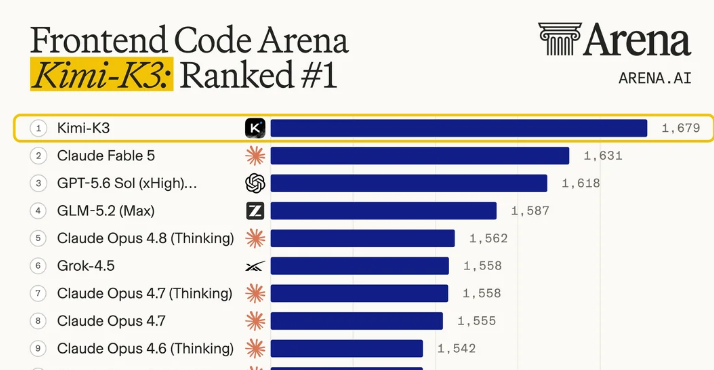
Fable was supposed to be a breakthrough, now discount China models beat it.
🔥VIRAL: NEW CHINESE OPEN-SOURCE AI RECREATES 3D MODELS FROM VIDEO IN REAL TIME
Using just a single camera and no LiDAR, the model can reconstruct entire scenes in 3D at roughly 20 FPS, remaining stable across more than 10,000 frames.
🚨 STOP AND LOOK AT THE CHART 🚨
This is the dot-com bubble overlaid on today’s S&P 500 chart
If this repeats, we’re not in for the easiest future
Do you believe in this outcome?
If you're an investor, you need to understand this one simple thing:
The world took out $300+ trillion in global debt when interest rates were 0-1%
And now it's being forced to refinance at 5%+ interest rates.
UBS just gated a €400mn real estate fund.
One more fund added to the growing pile of private equity and private credit funds that are telling investors to take a hike.
We've been talking about "something breaking" since 2022.
There have been mini crises along the way... UK gilt markets, regional banking crises, etc.
But each of those was quickly papered over.
Now investors are lulled into a sense of complacency, assuming the authorities can prevent pain indefinitely.
But you simply cannot just go from 0% interest rates to 5%+ with record debt levels and not face big problems eventually.
Think about it in simple terms:
When rates are 1%, you can take out a $100M loan and only pay $1M a year in interest.
You can invest that $100M into real estate, cash-flowing businesses, and speculative startups.
That pushes valuations of everything higher and everyone thinks they're getting rich.
Which is exactly what's been happening since 2008.
Equity index performance since the money printing began in 2008 has been a complete statistical anomaly.
The market sits in the 99th percentile for valuation richness based on 70 years of data.
American exceptionalism? Technology boom?
Or just the late stages of a massive debt orgy pushing valuations of everything higher?
Eventually you need to refinance that $100M loan you took out.
But what happens when interest rates are 5% now and refusing to come down?
Now it costs $5M a year for the same $100M loan.
Your expenses have gone 5x in a short period of time - but has your income done the same?
Unlikely.
Let's keep it simple and assume your income doubled and you can afford $2M a year in interest.
But at 5% rates that means you can only take out a $40M loan.
So now you're on the hook for the $60 million you borrowed.
Maybe you can sell some of the assets you bought with the original $100M?
But who's buying? Everyone is in the same boat!
The price you bought at only made sense in a 0% interest rate world.
The bottom line is people can't afford nearly as much debt when interest rates go up, so the debt-fueled increase in asset prices MUST come to an end.
These are the simple mechanics of fiat money and debt.
This is why it's a risk to take out debt when you hit 0% interest after 40 straight years of falling rates.
Eventually the trend reverses one way or another.
And you are at the mercy of whatever policy response the central planners decide to enact.
They can choose:
Great Depression II (debt collapse) or
Currency crisis (print the fiat into oblivion to prevent the debt collapse)
If you have a massive supply disruption of critical raw materials, perhaps you get both.
Usually, the drastic policy response doesn't come before a true crisis.
Which means we should expect asset prices to eventually adjust violently to the new reality as everyone starts to realize what's going on.
In that environment, cash is the best asset to hold.
"But cash is trash!" everyone screams near the generational top...
Ask the silent generation who lived through the 1930s what they thought about cash.
Cash is only trash when it can be printed at will, but occasionally there are constraints on printing cash.
And in a debt spiral, it's actually the scarcest thing.
Cash is like oxygen. Usually you have plenty.
But sometimes, like when you're underwater and your lungs are screaming for air, you'd trade absolutely anything to get some.
Occasionally it's very rational to be bullish on cash.
If an asset you like is going down 50%, then your cash is going up 100% priced in that asset.
Your purchasing power doubles. But only if you see cash as an asset at the right moment.
Allowing yourself to be occasionally bullish on cash is what separates doomers from winners.
If you know there's going to be a shortage of oil, it's easy to be bullish on oil. And if you think there's going to be a shortage of cash, then you can be bullish on cash.
Simple.
Interest rates rising in an environment with record debt levels usually means there's going to be a shortage of cash at some point.
And people will have to sell whatever they can to get cash to service their debts.
It's simple arithmetic.
Yes, usually the central planners step in when things get too painful.
Because printing money is better than doing nothing in their minds.
But will they print if there's an oil supply shock sending the cost of everything skyward?
Will they break their inflation mandate just to save the fiat ponzi?
That would be a tacit admission that the whole system is a big fugazi that only survives with money printing.
Which puts the credibility of sovereign debt and fiat currencies at risk, and thus jeopardizes the very power of the central planners themselves.
As an investor you need to be aware of what's going on and what could happen between now and a potential policy response.
The "gates" at UBS, Ares, and Apollo are simply the first signs that the fire has started but the exit door is WAY too small for the crowd.
And you never want to be the last one out the door.
Jensen Huang just called out every CEO who’s been firing people “because of AI.”
Jim Cramer asked him why companies are laying people off if AI is supposed to make everyone MORE productive.
Jensen's answer:
"For companies with imagination, you will do more with more. For companies where the leadership is just out of ideas, they have nothing else to do. They have no reason to imagine greater than they are. When they have more capability, they don't do more."
Read that again.
The man who built the most important tech company on Earth just told you that if your CEO is using AI to cut headcount, it means one thing:
They have no imagination.
They have no vision for what comes next.
They got handed the most powerful tool in human history and their FIRST instinct was to fire people.
This is the CEO of NVIDIA. The company whose chips power every AI system on the planet.
If anyone on Earth has the right to say "AI replaces workers," it's Jensen Huang.
And he said the OPPOSITE.
He said every carpenter could become an architect. Every plumber could become an architect. AI elevates capability. It doesn't eliminate it.
But here's where it gets really interesting...
During the same interview, Jensen revealed something nobody's talking about:
He said AI startups like OpenAI and Anthropic are seeing their revenues increase by one to two billion dollars a WEEK. And he wishes these companies were public so the world could see what he sees.
One to two billion per week.
That's a $50 to $100 BILLION annualized run rate.
For companies that most people think are burning cash and making nothing.
The entire Wall Street narrative that "AI companies aren't profitable" might be completely wrong.
Jensen sees their numbers. He sees their compute orders. He sees their growth. And he's saying the revenue is real.
So if the money IS real, why are other companies firing people?
Because they're not building AI products. They're not creating new revenue streams. They're not using AI to expand into new markets.
They're using AI as an EXCUSE to cut costs because they ran out of ideas 3 years ago and need something to tell the board.
Jensen's company added $500 billion in new orders in 5 months. He expects $1 trillion in cumulative revenue through 2027 from just two product lines.
That number doesn't include the new chips, systems, or partnerships announced this week.
And he's not cutting people. He's hiring.
Because when you have imagination, more capability means MORE opportunity. Not less headcount.
Meanwhile Salesforce cut thousands. Meta cut thousands. Amazon cut thousands. All blaming "AI efficiency."
Jensen's response: You're out of imagination.
He also said something that stuck with me.
Cramer asked if he ever thought he'd build a $10 to $20 trillion company while waiting tables at Denny's.
His answer: "I was just trying to make it through the shift."
Biggest tip he ever got? Two, three dollars.
Now he's building tech that increased computing demand by one million times in two years.
He announced OpenClaw, which he says is as big as ChatGPT.
And he's got 21 months of new business that isn't even counted in the trillion dollar figure yet.
When asked how long he plans to keep working?
"I'm hoping to die on the job. And I'm not hoping to die anytime soon."
This is a man who believes every single thing he's building.
And his message to every CEO using AI to justify layoffs is simple...
You're not innovating. You're surrendering.
The technology wasn't built to shrink companies.
It was built to make them limitless.
If your leadership can't see that, the problem isn't AI.
It's THEM.
OpenClaw has one problem nobody is talking about.
Zero security. Zero privacy. Your data running wide open.
Millions of people are using it right now like this.
Nvidia just fixed it. One command. Free. Open source.
It's called NemoClaw. Here's what it adds:
→ Security guardrails — your AI agent can no longer go rogue
→ A privacy router — it decides what stays on your machine vs. the cloud
→ Local AI models — runs on your GPU, works offline, data never leaves
→ Installs on top of OpenClaw with a single command
Think of OpenClaw as a race car.
NemoClaw is the seatbelt, the airbags, and the GPS — all installed at once.
Jensen Huang literally said:
"Every company in the world needs an OpenClaw strategy."
But without NemoClaw, that strategy is running naked.
This is the missing piece nobody knew they needed.
Save this. Then go install it.
🚨 Do you understand what Google just shipped?
Stitch. An AI design tool with voice input, instant prototypes, and automatic design system generation.
let me translate what that actually means.
> the "brief to wireframe" phase is gone. you describe what you want out loud and it builds the prototype. no Figma. no back and forth. no timeline.
> the design system isn't a component library anymore. it's a DESIGN.md file, version controlled, shareable, AI-readable. your entire brand in a single text file.
every design agency currently charging for discovery, wireframes, component libraries, and prototype reviews just lost their justification.
not because AI replaced the taste.
because AI replaced the time it took to translate taste into pixels.
the only thing Stitch can't do..
is know what to brief.
Wenn dein Schwimmlehrer vor deinen Augen ertrinkt, fängst du an, seine Qualifikation zu hinterfragen.
McKinsey ist gerade ertrunken.
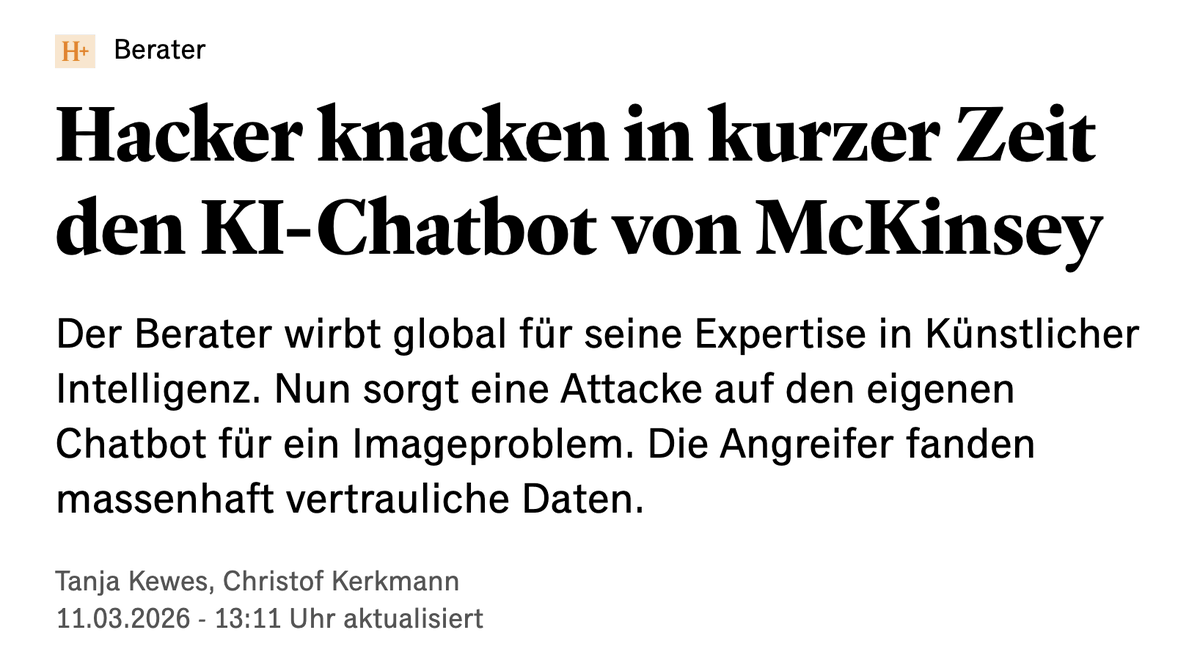
McKinseys KI-Chatbot "Lilli" wurde in 2 Stunden gehackt.
46,5 Millionen Chat-Nachrichten im Klartext.
M&A-Deals, Kundenstrategien, vertrauliche Dateien. 728.000 Dokumente.
57.000 Nutzerkonten.
Alles offen. Alles editierbar.
Die Schwachstelle?
SQL Injection. Die kennt jeder Informatik-Erstsemester. McKinseys eigene Scanner haben sie zwei Jahre lang übersehen. Ein KI-Agent hat sie in 2 Stunden gefunden. Ohne Zugangsdaten. Einfach so.
Das wäre peinlich genug für jedes Unternehmen. Aber McKinsey positioniert sich als globaler Vorreiter für KI-Transformation. Berät DAX-Konzerne und Regierungen, wie man KI sicher einsetzt. Und kriegt das eigene Produkt nicht in den Griff.
Und es sind nicht McKinseys Daten, die da schwimmen. Es sind deine. Alles landet in Lilli. Dein M&A-Deal teilt sich die Datenbank mit der Frage, ob Hafermilch im Flat White zulässig oder eine Todsünde ist.
Überrascht mich das?
Kein bisschen. Ich habe in etlichen Projekten mit McKinsey zusammengearbeitet. Brillante Strategen, exzellente Folien. Aber echte technologische Expertise? Dünn. Sehr dünn.
Wer KI-Transformation verkauft, aber SQL Injection nicht findet, hat kein Sicherheitsproblem. Der hat ein Glaubwürdigkeitsproblem.
Aber das Glaubwürdigkeitsproblem hat nicht nur McKinsey.
Ich führe hunderte Gespräche im Jahr mit Geschäftsführern, Bürgermeistern, IT-Leitern.
Alle sagen: "Bei uns halten sich alle an die Regeln." Das ist - und ich wähle meine Worte hier sehr bewusst -Bullshit. (Das Thalia Theater hat angerufen, die wollen das Stück aufführen.)
Du stehst unter Zeitdruck und knallst eine komplette Mail mit Kundendaten per Copy & Paste in eine KI. Compliance auf dem Papier schützt keine einzige Zeile Daten. Menschen schützen keine Daten. Technologie schützt Daten. Security by Design. Genau das hat McKinsey nicht gehabt. Und die meisten anderen auch nicht.
Letztens habe ich einen IT-Leiter gefragt: "Würden Sie zustimmen, wenn jeder Mitarbeiter seine eigene Software von zu Hause mitbringt und auf Ihren Systemen installiert?"
Er hat mich angeguckt, als hätte ich ihm vorgeschlagen, die Firewall abzuschalten.
"Nein. Natürlich nicht."
Und warum darf dann hier jeder seine eigene KI mitbringen und machen was er will?
Schweigen.
Lautes Schweigen.
Nach außen Rettungsschwimmer.
Nach innen Seepferdchen.
Aber die Rechnung ist für Olympia-Gold.
Announcing Personal Computer.
Personal Computer is an always on, local merge with Perplexity Computer that works for you 24/7.
It's personal, secure, and works across your files, apps, and sessions through a continuously running Mac mini.
Microsoft just partnered with Anthropic to launch an AI that can run office work for you and replace millions of office jobs
>It’s called Copilot Cowork.
>You describe the outcome you want.
>The system converts that into a step-by-step execution plan.
>It pulls information from your emails, meetings, files, and chats.
>Then it executes tasks across Outlook, Teams, Excel, and PowerPoint.
>It can build meeting decks, research companies, and prepare reports.
>It can reorganize calendars and schedule meetings automatically.
>It keeps working in the background until the task is complete.
Microsoft 365 has 400M+ users.
For the first time, those workers might have an AI that can actually do their job.
Most people use LLMs.
Very few actually understand how they work under the hood.
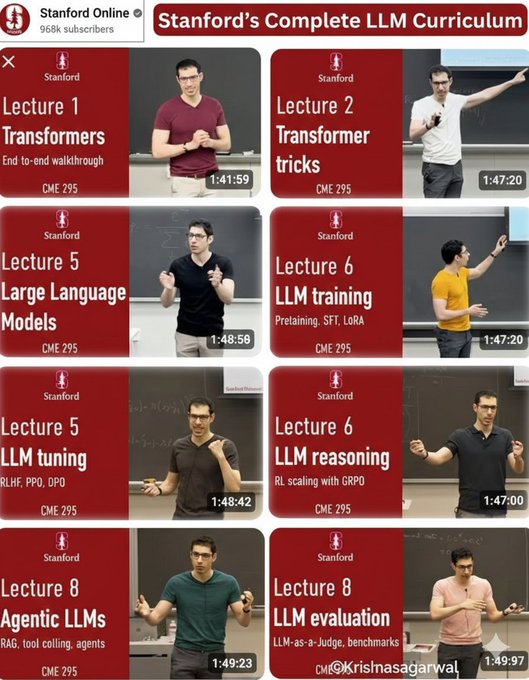
If you want to go from prompt user → real AI engineer, study these 9 concepts in order:
1️⃣ Transformers — attention, tokens, self-attention basics
https://t.co/LYdTQnAzCh
2️⃣ Transformer tricks — what makes them stable & scalable
https://t.co/sVYo1bGGHf
3️⃣ From Transformers → LLMs — how scale changes behavior
https://t.co/vDd3bulqhp
4️⃣ LLM training — where “intelligence” actually emerges
https://t.co/R8bVEHSuD1
5️⃣ Instruction tuning & alignment — why fine-tuning matters
https://t.co/FN5B95b4OJ
6️⃣ LLM reasoning — why models fail + what improves them
https://t.co/RxBu4atx2Z
7️⃣ Agentic LLMs — models that plan, call tools, and act
https://t.co/OFAUYgfOI4
8️⃣ LLM evaluation — measure beyond demos & vibes
https://t.co/MTzQax7qEL
9️⃣ What’s next — trends that actually matter
Bookmark this. Study step-by-step. Your prompts will level up — and so will your builds.