Thanks for the story. I will say this very nicely. My job is to represent the riders, not convince them, change their options, and definitely not side with the organisers, UCI, or fans. I'm not here to make friends with organisers, UCI, teams, or even fans.
It is not my voice. It's the riders voice. But I allow them to hide behind me, and I say what they want to be said.
I was a rider. You, as a fan, might read that a rider goes home cause of crash a few days before or a flu. But I know if a rider goes home because of a flu, and being at the great race of the Giro, he would have raced with that flu for days and been struggling and suffering which you can not see on TV for those days before deciding to stop. There is so much more happening than fans see. Stopping is the end point of the rider, a complete meltdown, and before that point, they have been well over their limit for sometimes as long as weeks.
I know the illnesses going through the teams, and the riders' health is my priority. Rain, not a problem. Add 4 degrees, add a decent where you can not pedal, and body temp gets colder over time. And a stage where it's all uphill from the start, which creates peleton stretched long and many different groups where cars can not service their own riders, giving riders proper clothing is the difference.
What is this difference? More than 10 riders went home due to illness. The next day, 10 more riders go home with illness and today?? Let's see. Now, these riders with it, have had it for days. Fans don't know that. Fans dont know if in the last 24 hours, 20 guys go home, which means another 40 are still racing while being ill. I do. Is it healthy to race such a demanding stage while being sick, pressure from teams, fans, contracts and like you said, every party/stakeholder against the riders opinion they ask for a stage to be shorter for their own health?
No doctor worth his salt would agree someone ill should spend 5 hours wet in the cold with heart rates going above 170 multiple times while the body is already fatigued. You are right. They can be replaced if they dont want to do it, and truth be told, some teams and organisers see that they are just race horses, Push them! We can replace them. so who cares!!!
I care. If you, organisers, sponsors, UCI, or fans rather risk a humans health for your own entertainment, then it proves the point that they need someone on their side, like me
@BenjaminPe87833@laflammerouge16 Agreed and next year at races where there are large crowds there will be sections where fans can not stand to give cars a chance to pass. So these rules will be applied across the board. 🤞
That's a lot of points you mentioned.... and sorry it took so long to reply.
The reason was not communicated properly. We have to think about what is fair. Is it fair the organisers decide a route that has a climb with a road that is so narrow that cars cannot pass the riders? Some cars were more than 5 minutes behind the riders when they reached the top. We didn't want to stop the race, we just think if the organisers want to pick a route that impacts a rider if they have a mechanical is unfair, it is not correct. Results should be based on performance. On this particular route, if they raced the full 4 circuits some team cars could be stuck very far behind and riders would not be able to pass a car on the climb to come back because a slower rider in front of the car would slow the car down. Race routes should be selected so cars can pass riders and riders can pass cars and they don't block each other. Any of the 10 riders would have been affected and it's great to see them united on this.
The CPA is pushing for the helmets to be improved, this is not a UCI problem, but the UCI has already created working groups on this topic. More industry and changing the helmet standards in the EU EN 1078 needs to be vastly improved or maybe a different standard for actually racing. One day we hope to get there. Hopefully sooner rather than later. Unfortunately, things don't move as fast as you and I wish for.
The UCI has said 2 times at the PCC and requested it to be recorded in the minutes that they will never profit from the riders' data. So this is not a UCI issue holding GPS trackers up, in fact at the Worlds they use GPS tracking and don't use the riders' power, cadence or HR. I still struggle to know exactly why we don't have GPS tracking today. The Velon system works, but not all teams use it, the UCI has an effective system used at the last 2 Worlds. The CPA keeps pushing the point that the team can decide which system to use. Our official statement is that even if the teams want to use their own system they can, as long as it sends the riders' location, speed and rider_id to a central platform, we are happy. If that's Velon, UCI's or their own we are fine with that. While 4G/5G is not ideal in some areas it's better than nothing. We can work on a more bulletproof system in the future, but 4G/5G can be a starting point.
Agreed with the downhills. I wish my words could move a mountain. But things don't move as easily as you and I wish.
The SRAM case is more than just SRAM. The case set a precedent. We need a governing body regulating the bikes. We don't want some brands bringing out non-double-triangle frame super bikes then claim anti-competitive. Already in this regulated sport there are some bikes faster/lighter than others and we need the difference to be as minimal as possible to be sure performance wins races. If there is a slight chance the sport loses some form of regulating control, then a few wealthy bike manufacturers would have bikes 5km/h faster than others and the sport would be a complete mess and unfair to some riders.
Stage 14, you are 100% correct. The focus was on stage 15 which was also code red, but 14 should have had some changes. This was handled wrongly. Heat stroke impairs brain development and function at every stage of growth up to approximately age 25, when the human brain finishes structural and neurological maturation. <--- this is not taken seriously enough and some people think ice and water solve this. With younger riders in the peloton today, this is a serious issue. When it's a code red, the UCI rules should just apply automatically. There should not be a stakeholder requesting a change. Rules are rules.
I'm extremely frustrated and demotivated that riders can't unite on actual safety issues that matter but regularly use their leverage with organisers and the UCI on symbolic GC neutralisations that don't move the needle.
Riders are wearing helmets that only have to adhere to the most basic safety specifications.
Unlike other sports, there's no comprehensive health screening and prevention policy related to RED-S.
Stakeholders (UCI and teams) quarreled for 2 years over data ownership of GPS tracking, indirectly stalling the implementation of these safety devices.
WorldTour races still include downhill lead-ins to mass sprint finishes despite Lappartient saying that shouldn't be happening, multiple years ago.
Money that was meant to be used for rider safety, was used by the UCI to fight a court case against SRAM, and the CPA seemingly decided that without internal vote on whether the riders are OK with that money being spent there.
Extreme Weather Protocol for extreme heat is a well-designed system, but wasn't applied on Sierra de la Pandera when the red temperature band was hit.
Those are some of the many issues where riders need a united stance, and stand up for their safety, but they don't. #LaVuelta26
Remember, 3/5km was one of the CPAs deliverable in SafeR. We are happy that this is proven to be a success and we are still pushing to have this at all races to be set at 5km and the 3km to dropped.
Your other point, you're right, they are 2 different things. 1, defining a safe road is just given, should be done. 2nd point, if an organisers wants to use a special route, due to historical reasons or what ever and is still safe but makes it unfair due to being too narrow or cars can not follow. Then ok, use the route, but make it fair and don't count GC time. Imagine Enric flated. And lost 3mins. How bad would the sport look that he lost the race because he was stuck behind the convoy, could not pass the cars as they were stuck behind a slower rider and Enric could not come back. The image of the organiser would be questioned. Then the UCI would be questioned for approvaling such a route. In the end, the riders had a bad rap because they just wanted it to be fair. That's not right.
Look at the TDF last stage. There is also a section where cars can not follow, Del Toro had a flat and lost time. He would have been off the podium if the GC times counted. Now is that fair? It's a rule that the team cars must follow and support their riders. If they can not, fair is fair, don't count GC time. Del Toro was clearly the 3rd strongest at the TDF. He deserves his result and it would be sad that he lost his podium because the organisers choose that route where cars could not follow.
You are right and it does not look good. But a route like this should not be accepted from the beginning or even chosen. Now if the organisers want, ok, have your route, but take GC time out to make it a fair race.
Why is it the CPAs job to make sure that every route is fair or safe? There are race guidelines and they should be respected and enforced. If we have to, we do, but then it's last minute. One item we are pushing for is, "What is a road that is safe enough to hold a bike race on?" To have this criteria that the road must be A,B,C and not D,E,F and if those points are followed then any route can be used. Instead it's backwards, where it's defined first, hard to judge in Google maps. Then a DS does recon, discovers it and we find out only days before. The CPA does not have the funds to drive every m of every race months in advance.
@elrestor Half true, there are no gutters stopping cars to pass and they do if there are no spectators. You can see often the cars using their horns to tell the riders to move to the side so they can pass and cars also move to the side if they can. Where the final stage, had zero space.
Very proud of @EvenepoelRemco speech. Great to see the riders speak about what is happening in cycling today and big thanks to RCS for giving the mic to Remco and their platform to help spread this word. No form of entertainment is worth someone's life.
A message from the riders:
As riders, we stand united against the unnecessary risk our lives are being subjected to.
This week alone, there were multiple incidents of vehicles on race courses. Two riders crashed when they hit a motorbike who was driving the wrong way on the race route. Luckily both escaped with cuts and bruises, it could have been so much worse.
This summer, a life was tragically lost to exactly this kind of failure. We will not stand for this any longer.
Riders race at high speed with little protection, and we depend on the race organisers to secure the roads. That responsibility is not being met.
We are calling for the help of the UCI for race organisers to take accountability and act. That means a serious, open conversation between riders, race organisers and the UCI resulting in concrete changes to how race routes are secured and managed.
After five minutes, we raced as normal. We did not want to affect the race, only to show what riders can do when we stand as one.
We love this sport. We respect the race organisers. We want to race hard and put on a show for our fans. However most importantly we want to come home safe to our loved ones.
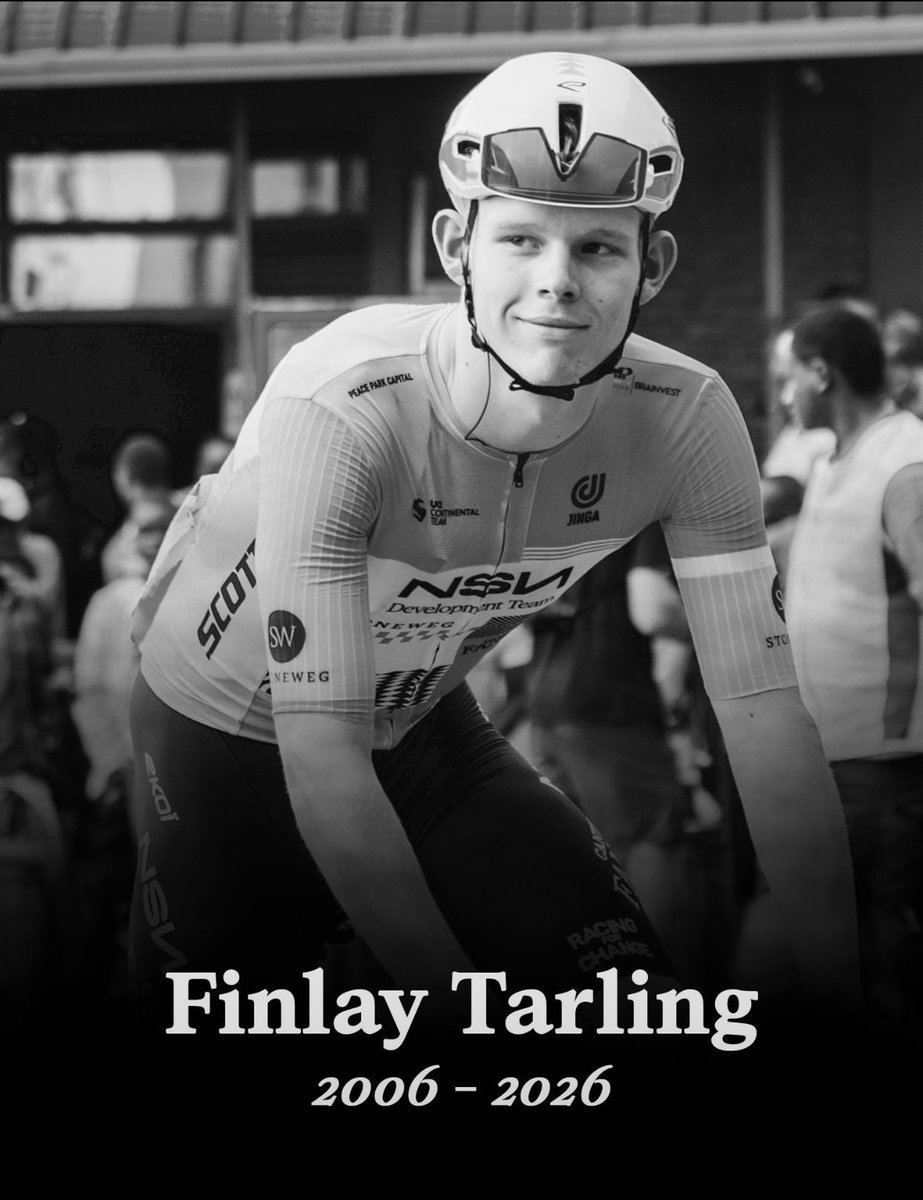
Today is a sad day.
We share in the grief of Finlay Tarling’s family, his team, his friends, and everyone who knew him. It’s not right for a young life to end this way; we are deeply saddened and are praying for him.
RIP, young rider, we will remember you forever🌹
#FinlayTarling #WeLoveTheRiders
Our position is clear that the CPA is extremely disappointed with the current direction of anti-doping in professional cycling.
Did you know that cyclists are the only athletes in the world who pay out of their own pockets to fund extra doping controls, long-term sample storage and for data analysis? This financial burden is a direct consequence of our sport’s historical past. While modern cycling is drastically cleaner today, active riders are paying for the mistakes of previous generations. Is that fair?
Within the SafeR initiative, members frequently claim that crashes happen because riders lose focus or look down at their bike computers. But consider the human cost of the current doping system, think about how you perform at your normal day job after only four hours of sleep, or after being woken up right in the middle of your REM cycle at 2 am for a blood test. Now, imagine that happening during a Grand Tour, between two crucial mountain stages after two full weeks of racing. The pressure on your shoulders. I am not saying this was the cause of Jonas Vingegaard's crash, but doing this to an athlete during the most important race of the year, after 2 weeks of racing does have some impact on their daily performance or could just sit in the back of their head during the stage.
It isn't just Jonas, its all professional cyclists must be available 365 days a year.
The 1-Hour Slot: During their designated one-hour daily window, riders must be at the exact location stated in their whereabouts.
The Other 23 Hours: Outside that slot, DCOs (Doping Control Officers) can still show up unannounced. If a rider isn't home, because they stepped out to get a coffee or went to the park with their child which they decided during the day. They are required to provide proof of where they were and why. Failing to justify their whereabouts can be logged as a missed test. Riders are terrified of getting a missed control. I have seen cases of riders that had to get a statement from resturant owners, with the bill, that they were out having dinner not in their 1-Hour slot. Now how can they get a written statement from their 3 year old child if they went to the park?
To make matters worse, the ADAMS application riders must use to submit their location data is notorious for technical glitches and frequent downtime.
We have said, Quality Over Quantity. The riders are directly funding the ITA, and we have repeatedly argued that increasing more tests is not the solution, it is a waste of resources. Instead, those funds should be invested in upgrading testing laboratory equipment.
Currently, equipment standards vary across different accredited labs. Some are far more advanced at detecting trace elements than others. We want a Quality over Quantity approach, State-of-the-art lab equipment capable of detecting the absolute smallest traces of banned substances. Which means fewer but more precise tests that catch real cheaters while reducing constant harassment of clean riders.
If there are advances in equipment testing, this would increase the detection window of finding banned substances, which would result in a more efficient approach, not needing these tests in the middle of the night, less stress and workload on the riders and a greater chance of catching cheats.
But this is not the direction where it is heading. The direction of the funding is not going to improve the laboratory equipment, but to increase the number of tests, power data monitoring and all of this means more work and stress for the riders. They have it hard enough. We want dopers to get caught, we don't want to harsses clean riders and get given a presentation with the total number of tests being increased year over year with fewer positives.
We have to consider if we want to continue to contribute to a system that is not going in the direction that is not more efficient, to catch cheaters, harasse less clean athletes & not treat the riders like criminals.
In this heat, its impressive what the riders are doing at the #tdf. So many bottles.... The @UCI_cycling & @LeTour have relaxed the rules to allow more bottle points, which is good. If we can increase it more, if would be better.
Bottles.... & bottles.... I feel for the riders..
https://t.co/Dk9KZ9okwT
Let's talk about the Moto's influencing the race for a bit. For the fans bashing riders for riding behind the Motos, that's unfair. The riders are free to ride anywhere on the roads. For races that have Motos too close or just everywhere, that's not the riders fault. It's the organization of the vehicles in front of the race that is handled badly, again not the riders fault. It's first a race, not a movie production set. Do the riders want the Motos not influencing the race? Of course they do, we hear comments all the time and we always bring it up at each meeting. Even the organizers has expressed to improve safety, is to decrease the speed of the riders, where the CPA has always replied, the fastest way to slow down the bunch is not to have the Motos so close to the bunch. Which is a lot easier than trying to enforce correct hand position.
Again, all riders want more distance between Motos and the front bunch, riders should not have to navigate to make sure they are not directly in the draft of a moto. Please fans, it's the motorbikes fault, not the riders. Respect the riders, their job is hard enough and then to read on social media that they get disrespected because they have a motorbike in front of them is not fair.
Maybe the CPA might create a fund raiser for the production crew to buy a zoom for their cameras on these motorbikes. As it's unfair how much they influence the race speed, the results and on the other riders.
It's not about the law doing it's job. It should. However, Belgium law, that you must brake directly on red. There is no warning before red. It just goes red. If a bunch stops directly, this itself will cause a crash in the worst possible place when a train is approaching. The organizers should foresee and warn the riders in advance to be able to slow down in a safe manner.
This will have to be handled very well. It's serious to cross a red light at a train crossing. But bike races are different to normal car traffic. Cars drive a safe braking distance from each other. In a bunch if a rider wants to stop on a dime as the Belgium Law states, then you would have a massive crash on the crossing or around. We have to make sure this case is handled correctly, not to have riders freak out in future races and slam their brakes on causing crashes on a railway seconds before a train crosses.
🇧🇪 Tour of Flanders railway crossing incident escalates as prosecutors open criminal investigation
"The risks to both riders and third parties are significant"
📰 https://t.co/RC6XfIOznd
📸 Cor Vos