"I have become such a better man and human being because of him"
Ethan Hindle and Hudson Brown both spoke at length after Monday's loss about Nick Mingione's role in their lives.
@BBNTonight | @LEX18News
@RedWavePress I hope the 5 year eligibility clock that starts when you graduate high school or turn 19,whichever comes first, that the NCAA is considering implementing actually happens and helps curb this trend.
Yesterday I wrapped up my college baseball career as well as my playing career. I was reflecting on some things that I wish I knew coming into college or somethings that I would tell younger players interested in playing college baseball. So here they are in no particular order⬇️
Ways to live healthier and longer that are backed by actual evidence:
1. Exercise: Most days a week= conversational. Occasionally intense
2. Strength train
3. Eat mostly real foods
4. Cultivate genuine relationships
5. Sleep 7+ hours
6. Don't smoke
7. Have ways to cope with stress
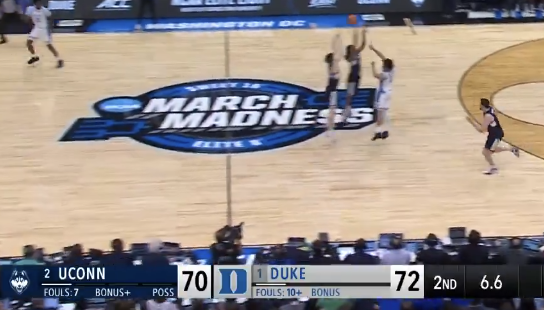
With 10 seconds left, Duke was up 2 with the ball.
All they had to do was hold the ball. They passed. And one was deflected. A clutch three and UCONN wins.
But...why throw the pass?
Under pressure, our brain betrays us. Part of it goes offline.
It's one of the cruel things in all of sport:
First, some context on how insane this was.
Duke led by 19. Number one seeds were 134-0 all time when leading by 15+ at halftime in the NCAA tournament. 134-0.
Braylon Mullins, the freshman who hit the 35-footer with 0.4 seconds left, was 0-for-4 from three before that shot.
Nothing about what happened should have happened.
We tell athletes to "rise to the occasion."
That's a lie. Under extreme pressure, you don't rise to anything. You fall to your defaults.
The latest neuroscience explains why:
When pressure spikes, your prefrontal cortex, the part of the brain responsible for planning, decision-making, and overriding impulse, starts to go offline.
Stress hormones like norepinephrine and dopamine flood the system. At moderate levels, they help you focus and lock-in. But past a threshold, the PFC starts to shut down.
Attention flips from thoughtful "top-down" control to "bottom-up" control, where whatever stimulus is in front of you captures your attention.
It's less thinking and planning and more impulsive reacting.
Hartogsveld and colleagues tested this in 2020. They stressed participants out and measured whether they could override trained habits when the situation changed.
Stressed participants committed significantly more "slips of action," performing the trained habit even when it was no longer the correct response.
Stress made them default to what they'd practiced most.
It's the cruel paradox of choking.
Your most practiced behaviors take over precisely when the situation demands something different.
Duke needed to do nothing. Literally hold the ball.
But everything a basketball player has ever practiced is telling them to make a play. In this situation, get past midcourt to avoid the backcourt violation.
When our PFC is off-line, we lose that impulse control to tell us, wait a minute, context demands something different!
Research shows that we often try to compensate for the pressure by trying harder.
We start forcing things or trying to micromanage the situation to deal with losing a bit of control.
Inevitably, this backfires. So you get this terrible contradiction.
The PFC goes offline and you lose top-down control.
But whatever executive resources remain get directed at the wrong thing, overmonitoring your own movements.
You start consciously controlling things that should be running on autopilot, and the whole system jams.
Don't believe me, try to do simple math when you are moderately stressed or fatigued, such as mile 15 of a marathon or the 6th 400m repeat of the workout?
Any runner will tell you, it's hard to do 26 minus 15...
Now, add the pressure of millions watching, and see how your brain works.
There's no perfect solution. You've got to feel for the Duke kids. This close and have it ripped away.
But that's why when preparing for a high pressure situation there are a few solutions.
1. Inoculate Yourself
Train in environments that simulate pressure as best you can. Up the ante, use exercise as a stressor to challenge decision making.
Visualize it. Michael Phelps visualized a "problem tape" of what to do if it went wrong.
Create simple If...Then scenarios. A mental playbook of sorts, like a QB that knows to dump it to the RB if pressure comes.
2. Copy Pilots.
They have checklists and slogans for emergencies (Aviate-Navigate-Communicate). It simplifies the priorities directing them what to focus on and what actions to take when their brain isn't working.
Tell your brain where to focus and what action to take.
Coaches need to make it simple and explicit. When the pressure is on, treat your athletes like a toddler. Because that's how their brain is kind of working...
I just sent "💪🏻Keep progressing: this week's workout plan for you!" to my 19.8K+ subscribers. Be sure to get on my list to get the next one straight to your inbox.
https://t.co/16utKtqMui via @kit
A sports psychologist friend once told me:
“The brain is wired to form associations.
When you repeatedly link a stimulus (action) to a peak state (feeling), you essentially programme a shortcut to that state.
Athletes do this all the time, it’s why pre-game rituals work.”
The Gameday Nation crew discussed Player of the Year nominees!
Brandan Carnes, rightfully so, wouldn’t let the conversation end without mentioning the @AW_LadyGenerals’ @Leah_Pikee.
As Deon Thompson put it, fittingly, “she’s a junkyard dog out there.”
@BCSNsports@AWGenerals1
The best high school teams share one secret: no egos.
The kid who dives for loose balls means as much as the one who scores 20 every game.
The coach who holds everyone accountable builds champions—not just players, but people.
There’s nothing more dangerous in high school basketball than an unselfish star player.
The one who passes when they could shoot, plays defense like their scholarship depends on it, and lifts their teammates.
Talent wins games — but humility wins championships.
“I am a Catholic. I am a Catholic man.”
— Heisman Trophy winner Fernando Mendoza on why he took his trophy to the priests at the St. Paul Center at his university