Dear friends, we have a cool paper that was published today, based on the work from our Microbiome Research Unit in the journal, Pathogens @Pathogens_MDPI
https://t.co/FwVAPfCknP
Here are 6 Key points in plain language
[1] For the first time in India, the study mapped the hidden arsenal of antibiotic resistance genes (the "resistome") in the guts of sick cirrhosis patients using shotgun metagenomics, revealing a dense reservoir of resistance that standard culture-based tests would miss entirely.
[2] The gut bacteria in sick Indian cirrhosis patients were dramatically altered, with harmful bacteria like Klebsiella, Enterococcus, and E. coli overtaking protective species — and this worsening tracks directly with how sick the patient was.
[3] A specific quinolone antibiotic resistance gene, QnrB4, emerged as a potential prognostic marker — its presence was linked to mortality, ICU admission, acute-on-chronic liver failure and immune paralysis (low HLA-DR), suggesting it signals colonization by dangerous multidrug-resistant bacterial clones.
[4] The carbapenemase antibiotic gene OXA-833 was specifically enriched in patients with GI bleeding, a novel finding suggesting that presence of blood in the intestines in bleeders may selectively promote carbapenem-resistant organisms, which has direct implications for antibiotic prophylaxis choices in bleeders.
[5] The commensal Ligilactobacillus salivarius was paradoxically associated with elevated inflammatory cytokines (IL-6, IFN-gamma), challenging the assumption that all Lactobacillus species are beneficial and cautioning against indiscriminate probiotic use in decompensated cirrhosis.
[6] The resistance gene burden wasn't just a bystander — it correlated directly with immune exhaustion, establishing a gut–resistome–immune axis where dense antimicorbial gene mutation carriage reflected bad bacterial colonization that actively drove the immune system into a state of paralysis.
@arifhussaintm
#medtwitter #liverx #meded #medicine #science
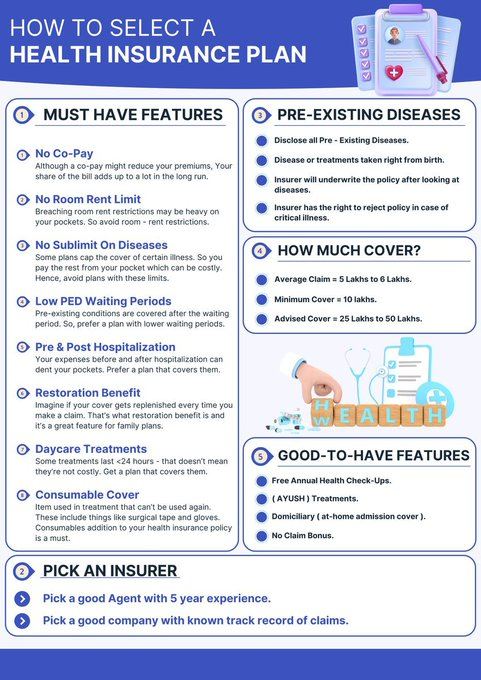
🚨Checklist to buy health insurance
Health insurance is one of the most complex types of health insurance
What are the things to keep in mind while buying health insurance?
Here is a smart cheat sheet to follow to buy health insurance��
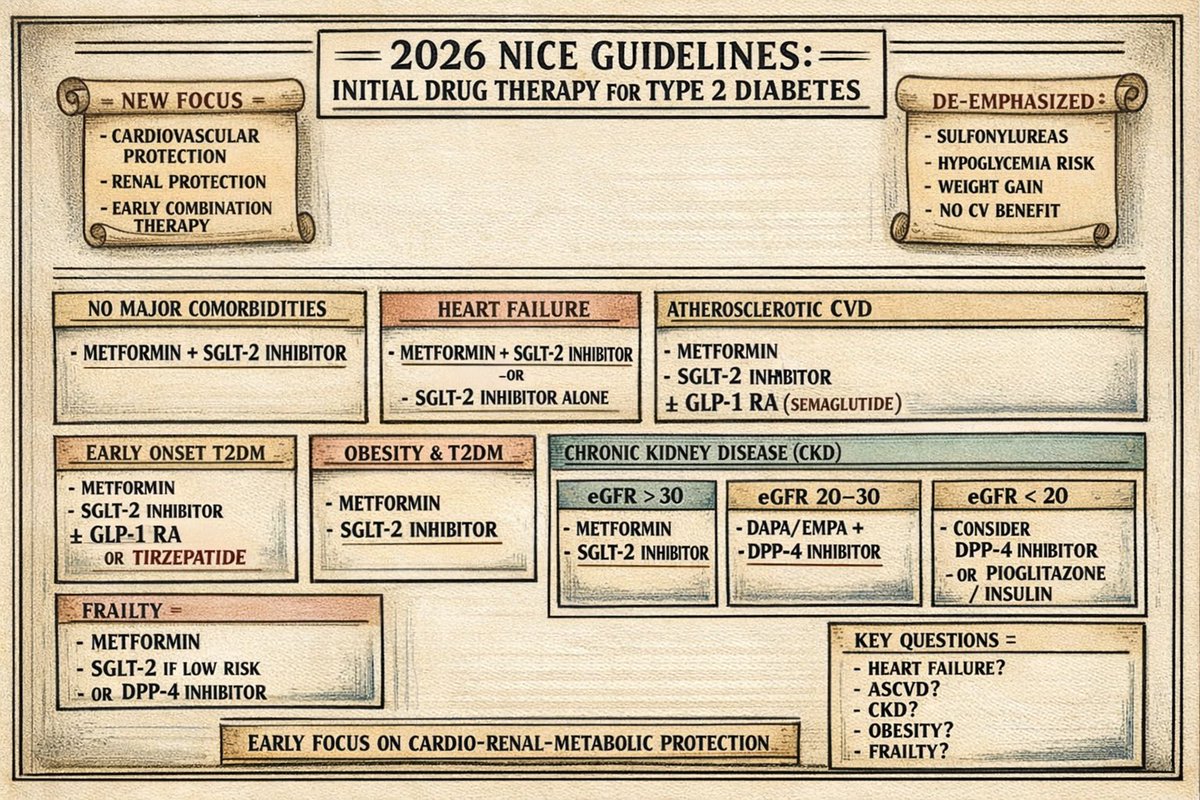
🧵 New 2026 NICE Update on Initial Drug Therapy in Type 2 Diabetes Detailed Thread
1️⃣ Big Shift in Philosophy
This is no longer just about lowering HbA1c.
The new guidance prioritises:
• Cardiovascular protection
• Renal protection
• Individualised treatment
• Early combination therapy
Glucose control is important but outcomes matter more.
2️⃣ First-Line Therapy (No Major Comorbidities)
For most adults:
✅ Modified-release metformin
PLUS
✅ An SGLT-2 inhibitor
If metformin cannot be used → start SGLT-2 inhibitor alone.
➡️ This is a major shift from traditional “metformin first, add later.”
3️⃣ Why SGLT-2 So Early?
Because evidence now strongly supports:
• Reduction in heart failure hospitalization
• Slowing CKD progression
• Cardiovascular mortality benefit
• Weight reduction
• Low hypoglycaemia risk
This class is now foundational therapy.
4️⃣ If the Patient Has Heart Failure
Start immediately:
✅ Metformin
✅ SGLT-2 inhibitor
If metformin contraindicated → SGLT-2 alone.
HF benefit drives this decision independent of HbA1c.
5️⃣ If Atherosclerotic CVD Is Present
Initial therapy can include:
✅ Metformin
✅ SGLT-2 inhibitor
✅ Subcutaneous semaglutide (GLP-1 RA)
If Yes 👉🏻 GLP-1 RA can now be started upfront in ASCVD.
This reflects strong CV outcome trial data.
6️⃣ Early-Onset Type 2 Diabetes
(Younger patients, aggressive phenotype)
Start:
✅ Metformin
✅ SGLT-2 inhibitor
Consider adding:
• GLP-1 receptor agonist
• Tirzepatide
This group often needs earlier intensification.
7️⃣ Obesity + Type 2 Diabetes
Initial therapy:
✅ Metformin
✅ SGLT-2 inhibitor
Weight-neutral or weight-reducing strategies are preferred.
Avoid agents that promote weight gain unless necessary.
8️⃣ Chronic Kidney Disease (CKD)
Treatment depends on eGFR:
🔹 eGFR >30 → Metformin + SGLT-2
🔹 eGFR 20–30 → Dapagliflozin or Empagliflozin + DPP-4 inhibitor
🔹 eGFR <20 → Consider DPP-4 inhibitor
If DPP-4 not suitable → consider pioglitazone or insulin.
Renal protection is central in this update.
9️⃣ Frailty
Be cautious.
Offer:
✅ Metformin
Consider SGLT-2 only if risk of:
• Hypotension
• Dehydration
• Falls
If risk is high → DPP-4 inhibitor may be safer.
Individualisation is critical here.
🔟 What’s Clearly De-emphasised?
Sulfonylureas are no longer early go-to drugs.
Reasons:
• Hypoglycaemia risk
• Weight gain
• No cardiovascular benefit
They are now secondary options.
1️⃣1️⃣ Key Takeaway
The 2026 update moves us from:
“Glucose-centric diabetes care”
➡️ to
“Cardio-renal-metabolic protection from day one.”
Early combination therapy is now the norm, not the exception.
1️⃣2️⃣ Practical Clinical Message
When starting treatment in Type 2 Diabetes, now ask:
• Does this patient have HF?
• ASCVD?
• CKD?
• Obesity?
• Frailty?
The comorbidity determines the drug choice not just HbA1c.
https://t.co/mlP4dTeHVp
#MedTwitter #MedX
A clinical summary for managing Type 2 Diabetes across various clinical scenarios, highlighting initial treatments and medication escalation pathways.
https://t.co/QKJqWQpWv1
Fatty pancreas is increasing seen on imaging, but what does it mean? This table summarises the key statements from a recently published multisociety document involving UEG, EASL, ESGE etc in @UEGJournal 🆕
🔗: https://t.co/OGzxYzx1jC
A 19-year-old woman was brought in after ingesting 10 to 12 naphthalene balls.
On examination, she exhibited cyanosis, and pulse oximetry revealed an SpO2 level of 86%, which did not improve with supplemental oxygen.
Lung auscultation was normal.
How would you manage this case?
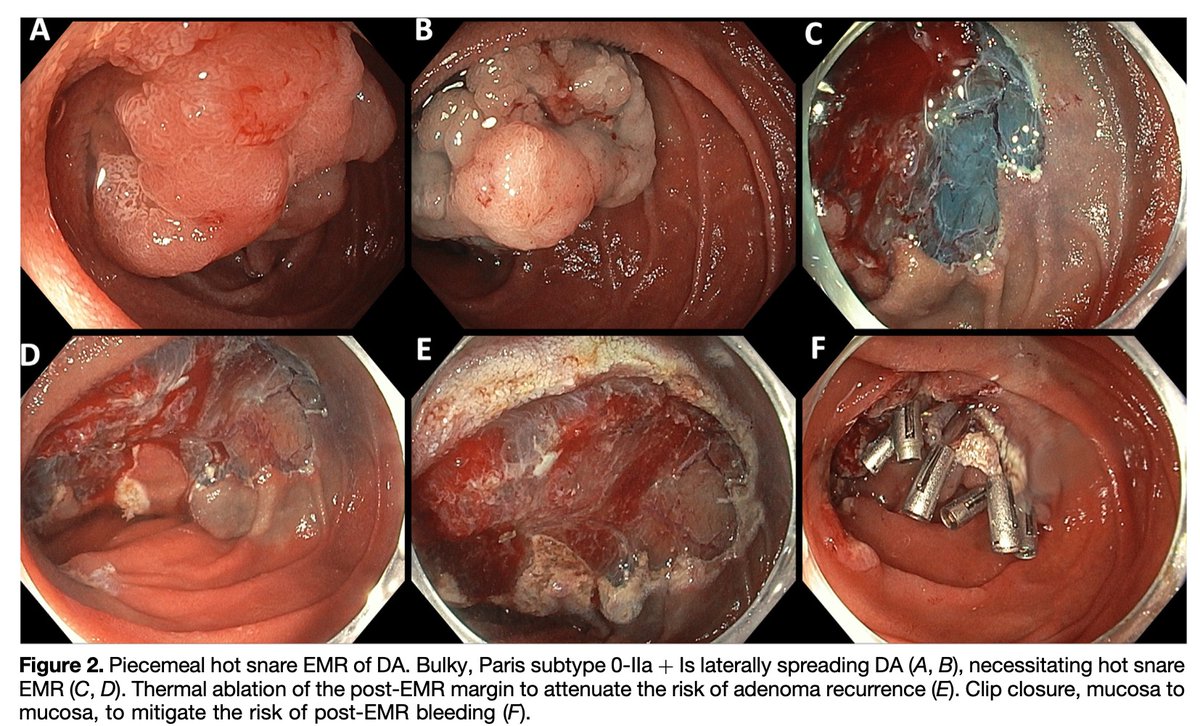
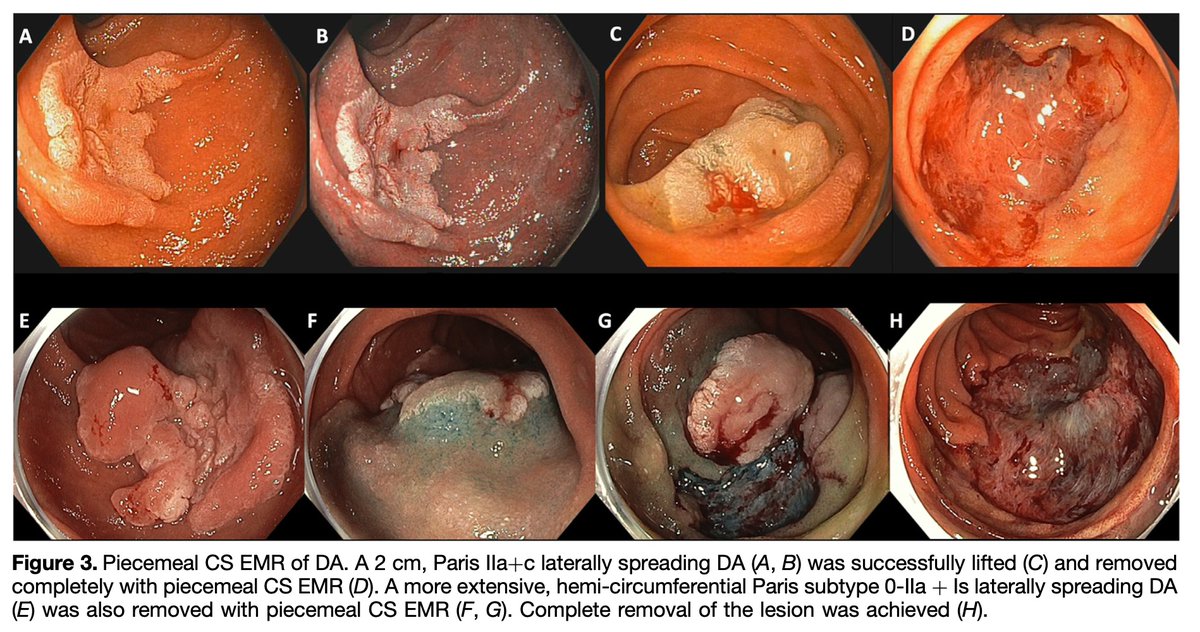
AGA practice update for non-ampullary duodenal lesions: https://t.co/gQKT0UFzvv
🍯>20mm/ Is: Hot snare
🍯<20mm: Cold snare
🍯Review their colonoscopy records, if not in last 3 yrs, repeat
🍯>30 mm polyps 25% bleeding risk, risk benefit less clear than colon polypectomy
🎯 3 Teaching Pearls from the “Compact Disc” Method for ERCP Cannulation
1️⃣ Visualize the invisible.
Imagine stacked CDs inside the papilla to conceptualize the 3D bile duct axis—especially in long oral protrusion (LOP).
2️⃣ Advance gently, not forcefully.
Cannulation should feel like passing through the center hole of each CD. Force bends the axis and increases injury risk.
3️⃣ Alignment is everything.
Ensure scope position and catheter axis are “face to face” with the imagined duct axis before advancing.
Simple concept.
https://t.co/bqmT0zFmEa…
#ERCP #Endoscopy #MedicalEducation #AdvancedEndoscopy
#Basics
#KFHU
#BiliaryCannulation
🚨Fresh Article🚨
Effectiveness and safety of JAK inhibitors in Acute Severe Ulcerative Colitis: A systematic review and meta-analysis
Out now on @AGA_CGH
https://t.co/MbyJ0UY2v0
#GITwitter#CGH4ALL
Thanks to @drvishal82 and @ibdseb for the guidance