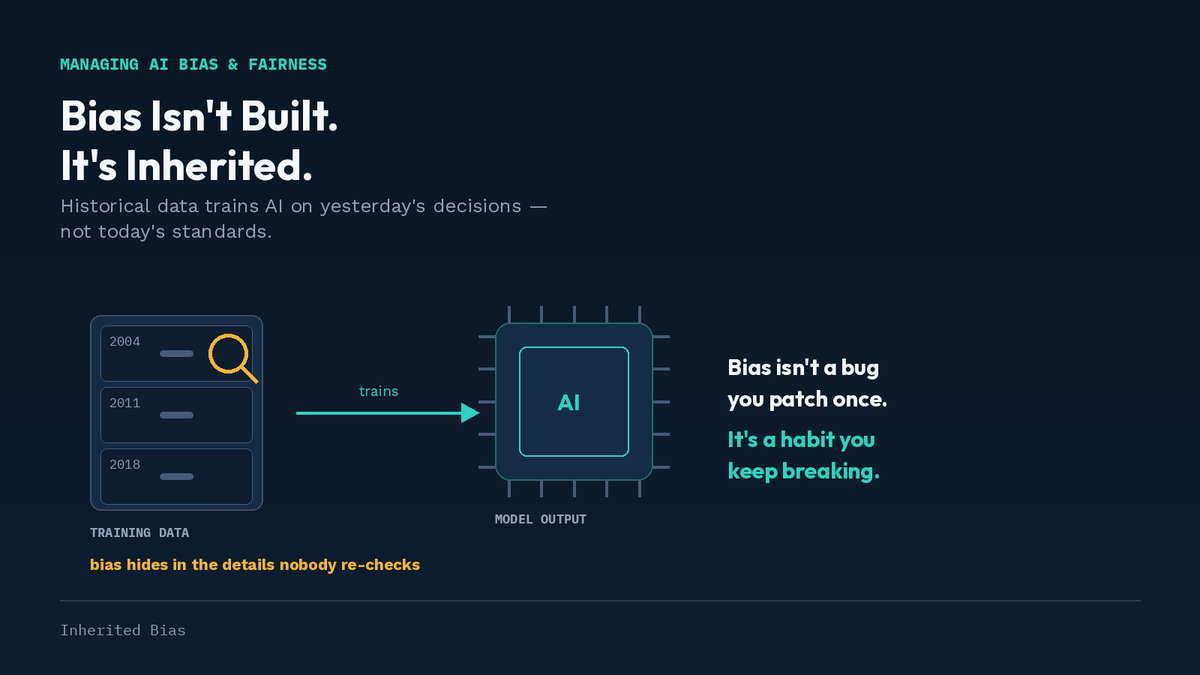
Historical data doesn't just teach AI what happened — it teaches AI what was acceptable at the time.
That's how bias slips into lending, hiring, and underwriting models. Quietly, through the training set, long before anyone reviews the output.
3 things worth doing before your next model ships: 1️⃣ Audit training data for historical skew — before build, not after a regulator asks 2️⃣ Test outputs by subgroup, not just aggregate accuracy 3️⃣ Document the why behind a decision, not just the what
Bias isn't a bug you patch once. It's a habit you keep breaking.
#ResponsibleAI #Fintech #DataStrategy #AIgovernance
The economics of GenAI, part 1: intelligence got 280x cheaper. Nobody told the budget meeting.
In physics we'd call this a phase transition. In business, most people just call it "the AI subscription that keeps renewing."
Between Nov 2022 and Oct 2024, the cost of GPT-3.5-level intelligence fell from $20 to $0.07 per million tokens. That's not incremental — that's the cost of compute behaving like the cost of storage did in the 2000s.
But here's the trap I keep seeing in boardrooms: teams still price GenAI like it's 2023. They over-provision, over-negotiate enterprise contracts, and lock into one vendor "for safety" — while the unit economics underneath them are moving 10x faster than their procurement cycle.
Practical tip: revisit your AI vendor costs every quarter, not annually. If your last GenAI cost review was before ChatGPT-4o pricing dropped, you're likely overpaying for intelligence that's now commoditized.
Cheap tokens ≠ cheap outcomes. That's part 2.
#GenAI #AIStrategy #DataStrategy #FinTech #CDO
Worked with a few organisations recently who rolled out GenAI pilots that looked great on day one — then quietly stalled.
Almost every time, the issue wasn't the AI. It was that nobody had clearly answered:
• Who owns the data going into it?
• What happens if it's wrong?
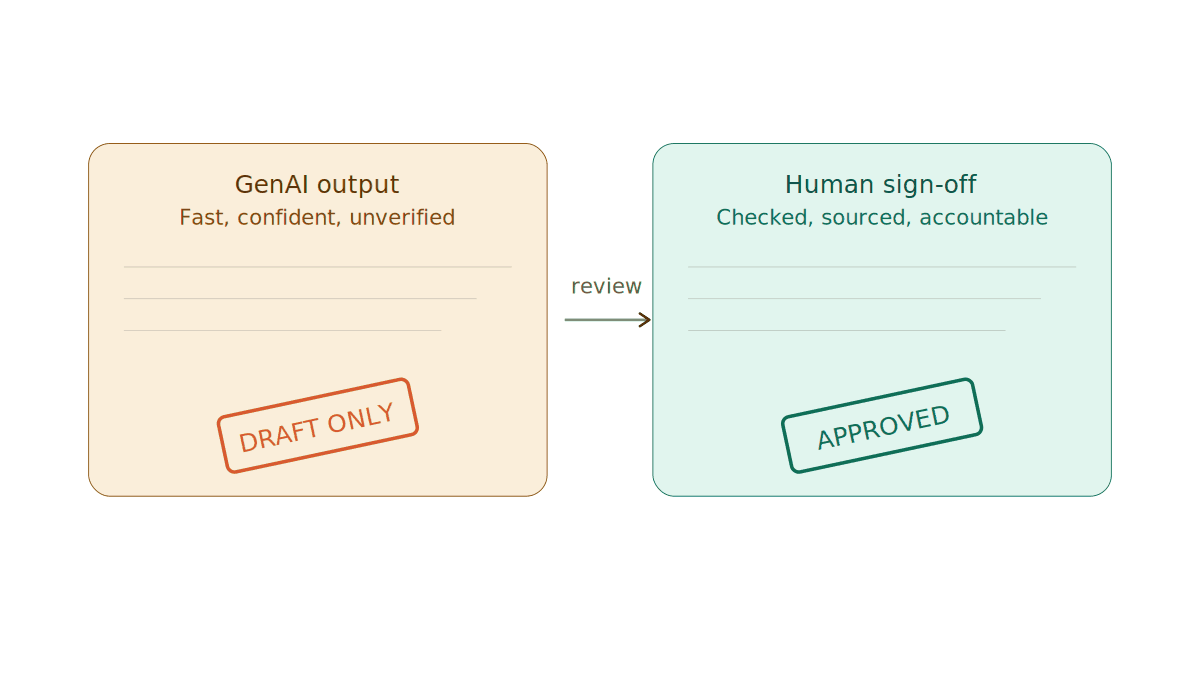
• Who signs off before it reaches a client or regulator?
Not the most exciting questions to ask before a launch. But skipping them is usually why "promising pilot" turns into "quiet shelf-ware."
Curious — has anyone here seen a pilot stall for a reason nobody expected?
#DataGovernance #AIStrategy #FutureOfWork #Fintech
🎲 Boards love certainty. Reality doesn't deal in it.
The biggest favor a data leader can do for their executive team isn't a more precise forecast — it's re-framing the question from "what will happen?" to "how confident should we be, and what does that confidence justify?"
A Bayesian doesn't show up with one number. They show up with a range, and a clear sense of how that range should shrink as evidence comes in — and, just as important, how much it should move when it doesn't.
Practical tip: next time someone asks for a forecast, ask them back — "what decision are you trying to make, and how would your decision change between the low and high end of my estimate?"
Half the time, the honest answer is: it wouldn't. Which means you don't need a sharper number — you need a different question.
Uncertainty isn't a weakness in your model. Pretending you don't have any — that's the weakness.
#Uncertainty #DataLeadership #ChiefDataOfficer #BayesianThinking
Stop mining your data for "insights." Start interrogating it.
A physicist doesn't run an experiment hoping something interesting shows up. They form a hypothesis first, then test it.
Most analytics teams do the opposite: dump data into a dashboard, stare at it, and call whatever jumps out an "insight." That's not analysis — that's astrology with extra steps.
The pitfall: with enough variables, you WILL find correlations. Ice cream sales correlate with shark attacks. Doesn't mean ice cream causes sharks.
Lesson:
→ Write the hypothesis BEFORE you open the dashboard
→ Define what "true" and "false" look like in advance
→ If you can't state what would disprove your idea, you don't have a hypothesis — you have a hunch wearing a lab coat
Data doesn't lie. But undisciplined questions get answers that confirm whatever you already believed.
Test ideas. Don't fish for them.
#DataStrategy #Analytics #DataDrivenDecisions #FinTech #CDO
Some teams I work with use GenAI and get real value. Others use it and create more rework than they save.
The difference usually isn't the tool. It's a few small habits:
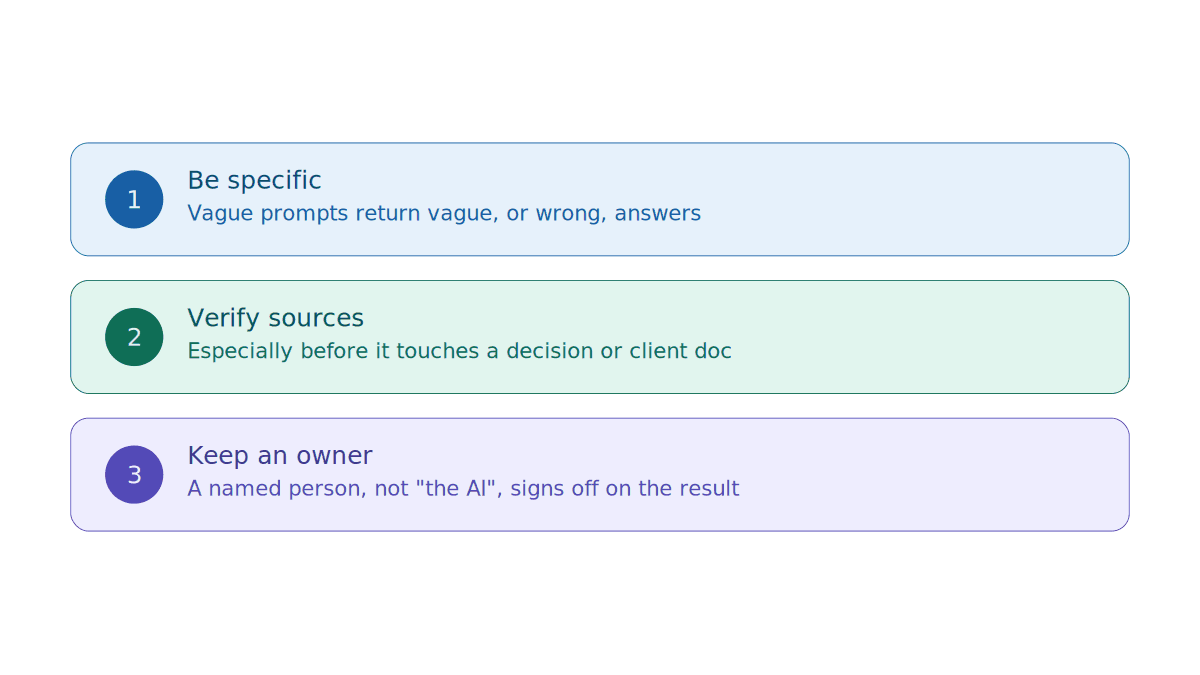
🔹 Be specific in what you ask — vague questions get vague (or wrong) answers
🔹 Double-check anything that feeds into a decision, report, or client-facing doc
🔹 Keep a human name attached to the final output — someone's still accountable
None of this is groundbreaking. It's just easy to skip when you're moving fast.
What's one habit that's saved you from an AI mishap?
#FutureOfWork #AIUpskilling #DataLiteracy #FinancialServices
Ever asked a GenAI tool for a stat and got a confident, well-formatted answer... that was completely made up?
Well, you're not alone. It's a normal occurrence when the human in the loop element is skipped.
The real shift happening at work right now — it's not about AI replacing skills, it's about us needing one new habit: pause before you trust a clean-looking answer.
Anyone else catch one of these "confidently wrong" moments recently? Curious what tripped you up.
#FutureOfWork #GenAI #AIStrategy #DataLeadership
📉 "Our churn-prediction model is 95% accurate!"
Cool story.
Also — if only 2% of your customers actually churn, a model that just says "nobody churns" is also 98% accurate. And completely useless.
This is the base rate trap, and it quietly wrecks more business decisions than bad data ever does.
New hire looks brilliant in the interview? Great — but how many "brilliant interviewers" turn out to be mediocre performers, on average?
That base rate matters more than your gut feeling from one hour in a room.
Three quick checks before you trust a number:
— What's the base rate of the thing you're predicting?
— Is your "accuracy" stat hiding behind a rare event?
— Would a lazy guess (e.g., "nothing changes") score almost as well?
Bayesian thinking isn't about being a genius statistician. It's about asking one humble question before you celebrate a number: compared to what?
#BaseRate #BusinessAnalytics #AIStrategy #DataDriven
⚡ Unpopular opinion: "data-driven" leaders are often less rational than they think.
Having more data doesn't make you a probabilistic thinker. It can actually make things worse.
Here's why:
More data → more patterns to find → more stories to tell → more confidence in the wrong conclusion.
I've seen it repeatedly in financial services. Teams with the best data infrastructure making the most overconfident calls. Why?
Because they confused data volume with data clarity.
3 myths I want to put to rest:
Myth 1: "We're data-driven, so we're objective."
Data doesn't remove bias. It amplifies whatever assumptions you built into your models, your metrics, and your questions. Garbage in, confident garbage out.
Myth 2: "AI will solve the uncertainty problem."
AI surfaces probabilities. It doesn't interpret them. An executive who hasn't built probabilistic intuition will still read a "73% confidence score" as either "basically certain" or "basically a coin flip." The tool is only as good as the mental model behind it.
Myth 3: "We need better forecasts."
You probably need better questions. "Will this work?" is the wrong question. "Under what conditions does this work — and how likely are those conditions?" is the right one.
Probabilistic thinking isn't about having more data.
It's about holding your data more honestly.
Which of these myths do you see most often in your organisation?
#AIStrategy #DataDriven #CDO #Leadership #ProbabilisticThinking
🧠 The real reason your data team's forecasts keep getting ignored in the C-suite
It's not the model. It's the language.
Data teams speak in confidence intervals. Executives speak in commitments.
When those two worlds collide, the nuance dies — and certainty wins by default. That's a cultural problem, not a technical one.
Here's what I've seen work at the leadership level:
Make uncertainty a feature, not a bug
"We're 65% confident" sounds weak in a deck. Frame it differently: "Our base case is X, and we've stress-tested the scenarios where it doesn't hold." Same information. More trust.
Reward honest forecasting
If a team says "we don't know" and gets punished for it, they'll learn to say "definitely" instead. That's how bad data cultures start.
Normalize being wrong in the right direction
The goal isn't to never miss. It's to miss small and learn fast. Probabilistic thinkers build that into their planning.
AI tools amplify this problem if leadership doesn't have the foundations. A model that outputs probabilities means nothing if the exec team treats every output as a verdict.
Build the mindset first. The tools will make more sense after.
What's one thing your organization could do this quarter to build more honest forecasting?
#AILeadership #DataCulture #FutureOfWork #CDO #ExecutiveEducation
Your dashboard has 47 metrics. Your business has 3 real questions. See the problem?
Lessons learnt in financial services:
Most analytics teams are excellent at generating data.
Very few are excellent at finding meaning in it.
Signal = the insight that drives a decision.
Noise = everything that looks important but isn't.
The trap? We confuse busyness for insight. More charts ≠ more clarity.
"Data rich. Insight poor. That's the silent crisis in most boardrooms today."
3 questions to ask before your next analytics review:
→ Does this metric change a decision?
→ Does anyone act differently because of it?
→ If it disappeared tomorrow, would anyone notice?
If you answered no to all three — it's noise. Cut it.
#DataStrategy #BusinessAnalytics #SignalVsNoise #ChiefDataOfficer #DataLeadership #FinancialServices
Your data team speaks Python. Your board speaks P&L. Someone needs to translate.
The biggest gap in most data strategies isn't technical.
It's linguistic.
As a data professional, one of the most important skills you can acquire is story telling.
Explaining a neural network to a CFO in 60 seconds.
(Spoiler: you don't mention the neural network.)
The translation rule I teach every data team:
Replace this → With this
"Statistical significance" → "We're confident enough to bet on this"
"Model performance metrics" → "Here's what it got right vs. wrong"
"Data pipeline" → "How we keep information fresh and trusted"
"Feature engineering" → "What we taught the system to look for"
You don't simplify to talk down. You simplify to bring people along.
The most data-literate organisations I've seen don't have the best tools.
They have the best translators.
If your data team can't explain it to the board in plain English, the board can't fund it. Simple as that.
#DataLiteracy #DataCulture #Leadership #DataStorytelling #BusinessStrategy
The "More Data" trap is costing your business millions.
I've sat in boardrooms where leadership said:
"We need more data before we decide."
Translation: We don't trust the data we already have.
That's not a data problem. That's a trust problem.
Here's the uncomfortable truth from financial services:
Most bad AI decisions weren't made with too little data.
They were made with too much data and no clear question.
Before your next AI/data initiative, ask:
✅ What specific decision will this data improve?
✅ Who owns the outcome — not the dashboard?
✅ What does "good enough" look like to act?
Garbage in -> confusion out.
More data doesn't fix a broken question.
The most dangerous words in data strategy: "Let's pull everything and see what we find."
#DataStrategy #AILeadership #DataGovernance #DigitalTransformation #TechLeaders
🔮Predictive Intelligence Isn't About Predicting the Future.
It's about reducing uncertainty. In financial services, markets, customers, and risks change constantly.
No model is perfect. The real value comes from helping leaders make better-informed decisions with greater confidence.
Think of predictive intelligence as a weather forecast:
You may not know exactly when it will rain.
But knowing there's an 80% chance helps you carry an umbrella.
Better decisions beat perfect predictions every time.
#AIStrategy #RiskManagement #DataAnalytics #FinancialServices #Leadership
🚀From Dashboards to Decisions
Many organisations have invested millions in reporting tools.
Yet one question remains: "So what?"
The next evolution of analytics is moving beyond visibility to action.
Reporting tells you what happened. Predictive intelligence suggests what may happen. Decision intelligence recommends what to do about it.
That's where real business value emerges.
The winners in the AI era won't be the companies with the most data.
They'll be the ones that turn insight into action fastest.
Because spreadsheets don't create value. Decisions do.
#DecisionIntelligence #DataAndAI #PredictiveAnalytics #BusinessTransformation #DigitalTransformation
📉Bad Data + AI = Faster Bad Decisions
A surprising number of AI projects struggle for one reason:
The data wasn't ready. Organisations often invest heavily in sophisticated models while overlooking data quality.
That's like installing a Formula 1 engine in a car with flat tires.
Before launching predictive initiatives, ask:
✓Is the data trusted?
✓ Is it complete?
✓ Is it consistent across the business?
The most successful AI programs I've seen spent more time fixing data than building models.
Not glamorous. Extremely effective.
#DataQuality #AI #DataGovernance #PredictiveAnalytics #CDO
🎯The Biggest Predictive Analyst Mistake?
Trying to predict everything. I've seen organizations build dozens of models that nobody uses.
Instead, start with one critical business question:
✔Which customers are likely to leave?
✔Which loans carry elevated risk?
✔Which products may face demand shifts?
A prediction without a business action is just an interesting statistic.
As a physicist, I learned that the best models aren't always the most complex—they're the most useful.
Focus on decisions, not algorithms. Your executives won't ask how many variables your model uses.
They'll ask: "What should we do next?"
#DataScience #AILeadership #PredictiveIntelligence #Analytics #BusinessValue
📊Reporting Is History. Predictive Intelligence Is Foresight.
Many organizations are still asking: "What happened last month?"
The better question is: "What is likely to happen next month?"
Reports describe the past. Predictive intelligence helps shape the future.
A simple test:
If your dashboard tells you sales dropped after the fact, that's reporting.
If it alerts you that sales are likely to drop next month—and why—that's predictive intelligence.
The goal isn't more dashboards. The goal is better decisions.
As a Chief Data Officer, I've learned that business leaders don't need more data. They need earlier signals.
🚨Don't wait for the smoke alarm after the fire starts.
#DataStrategy #PredictiveAnalytics #AI #BusinessIntelligence #Leadership
🔑 The single metric that predicts whether your Data & AI strategy will succeed or stall.
It's not model accuracy. It's not data volume. It's not your cloud spend.
It's decision adoption rate — the percentage of business decisions actually influenced by data and AI outputs, tracked over time.
Why this matters in financial services specifically:
✦ A risk model nobody trusts is worthless — regardless of its AUC score
✦ Insight that never reaches the decision-maker has zero ROI
✦ Adoption reveals where trust, literacy or access is broken in your data culture
Measure what gets used, not just what gets built. That's how you sustain executive buy-in.
"The best data strategy is the one your organisation actually acts on."
#DataStrategy #AIAdoption #DataCulture #CDO #DigitalTransformation #DataDrivenDecisions #FinTech
🧠 You hired the best-in-class data scientist. They spend 70% of their time cleaning data. Fix this.
This is not a data science problem. It's an organisational architecture problem.
High-performing Data & AI teams I've worked with share one structural trait: they separate data engineering from data science deliberately — and invest proportionally in both.
What successful data organisations do differently:
✦ Data engineers own pipeline reliability and schema governance
✦ Data scientists own model design, experimentation and insight generation
✦ A shared data catalogue makes assets discoverable across both teams
✦ MLOps is treated as infrastructure, not an afterthought
"You don't have a talent problem. You have a workflow problem wearing a talent problem's clothes."
#DataEngineering #MLOps #DataScience #AITransformation #DataTeams #TechLeadership #CDO