Excited to welcome @AnnieHLiang as an Economist in Residence at OpenAI.
Annie is an economic theorist at Northwestern who has explored topics such as how we delegate decisions to AI and ownership of creative assets in the Intelligence Age. We are so excited to work with Annie.
...And we’re already searching for our next economist in residence, preferably an AGI-pilled labor economist to join us in 2027H1.
Fun piece from @AnnieLowrey ft great quote from Martha (per usual).
Feels very spiritually aligned with my essay last month; great to see more perspectives around these and similar ideas: https://t.co/nSlu7BzBg0
Great to speak with @AnnieLowrey about why the new jobs that emerge from AI may have absolutely nothing to do with AI and what the fact that our parents all think we spend our money indulgently can teach us. https://t.co/xKzcROIilz
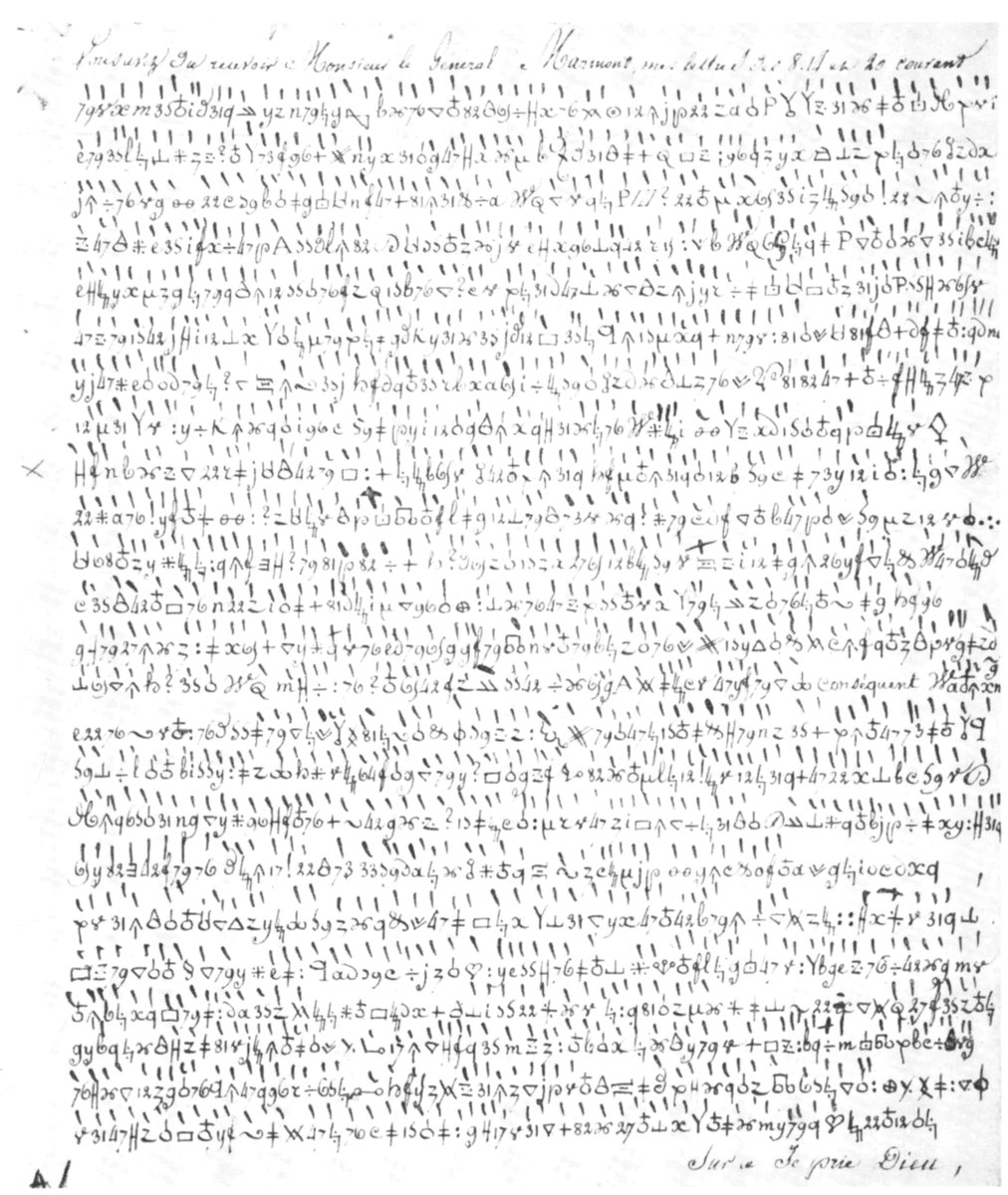
I used GPT-6 Astra to break an unsolved cipher to one of Napoleon's generals that had gone unread for 217 years.
What makes this impressive isn't actually the codebreaking, but that Astra completed the entire multi-modal workflow in ~6 hours from a single image and goal.
1/6🧵
One cool thing about ARC-AGI-3 is that it measures cost until success or timeout, instead of cost of first attempt.
This is arguably more aligned with real life, and shows how costly models at high efforts can counterintuitively be cheaper, by needing less iteration.
This is exactly why we release data publicly. Our Enterprise Signals data shows up all over this interesting analysis by @DavidGeorge83
Read more here: https://t.co/HFDRGpxNIw
Great video from Ethan. These types of contingencies are part of why we don't know exactly what future technologies, or jobs, will look like; you don't just have to predict 1 idea; you have to predict an interlocking series
More in latest OAI Econ blog:
https://t.co/rxi683VvU2
I was reflecting on how many random contingencies went into creating the current accelerating AI moment and had Opus 5.5 put together a video, inspired by old science show Connections, to try and point out how a series of initially unrelated ideas led to the moment we are in now.
ok like everyone i teased the model's early 6% insta-reading. but the way this thing works: the longer the nowcast doesn't dip, the more potentially legit it gets...
Q4 here we come
We don’t have the nouns (yet) to describe the jobs of the future.
That doesn’t mean they don’t exist
We can take seriously near-term negative impacts without treating today’s work as the boundary of what’s possible
My latest in OpenAI’s Econ Substack: https://t.co/nSlu7BzBg0
Would love to see a breakout in the next wave on how people update their other forecasts wave over wave, conditional on their forecast here. @EzraKarger
In the second wave of LEAP @Research_FRI, we included a question on AI solving or substantially assisting in solving a Millennium Prize Problem. Median expert forecast was 10%, and 5.4% for Superforecasters
GPT-6 Astra is here.
We hope it will begin to enable a new generation of entrepreneurship, scientific discovery, and building.
We believe it is the best model in the world for computer use, professional work, science, coding, cybersecurity, and more.
It took us some extra time to ensure that we could meet the safety and alignment standards required for this capability level, but we think you’ll find it worth the wait.
It scores 98% on FrontierMath Tier 4, 99.9% on ARC-AGI 3, and 100% on ExploitBench.
6/ congrats to my teammates on an incredible paper & joint Enterprise Signals release: @RonnieChatterji, @daveholtz, @sonnytambe, Gawesha Weeratunga, @neelrakholia, Cassandra Duchan Solis, & @drew_m_johnston
Paper: https://t.co/sUy3XdzBsT
Overview: https://t.co/fXtCUTQxvj
1/ New @OpenAI Econ Research on how AI adoption is diverging
There's an 8x token output gap btwn top firms & typical.
Includes:
- more context & work surfaces through plugins (21% vs 9% use)
- more codified workflows via skills (19 to 3%)
Integration, not shallow chatter 🧵🧵
5/ my read cont.:
maybe early signs of a smile-curve on adoption, with the smallest firms able to move nimbly and build AI-first, and the largest firms able to create space to experiment and invest in complements