In @hechingerreport, Prof. Steven Durlauf points to the postwar model of federal research funding as proof that sustained investment works, warning that funding cuts put the U.S. "on a suicidal trajectory" from its position in global higher education. https://t.co/JoKtBKZLTP
In @TheAtlantic, Prof. Konstantin Sonin explains why drone strikes on Russian oil infrastructure haven't sparked the protests some hoped for. Despite astonishing tolerance for wartime risk, he says, "Russians can endlessly adapt to this crisis too." https://t.co/7TVJzODQ97
In @WSJ, Prof. @k_sonin explains why Wildberries has become more than an online retailer in wartime Russia: “Wildberries is a strategic asset as it’s a big profitable business.” Its rise, he notes, "dovetailed with plans ... isolated from the West." https://t.co/Y9m7a4UvrW
The Water Watch Center will help small water utilities strengthen cyber defenses, identify attacks, and respond to breaches. Co-founded by Harris's Jake Braun, it brings cyber providers and volunteers together to protect critical water infrastructure. https://t.co/KT77gdwQ4z
In @Marketplace, energy economist @RyanMKellogg explains why banning U.S. oil exports is unlikely to be a simple fix for gas prices. Because oil trades in global markets, cutting off exports could distort supply and leave consumers with few clear benefits. https://t.co/t60nOvKzFF
New in @NBCNews: cyber expert Jake Braun announces a new effort to help protect water utilities from cyberattacks, bringing together AI tools and ethical hackers to identify vulnerabilities before adversaries can exploit them. https://t.co/WaKJDKidv1
In @nbcchicago, Jake Braun says attacks on water utilities should be viewed as “a national attack,” targeting technology “ubiquitous among water utilities,” a warning that cyber threats can reach critical infrastructure here at home. https://t.co/zySTBRVBur
In @USATODAY, Prof. Anthony Fowler helps explain how voters who reject party labels are not always a single bloc, and often "they are highly swayed by the qualities of a particular candidate’s ideologies," rather than partisanship. https://t.co/h8eNmnCM3E
Does more family income boost kids' test scores? Dhaval Dave of @bentleyu, Robert Kaestner of @HarrisPolicy, Wei Lyu of @UABNews and George Wehby of @uiowa (all NBER) find higher family earnings have little effect on children's math & reading achievement. https://t.co/3lIlwrFXZG
In @ChalkbeatCHI, municipal finance expert Justin Marlowe explains why passing a @ChiPubSchools budget matters beyond the boardroom: an approved budget can help reassure lenders that the district has a plan in place, even amid serious fiscal uncertainty. https://t.co/xPDxC0EMs4
In @ABC7Chicago, Jake Braun warns that AI is making foreign cyberattacks more scalable and sophisticated. As Russian-linked hacking campaigns raise new concerns, Braun says the broader goal is clear: undermining public trust in U.S. institutions.
https://t.co/FEP5ID2A7i
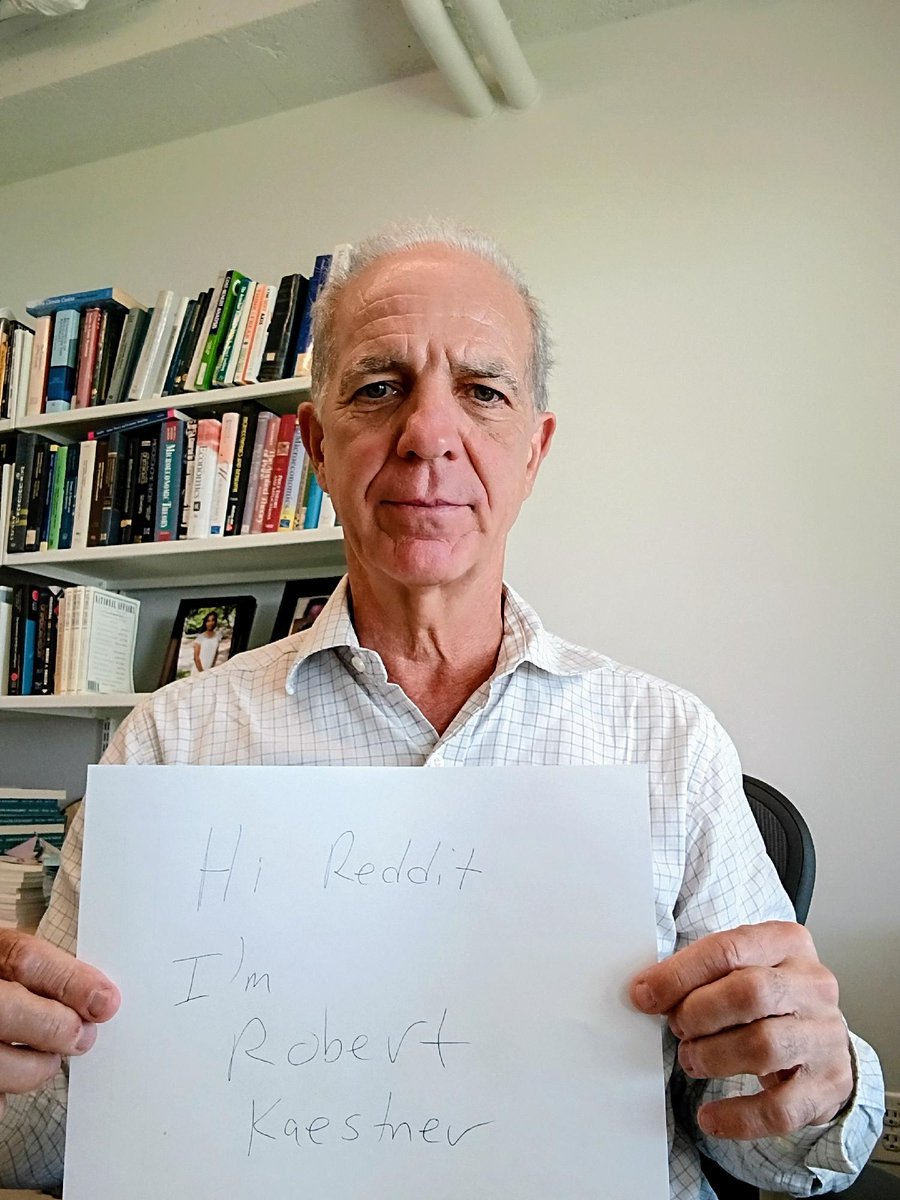
Join us live now on Reddit for an AMA with Prof. Robert Kaestner. Have questions about health insurance, public policy, health disparities, or how economists measure the real-world impact of policy? Bring them to the conversation here: https://t.co/PjJuTKRxPk
The Harris Social Impact Fellowship at the University of Chicago is now accepting applications for the 2027-2028 cohort. Explore our website and apply here by October 19: https://t.co/ieE9ane0lG.
In @NPR, Rebecca Neusteter brings national expertise to Baltimore’s effort to rethink 911. The city’s approach reflects the idea that people in crisis should be connected to the right help, not simply routed through the default emergency response. https://t.co/ZJE8ZoJyNF
In @WGNNews, Prof. Christopher Berry discusses a new @miurbanchicago / @NORCNews poll showing Chicago Mayor Johnson facing a steep path to reelection. https://t.co/gDcH631I6p
In @wttw, Jake Braun cuts through the election-security debate, saying solutions are practical: paper ballots, open-source voting equipment, and moving away from touchscreens. "The solutions are not hard and they’re the cheapest solutions out there.” https://t.co/vmwvAw74Wp
Harris welcomed the inaugural cohort of its Master of Science in Climate and Energy Policy program. Through rigorous training in data, economics, and climate science, students will prepare to navigate the tradeoffs shaping the global energy transition. https://t.co/KlYGPAiS89
New @Axios story features Robert Kaestner on what GLP-1 drugs do (and don’t do): His new NBER working paper finds that among adults with diabetes, GLP-1 use did not materially improve mental health, employment, or marriage outcomes. https://t.co/x3AjbqFSET
In @NOTUSreports, Prof. Bruce D. Meyer argues that single adults, often men with extremely low incomes, are too often overlooked by the social safety net. His prescription: stronger job-search support, behavioral health care, and housing assistance.
https://t.co/VhvvG6fJPH
As Africa’s Ebola response draws scrutiny, @austinlwright's research offers a broader warning: abrupt USAID cuts can destabilize fragile regions. His recent @ScienceMagazine study found higher conflict in African areas most exposed to USAID pre-shutdown. https://t.co/obYLOqKYnl