OK, I've had time to digest. Here are a few thoughts on the new FTC Policy Statement on Unfair Methods of Competition.
TL;DR: it holds plenty of symbolic value for the FTC in replacing the bipartisan 2015 Statement with, but will hurt more than help in court. (1/x)
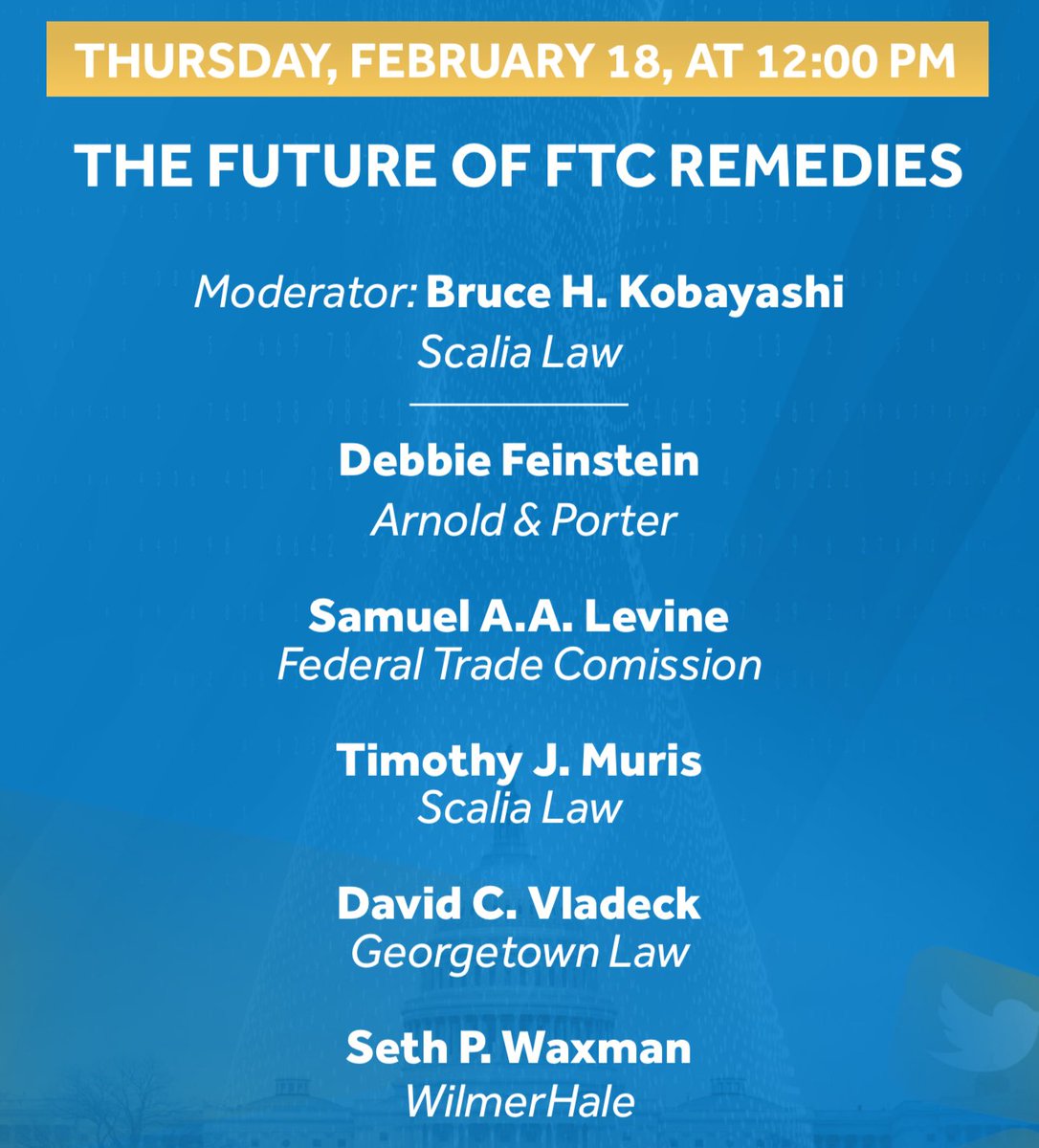
Enjoy the first panel from @AdLawCenter & the GAI’s antitrust conference as @ProfGavil, Thomas Hazlett, Barry Nigro Jr., and moderator GAI’s Prof Tad Lipsky discuss current #antitrust law and what changes may be coming.
https://t.co/wd56OLgYgo
This discussion has been absolutely fascinating. Great work by @geomasonlrev and @GAI_GMU to bring such knowledgeable panelists together. The FTC remedies space will be one of the most interesting to watch for the foreseeable future.
@exteric I agree that standing is the real bar here but I think there are viable arguments if someone could clear that hurdle. Fingers crossed we don’t find out hahaha.
@exteric The argument goes something like “Az.’s Republican electors slate—if accepted—would deprive the people of Az their right to choose their (national) representative, the essence of republican gov. The elector’s act is a safeguard against that and a guarantee of republican gov”
@exteric Of course, this would make it a political question. See Luther v. Borden; Baker v. Carr. If the Elector’s Act is an exercise of that power then “it rests with Cong. to decide what government is the established one in a state . . . as well as its republican character.” Luther