We next meet on Tuesday 2nd June at The Blue Room Sports Venue, 220 Headstone Lane, HARROW, HA2 6LY for our AGM & Presentation Evening with the Mayor of Harrow.
Now available for download: the official summary of changes and clarifications to the Laws of the Game 2026/27, effective from 1 July
➡️ English: https://t.co/rUWfnvqnki
➡️ French: https://t.co/t5YtA8pT6v
➡️ German: https://t.co/mZspgn58k7
➡️ Spanish: https://t.co/8SCO4Qrboq
Competitions that begin before 1 July, such as the @FIFAWorldCup, can implement the changes earlier.
An attacker comes very close to the goalkeeper, who has caught the ball inside their penalty area. While the goalkeeper is releasing the ball to pass it with their hands, the attacker jumps in front of the goalkeeper to block the pass (without making contact with the opponent). Immediately after the ball is thrown, it rebounds off the attacker’s head and goes into the goal.
What is the correct decision?
➡️ https://t.co/WmQHz1WhtL
➡️ https://t.co/sIr77TcuGP
Download the official app:
➡️ https://t.co/BwKFiVQuwn
➡️ https://t.co/jkJetKEFxU
The position of the ball for a penalty kick is correct if part of the ball:
➡️ touches the centre of the penalty mark, and/or
➡️ overhangs the centre of the penalty mark (in the air)
Law 14 does NOT require the ball to be:
➡️ wholly on the penalty mark
➡️ touching the penalty mark
A defender (Team A) attempts to kick the ball out of the penalty area. The ball deflects off another defender (Team A) and goes to an attacker (Team B), who has been in an offside position since the first defender kicked the ball. The attacker controls the ball and is unfairly challenged (careless tackle) by an opponent inside Team A’s penalty area.
What is the correct decision?
Find out more:
➡️ https://t.co/Cqoshf6ZJy
➡️ https://t.co/UzoJVOQPgb
➡️ https://t.co/6CzKym6YlD
➡️ https://t.co/sIr77TcuGP
Download the official app:
➡️ https://t.co/BwKFiVQuwn
➡️ https://t.co/jkJetKEFxU
Until 2019, any number of players were allowed to contest a dropped ball and the #referee could not decide who may contest it or its outcome.
In 2019, the procedure was changed so that:
➡️ the ball is dropped for only one player
➡️ all other players of both teams must be 4 m (4.5 yds) from the ball until it is in play (i.e. it touches the ground)
While the player taking the penalty kick is running to the ball, their team-mate touches the penalty area line with the foot before the ball is kicked. The goalkeeper saves the kick and the ball rebounds into the field to the attacking team player who encroached, who then plays the ball and scores.
What is the correct decision?
➡️ https://t.co/xP32uLkBzM
➡️ https://t.co/ho5TvIPozZ
➡️ https://t.co/Ee8OoUDFmz
Download the official app:
➡️ https://t.co/BwKFiVQuwn
➡️ https://t.co/jkJetKEFxU
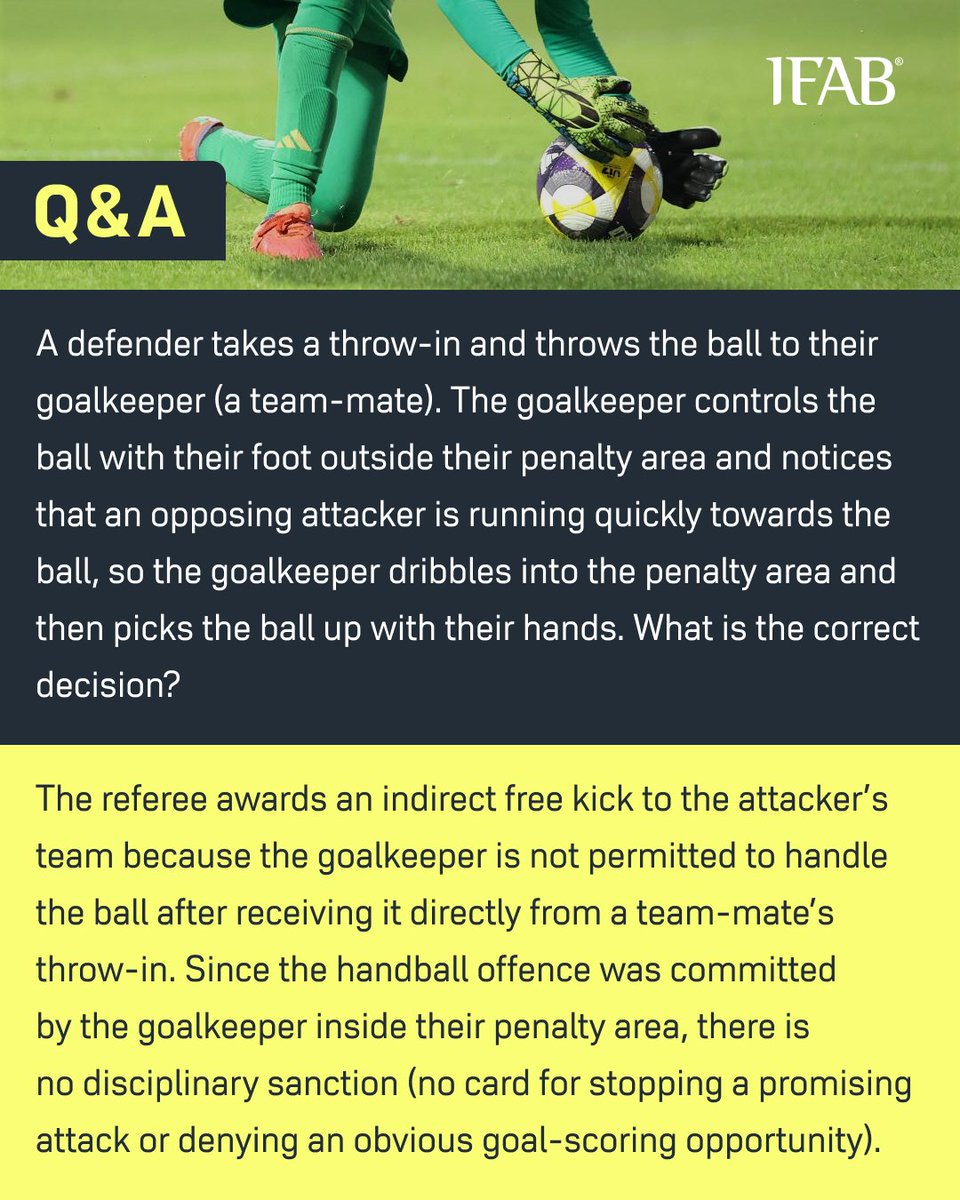
A defender takes a throw-in and throws the ball to their goalkeeper (a team-mate). The goalkeeper controls the ball with their foot outside their penalty area and notices that an attacker is running quickly towards the ball, so the goalkeeper dribbles into the penalty area and then picks the ball up with their hands.
What is the correct decision?
Find out more:
➡️ https://t.co/WmQHz1WhtL
➡️ https://t.co/UzoJVOQPgb
Download the official app:
➡️ https://t.co/BwKFiVQuwn
➡️ https://t.co/jkJetKEFxU
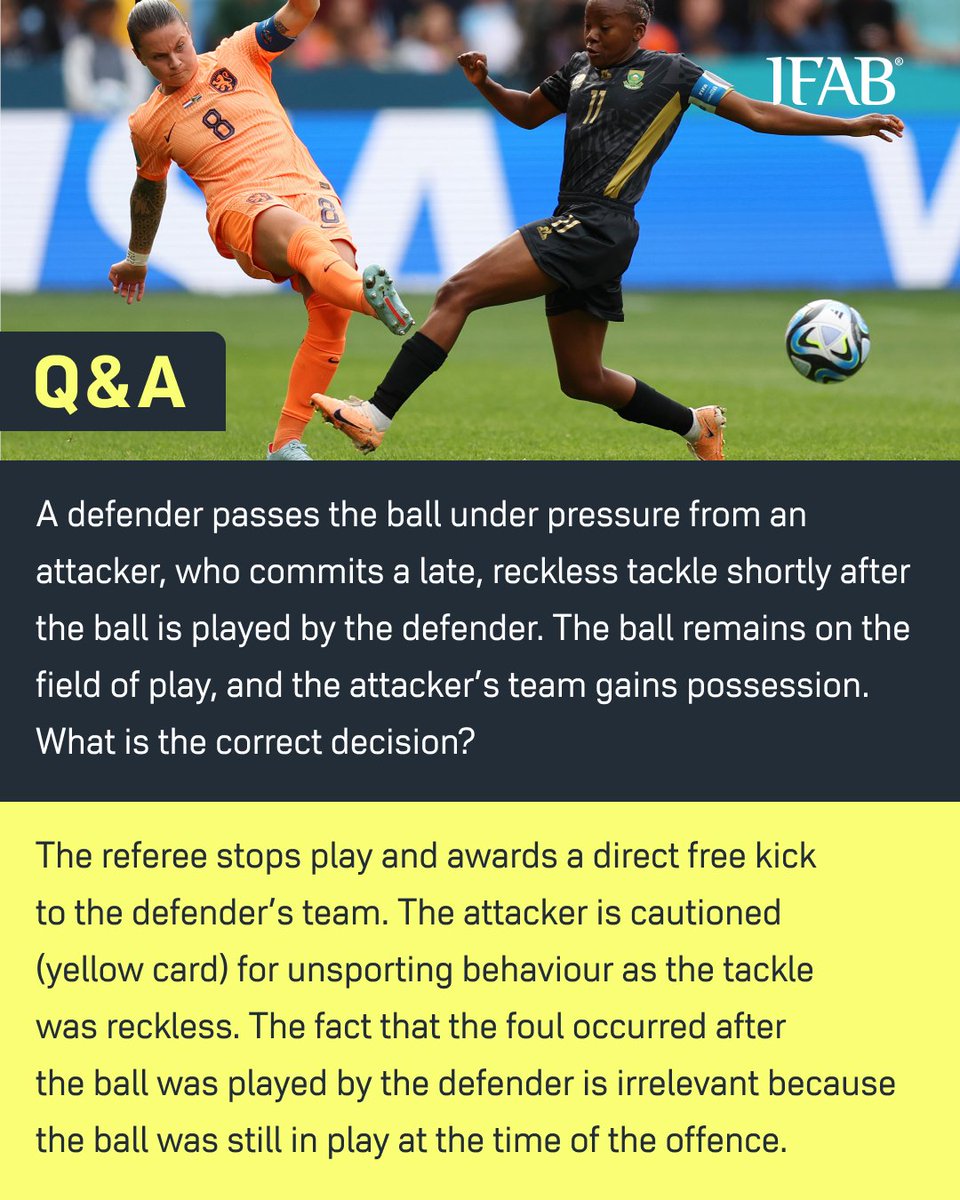
A defender passes the ball under pressure from an attacker, who commits a late, reckless tackle shortly after the ball is played by the defender. The ball remains on the field of play, and the attacker’s team gains possession.
What is the correct decision?
➡️ https://t.co/Ff3xbvi9hG
➡️ https://t.co/UzoJVORn5J
➡️ https://t.co/sIr77Td2wn
Download the official app:
➡️ https://t.co/BwKFiVR2lV
➡️ https://t.co/jkJetKFdns
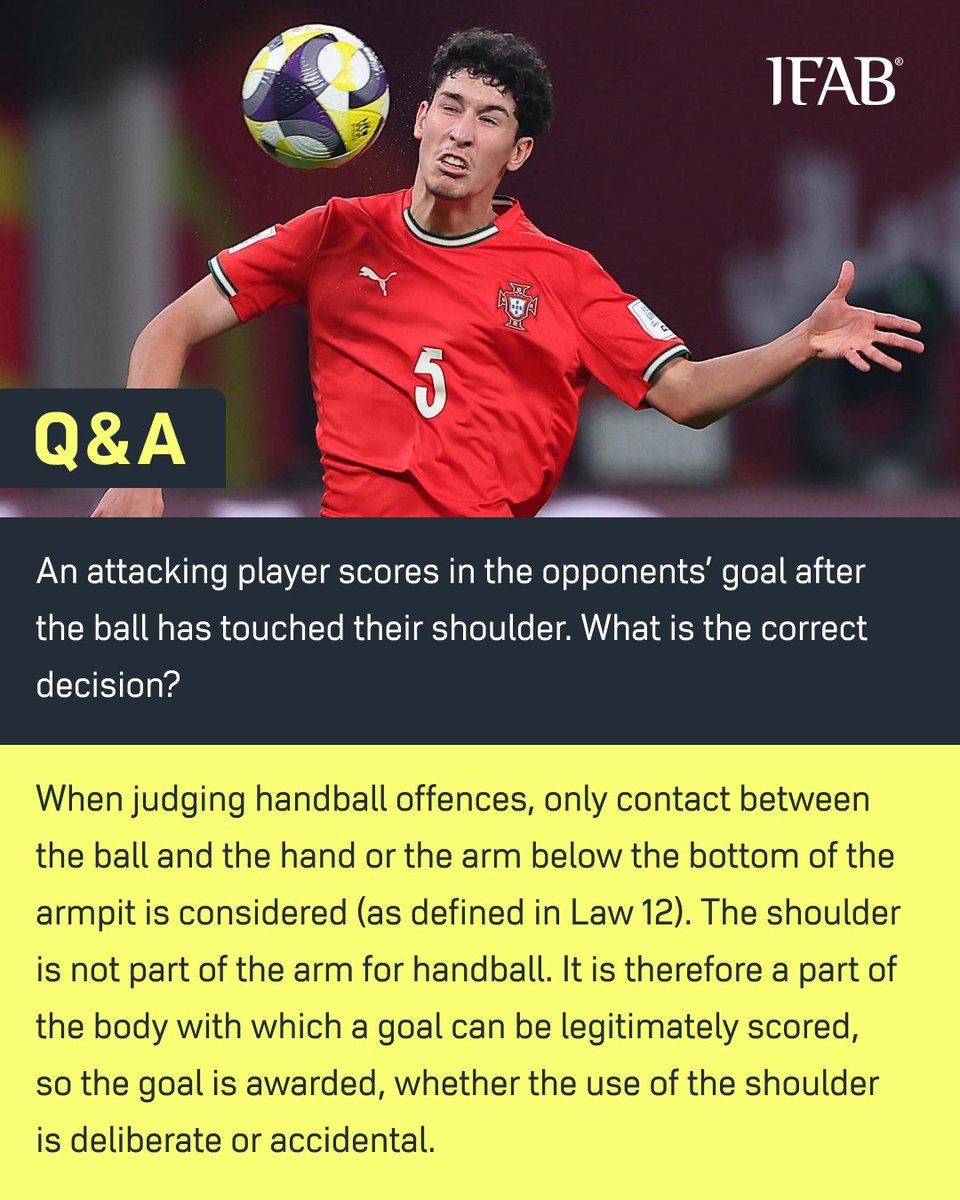
An attacking player scores in the opponents’ goal after the ball has touched their shoulder. What is the correct decision?
Find out more: https://t.co/HWpcjeJyuk
Download the official app:
➡️ https://t.co/XDWsUhp64H
➡️ https://t.co/4IV0uRgD41
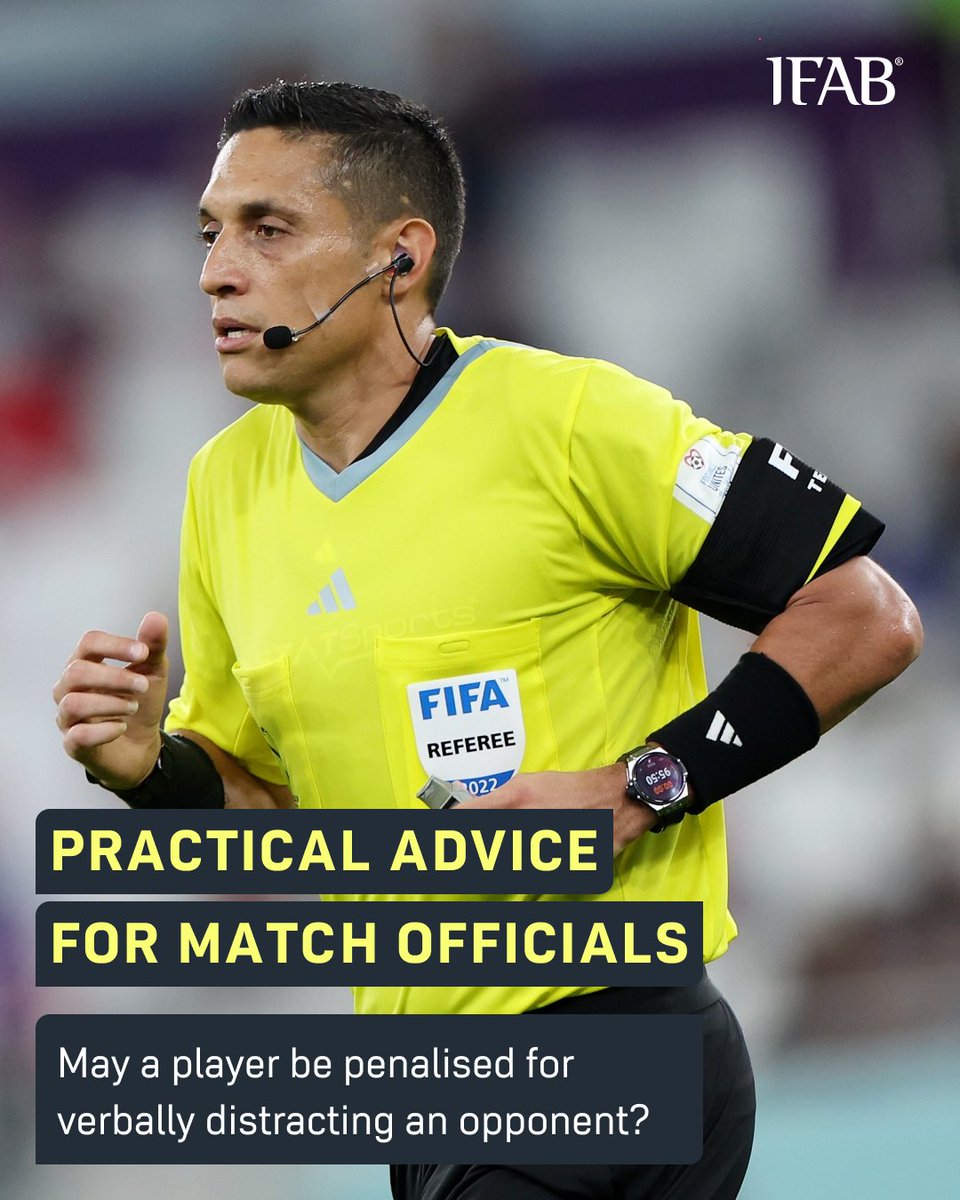
Law 12 – Fouls and Misconduct allows a player to be cautioned (yellow card) for verbally distracting an opponent if this is considered by the #referee to be unsporting behaviour.
Minor offences can be dealt with a warning, unless they are blatant and/or repeated.
For a player to be punished, the referee should be convinced that the verbal distraction unfairly impacted the opponent and interfered with play (which is more likely in youth/grassroots football).
➡️ https://t.co/sIr77TcuGP
Examples:
1. At a penalty kick, a defending player shouts when an attacking player is about to kick the ball. This unfair interference distracts the kicker (the kick is missed) ➡️ retake and caution
2. At a throw-in, an opponent shouts at the thrower to distract them ➡️ retake (or indirect free kick if the throw-in has been taken) and caution
3. During play, an attacker who is behind a defender shouts ‘my ball’ to mislead the opponent, who fails to control the ball ➡️ indirect free kick and caution
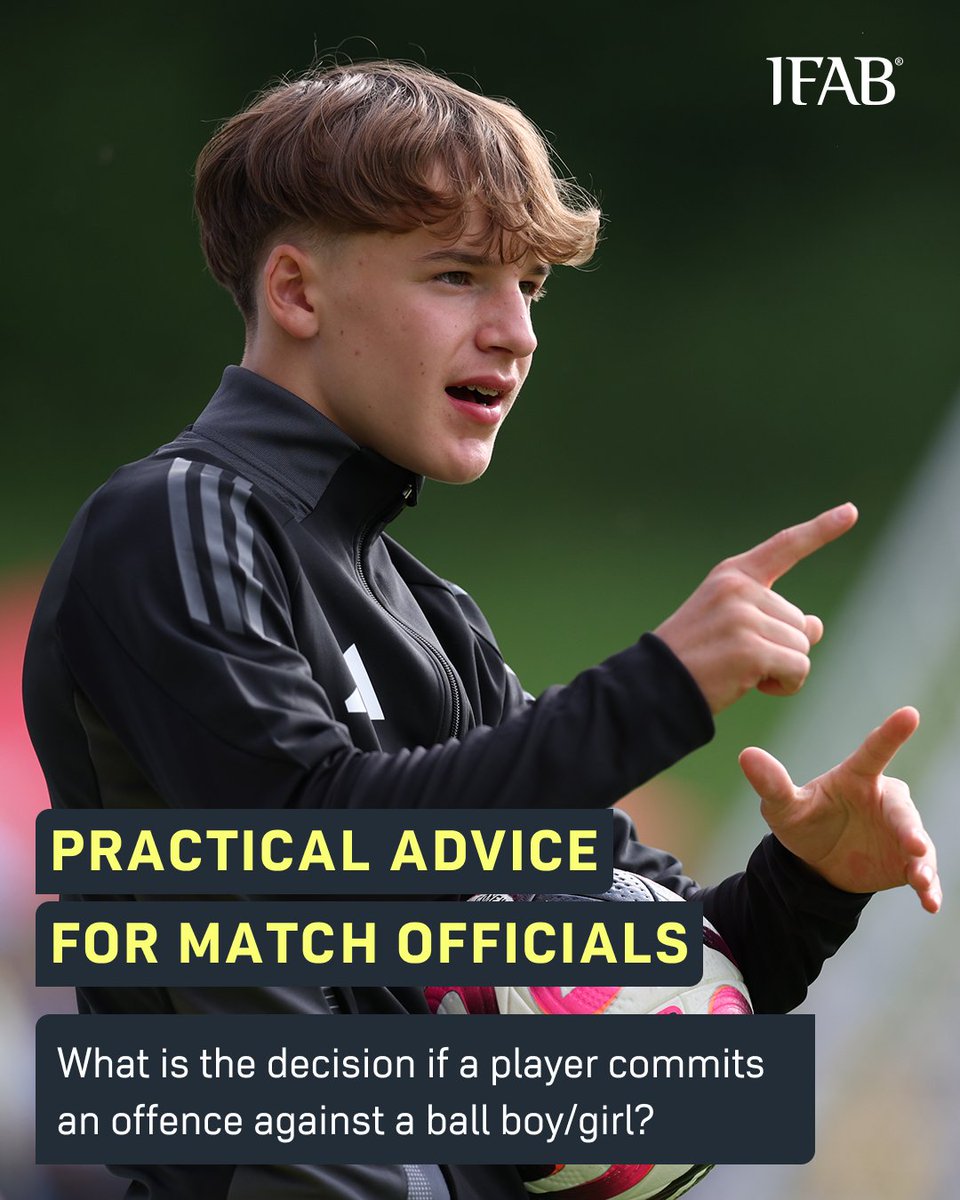
Any offence by a player against a ball boy/ball girl must result in the appropriate disciplinary sanction:
➡️ warning
➡️ caution (yellow card) for unsporting behaviour
➡️ sending-off (red card) for violent conduct, spitting, or offensive, insulting or abusive language/action(s)
The player must be sanctioned even if the offence is committed when the ball is out of play.
Example: A player leaves the field of play to take a throw-in and pushes a ball boy to retrieve the ball.
A free kick or penalty kick can only be awarded for offences committed:
✅ when the ball is in play
✅ against a match official or someone on the team lists (a player, substitute or team official)
A ball boy/girl is not named on the team list and is considered an ‘outside agent’.
If a player commits an offence against a ball boy/girl when:
➡️ the ball is out of play – no change to the restart
➡️ the ball is in play – a dropped ball*
➡️ the ball is in play after the player has left the field of play without the referee’s permission – an indirect free kick from the point on the boundary line where the player left
In principle, the #referee is not obliged to stop play (immediately) and should consider the following:
➡️ severity of the offence
➡️ current situation on the field
➡️ interference with play
*This restart applies to both verbal and physical offences committed inside or outside the field of play (assuming that the offending player was legally off the field e.g. to receive medical treatment, change equipment, etc.).
A player changes places and shirts with the goalkeeper while the ball is in play. The #referee was not informed beforehand and stops play after noticing the change.
Is this the correct decision?
➡️ https://t.co/yxYnFeBb11
➡️ https://t.co/JoNJUGaJsB
➡️ https://t.co/HEGL8q4Zmk
A player, substitute or team official:
➡️ must be sent off (red card) for using offensive, insulting or abusive gestures
➡️ may be cautioned (yellow card) for the following offences:
– dissent (e.g. sarcastic clapping)
– unsporting behaviour (e.g. provocative gestures towards fans)
– excessively/persistently gesturing for a card to be shown to an opponent
– excessively showing the ‘TV signal’ for a VAR ‘review’
A defending player who is on the field of play, close to the touchline, deliberately handles the ball as it is going past them (with no opponents nearby), preventing it from leaving the field of play. Otherwise, the ball would have gone out for a throw-in to the opposing team.
What is the referee’s decision?
➡️ https://t.co/UzoJVOQPgb
Download the official app:
➡️ https://t.co/BwKFiVQuwn
➡️ https://t.co/jkJetKEFxU
An attacker is in an offside position when their team-mate makes a long pass towards them. However, the ball does not reach the attacker, as it is intercepted by a defender. The defender controls the ball with their feet, moves a few metres and touches the ball several times.
After that, the attacker, who was in an offside position, runs to the ball, tackles the defender and gains possession without committing a foul.
What is the referee’s decision?
Find out more: https://t.co/Cqoshf6ZJy
Download the official app:
➡️ https://t.co/BwKFiVQuwn
➡️ https://t.co/jkJetKEFxU
According to Law 2, if the ball becomes defective during a penalty kick or penalties (penalty shoot-out) as it moves forward and before it touches a player, crossbar or goalpost(s), the kick is retaken.
Example: The ball is kicked, moves a few metres, and then suddenly bursts/becomes flat before reaching the goal/goalkeeper. As a result, the ball stops and does not cross the goal line.