Poet, Ultimate Player/Reporter, Philosophy Dr. of fMRI, Researcher @UniOfYork, Fashion Icon, Christian, He/Him. Trying to bring chaotic good to the world.
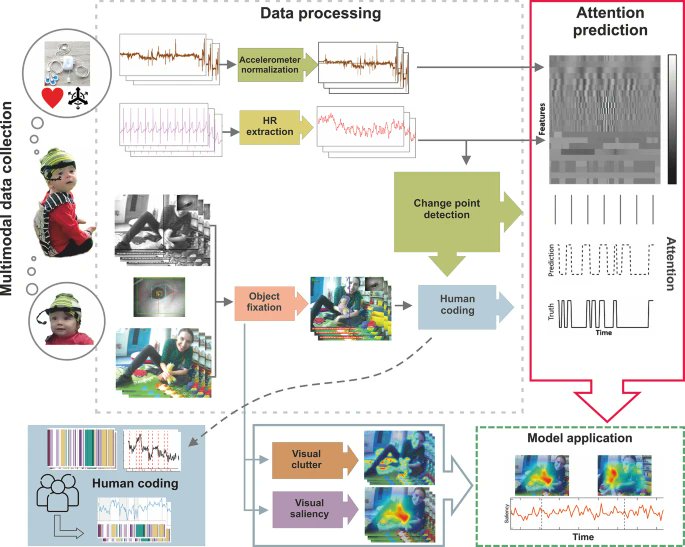
ASAP - new tool to measure infant sustained attention from large real world data. Hundreds of hours of physiological signal recorded from freely moving infants become manageable. It opens exciting new opportunities to learn about infant development
https://t.co/j90Rr57tY1
ICIS 2024 is almost here. YAY! Really excited to organize a pre-conference workshop. Great chance to chat with other researchers passionate about naturalistic approaches to understanding infant development. Join us on July 8th! The more the merrier!
https://t.co/Uc097o7NxA
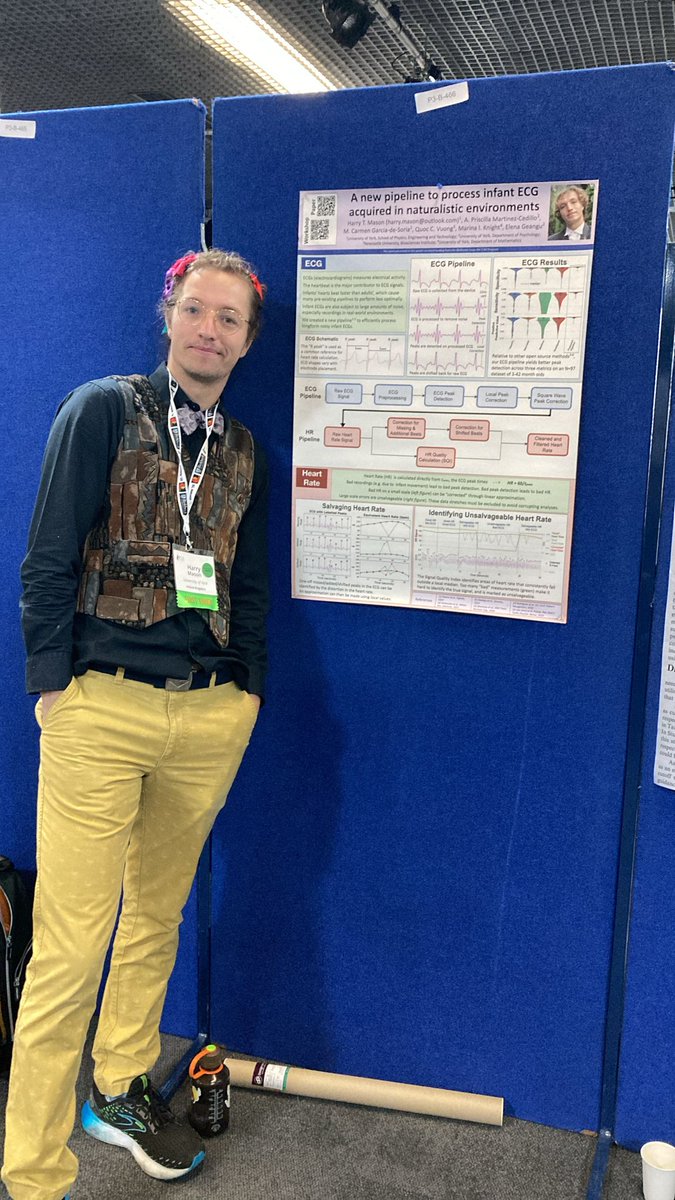
Huge congrats to @HarryTMason for the publication of his paper. Amazing work on finding solutions for processing real world big data for infancy research. Complete Pipeline for Heart Rate Extraction from Infant ECGs https://t.co/qr8r7t1AzQ #mdpisignals via @Signals_MDPI
That's it! Thank you to @geangu_elena, @APmar_cedillo, Mari Garcia-de-Soria, Marina Knight, Quoc Vuong and Stephen Smith for their help, and thank you for reading!
I have another paper! Actually, I have a couple, but this is my main paper from the University of York. Many thanks to my co-workers for helping support me during this time. I’ve tried to write a simple explanation to allow everyone to understand.
https://t.co/aEyPHXQS13
*Can you summarize the whole paper?*
Infant HR is very fast. ECG give us HR – but it's so fast that normal approaches don’t work as well. We adapt the best approach to improve HR. We then clean up the HR, and identify areas which we couldn’t accurately calculate.
*Why were you working on infant ECG?*
From working @YorkDSN looking at the development of young children. When you pay attention to something, HR drops and then stabilizes. Roughly, if an infant has that “drop-then-stabilize” HR shape, it indicates an ability to pay attention.
*You’ve got a heart rate signal, what now?*
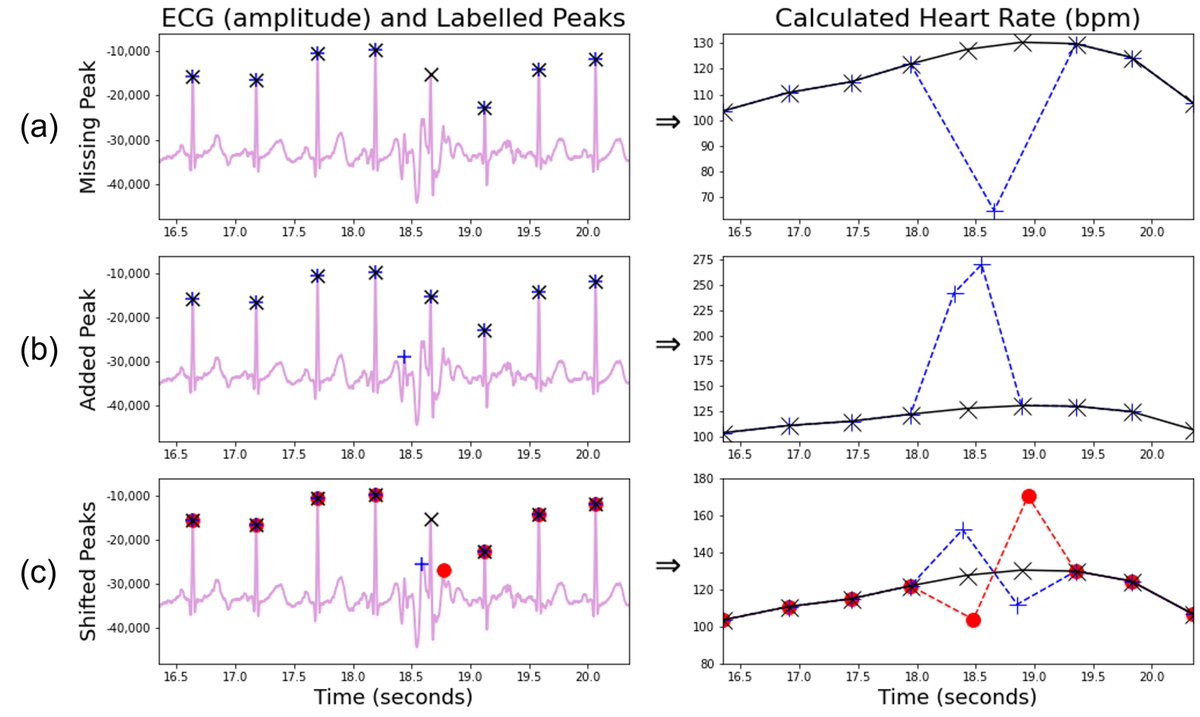
We improve the signal. Your HR is fairly consistent – it doesn’t rise or fall that much from beat to beat. If it halves/doubles, you’ve likely missed/added a beat. We to try to correct these areas.
New pre-print out! It's been a very fun topic to delve into these last 2 years. Here's hoping any review comments are short but helpful :)
For anyone not aware, a pre-print is where you can put research you've submitted, but that hasn't yet been through peer review.
New pre-print from our ECG guru @HarryTMason . Well done Harry for developing such a useful tool for infancy research in the 'wild'! 🏋️♀️🏋️♀️
Bring on more infant ECG :) ❤️❤️
A Complete Pipeline for Heart Rate Extraction from Infant ECG @Preprints_org https://t.co/MaTjd5kNs7