@GeoffArsenal I always believed we would get to the final and then win it next year. It was a step at a time. Quarter, semi and then final. Next year we win it
@TheArsenalMind Imagine Arsenal wins the champions league and the World Cup is just 12 days away.
Theres no way marketing of the World Cup would not drop.
Arsenal's loss is a marketing strategy for the World Cup. Premier league win and timelines across social media show just Arsenal content.
#PSGARS Imagine Arsenal wins the champions league and the World Cup is just 12 days away.
Theres no way marketing of the World Cup would not drop.
Arsenal's loss is a marketing strategy for the World Cup. Premier league win and timelines across social media show just Arsenal
AM I A THIEF?
One of our Sudanese brothers once shared a deeply touching story titled “Am I a Thief?”—and honestly, it’s not just a story… it’s a mirror to the soul.
He spoke of two moments that seemed small on the surface, yet carried profound weight.
The first moment:
He had traveled to Ireland for a medical exam. The fee was £309, but without change, he paid £310. It felt insignificant—just £1 extra. He completed his exams and eventually returned to Sudan, probably never thinking about it again.
But then… a letter arrived.
Inside was a cheque for £1, with a message that pierced deeper than the money itself:
“You made a mistake when paying your exam fees. The fee was £309, but you paid £310. This is your £1… we do not take more than what is rightfully ours.”
Pause for a moment and let that sink in…
The envelope, the stamp, the process — it all cost more than £1. Yet, integrity was not measured by cost but by principle.
> It wasn’t about the money. It was about doing what is right… even when no one is watching, even when it doesn’t “make sense.”
The second moment:
On his daily route between college and home, he would stop by a small grocery shop run by a woman and buy chocolate for 18 pence.
One day, he noticed something different. The same chocolate—same size, same quality—but now there were two prices: 18 pence and 20 pence.
Curious, he asked why.
She calmly explained:
“There were issues in Nigeria where we get cocoa. Prices have gone up. The new stock is 20 pence, but the old one remains 18.”
He thought logically, like many of us would:
“Then people will only buy the 18 until it finishes, before moving to 20.”
She nodded, “Yes, I know.”
So he suggested what seemed like a “smart” solution:
“Why not mix them together and sell everything at 20? No one will know the difference.”
She leaned closer… lowered her voice… and asked a question that struck like lightning:
> “Are you a thief?”
He was stunned. Speechless.
> He walked away—but that question followed him… echoed within him… refused to let him go:
> "Am I a thief?"
Sometimes, we think being a thief is only about taking what is not ours in obvious ways.
> But this story challenges something deeper.
It asks:
What do we do with the little things?
The unnoticed moments?
> The quiet opportunities to bend the truth… just a little?
Because integrity is not proven in grand gestures.
> It is revealed in the smallest decisions—when profit is possible, when shortcuts are easy, when no one would ever know.
And perhaps the real question is not what others call us…
but what our conscience whispers when we are alone.
Am I a thief?
Conclusion:
“Whoever is faithful in very little is also faithful in much, and whoever is dishonest in very little is also dishonest in much.” — Luke 16:10
Culled
One day in September 2001, when I was a tiny 11 year-old starting secondary school at Atlantic Hall, back when it was located at Maryland, Mrs Adepoju the class teacher announced a group exercise as an icebreaker. All of us were to write our dream holiday location on a piece of paper, and one by one we would read out what we had written.
She started from the other end of the class, so I got to hear multiple answers before it got to my turn. The answers were basically "London", "America", "London", "London", "London", "London", "London", "UK", "London", "London"...
Now for context, I was already reasonably well travelled at the time, and even though my family was not the kind to go off on a jaunt to London at every given opportunity like some of my new peers, I had been privileged to travel fairly extensively around Africa, and I was visually familiar enough with the places being mentioned to know that people from London generally looked forward to going on holiday to warmer parts of the world in Africa, Asia, Southern Europe and Latin America.
I also knew from personal experience that people from "America" and "London" could be found in their thousands enjoying holidays in Lomé, Zanzibar and Accra. You would often find me as the sole African kid surrounded by white kids playing together in the lobby or private beachfront of Lomé's Hotel Deux Fevrier or Hotel Sarakawa whenever my family was in town.
In addition, the travel sections in the Newsweek, TIME and Readers Digest magazines that my dad bought every week made it clear that safari tours in Kenya, Tanzania and South Africa were among the most highly rated holiday experiences on earth. These experiences were so exclusive that it would actually be easier for a Nigerian to take a trip to London than to go on safari in Kenya.
I'm providing all this context to explain why it seemed pretty obvious to me that writing "Kenya" as my dream holiday destination was a valid and reasonable choice. Instead, what happened when it got to my turn was that I read out "safari in Kenya" - and the rest of the class burst into laughter and giggles. I was utterly confused at first. Did they not hear me correctly?
They did.
As one of them helpfully explained in between subsequent chortles, "We're talking about places like London and New York, what is *Kenya*?" The inference of course, was that *Kenya*, located in Africa as it was, did not belong in the same conversation as "London" when discussing destinations.
What constituted a "dream holiday" for these children of Nigeria's elite was a Virgin Atlantic economy class ticket to Gatwick Airport, a 4-week stay with their NHS auxillary nurse aunty and her 2 kids in a cramped 2-bedroom council terrace in High Wycombe, and an Oxford Street shopping rampage yielding 50kg of excess baggage for the return trip, filled with WH Smith pencils and Primark clothes to show off to each other at the end of term party.
While the actual inhabitants of London used monthly payment plans to save up for their once in a lifetime Thomson package holiday tour in Kenya, these ghettofabulous sons and daughters of the Nigerian "elite" looked forward to a cold, uncomfortable experience on a miserable umbrella island as their "dream holiday". Not because it was a dream holiday, but because that was the social expectation they all enforced on each other.
And if you knew better, they *laughed* you.
That day was the first time I experienced something that I have gone on to experience many, many times over the intervening 25 years of my Nigerian life - the existential dread of being surrounded by people whose information level is so far below the one I operate with that we genuinely have almost nothing in common.
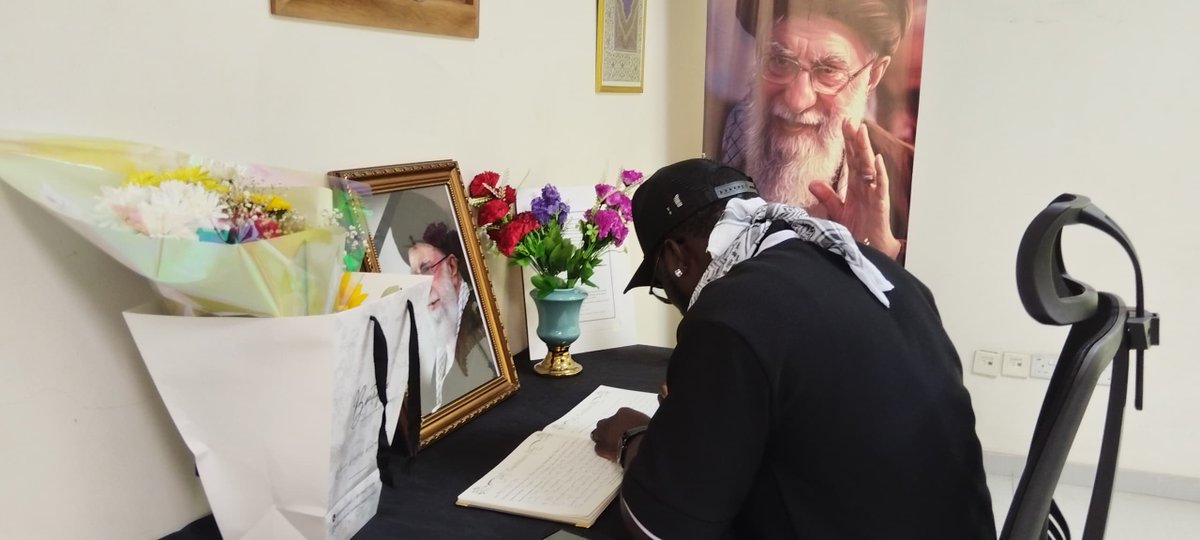
It's an experience I am so used to that I no longer bother to explain myself to Nigerians. The people who think that London is a dream holiday destination definitely think that "Iran is a terrorist regime that murdered 30,000 protesters."
Of course they do.
There are a number of points I would like to make on this CAF Appeals Committee ruling.
First, let’s clear the air on this Senegal leaving the pitch for 15 minutes argument. There is nothing in the CAF Afcon Regulations that specifically state how much time a team may be off the pitch for them to forfeit the game.
Second, there is nothing in the IFAB Laws of the Game addressing a team walking off and/abandoning a game.
With those pieces of housekeeping done, let’s look at the actual regulations. And I will focus on Art 82 as it is the main crux of the issue. Art 84 is simply the sanction for violation.
ARTICLE 82
If, for any reason whatsoever, a team withdraws from the competition or does not report for a match, or refuses to play or LEAVES THE GROUND before the regular end of the match without the authorisation of the referee, it shall be considered looser and shall be eliminated for good from the current competition. The same shall apply for the teams previously disqualified by decision of CAF.
There are two offenses here that Senegal MAY have committed. The first is “refusing to play” the second is “leaves the ground”
REFUSING TO PLAY
It could be argued by the language of the Regulation that that does not apply to Senegal because by starting and playing the game, they did not “refuse to play”.
Looking at the chronology of the wording, it starts with
- withdraws from the competition
- does not report for a match
- refuses to play
- leaves the ground
The progression is clear:
- not appearing for the competition
- appearing but not showing up to play
- showing up but refusing to play
- and then leaving after
If we go by the letter and progression there, then we can say that the only one that applies to Senegal is the last one.
If the language had been “refuses to continue play”, with the operative word there being “continue” that might present a stronger case.
But this might just be me splitting hairs.
Now to the “leaves the ground” part. There are 16 mentions of “field” or “field of play” in these AFCON Regulations in reference to the pitch. Here are two examples:
ART 16.20.2
The match is restarted with the same players on the FIELD and with the same substitutes available when the match was interrupted;
ART 42.3
A player expelled from the FIELD by the referee is automatically suspended for the following match in the framework of the same competition, without prejudice to other sanctions that might be imposed upon him subsequently.
Mentions of ground always refer to the venue, not the pitch. This distinction was clearly not accidental.
Senegal may have left the field, but they did not leave the ground. So if we follow that argument, then we can see that there would have been no reason for the game to be abandoned as Senegal did not leave the ground. Only the field.
Clear distinction
Finally, we go to the outcome of the game and the authority of the referee to determine the result
LAW 5
The decisions of the referee regarding facts connected with play, including
whether or not a goal is scored and the result of the match, are final. The
decisions of the referee, and all other match officials, must always be respected.
“The referee may not change a restart decision on realising that it is incorrect or on the advice of another match official IF PLAY HAS RESTARTED or if play has restarted or the referee has signalled the end of the first or second half (including extra time) and left the field of play or abandoned the match.
Clearly, even if we agree that the referee made a mistake in not abandoning the game, the fact that they completed the second half, and played two additional periods of extra time before coming to a result, precludes anything else.
The referee restarted the game, it was played to a conclusion and there was a result.
Senegal won. Morocco lost.
C’est finis
QED
@samuelJayC Can’t understand all u Arsenal uk fans negativity. 4 away games in 11days. The team was poor today but cut them some slack. We lost to 2 stunning goals and one mistake. Your negativity basically causes the implosion
@A_kinola02@EuginhoCortez One was prepared for the life of sports and publicity and was trained properly, the other saw sport breakthrough as a life or death issue. The sport means different things to both
@RealOlaudah True, except for where she said her feelings are in check. 8 out of 10 side chics always fall in love. Especially the ones between 20 and 30 years old.
@TheArsenalMind To answer your question, do you think haaland would be as prolific in this Arsenal side with the way we play? After we win trophies this season he’ll adapt to our style and score a lot of goals
@CigsMake In the 80s and before, people actually lived life mostly outdoors and fended for themselves. Then they decided they didn’t want their kids going through the same things they went through
@currentiyke@asemota Be like sometimes we Dey forget say that year, when pikin don useless finish and no hope na abroad them Dey send am go. Those useless people still Dey born pikin ooo And most times coming back to naija fit mean certain death
@BenHundeyin Why do u people always announce ur plans on social media? Is it for the terrorists to prepare and change location or u just want to be seen as taking action?