Today we're launching Intercept: a $500M philanthropic initiative to make respiratory infections, like the common cold and flu, a thing of the past.
We treat respiratory infections as a minor nuisance, but that’s really not the case. Most of us will spend 5% of our lives (!) sick from these viruses, they kill 1M people a year, cost $600B annually in productivity, and periodically threaten civilization through pandemics.
So, if they’re such a big problem, why haven’t we dealt with them yet? Last year we convened ~40 leading scientists, pharma R&D leaders, biotech investors, and regulatory experts to better understand that.
We heard two main reasons:
(1) First, it’s just technically very challenging: respiratory viruses represent hundreds of distinct, mutating strains across several families. Fortunately, recent breakthroughs make this newly possible.
(2) Second is a lack of funding: broad-spectrum solutions have historically been underfunded, in part because they’re not a great fit for most philanthropic or commercial funding (and while COVID generated a burst of activity around preventing and understanding respiratory infections through an influx of new funding, that hasn't been sustained).
We think that with enough focus and funding, this might be solvable. Intercept is a $500 million philanthropic initiative that will take advantage of new tools to catalyze the development and deployment of two types of products: broad-spectrum preventatives and air cleaning technologies.
This problem is undoubtedly difficult. But it’s more tractable now than it’s ever been. We think we should give it our best shot.
We’re enormously grateful to our anchor funders: @stripe, @AnthropicAI, @TheFluLab, @FoundationOAI and individuals from Jane Street.
And, I’m very excited to be building this with @incredutility and the rest of the team.
I got curious about the real story of Ozempic + Gila monster spit people cite when advocating for basic research funding. The truth is more interesting, and shows us more about the stories we tell ourselves about science than it convinces people to maintain the funding status quo
How much of the human genome is essential?
Two pieces out today from our lab: 1) a method to map essential genomic intervals at gigabase scale, and 2) an argument that it's time to consider synthesizing a minimal human genome.
https://t.co/iwyiZXKGdp
https://t.co/izJ2DzhgQC
But the Bitter Lesson from AlphaFold & EVO2 is that scaling is actually very challenging in biology & even today models that incorporate domain specific constraints & inductive biases are still very hard to beat. 8/
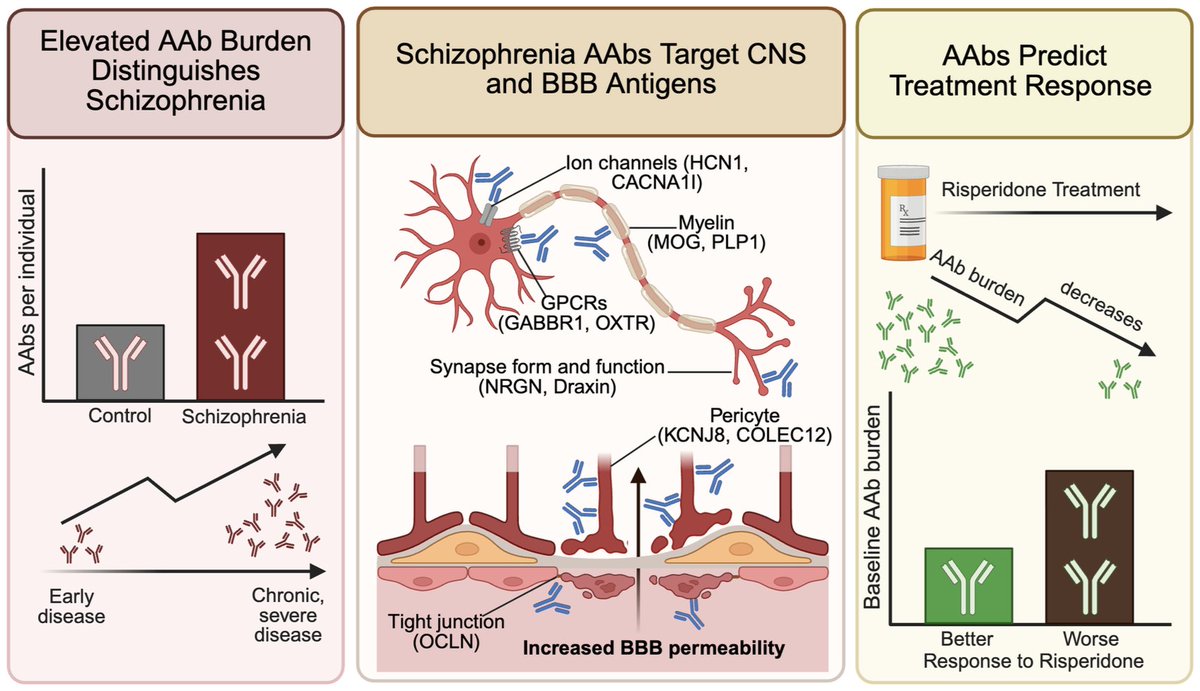
Autoantibodies cause autoimmune disease, shape infection outcomes, and alter cancer immunotherapy. But what role might they play in neuropsychiatric disease? In our new preprint, Katlyn Nemani and @JillianRJaycox take on this question in schizophrenia. 🧵
https://t.co/lmL4sx7QSz
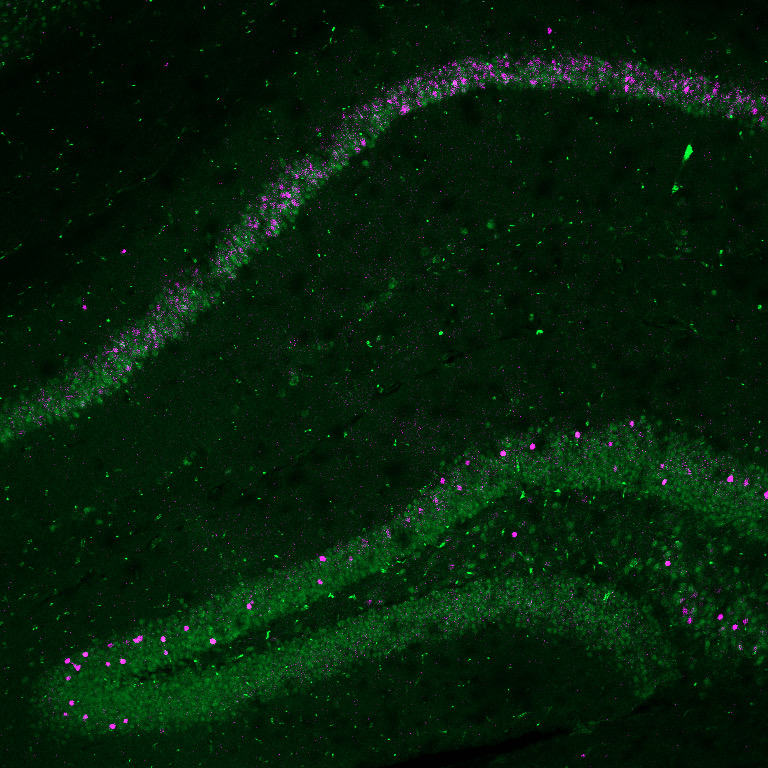
A history of viral encephalitis is one of the strongest risk factors for developing dementia. With @JacobJacobog02, Yifan Chen, @RNA_Life, and @RyanDhindsa, we refine this link by describing a neuronal cell type that can reactivate HSV-1 in humans 1/n
https://t.co/y8D2orzUur
A remarkable result supported by remarkably clean data.
A recent study published in Cell tackles a difficult and important question:
Can a routine vaccine influence dementia risk?
Instead of relying on correlations, they use a quasi-experimental design built around age-based eligibility for the shingles vaccine. Individuals just above and below the cutoff are nearly identical, except for vaccination status. This creates a rare opportunity in human populations: something close to randomization at scale.
The result: vaccinated individuals show a lower incidence of dementia over time. The separation is gradual, internally consistent across analyses, and robust to multiple checks. Even among people already diagnosed with dementia, vaccination is associated with slower progression and lower mortality.
No mechanism is claimed. No overreach. Just a clear signal from a well-constructed natural experiment.
The implication is hard to dismiss: a single, widely used vaccine — given for an unrelated reason — may meaningfully alter the trajectory of one of the most complex diseases in medicine.
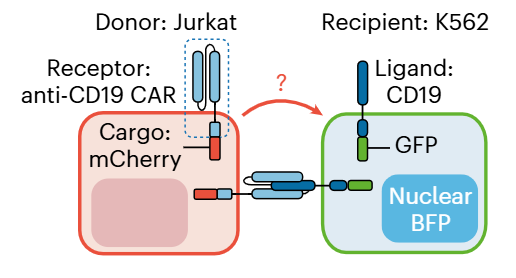
Ever heard of 'cellular nibbling'?
In our @NatureCellBio paper, we’ve turned trogocytosis into a delivery tool for programmable medicine. Congrats to @Xinyi and team!
Link: https://t.co/8S503nSMCH
@StanfordBioE @StanfordChEMH @CZBiohub#GeneTherapy#SyntheticBiology
Excited to share my postdoc work with @JD_Buenrostro now out in @Nature!
"Epigenetic memory of colitis promotes tumour growth"
https://t.co/6703aeQlLG
We wanted to understand how transient inflammation can create a long-lived increase in cancer risk, even after full recovery 🧵
How specific are therapeutic monoclonal antibodies, really?
In our new paper, @Yile_Dai led a collaboration with Adimab to profile 174 FDA-approved and clinical-stage mAbs against 6,172 human extracellular proteins.
What we found surprised us.🧵
https://t.co/ONTSF60B2g
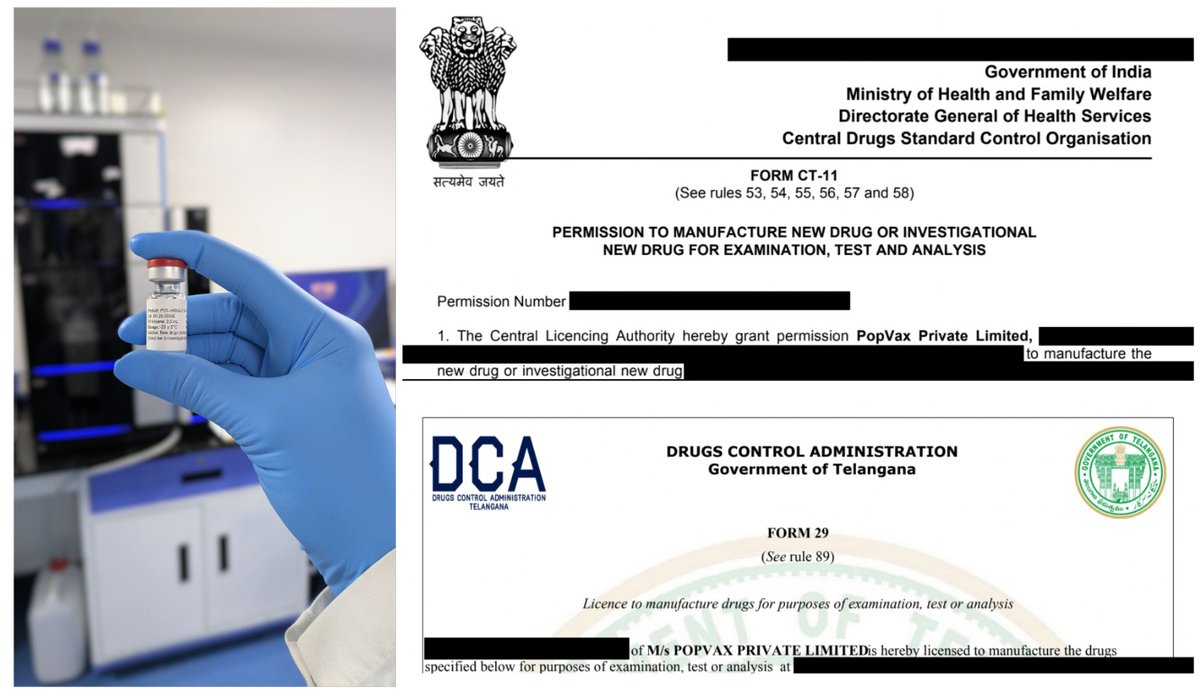
Four years ago, I started @PopVaxIndia with no real knowledge of biology and <$50k in personal funding, convinced that the combination of generative AI for design & RNA for delivery would unlock a new class of vaccines & therapeutics against diseases resistant to legacy methods.
Great to the see the flurry of single gene knockdown Perturb-seq like atlases from cell-lines, mouse brain etc over the last few days. These are undoubtedly very valuable datasets. I just want to re-iterate a few other very important expt. design considerations 1/
Reasons to be pessimistic (and optimistic) on the future of biosecurity
https://t.co/mzqsTrS82e
"It was such a fun read (if you can say that about an article on weapons)!"
—a glowing review from an early reader
this is (once again) the longest article I have ever published at 13,000 words. it involves interviews with 16+ researchers/VC's/policy folks in this field, and discusses basically every single facet of biosecurity that i could find. topics include: how machine-learning in rapid response therapeutic design may work, the financial status of the customer base of biosecurity startups, why agroterrorism feels extremely likely to me, and a lot more
i admittedly started the essay pessimistic that this subject matters at all, and i end it surprised that it doesn't keep more people awake at night. im not a doomer about it all, but i can see how people become one. very grateful to the people who decide to spend their career (or some fraction of it) working here, and especially grateful to the ones who helped teach me about the subject
We are excited to present our new study @Nature, led by @DrDrCox and performed in collaboration with the lab of @MaayanLevyPhD, in which we explore the impact of gut-brain axis aging on cognitive decline.
https://t.co/Rp96nyhMvH
We connected our autonomous lab to @OpenAI's GPT-5 and let it run 36,000 experiments. The result was a new state-of-the-art for Cell-Free Protein Synthesis that cut costs by 40% per gram of protein.
You can now order the beta version for your own lab: https://t.co/iFSemhP5XY
You can read the full preprint and read OpenAI’s blog post about our work here: https://t.co/vEsAvMTRWj
See the full press release here: https://t.co/8srYMaIrq5
Amplifying this because it’s quite poignant in the current discussion.
James highlights the history of MPTP.
In the 80s, young drug users in California, Maryland, Vancouver and elsewhere developed severe, sudden-onset parkinsonism after injecting what they thought was a “synthetic heroin.” A graduate student chemist had been synthesizing MPTP as a meperidine analog to create a designer drug called MPPP (1-methyl-4-phenyl-4-propionoxypiperidine), which does have opioid properties. Due to improper synthesis conditions, MPTP was produced as a contaminant.
The end result is now we have a chemical, once believed to be a possible opioid analgesic, that is used exclusively to create mouse models of Parkinson disease. And dozens of people died from their Parkinson they acquired in their youth.
Not all research chemicals are the same. Act accordingly.
There's a bacteriophage that turns bacteria into “liquid crystals.”
Specifically, Pseudomonas aeruginosa bacteria make Pf phages, which are rod-shaped, negatively-charged, and measure about 2 micrometers in length (roughly the length of an E. coli cell). These phages leave the cells and enter their surroundings. There, they mix with polymers, also secreted by the cells, to form a crystalline matrix.
Surprisingly, this is good for the cells. Although the phages kill some of them, it also makes their biofilms stickier and able to withstand certain antibiotics. These bacteria + phages are prevalent in cystic fibrosis patients; they've formed a sort of symbiotic relationship.
The Pf phages are made from thousands of repeating copies of a coat protein, called CoaB, which wraps around a single-stranded, circular DNA genome. These genes are integrated directly on the bacterial chromosome.
The bacteria “turn on” these phage genes when placed in a viscous environment with low oxygen levels. This is like a trigger to start forming a biofilm. And the cells make a lot of phages; about 100 billion per milliliter.
These liquid crystals form because of a physics principle called “depletion attraction.” If you just mix a bunch of loose or flexible polymers together (such as long carbon chains) they will not form a liquid crystal. But if you mix stiff rods (the phages) with loose polymers at a high enough concentration, the polymers will force the phages close together to create a material that flows like a liquid despite being ordered like a crystal. See the video below.
These liquid crystal biofilms are hard to get rid of. The negatively-charged phages block many antibiotics (like aminoglycosides, which are positively-charged) from entering cells. Liquid crystals also retain water, so these biofilms can survive on drier surfaces.
I first heard about this from Malmesbury’s excellent newsletter, called “Telescopic Turnip.”
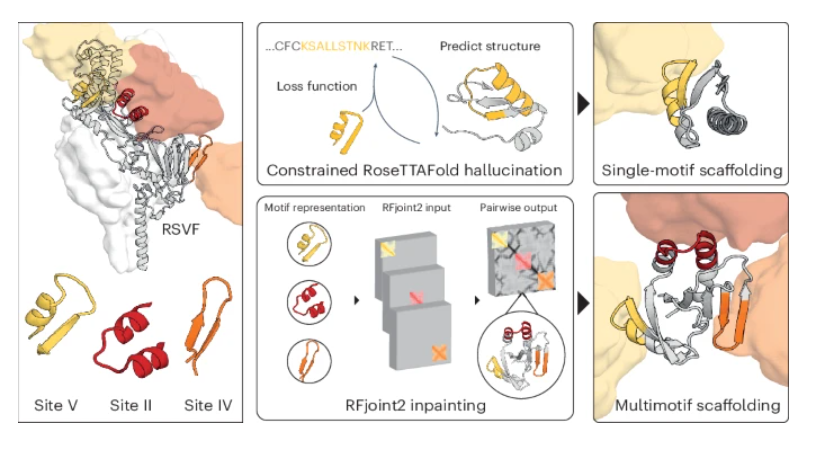
A new paper developed a deep-learning-based de novo design strategy that enables simultaneous scaffolding of three distinct epitopes and demonstrates the potential of generative models for complex multisite protein engineering
https://t.co/zaHe8JAakC
Saying this again
Line between chronic disease & infectious disease is artificial
HPV causes cervical cancer
Increasingly looks like EBV may cause Multiple Sclerosis or even Lupus
We need to refocus on new vaccines to prevent or even treat many chronic diseases
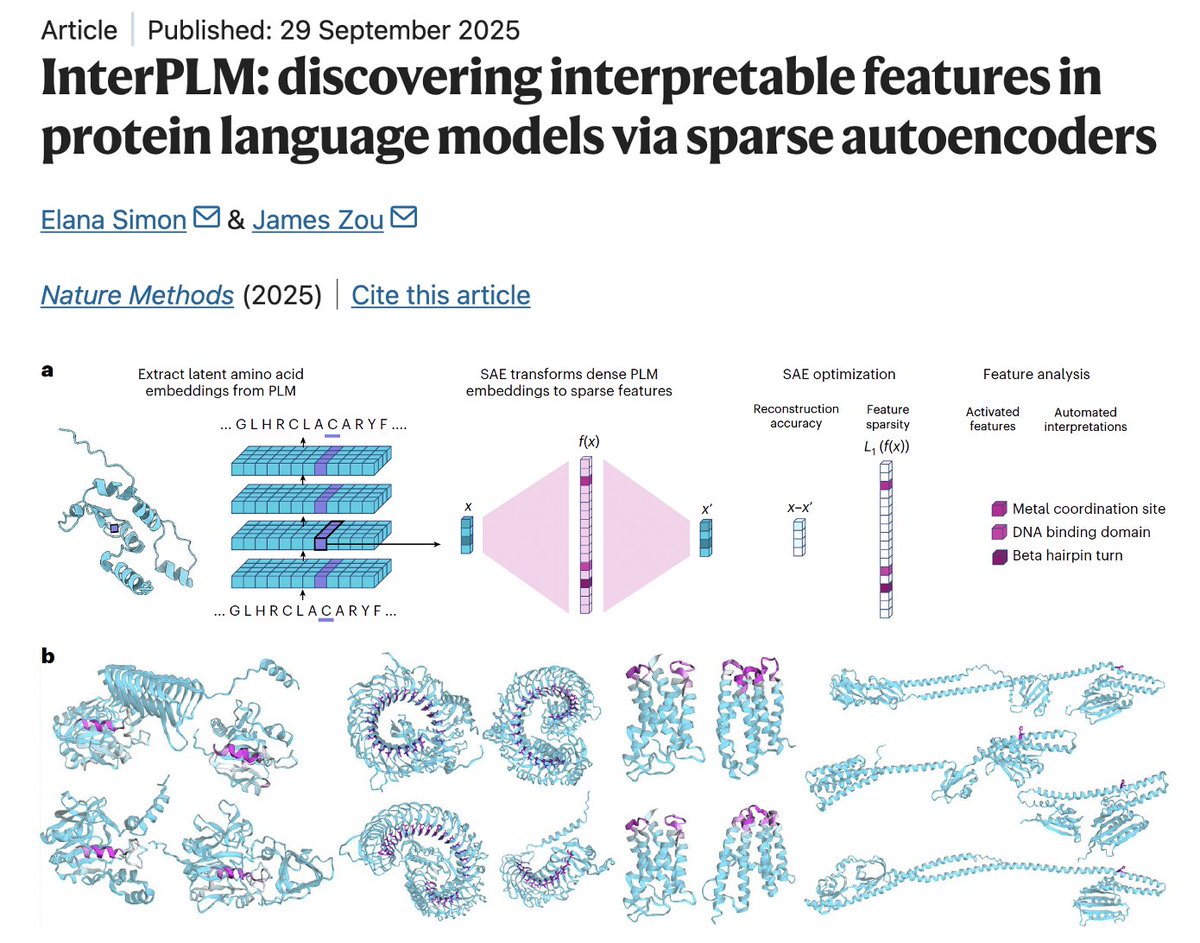
How do protein language models (PLM) think about proteins?🧬 We answer this w/ #InterPLM, just published in @naturemethods!
Using sparse autoencoders + LLM agent, we identify 1000s of interpretable concepts learned by PLMs, pointing to new biology 🧵