How much of the human genome is essential?
Two pieces out today from our lab: 1) a method to map essential genomic intervals at gigabase scale, and 2) an argument that it's time to consider synthesizing a minimal human genome.
https://t.co/iwyiZXKGdp
https://t.co/izJ2DzhgQC
1/n What fraction of the human genome is essential for cellular viability?
Excited to share our preprint that explores this question by combining an unusual CRISPR system, phage promoters, and thousands of deletion launchpads.
@sudpinglay@JShendure
https://t.co/rTO1MyFv3q
Looking forward to engaging further with the community on these ideas.
If you're excited about working in these areas, we are hiring!
https://t.co/wAehoBsJ5F
How much of the human genome is essential?
Two pieces out today from our lab: 1) a method to map essential genomic intervals at gigabase scale, and 2) an argument that it's time to consider synthesizing a minimal human genome.
https://t.co/iwyiZXKGdp
https://t.co/izJ2DzhgQC
3. Genome synthesis: smaller genomes are cheaper and easier to synthesize. The first minimal genome built becomes the foundation every future synthetic genome can be built from, bringing the cost of every subsequent project down with it.
Characterizing AI-designed proteins requires quantitative biochemistry at massive scale. Enter Amplicon/Protein Bead Display (APB-Display), a fully in vitro platform that quantifies Kd's for >100,000 variants in <3 days (preprint link below!) @Stanford_ChEMH@czbiohub (1/n)
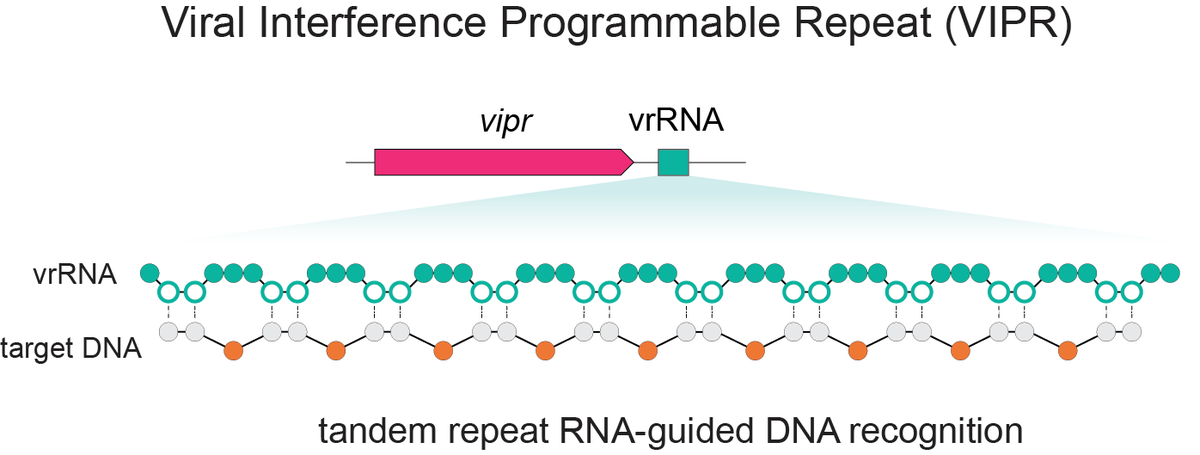
Excited to share our discovery of a new programmable RNA-guided DNA-targeting system hiding inside bacteriophages that predates CRISPR.
We call it VIPR (Viral Interference Programmable Repeat), and it uses an entirely new logic to find its targets.
Thread + link below.
@BrianHie@pdhsu@Nature This would not have been possible without @AnsaBio providing the synthetic DNA. Their up to 50kb clonal DNA without any sequence restrictions is an absolute game changer!
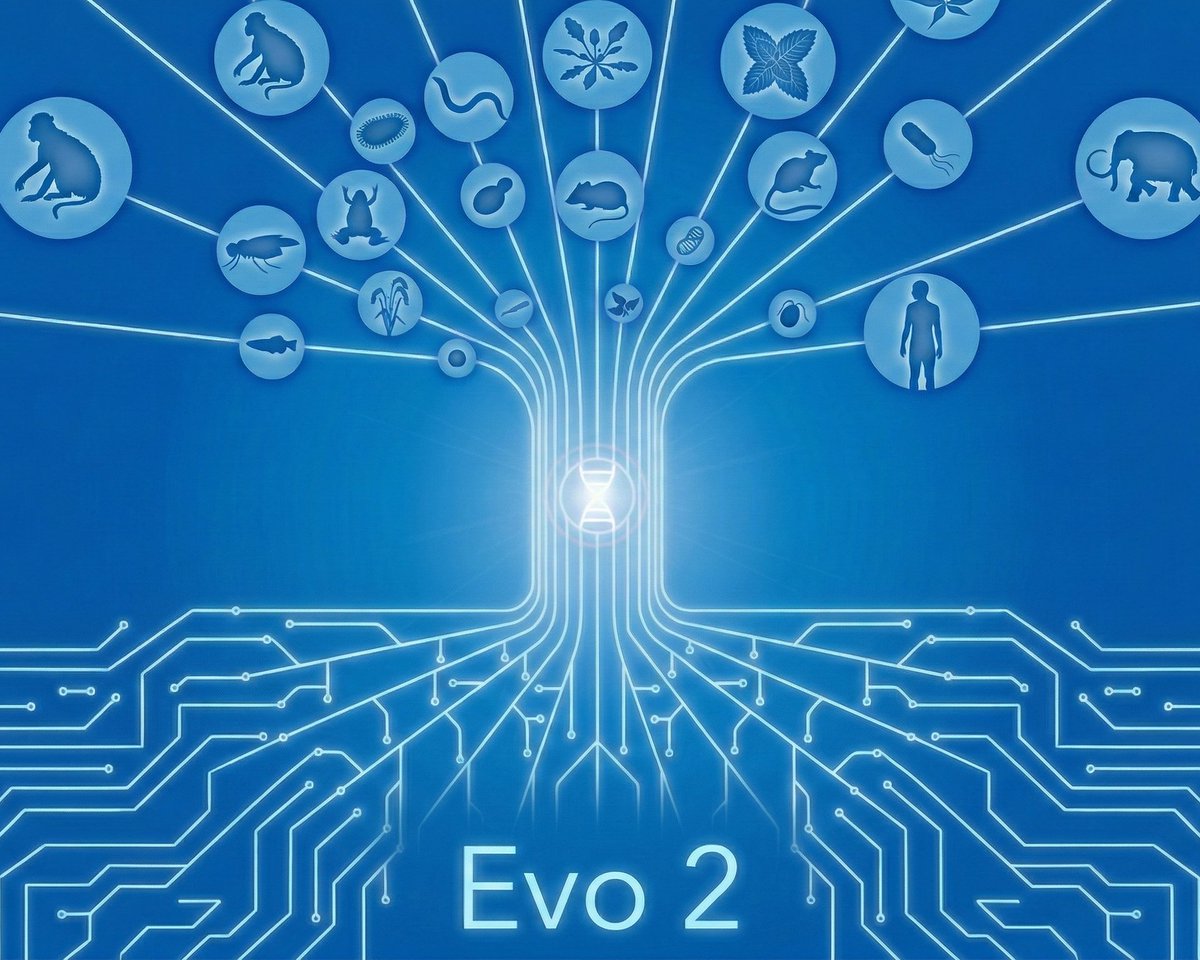
Thrilled to see the Evo2 paper led by @BrianHie, @pdhsu & team out in @Nature!
We helped bring long (20kb!) AI-designed DNA to life in cells. Seeing experiments match the designs was wild-biological abstraction is starting to feel real.
Join us → https://t.co/qvh9VQJcMa
Evo 2, our genome language model that generalizes:
- across biological prediction and design tasks,
- across all modalities of the central dogma,
- across molecular to genome scale, and
- across all domains of life,
is published today in @Nature.
if you are excited about these areas, come join our lab @uwgenome and the Seattle Hub for Synthetic Biology! We are hiring at all levels.
https://t.co/wAehoBsJ5F
We also discuss current bottlenecks for mammalian genome writing (mainly throughput and size), mechanisms to address them, and future directions for the technology. We think it is particularly poised to revolutionize generating training data for genomic AI models.