The Harvard Aging Brain Study (HABS) aims to elucidate the earliest changes in molecular, functional & structural imaging markers in preclinical #Alzheimers 🧠
Yang & Yau et al. studied blood markers of vascular health in older adults and found that the plasma levels of two proteins involved in blood vessel formation predicted future Alzheimer’s disease pathology and cognitive decline. https://t.co/pMY4dG80qz
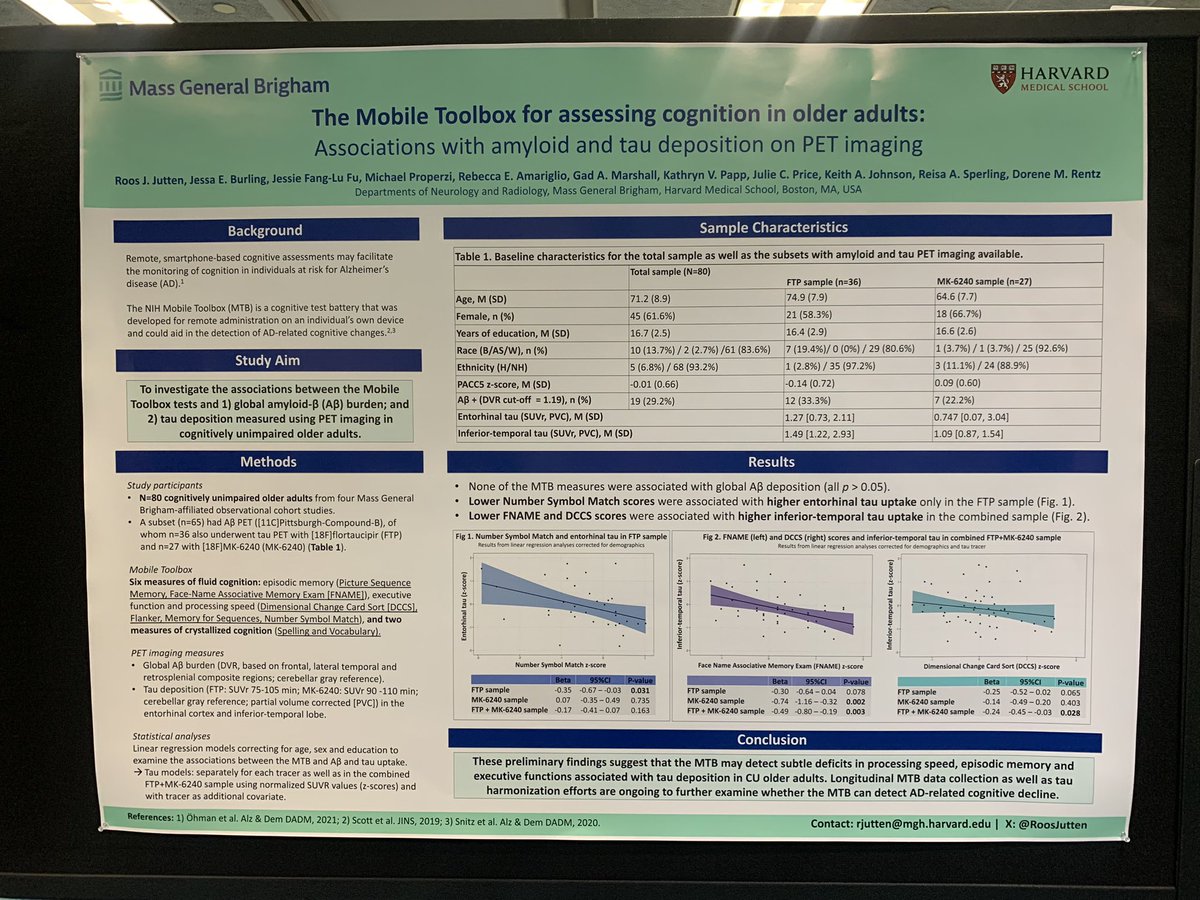
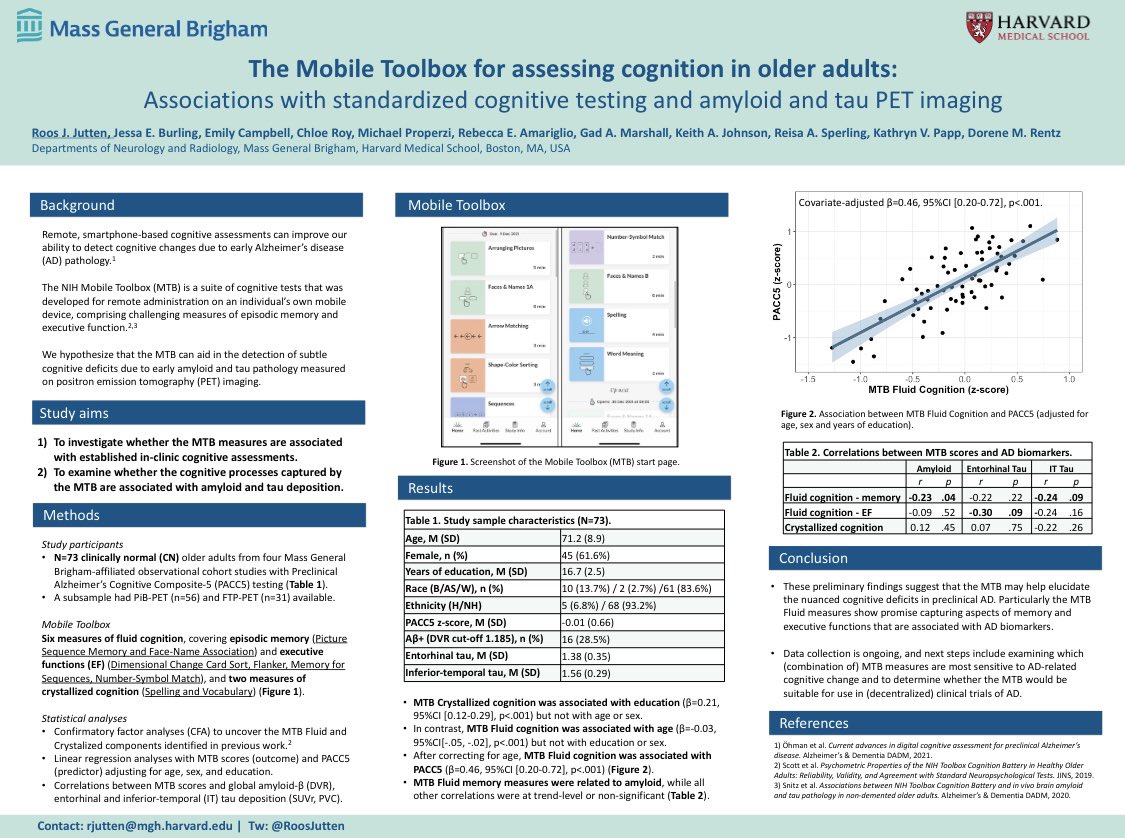
Excited to attend @HAIconference (for the first time!) and to present our first results on remote, unsupervised cognitive testing vs. amyloid and tau PET in cognitively normal older adults. Would love to get feedback on our PET data - come visit me at board #129! @HarvardAging
Hanseeuw et al 🤩
Association of pathological and volumetric biomarker changes with cognitive decline in clinically normal adults: Harvard Aging Brain Study | @GreenJournal https://t.co/kVPQ23aMOJ
Excited to present our work on @BRANCH_Harvard at #CTAD23! Brief, daily, remote digital testing can reveal subtle cognitive changes in cognitively normal adults with Ab and tau pathology, which may facilitate AD secondary prevention trials. @HarvardAging@CTADconference @PappKate
"Sex Differences in Resilience and Vulnerability to Aβ & Tau Pathology"
Rachel Buckley, PhD @bucklr01
Massachusetts General Hospital / @harvardmed
Memory and Aging Center Grand Rounds
Friday, Oct 27, 9 to 10am PT
register 👉 https://t.co/OcHMAKDb8D
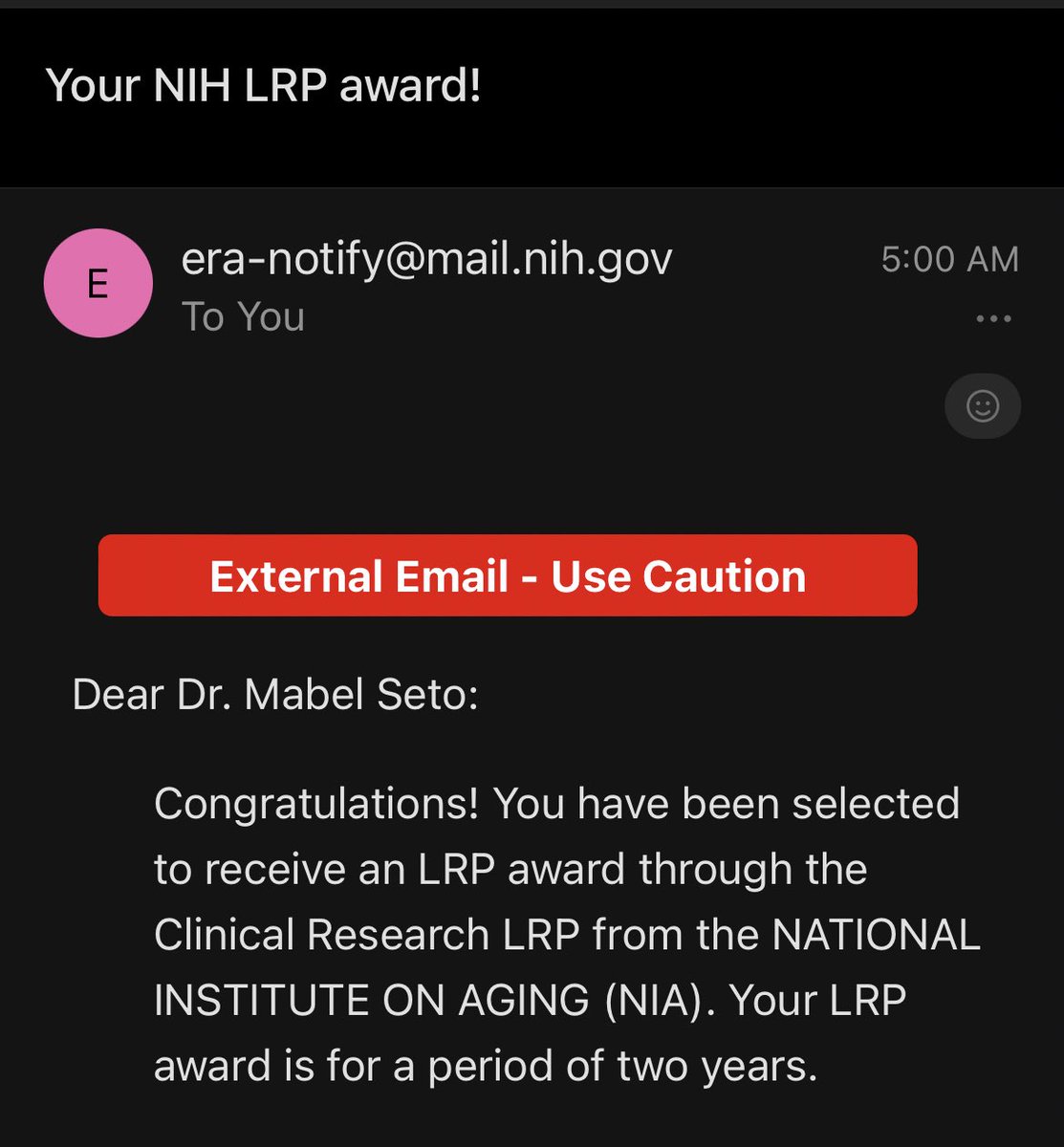
Such amazing news! So honored to receive the @NIH_LRP award from @NIHAging. Many thanks to all of my mentors (@bucklr01 @timothyjhohman & More!!) and the teams at @HarvardAging and @VanderbiltAlz for all of their support thus far on my scientific journey.
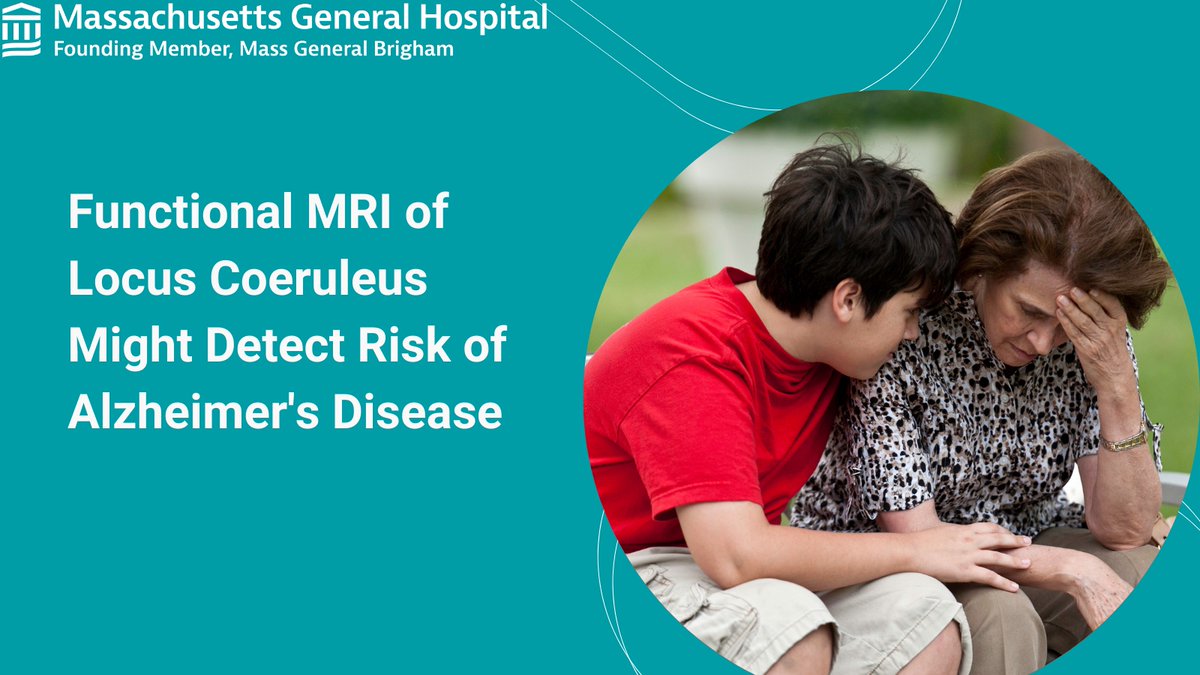
Very excited to share our recent work on the relationship between novelty-related LC activity, entorhinal cortical tau deposition, and cognitive decline!!!
Check it out!!! https://t.co/0XPF9lNX0r
How can brief, remote, daily cognitive testing improve our ability to detect early #amyloid and #tau related cognitive changes in preclinical #Alzheimers disease? Come hear about our @BRANCH_Harvard longitudinal findings today at #AAIC23: P2-550!
@PappKate @HarvardAging
Excited to present some first preliminary data of my @alzassociation AARF project on the Mobile Toolbox implemented and associations with #cognition measures, #amyloid and #tau PET in older adults! Come visit me at my poster today (7/16): P1-570. @HarvardAging#AAIC23
Everyone, if there's one thing you do this year, it's book a session for your lab with @ActToCap - Bri is incredible!! Science comm is critical for networking, funding, media, promotions, and recruitment & outreach in the community. DO THIS WORKSHOP 🎤🎤🎤🔬🔬🔬#scicomm#ENDALZ
Dr. Talia Robinson's (twitterless) first postdoc publication!!🧠This paper investigated the association between study partner and self-reported SCD with AD phenotypes across different ethnic/racial participants in the A4 study. #BlackInNeuro So proud!
https://t.co/RoMa1npIml
#WomeninSCDmonth =>Spotlight on Dr Rebecca Amariglio @rivkae, Dr Talia Robinson and Dr Catherine Munro @cmunrophd from @BrighamWomens@HarvardAging An outstanding group of women defining the field of SCD. Please see below some of their AMAZING WORK!
🚨🚨 A reminder that our team is looking for a postdoc with a bckgrd in human genetics (stats). Are you interested in the X chromosome? Are you curious about why women are at ⬆️ risk for #Alzheimers? Come tackle these challenging questions with us! https://t.co/byyakjmT6N
Excited to share our work from @HarvardAging on vascular synergy in preclinical AD! Systemic vascular risk, esp high systolic blood pressure and BMI, interacts with elevated Aβ to promote longitudinal tau-PET burden and cognitive decline in preclinical AD: https://t.co/94xXS7rhFP