Progress in all-optical electrophysiology: we introduce a stable Optopatch hiPSC reporter line, improved ultrawide-field optics, and automated phenotyping software for simultaneous voltage recordings from > 3,000 neurons (I think that’s a record!).
https://t.co/BDSUO6ZidN
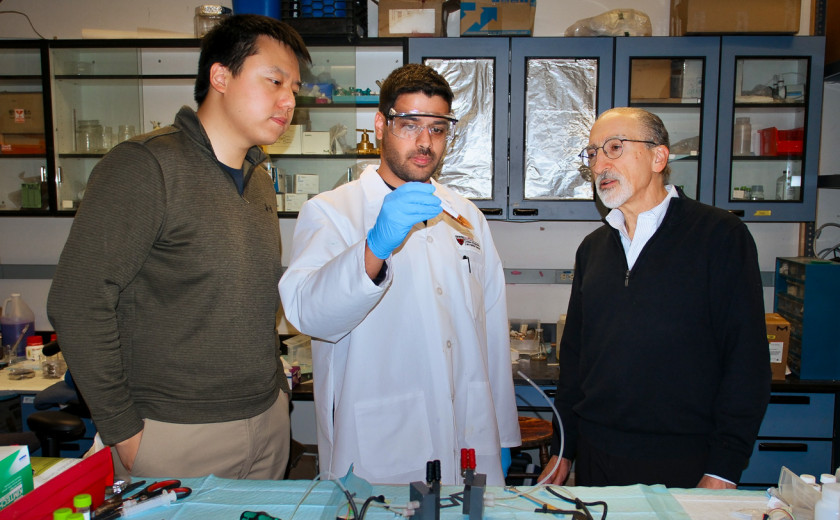
New research: Harvard team uses durable battery molecules to drive key reactions with electricity. No hydrogen gas or heavy metals required. https://t.co/wP1NR6H8Ts @RichrdLiu@HarvardCCB
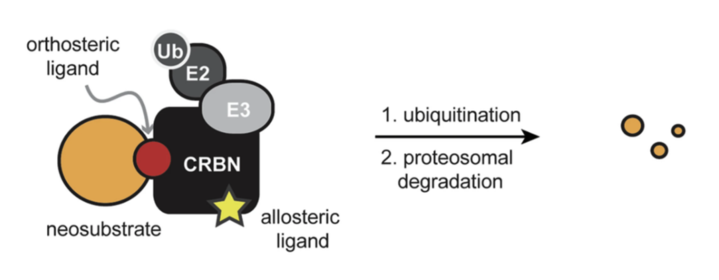
When it comes to modulating cereblon for TPD, the future is allostery 🫡. Read more about this intersection of allosteric modulation and target protein degradation in our latest review by Vanessa 🥂, out now in @ACSCentSci! 💙 #thefutureisallostery
https://t.co/hyn6GAtVdE
We posted a preprint on all-to-all functional mapping of a cortical microcircuit in vivo. https://t.co/enxvQaV5wW
Yitong Qi developed molecular tools, optics, and protocols for massively parallel optogenetic stimulation and voltage imaging during animal behavior.
In the 1950s, Lipscomb & colleagues unpicked the structures of several boranes using low-temperature x-ray crystallography, determining they shared two electrons across three atoms.
This accounted for boranes’ unusual geometry & unexpected dipole moment.
https://t.co/A6k89ahIqS
Thank you @Harvard for featuring our fitness landscape design (FLD) work in "How to build an evolutionary trap for viruses"!
Read the article in the FAS current below: https://t.co/Z6i9vyGJSc
We wrote a tutorial guide on voltage imaging, now out in Neuron: https://t.co/wfLz4mxFeP. Indicators, microscopes, and software have all advanced to the point that it's not so hard -- you can now directly watch the electrical activity of neurons in live animals or in culture.
Congratulations to @brian_b_liau on winning the 2027 Tetrahedron Young Investigator Award For Bioorganic and Medicinal Chemistry! #chemtwitter https://t.co/ezRlyCGM9d
Competing species/strains lead to noisy, complex evolutionary trajectories. It's difficult to extract genotype fitnesses from experimental time series or population-level sequencing data.
Until now! All you need is 1 equation:
https://t.co/W63NEpgsav
Useful for experiments!
1/N
@HarvardCCB is pleased to announce that leading chemist Jeffrey R. Long (Holm Lab alumnus) will be joining our department as the inaugural Thomas C. Foley Professor of Energy and the Environment: https://t.co/bn9XbNovHZ #chemtwitter
I’m thrilled to announce Fitness Landscape Design (FLD), the first protocols for reshaping protein evolution to fight disease! FLD can proactively suppress viral fitness trajectories before mutations even arise. @Harvard@MIT
Today in PNAS: https://t.co/fozvqklaDI
MORE SOON!
For #ChemistsCelebrateEarthWeek, we're spotlighting the 2021 winner of the Dreyfus Prize conferred in Environmental Chemistry, James Anderson (@Harvard): https://t.co/VNWVPQcLWr
Pour a glass of champagne AND red Bordeaux—Our newest work with @GSK and @scrippsresearch is out in @Nature, where we describe SB-405483, the first allosteric CRBN ligand which potentiates neosubstrate degradation. Congrats Vanessa and all authors! 🍷💫💐
https://t.co/MLj3VOgsOq
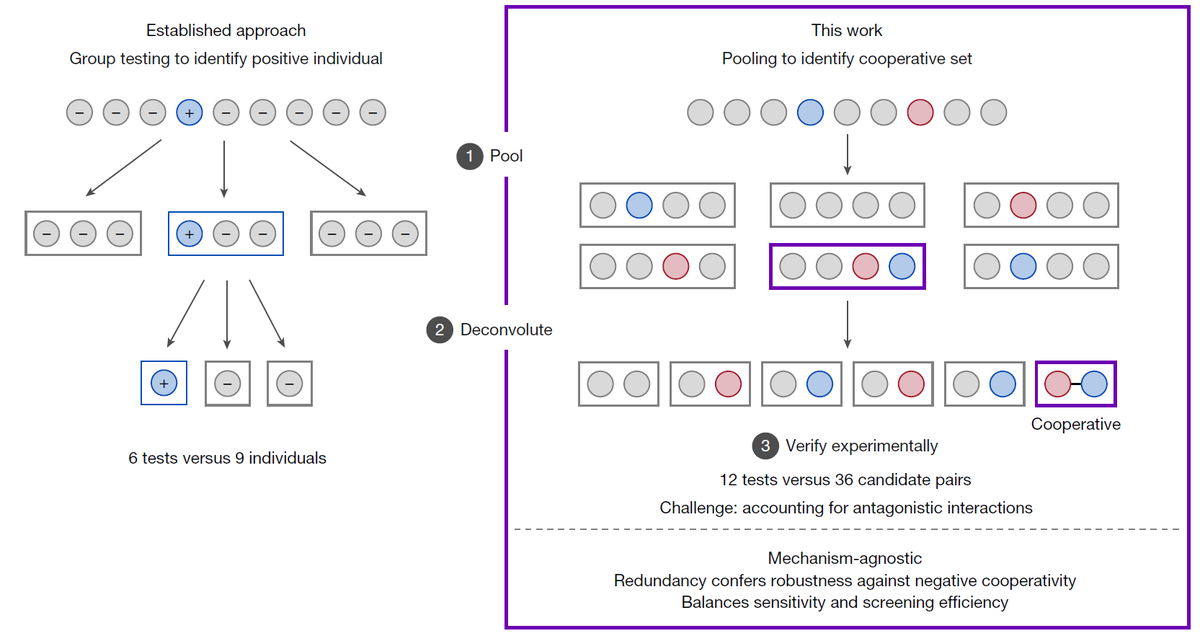
Our study on discovering cooperative catalysis is in print @Nature! With @JacobsenLab@eugene_e_kwan@Merck@RichrdLiu we use simple math-based pooling/deconvolution to uncover useful catalyst combinations with minimal experiments
Read for free! https://t.co/TqrgAStfqN