Missed variants mean missed diagnoses. At #nanoporeconf, André Reis will reveal how one assay could uncover what current testing can’t, and how this could have future potential to transform our treatment of neurodegenerative disorders. https://t.co/XXHQK1AuGM
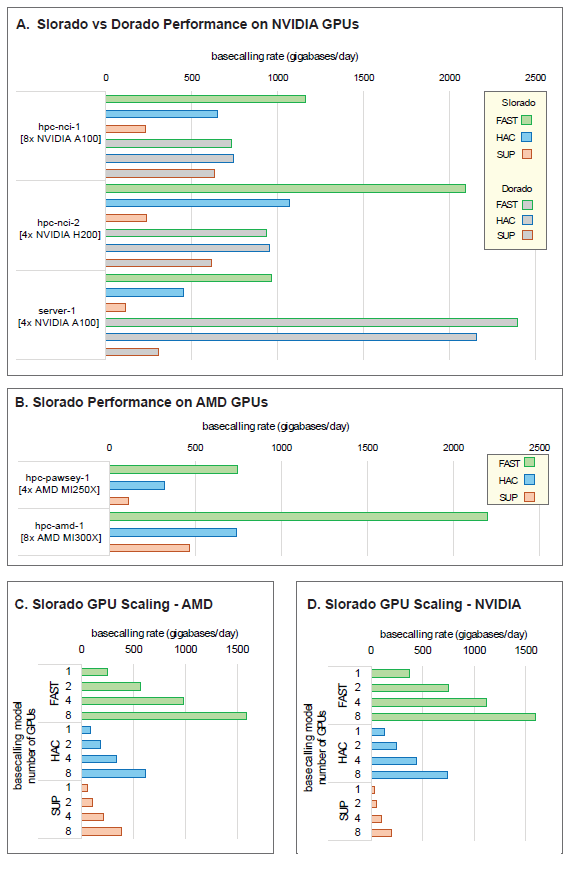
We have released slorado v0.5.0-beta and now it supports Nanopore DNA methylation calling (5mCG_5hmCG). Also 20% performance improvement to SUP models. Slorado supports both NVIDIA and AMD GPUs.
https://t.co/oAKvtHva2F
@bonson_wong@GaganGdas
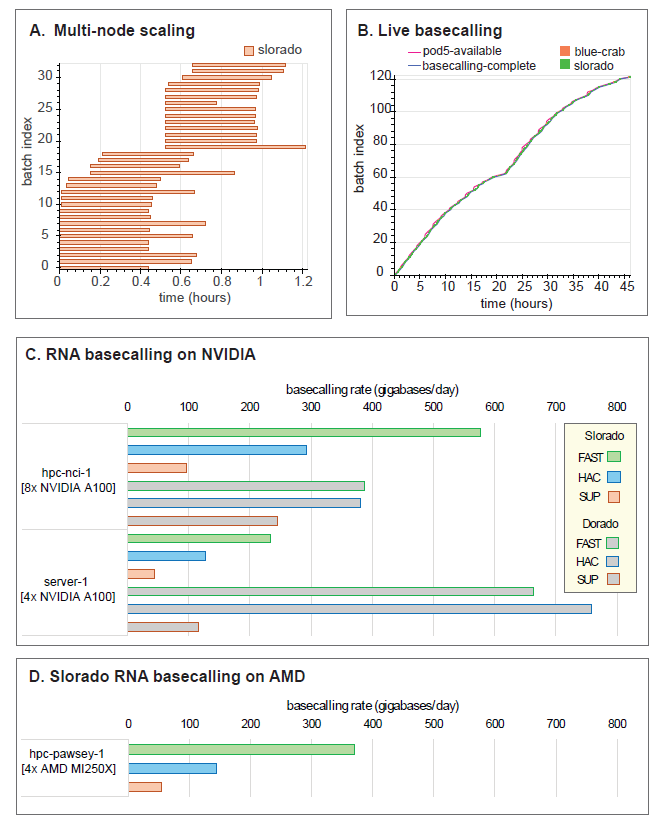
The pre-print for Slorado and openfish is out. https://t.co/MFDJFjkXE3
You can do @nanopore basecalling with not just NVIDIA GPU, but also using a range of AMD GPU.
Would be useful since popular GPUs are now 💸💸💸💸(& hard to buy),
Work by @bonson_wong
If you have HiFi or Nanopore R10 metagenomic data, try myloasm from Jim Shaw. You will probably find more complete circular contigs to higher resolution especially for R10 or environmental samples. Scalable to >500GB data. Written in Rust. Published in
@NatureBiotech
We've just released Minimod v0.5.0! 🧬
Minimod is a fast, lightweight tool for extracting modifications and computing frequencies from aligned BAM files (with MM/ML tags).
Check it out https://t.co/vK2HgETlc8
#Bioinformatics#Genomics#Epigenetics#ONT#PacBio#OpenSource
@jpelbers@bonson_wong Unfortunately, to get based on readids an index would be necessary. But first of all better check with one example large blow5 (the test file i used is too small) as i remember some throttling issue was there. If you open an issue, Bonson would tell details
slow5tools v1.4.0 released
Many bit profiles for ex-zd lossy compression added by @hiruna72, who reduced 275TB of historical @nanopore rawdata at @GenTechGp to 172TB.
guide to lossy archive: https://t.co/RbxyRKCyGx
paper: https://t.co/oixtNp6OHW
release: https://t.co/ysfXrSHj6t
Oh yea, buttery-eel, the python wrapper around dorado-server and the pybasecall api had a big update in how it moves data around, so it will max out as many GPUs you can throw at it without any "choppyness". Released this before I went on a break. It's pretty cool.
@Steen_Dr@NCInews@nanopore We copy terabytes of files between our lab computers and Gadi. Typically 1TB blow5 file takes 1-2 hours over scp.
scp reads.blow5 https://t.co/L71gmkc0O3:/...
2% 18GB 157.3MB/s 1:19:19 ETA
Now that the @NCInews Gadi supercomputer in Australia has H200 GPUs, @nanopore super-accuracy basecalling+modcalling is much faster than before. For those who are interested, I have updated my example scripts [https://t.co/LZm0sRwVXC] to demonstrate how these can be used.
@kirk3gaard@NCInews@nanopore And buttery-eel latest 0.8.1 by @Psy_Fer_ with with latest ont-doraro-server 7.11.2 on 4xh200 took almost the same time 1.25 hrs.
Didn't run with pod5 as on these system with lustre, it tend to get I/O bottlenecked as we showed at https://t.co/dnvNz3wKr4
@kirk3gaard@NCInews@nanopore From my memory for a small 30 gigabase dataset, total elapsed time:
4xH200 1.25 hrs
4xV100: 8.75 hrs
slow5-dorado-v1.1.1 [email protected] --modified-bases 5mCG_5hmCG