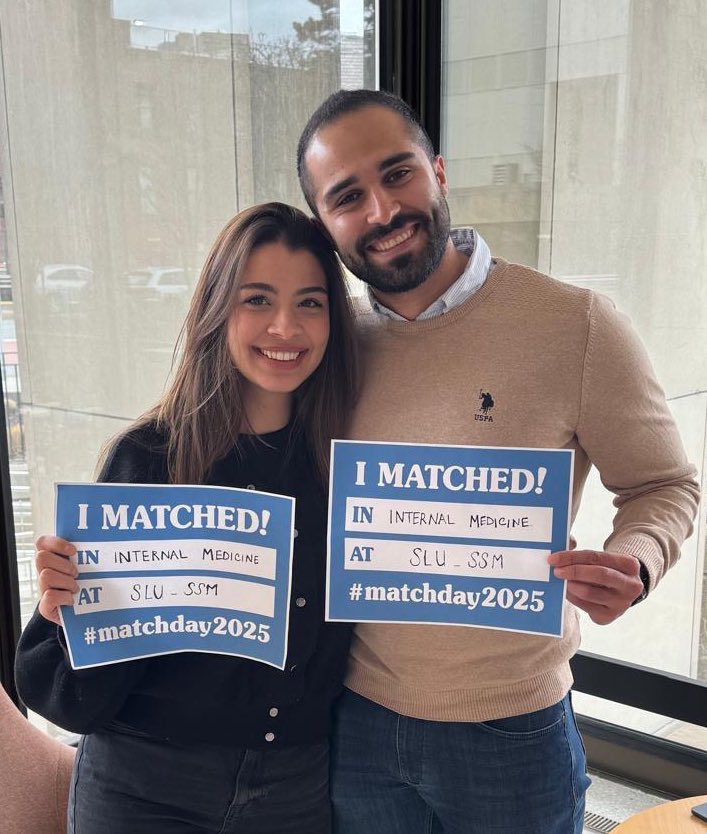
We couple matched!!!
We are grateful for family, friends, mentors and everyone who contributed to our journey.
Super happy and excited to be part of @slusom@im_slu!
#Match2025#Couplematch
@HadidiSamer@utswcancer@EJIM_journal Even well-conducted meta-analyses cannot overcome limitations in the underlying evidence beyond improving precision in small samples. A rigorous meta-analysis is not necessarily high-quality evidence, but rather the best available synthesis of existing evidence.
Excited to share our new review on atrial fibrillation after hematopoietic stem cell transplant.
We highlight incidence, risk factors, management challenges, and the need for HSCT-specific AF risk tools.
@Hassankwth@Mhamad8azal
https://t.co/OoLFvGBSeY
I know some have become experts at clinical appraisal and clinical trial critique. It’s important to have this dialogue and it helps physicians and patients understand the drawbacks of a given trial. But my advise to young investigators is to best not to make it your primary academic output.
Secondly, when critiquing it’s also worthwhile remembering that the investigators of trials may also fully aware of the issues but there are many barriers and often we have to choose between not doing a trial at all versus compromising. Perfect trials are not common; we can usually find some fault with almost all trials. So we must strive to avoid rudeness and condescension.
Third, try if possible to lead a clinical trial or at least get engaged with someone who leads trials and get a feel for the various stakeholders who have veto power during trial design, and more importantly the various competing priorities for what the trial seeks to accomplish, it will be easier to understand why a specific control arm was chosen, or a why a specific endpoint was chosen, even though you may think they are the wrong ones.
31% of patients needed to travel by air to be diagnosed with amyloid. @SLentzsch sharing key lessons for all doctors to have their clinical hats on to avoid missing this diagnosis ! #mmsm
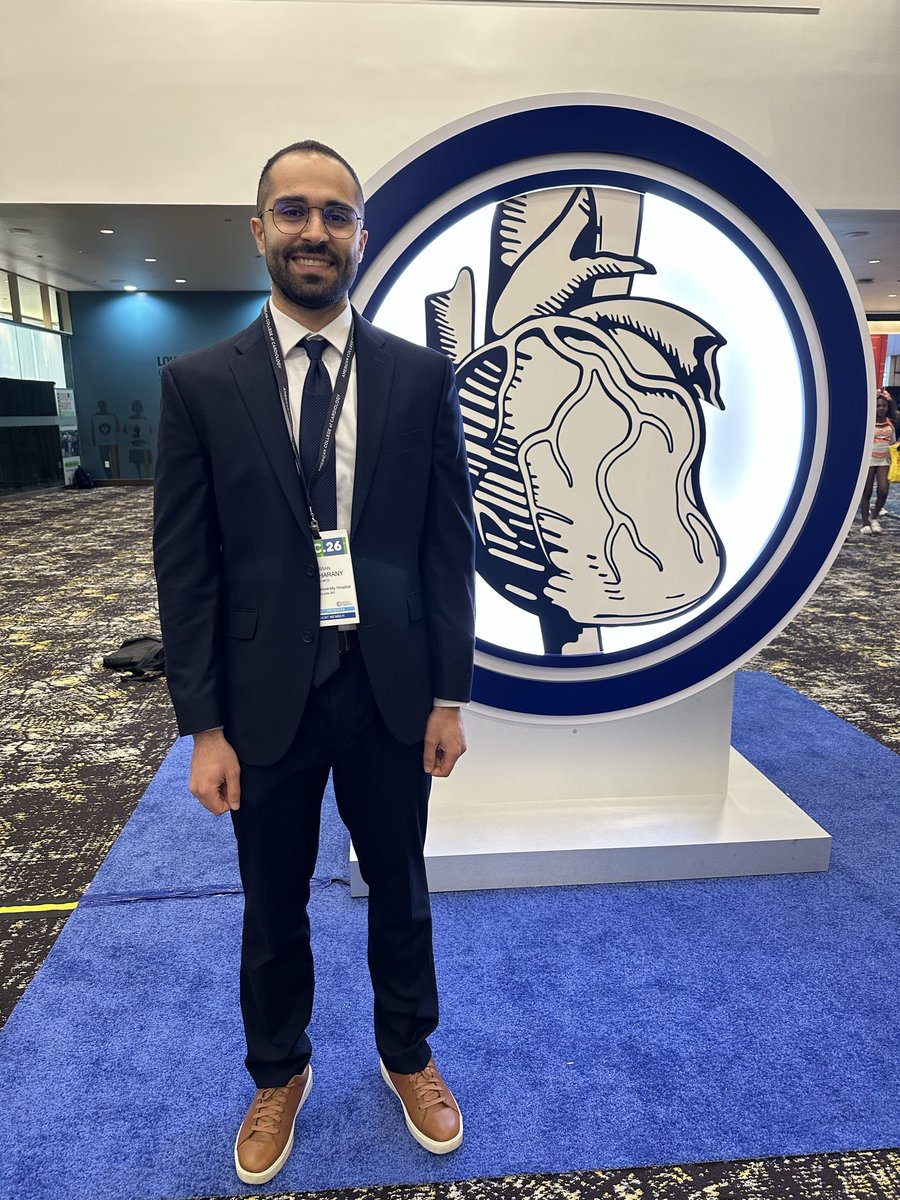
Attending my first #ACC2026 has been a truly rewarding experience.
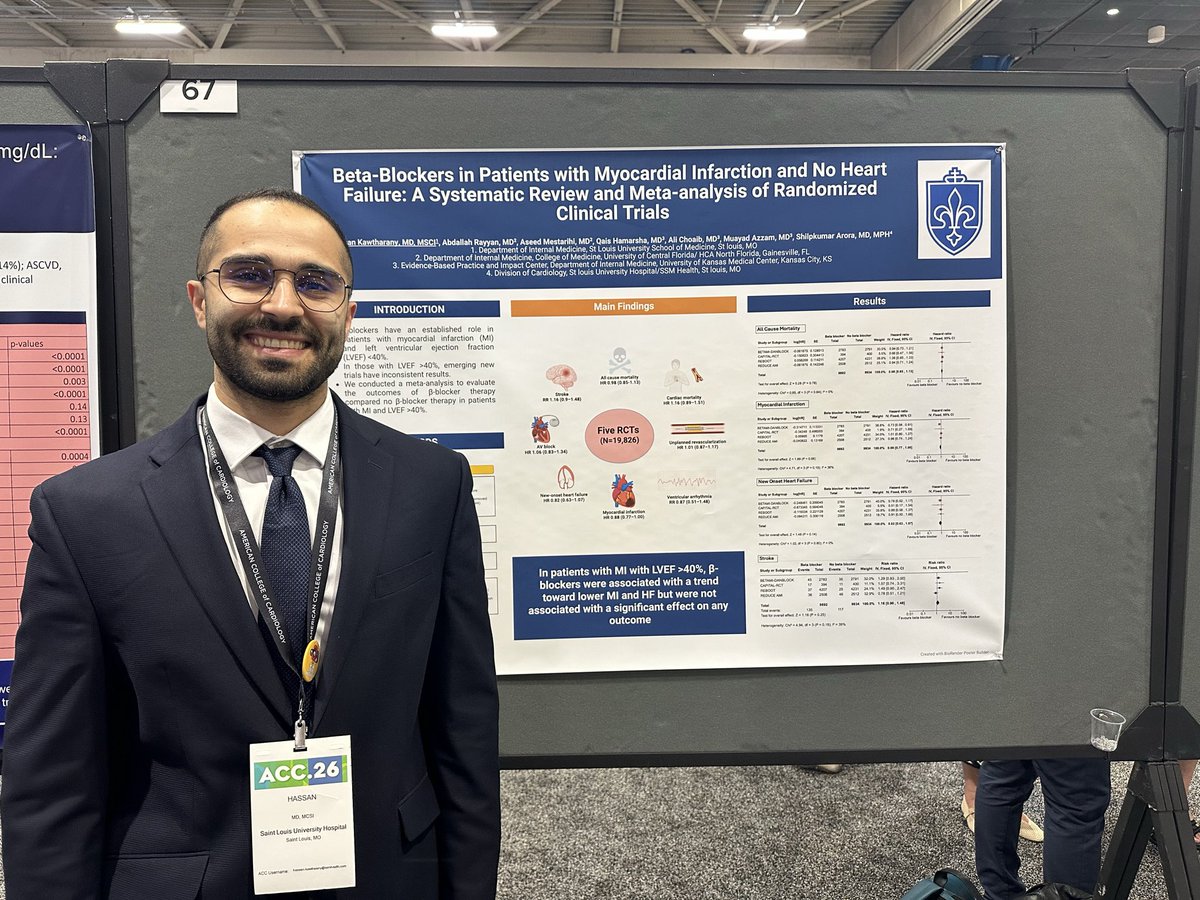
Grateful for the opportunity to present our work and reconnect with friends and mentors!
Excited for what lies ahead in cardiology. 🫀
March is Amyloidosis Awareness Month! Not all diseases are easy to spot — but awareness makes a big difference.
Learn the signs. Share the message. Help us spread the word!
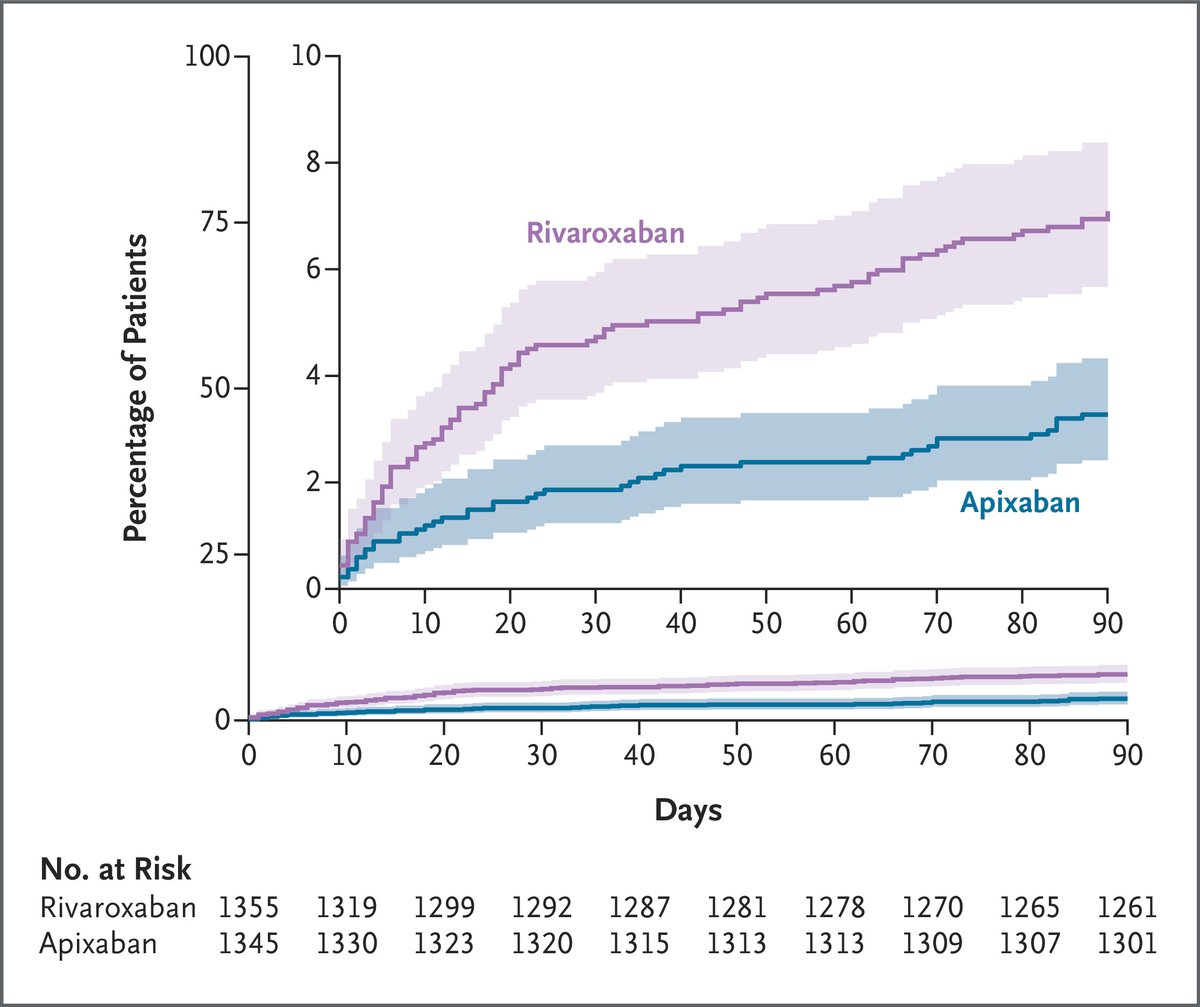
Finally published: the COBRRA trial, the first randomized head-to-head comparison of major DOACs — something the companies would never have done themselves, as a direct confrontation goes beyond their commercial interests. This was driven by independent investigators. The results somewhat support the idea of apixaban being the “safer” DOAC. That said, the list of study limitations is long, and for me, labeling something as “safe” is not enough — after all, even placebo is “safe” when it comes to bleeding. https://t.co/eYehndGzvB
Check our latest study showing that in MI patients with LVEF >40%:
• No mortality benefit with β-blockers
• No ↓ arrhythmia or revascularization
• Signal toward ↓recurrent MI
• Signal toward ↓new HF
https://t.co/b3xI8Ol2WC
@Hassankwth@alichoaibb@hamarshaqa@MuayadAzzam
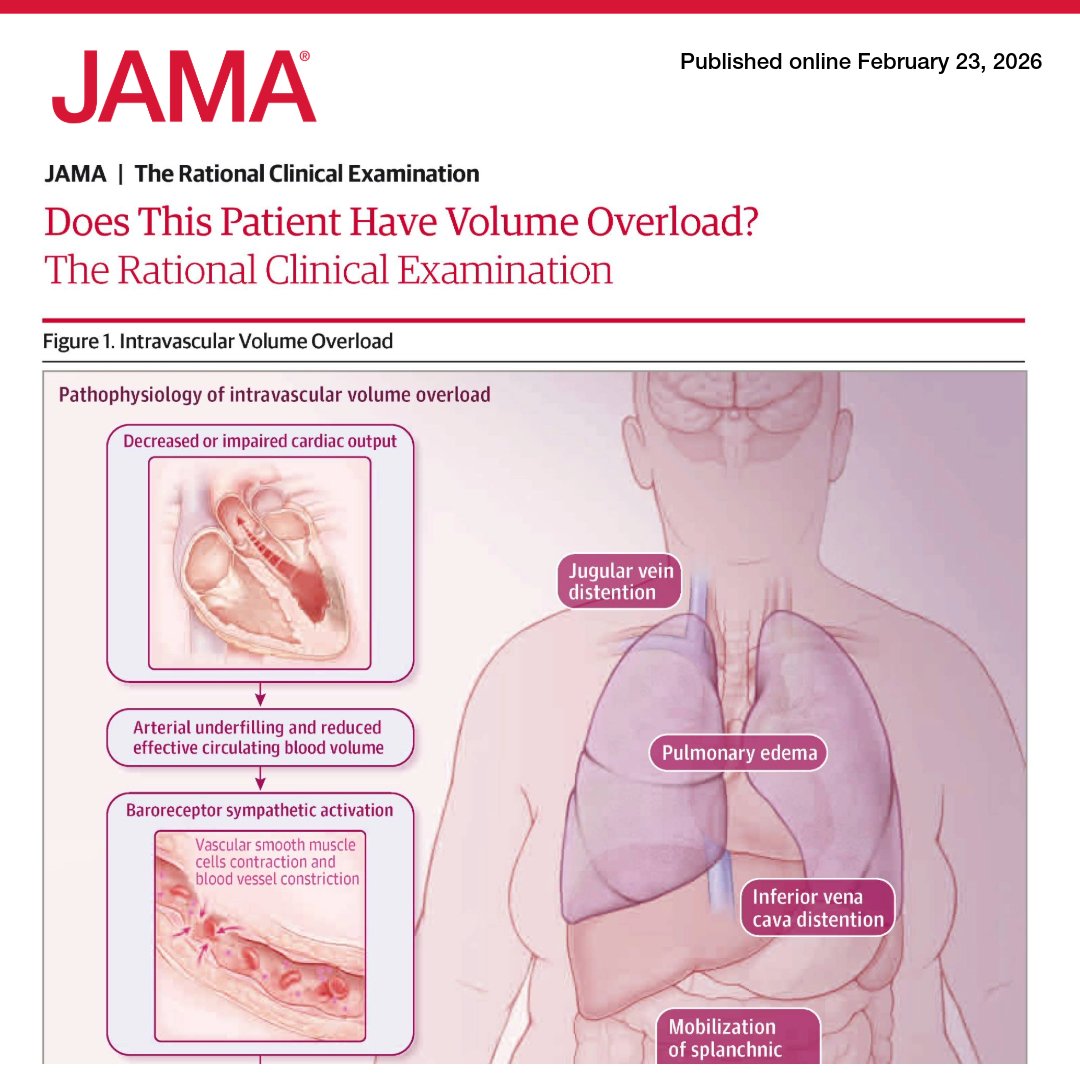
How can volume overload be reliably excluded at the bedside?
📊 This Rational Clinical Examination evaluates the diagnostic accuracy of clinical examination, radiographic imaging, and laboratory testing in assessing volume overload in nonintubated patients.
https://t.co/AkRpUEwfbJ
Calling for applications for our 2026-2027 Cardiac Amyloidosis fellowship. This is a joint University of Chicago and Endeavor fellowship that is multi-disciplinary and has both clinical and research components.
Email [email protected] if interested.
Red flags matter!!!
A deep dive into recognizing systemic amyloidosis (light chain and transthyretin).
Work led by @JoselleCookMD@hiragss now published in @BloodPortfolio
ASH has released new Clinical Practice Guidelines on the diagnosis of light chain (AL) amyloidosis, a rare and life-threatening bone marrow disorder. The guidelines present 12 evidence-based recommendations designed to help clinicians improve diagnosis.
https://t.co/xLgyEiv6Q8
Happy to share our work on the diagnostic accuracy of LGE on CMR and key echocardiographic findings for the diagnosis of🫀amyloidosis, now published in Amyloid
Grateful for the tremendous efforts of all co-authors.
🔗https://t.co/MsmmldADAT
Last publication of 2025. Thankful for an incredible team and a year of meaningful progress in amyloidosis research. Ready for what 2026 brings. @BU_Amyloidosis
Detection yield of surrogate tissue biopsies across amyloidosis classes: Amyloid: https://t.co/9YcrrUrhRE
Check our viewpoint published @JAMA_current#MedEd
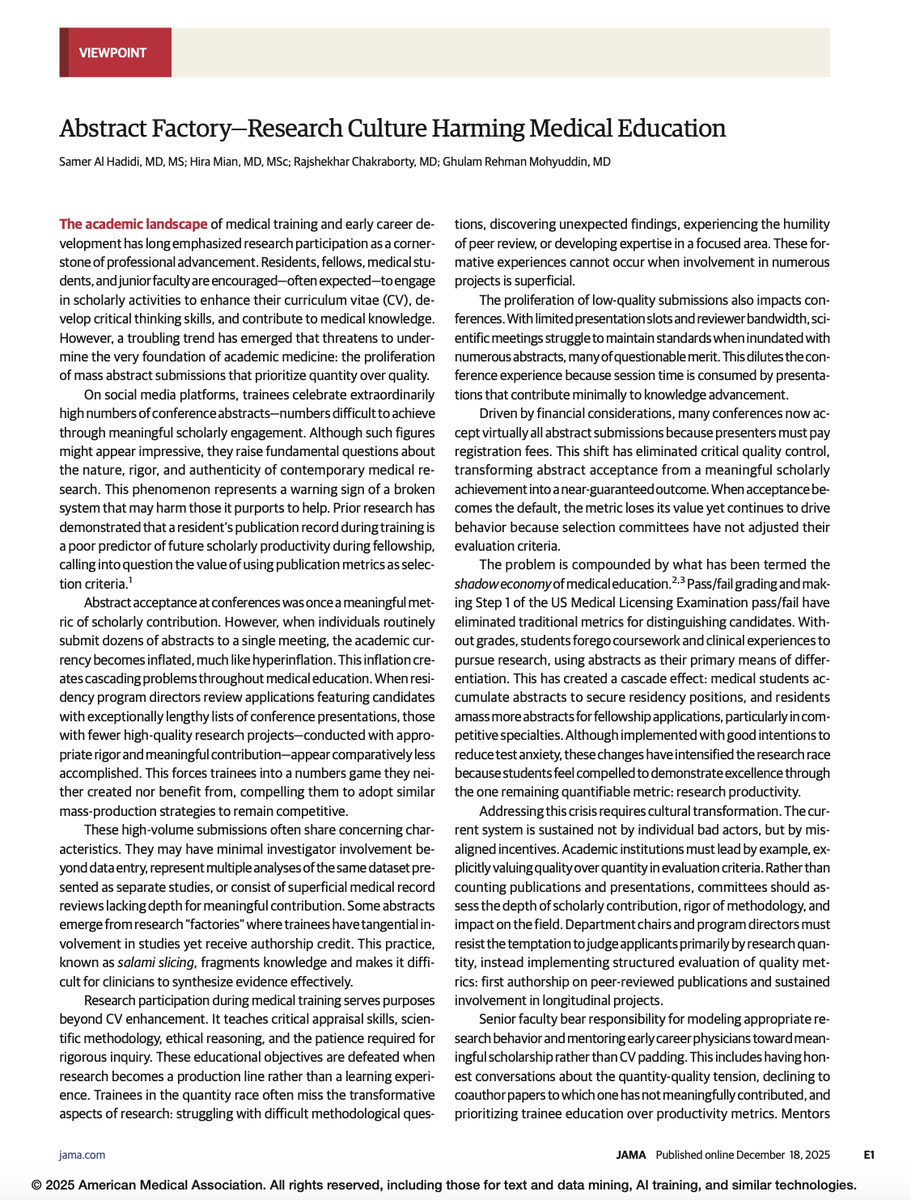
Abstract Factory—Research Culture Harming Medical Education
The "abstract factory" is destroying medical education. Trainees and junior faculty compete with abstract counts instead of meaningful research. Result: inflated CVs, diluted conferences. We shouldn't celebrate this—you don't need publications to be a great doctor.
➡️https://t.co/IMBhy45L1K
@utswcancer@rajshekharucms@HiraSMian@ManniMD1@HemOncFellows@ASCOTECAG