"What if you could reduce the friction from insight to action down to zero?"
In our latest episode of Open Haus, founder and CEO @Zep_Haus lays out his vision for Architect — an autonomous system that solves the long-standing problem of marketers allocating budgets based on incomplete data.
Olivia Kory and Greg Dale also join Zach to discuss Haus MCP, the Incrementality Index, Causal MMM expansion, and much, much more. It's a jam-packed episode all about the next evolution of the Haus platform.
Watch the full episode, now available on YouTube, Spotify, and Apple. Links below.
We're going live for a virtual roundtable all about the modern marketing OS. If you missed last week's Growth Lab, this is the hour-long walkthrough you need.
Monday, 6/1 at 2pm ET / 11am PT. Bring your questions and RSVP below. ⬇️
You run an incrementality experiment against a marketing campaign. You evaluate the results. You take action based on the results. Business outcomes ensue. Simple, right?
One catch: The delayed effects of a marketing campaign can be famously challenging to understand. If you cut or reallocate spend too soon based on initial results, you potentially miss out on meaningful incremental revenue.
Knowing how, when, and where to measure lagged lift in your marketing strategy is more important than ever, and our latest research looks at hundreds of incrementality tests across Haus customers – from enterprise powerhouses in fintech and retail to consumer brands in beauty and wellness — to dive into delayed impact patterns in the data.
Here’s a taste:
// Across hundreds of upper-funnel experiments, ~25% of incremental lift arrives after the media spend window closes, during the post-treatment window (PTW)
// Delayed lag hits hardest in retail sales: For experiments measuring retail outcomes — including lift at Target, Walmart, Sephora, and similar retailers — the median share of lift arriving in the post-treatment window is ~29%
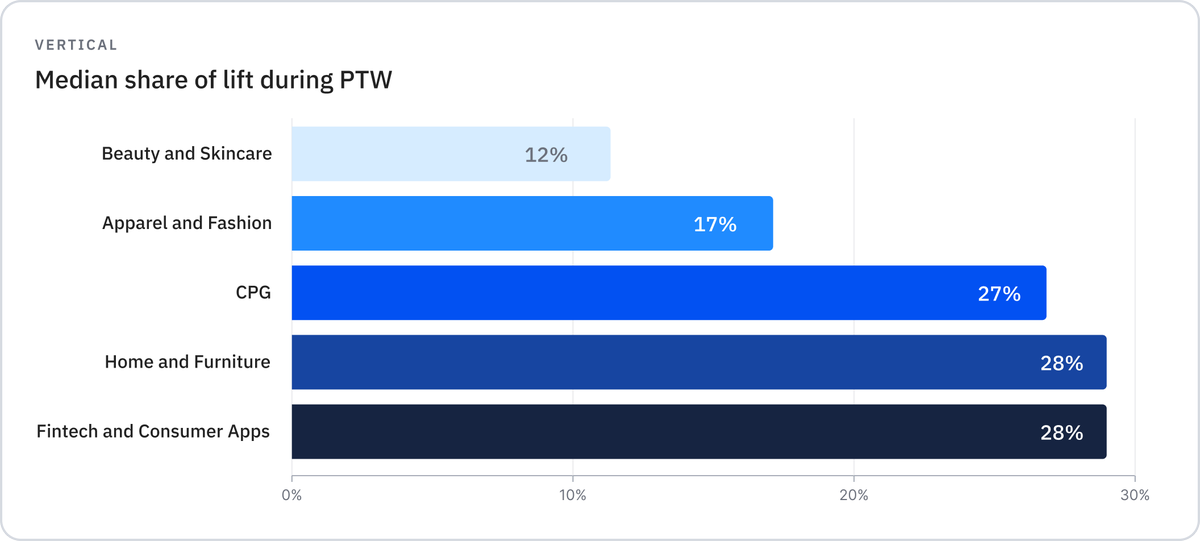
// The category in which you’re selling matters big time — more so than marketing channel (see chart)
// Upper-funnel tests beat a brand's median iROAS 65% of the time when run 7+ weeks — compared to just 44% success rate when run 4 weeks or less
That’s the tip of the iceberg. Our latest research — The Delayed Impacts of Upper-Funnel Marketing — is available today. 🔽
We're two weeks out from the Haus Growth Lab — and still adding some of marketing's most innovative minds to the lineup.
In LA, Barron Kennedy II (Thrive Causemetics Inc.) and John Liu (Riot Games) will join Annie Leanse (Fox Corporation) for a panel discussion on the future of growth marketing.
And in NYC: Morgan Brown (Wayfair), Bill Rom (Baseball Lifestyle 101), and Vince Sigismondo (Equinox) explore how they're driving performance through experimentation.
Plus, Haus' @Zep_Haus and @gregdale lay out their vision for the future of marketing.
It's a new era. Learn from the teams rewriting the marketing playbook. Save your spot below.
Next week, Haus’ @oliviaakory will be on the main stage at the Meta Performance Marketing Summit 2026 to discuss how incrementality is helping some of the world's biggest brands prove ROI and accelerate growth.
She’ll be joined by growth leaders from @Meta and @Fanatics to offer tactical insights for how brands can stay ahead as consumer behavior shifts toward fewer clicks.
And if you can’t make the panel in person, no need to worry — you can still tune in virtually. Register below. ⬇️
When Meta announced it would change their standard for US geo-targeting come June 2026, brands running geo-based experiments faced a real problem: The geographic units on which their tests were built were going away.
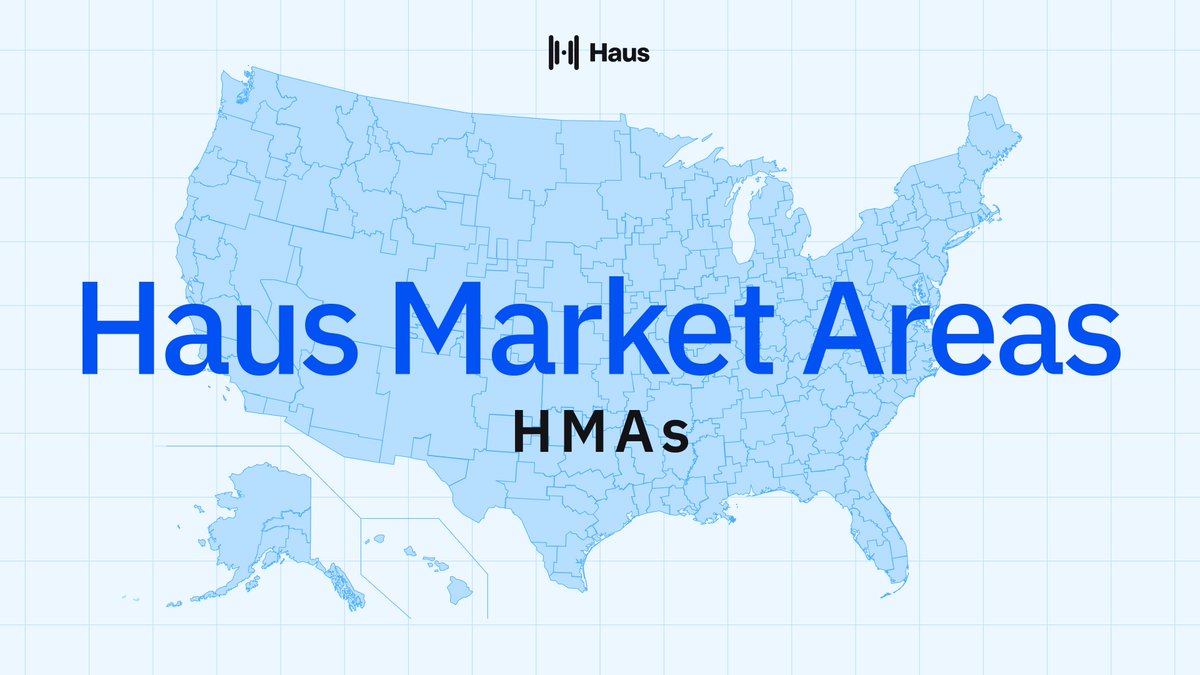
We saw this coming and shipped ahead of it. Haus now has Haus Market Areas (HMAs), a new proprietary US design granularity that works across all platforms that target by DMA.
That means no disruption to your testing cadence and no scrambling to rebuild your geo strategy from scratch.
If you’re a Haus customer who has questions about this change or wants to learn more, reach out to your Measurement Strategist.
Every growth marketer wishes they could wave a magic wand and precisely understand the long-term effects of upper-funnel campaigns.
But as @oliviaakory and @Chandler_Mktg discuss in the latest episode of Open Haus, it's more complicated than that — and usually starts with running longer tests.
Full episode in the comments 🎧
There is a right way and a wrong way to diversify your media mix.
On the latest episode of Open Haus, Haus Measurement Strategist Dean Gordon walks through the right way.
First step? Ensuring you're grounding your decisions in marginal efficiency, not average.
Our next Open Haus is an inside look at some of the most elite measurement programs in the world.
Olivia Kory will sit down with Faith Shin, Senior ML Manager of Measurement and Attribution at @Wayfair and Joe Meier, VP of Marketing Analytics at @SharkNinja for a masterclass in measurement at scale.
As leaders from two of the most analytically rigorous brands in the business, Faith and Joe will break down:
– How they keep pace with massive product catalogs
– The criteria they use for evaluating potential measurement partners
– Strategies for building measurement systems biased toward action and speed
We’ll also hear from Haus’ Chief Scientist Joe Wyer about the patterns he’s noticed across enterprise orgs building rigorous, high-velocity measurement programs.
📅 Thursday, April 23 @ 1pm ET / 10am PT
🔗 RSVP link in the replies!
Bring your questions — there will be a live AMA.
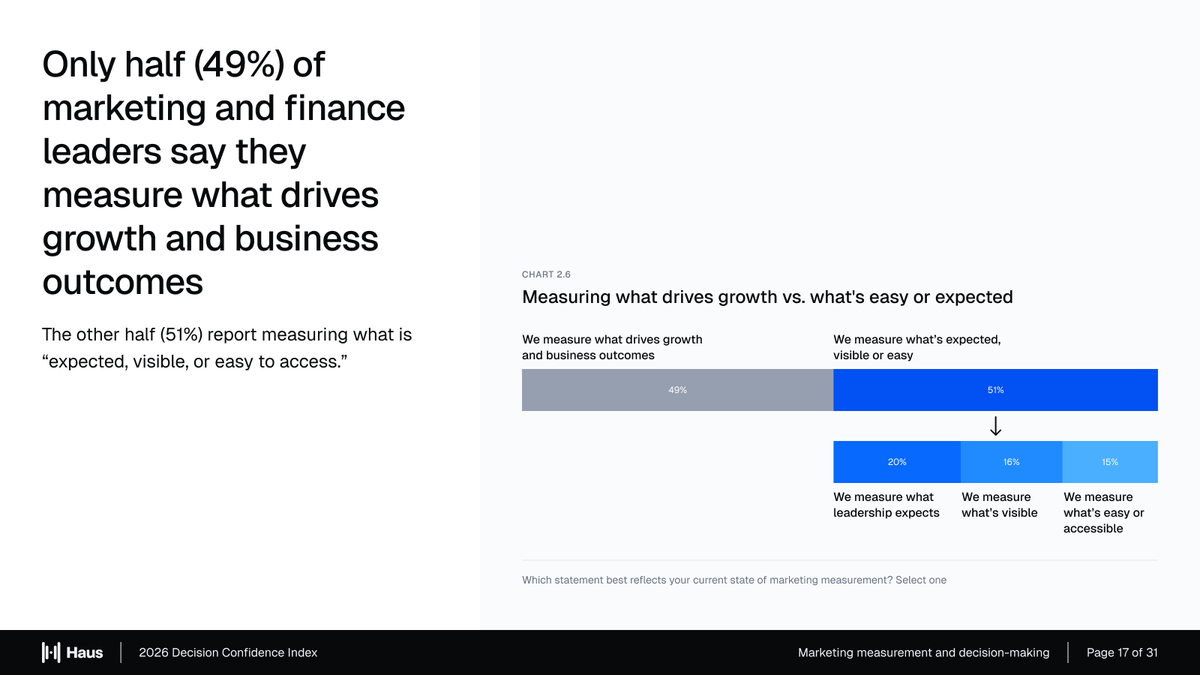
500 marketing and finance leaders from US-based enterprises. One uncomfortable truth:
Only half say they’re measuring how marketing drives business outcomes.
• 40% say their measurement tools make it much easier to take decisive action
• 35% suspect more than a fifth of their budget is misallocated, but can't confirm it
• 71% believe AI-powered marketing tools prioritize short-term performance over long-term brand growth
The organizations that can clearly connect paid media to incremental business outcomes make faster, more defensible decisions. Over time, this compounds into durable growth advantages.
Haus’ 2026 Decision Confidence Index is live. Link in comments. 🔽
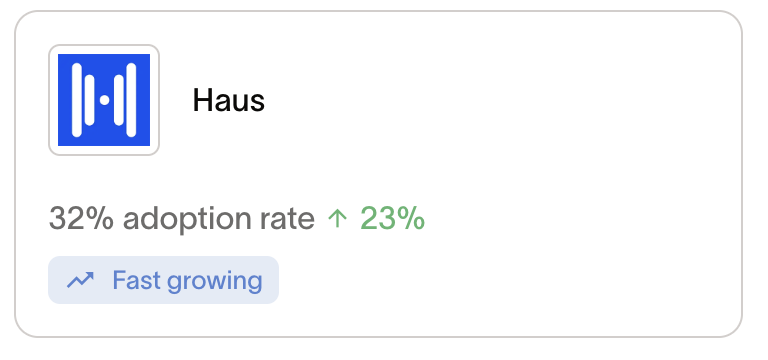
Haus just claimed the top spot in the new Marketing Measurement category on @Ramp Rate, which is the company’s public vendor adoption index for SaaS buyers and analysts.
Based on real SaaS spend data from 50K+ companies, Ramp Rate highlights how quickly teams are adopting Haus to measure causal marketing impact.
We’re proud that more teams trust us to solve their biggest measurement and decision-making challenges. The growth numbers are exciting, but even better are the hard-earned wins, creative solutions, and real partnerships our team and customers are building every day.
Check out the full category and data at the link in the replies.
Next week, we’re going live for a jam-packed Open Haus all about operationalizing MMM.
This is causality-driven MMM in theory and in practice, featuring real stories from leading brands like @StockX and @OluKai.
When: Wednesday, February 25 @ 3pm ET / 12pm PT.
Where: Live on Zoom. RSVP at the link in the comments.