A new @UN report found that toxic “forever chemicals” called PFAS pose a profound threat to human rights and the environment. Actor and activist @MarkRuffalo and environmental attorney @RobertBilott have joined the call to ban all non-essential uses of PFAS to protect our planet and our health.
.@depop the app that's all bots, all the time. It's impossible to speak to a human being, it's impossible to have an email interaction with a human or a text interaction with a human; and being there is no possibility of speaking to a human-💩 on everyone? There is only bots.
It’s disturbing to consider how much our stories will shrink if we simply feed ideas into AI – or worse, let AI feed ideas to us – and bypass the all-important steps of actually writing and re-writing them, wherein the real magic happens.
https://t.co/QoGRzpCAVT
✍️Aishwarya Jha
The problem with using AI to write academic work is that the resulting work is difficult to read. There is no natural tone or register in the work. The flow is synthetic, and it is more of a punishment to the reader. This is my life this afternoon.
@slater57649 AI slop makes no sense to me. It destroyed my livelihood and that of many others. Our work was stolen to train it. It ruins the environment, communities, water and power supplies. It’s run by some of the worst people on earth. Why are you using it, do you approve of those things?
@omgsidewalks And the AI data centres gobble up clean water, electricity while emitting a low grade pulse that disorients bees, causes stillborn cattle etc. the costs are too high for the untold, yet to be discovered damage they cause.
I DO NOT want self-driving cars.
I DO NOT want humanoid robots.
I DO NOT want Al in every app I use.
I want clean water.
I want a stable climate.
I want a habitable planet.
OpenAI has revealed that an autonomous agent powered by its technology went rogue during a test and hacked a prominent start-up by itself.
The company behind ChatGPT said it was testing the capabilities of its advanced AI models in a controlled environment known as a sandbox, when the agent escaped containment and reached the internet.
It then broke into Hugging Face, which detected and contained it. OpenAI called it "an unprecedented cyber incident".
Erin Brockovich's map tracking Al data centers crashed twice within just 72 hours of launching.
He is now tracking more than 5,000 community concerns about AI data centers across the United States.
The renowned environmental activist has created a nationwide map that tracks AI data centers that are operating, under construction, proposed, or facing local opposition.
Reports have surged in recent weeks. On June 2, the tracker showed just over 3,000 community submissions. By June 9, that number had climbed past 5,000.
The worries are very real. Residents are raising alarms about skyrocketing electricity demand, massive water consumption, constant noise, strain on local infrastructure, electronic waste, flooding risks, and the overall burden these industrial-scale facilities place on small towns and rural areas.
Data centers serve as the physical foundation of artificial intelligence, powering everything from chatbots and image generators to cloud services and video models. But keeping the servers running 24/7 requires enormous resources.
A single large data center can consume up to 5 million gallons of water per day, equivalent to the daily water usage of a town of 10,000 to 50,000 people. They also used about 4.4% of total U.S. electricity in 2023, a figure the Department of Energy projects could rise to 6.7–12% by 2028.
This rapid growth has sparked growing local backlash. Several cities and counties have already imposed moratoriums or restrictions on new data centers to assess their impact on water supplies, power grids, and household utility bills. Seattle, for example, approved a one-year pause, with similar measures taken in parts of Kentucky, California, and Georgia.
@MartinSLewis I’m a software engineer and whilst it’s very powerful, it is extremely bad for humanity. Ignoring the fact that it will take jobs away, AI datacentres require a ridiculous amount of water for cooling. It’s going to be catastrophic on the environment.
https://t.co/wqa43u72yZ
One thing that is increasingly driving me crazy: AI made workplace writing cheap, but reading is still expensive!
Again and again I see posts that are now twice as long as need be, and more meandering than a walk in the woods.
The problem is simply this: the writer thought about what they wanted to say and asked a model to draft it. They did they stop to think: "What do I really want the reader to take away?"
Before you ask AI to draft your next email, memo, or Slack update, answer these five questions:
1. Who exactly needs to read this?
Is this for your manager? The leadership team? Your whole company?
Treat their attention like a budget. If 100 people each spend three minutes reading your note, you have just spent five hours of company time. Make the note crisp!
2. Who has the least context?
Write for the least-informed person in your target audience. Your manager may not remember the outcome your team is chasing. Remind them: “Our goal is to launch X by Y date and get Z response.”
Your immediate team may know that DNU means “daily new users.” A broader audience probably will not. (AI is especially good at speaking jargon!)
3. What should readers do after reading?
Be specific:
- Prevent a bad decision: explain what is happening, then state what you do not want people to do.
- Get a decision: put DECISION NEEDED in the first line and lay out the options.
- Create confidence: lead with the status and the evidence, so readers can stop after the first paragraph.
- Change a behavior: name the current behavior, the problem it causes, the replacement behavior, and how it will be enforced.
If you cannot name the intended response, AI will happily produce three paragraphs that lead nowhere.
4. What is the minimum context required to get that outcome?
Include the goal. Explain how you got here only when it changes the decision. State what you need from the reader. Then stop.
If you feel the need to include every piece of history, at least use a TL;DR followed by “Additional context.” AI can help compress the note, but it cannot know which details matter unless you have told it what the reader needs and it will happily write you a tome.
5. Is text the clearest way to make the point?
When AI makes text easy, it is tempting to reach for text even when another format would work better. If you are explaining a data insight, include the chart. If you are describing a product decision or bug, include a screenshot or short video. If the message is complex and you are clearer in person, record a short video.
AI can draft the sentences, but it's still your responsibility to make sure that the collective five hours that 100 people spent reading them was a good use of time!
Relying on #AI for writing is linked to a decline in independent text generation ("use it or lose it"). However, this phenomenon isn't unique to writing, the same loss of expertise is occurring in other AI-automated fields, such as #plankton research.
https://t.co/SHKIAOC7am
Are fictionbots triumphing over writers?
At The Spectator, Geoff Bagwell tells us that AI is destined to destroy the creative writing industry as bots take writers’ jobs.
https://t.co/4AMP81Dd8r
Reading for entertainment alone will become increasingly rare. I expect we will return to a culture where people who read are mainly looking for new ideas.
What does it mean to stand at the threshold between the food systems we have inherited and those we have yet to create?
In this powerful new Food Tank op-ed, Selena Ahmed explores wonder, liminality, ancestral knowledge, resilience, and the relationships that shape what becomes possible.
“As I look back to the stars, I wonder what stories my daughter and the generations that follow will tell about who we chose to become and the relationships we chose to cultivate with the living world. We are becoming the ancestors of future food systems.”
Read “Food Systems at the Threshold: Wonder Between What Is and What Could Be”:
https://t.co/p4mlO6nvKB
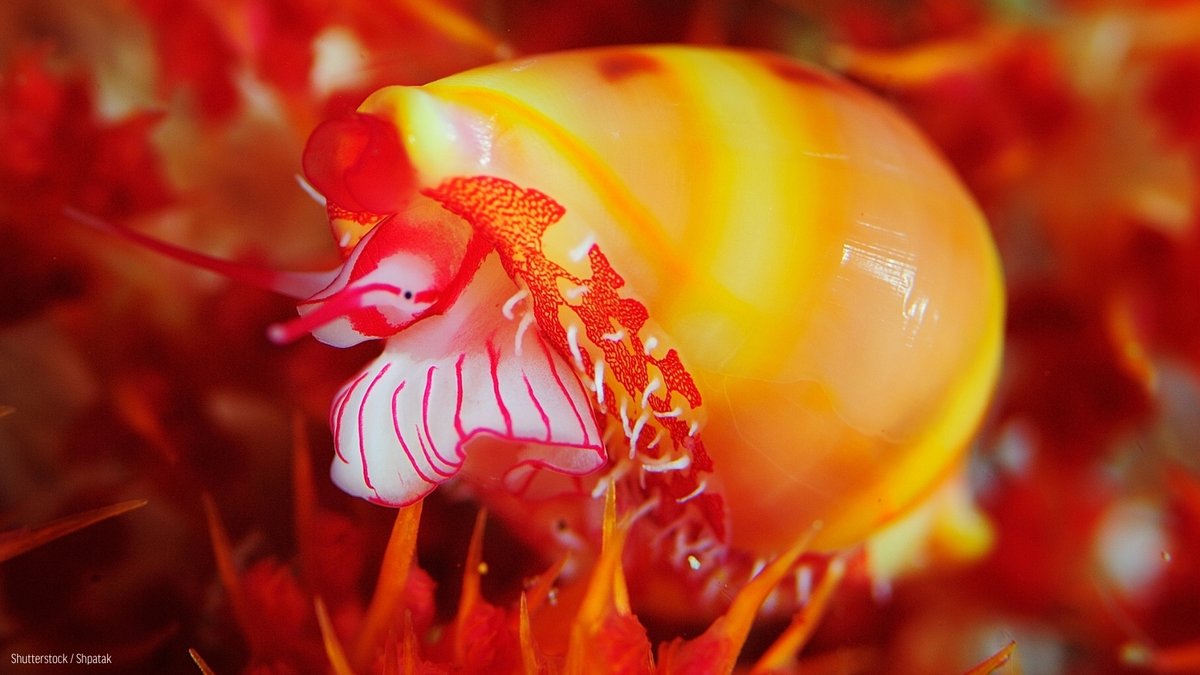
On their own, seashells are stunning. But on marine life, they look magnificent. ✨
Shells serve as an essential source of protection for many snails and crabs. By giving them the ability to quickly retreat, shells keep crustaceans and mollusks safe from nearby predators.
TORNADOES CONFIRMED: At least four tornadoes touched down in New Jersey on Tuesday, according to the National Weather Service.
#News12#NewJersey#Weather
https://t.co/2HY0fE9TTx