I’m happy to share that I’m starting a new position in med chem at @neurocrine Biosciences! Feels wild to bring a 10-year chapter of academic research to an end, but I am excited for what the next will bring!
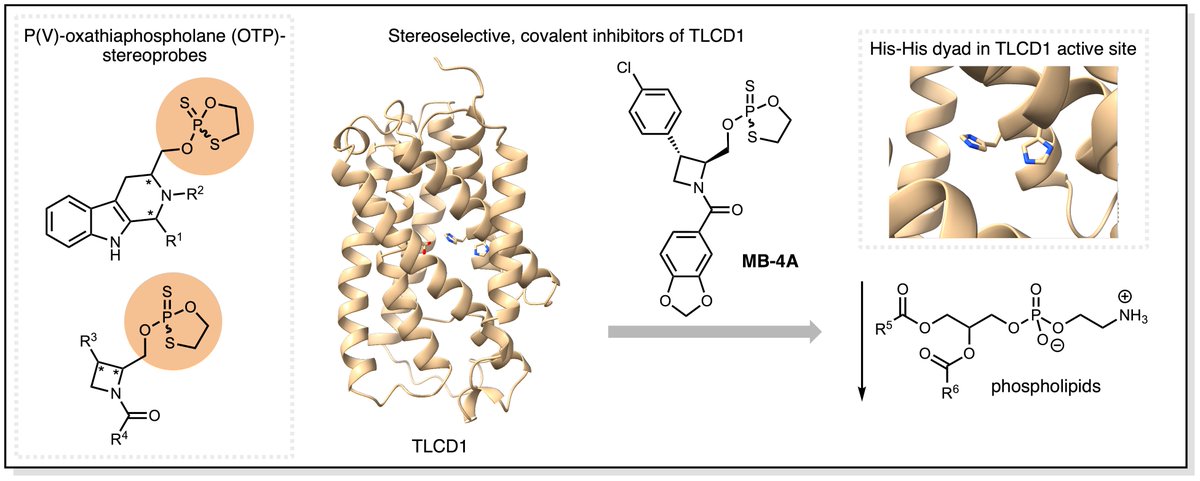
Excited to share this work profiling a new P(V)-electrophile using our stereoprobe platform, where we discover a first-in-class, cell-active inhibitor of integral membrane protein TLCD1 and ID critical catalytic residues! Great collab w/@BaranLabReads https://t.co/lGsWZGyNGq
Excited to see our latest work in print!
Total chemical synthesis of full length myoglobins, including mutants outfitted with a variety of noncanonical AA, for enantioselective biocatalysis:
https://t.co/Uri1rNt7Ne
We know DFT is slow. But how slow is slow?
@CorinWagen went through and compiled a list of supercomputer usage statistics that were previously buried in government websites.
rowans funding announcement lines up well with the final clip
subject: how did @RowanSci start?
usually this leads to a boring answer but not in this case imo
'This is what we were waiting for. We were just totally on the wrong tech tree.'
full link: https://t.co/Gu9gzsdeG3
Sweet work by Queen B @SamanthaAngle1@JacobsenLab on catalyst-ctrl'd iterative Matteson homologations! Feat. selective synthesis of all permutations of the stereotriad Benzestrol. Feel lucky to have been a small part of this story, @Merck got a good one! https://t.co/Y1luwcTip3
Ton of fun working with Mike + @MolhmNassir on this paper! A "true" collab motivated by enabling better access to stereoprobes for chemoproteomics--for this paper and at least one more to come. Really exciting to be bridging the worlds of synthesis + chem bio!
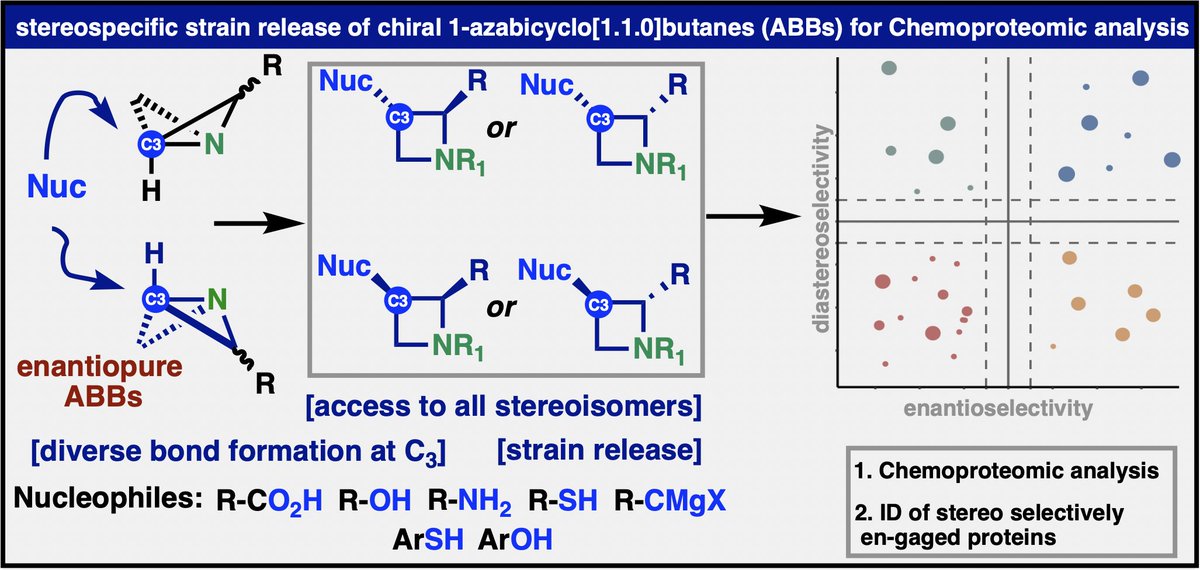
Simple, Enantiocontrolled Azetidine Library Synthesis via Strain Release Functionalization of 1-Azabicyclobutanes. A fantastic collaboration with the Cravatt lab.
A simple, modular, programmable approach to access complex stereopure azetidines through strain-release functionalization is disclosed. The synthetic methods developed enable parallel synthesis of stereodefined azetidines that would be otherwise laborious to produce. Given the privileged nature of these structures, a set of stereoprobes for use in activity-based protein profiling was prepared and evaluated, revealing proteins in human cancer cells with were liganded with clear stereo- and chemoselectivity.
Appearing today in @ChemRxiv : https://t.co/ATPRy8yYan
How do intrinsically disordered regions (IDRs) regulate protein function? Today in @MolecularCell, we show how the IDR of LSD1 acts as a fuzzy molecular switch to tune transcription factor interactions & control leukemia differentiation. (1/6)
https://t.co/XRNw9Q4V7U
@GBD_Lab@QiqiangX Awesome stuff! Practicality q: do you know if the amino alcohol-protected boron can be elaborated stereospecifically using the suite of Aggarwal/Morken rxns? Easy enough to swap the ligand for Pin, but an understanding of the versatility of the immediate product would be sweet.
@mramirez9409@UMNChemistry@UMNews Congrats Melissa! Coming from a born-and-raised Minnesotan, I have tremendous respect for the (real) U of M and the chem dept. The food is also surprisingly fantastic in the greater Minneapolis area. Best of luck and have fun!
Sweet paper by Jake @JacobsenLab! In the first "intentional" application of our strange isothiourea boronate catalyst, Jake swaps out the alkali metal (from LIT Cat to KIT Cat) and uses it to catalyze an enantioselective Wittig. Incl kinetics, IR, and DFT
https://t.co/hokFkZhRhQ
@HaydenChem is a KIE master and if you’d like to brush up on some important tools for mechanistic analysis, check out this awesome new lecture 🔥 @MatthewHorwitz1
Still hungry to learn about physorg analysis after listening to @DennisKutatela1? Let me teach you how to think about + conduct Hammett plot and KIE analysis! Feat. examples from my time in @JacobsenLab. Thanks @MatthewHorwitz1 for this sweet opportunity to share a passion!
Join us this week as we continue our Advanced Organic Chemistry course with a beast of a talk on Hammett analysis and KIEs by @HaydenChem!!
Full talk: https://t.co/4oyYxDwzPw
Chemical Proteomic Discovery of Isotype-Selective Covalent Inhibitors of the RNA Methyltransferase NSUN2 (Benjamin F. Cravatt and co-workers) @scrippsresearch@UChiChemistry#OpenAccess https://t.co/dueGNDjAru
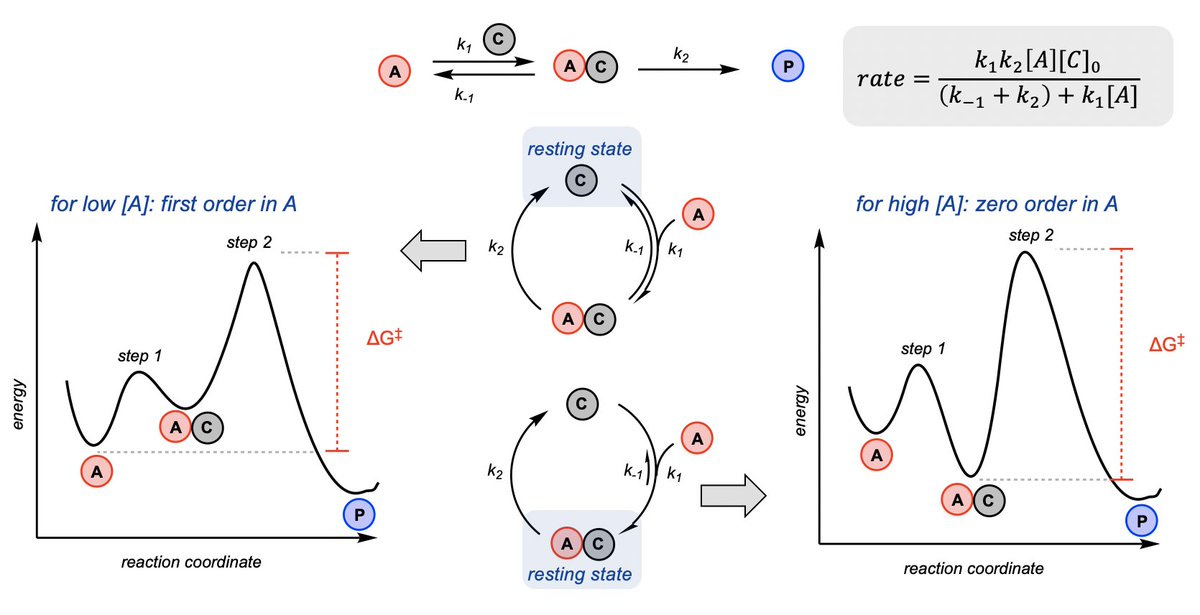
Interested in physical-organic mechanistic analysis? I watched this kid @DennisKutatela1 spend many many hours acquiring kinetics in his PhD… you should give his lecture a listen!
Episode #2 of the Synthesis Workshop Advanced Organic Chemistry course is live now - come watch @DennisKutatela1 teach kinetics!!
Link: https://t.co/FZr0fVqjJp
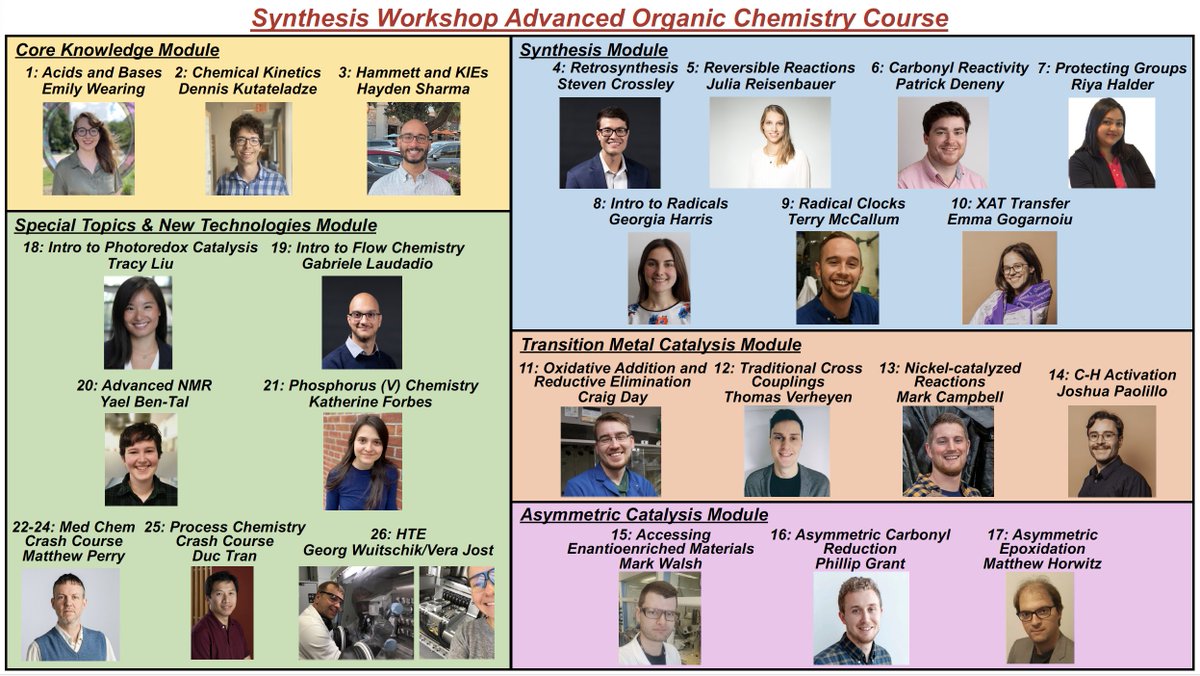
IT'S FINALLY HERE! Starting October 28th, the Synthesis Workshop Advanced Organic Chemistry course will begin releases through our regular YouTube channel for FREE, thanks to the massive efforts of presenters from many researchers from academia and industry!
Support by sharing!
Over the past year, I've been learning about how quantum chemistry is used outside academia. (Turns out it's not just for "Figure 4" in JACS papers!)
I summarize some of what I've learned here, and share some thoughts about how QM software should evolve to meet pharma's needs.
When choosing PhD rotations, I’d suggest picking labs where the people are friendly and challenge your thinking.
The research should motivate you, but don’t choose a lab for a specific project. This is a training experience. Your interests will change.
Lafayette Chemistry is excited to welcome our newest tenure-track faculty member, Assistant Professor Dr. Kristen DeMeester! Check out her bio: https://t.co/ccWAfikzAi