📍 Last Friday, the Embassy of France in Hungary and the French Institute hosted a conference, which explored the challenges facing the information environment, election campaigns, and democratic processes.
As part of the HDMO project, Ágnes Urbán (@MertekMonitor) and Bulcsú Hunyadi (@Pol_Cap) presented their latest research findings on the Hungarian election campaign, while a representative of VIGINUM shared insights from the French perspective.
The conference was followed by a roundtable discussion featuring Szabolcs Panyi, Hervé Brusini, Mathias Girel, and Ágnes Urbán, who discussed the transformation of the information space, the impact of artificial intelligence, as well as the challenges posed by disinformation and attempts to influence public opinion. The panel was moderated by Viktória Serdült (HVG).
Many thanks to the organizers, speakers, and participants for this thought-provoking exchange.
#AI Political #Influencers: the New Gods of #Propaganda and #Disinformation?
👉 Read this week's edition of the EDMO Weekly Pulse: https://t.co/6xmiY5TWhk
All our topics this week:
→ 𝗭𝗢𝗢𝗠-𝗜𝗡: 𝗔 𝗰𝗹𝗼𝘀𝗲𝗿 𝗹𝗼𝗼𝗸 𝗮𝘁 𝗰𝗮𝘀𝗲𝘀 𝗱𝗲𝘁𝗲𝗰𝘁𝗲𝗱 𝗯𝘆 𝘁𝗵𝗲 𝗘𝗗𝗠𝗢 𝗡𝗲𝘁𝘄𝗼𝗿𝗸
🤖 How Synthetic Content Transforms Political #Communications ++ 🇺🇸 Fear, Boos And Firebombs: AI Creates Growing Anger Among Americans ++ 🇭🇺 @Meta Oversight Board Is Investigating AI Video Impersonating Péter #Magyar ++
→ 𝗘𝗟𝗘𝗖𝗧𝗜𝗢𝗡 𝗕𝗘𝗔𝗧: 𝗧𝗿𝗮𝗰𝗸𝗶𝗻𝗴 𝗲𝗹𝗲𝗰𝘁𝗼𝗿𝗮𝗹 𝗱𝗶𝘀𝗶𝗻𝗳𝗼𝗿𝗺𝗮𝘁𝗶𝗼𝗻 𝘁𝗵𝗿𝗼𝘂𝗴𝗵 𝗘𝗗𝗠𝗢 𝗛𝘂𝗯𝘀
🇲🇹 #Malta General #Election: Unearthing a Pandora’s Box ++ 🇨🇾 #Sandygate: the “True” Crime Case That Shook Up the Election Campaign and Public Debate in #Cyprus ++
→ 𝗚𝗟𝗢𝗕𝗔𝗟 𝗣𝗨𝗟𝗦𝗘: 𝗗𝗶𝘀𝗶𝗻𝗳𝗼𝗿𝗺𝗮𝘁𝗶𝗼𝗻 𝗻𝗮𝗿𝗿𝗮𝘁𝗶𝘃𝗲𝘀 𝘀𝗵𝗮𝗽𝗶𝗻𝗴 𝘁𝗵𝗲 𝘄𝗼𝗿𝗹𝗱’𝘀 𝗰𝗼𝗻𝘃𝗲𝗿𝘀𝗮𝘁𝗶𝗼𝗻𝘀
⚓️ #Flotilla Goals Misrepresented: Fact Checks Challenge Meloni’s Claims and Highlight Legal Dispute ++ 🦠 Misleading #Ebola Claims Spread as Conflict and #Misinformation Fuel Deadly Outbreak in #DRC ++ 🇺🇦 False Claims About #Ukraine Drone Attacks From #Latvia Debunked as Russian Disinformation ++
→ 𝗢𝗡 𝗔 𝗗𝗜𝗙𝗙𝗘𝗥𝗘𝗡𝗧 𝗡𝗢𝗧𝗘
💡 AI and #Democracy: Mapping the Intersections | Report by @Rageorge88 and Ian Klaus @CarnegieEndow
🤝 With contributions from across the EDMO Network, incl. @BECID_EDMO (@rebaltica), @GADMOeu (@correctiv_fakt), @HdmoHub (@lakmusz_hu), @iberifier (@Newtral), @IDMO_it, @MEDDMOhub, @nordishub (@TjekDet), @STGEUI, @PagellaPolitica, @FactaNews, @atc_gr, as well as outside the EDMO network, incl. @BalobakiCheck and @TBIJ.
HDMO Partners Join Events on Information Integrity and Disinformation at the French Institute in Budapest (from May 26, 2026)
Starting May 26, 2026, the French Institute in Hungary will once again host a series of events dedicated to promoting media literacy and strengthening information integrity.
The programme features a rich range of activities, including training sessions, workshops for students and teachers, a roundtable discussion, film screenings, a digital exhibition, and professional meetings. Together, these initiatives aim to raise awareness across diverse audiences—particularly among young people—while fostering practical solutions and showcasing expert insights.
HDMO partners @Pol_Cap, @MertekMonitor, and @AFP are among the contributing organisations.
On May 29, Bulcsú Hunyadi (Political Capital) and Ágnes Urbán (Mérték Media Monitor) will present their analysis of the Hungarian election campaign during a public discussion.
Throughout the week, a selection of AFP’s Hungarian fact-checking work will be featured within the immersive exhibition Fabricated, originally developed by Inholland University.
The full programme (in Hungarian) is available here: Dezinformáció elleni hetek | Institut français
Magyarországon az elmúlt tizenhat évben intézményes, államilag szponzorált dezinformációs kampányok mérgezték a közéletet. Meg is van az eredménye: közvélemény-kutatások szerint a magyar információs környezet torzulása tartós bizalomvesztést, polarizációt, az összeesküvés-elméletek és dezinformációs narratívák terjedését, valamint az intézményi bizalom súlyos erodálását hozta magával.
Ezek a hatások bár nem visszafordíthatatlanok, nem is tűnnek el automatikusan egy kormányváltás következtében. Intézményes válaszokra van szükség a médiaszabályozás, a médiapluralizmus védelme, valamint a médiaműveltséget és kritikai információfeldolgozást fejlesztő oktatási programok területén.
A HDMO partnerszervezetei által összeállított javaslatcsomag célja egy tisztább, működőképes információs környezet támogatása és az uniós szabályok hatékonyabb érvényesítése: https://t.co/4a1Ea3BayL
Hungary’s democratic transition after Viktor Orbán may begin where his regime was once strongest: the centralized media and propaganda machine that sustained sixteen years of illiberal rule.
In this ECPS interview, @peterkreko, Director of @Pol_Cap argues that Orbán’s highly professional disinformation apparatus has suffered a striking collapse, opening new possibilities for democratic renewal, media pluralism, and a more critical public sphere: https://t.co/Uo9PxPWvTn
After 16 years, Orbán’s propaganda machine didn’t gradually weaken. It collapsed.
The bigger question now is what comes next.
Can Hungary move from being a laboratory of illiberalism and post-truthg to a laboratory of democratic renewal? Can a country shaped by state-sponsored disinformation rebuild media pluralism, democratic trust, and a less tribal political culture?
That’s the challenge I discuss in my new interview with @populismstudies@selcuk_gultasli
https://t.co/rEFwOpTOgn
🚨 Why Fidesz’s campaign didn’t work?
🚨 Why were Russian disinformation and AI ineffective?
Szilárd Teczár's interview with @peterkreko director of @Pol_Cap and Ágnes Urbán director of @MertekMonitor is now available in English on @lakmusz_hu.
Here you can read a shortened, edited version of the conversation: https://t.co/Wpl1Qr82g4
Do not miss HDMO's latest blogpost on @EDMO_EUI Blog by colleagues from @Pol_Cap:
👉 How AI-generated content was weaponized in Hungary’s 2026 election campaign
👉 What explains the limited success of AI-driven disinformation despite its widespread use
👉 How public attitudes toward deepfakes may shape future political strategies
👉 Why a coordinated policy response is essential to address the risks of AI in elections
🔗 Read the full blogpost: https://t.co/XTw6N9uXUY
📆 Register now and join us on 13 May for the first module of the EDMO Training Series on #Identity‑Based #Disinformation!
❗️Disinformation targeted against #minorities and #migrants poses particular challenges and risks, not only because of its potential overlap with illegal categories of speech including #HateSpeech, but also for its potential to incite #discrimination and at times real world #violence.
The first module of EDMO’s training series on identity-based disinformation aims to provide an overview of some of the main trends, #narratives and techniques used by disinformation actors and networks when targeting minorities and migrants across #Europe. We're very much looking forward to hearing from
– @lisaginsborg@STGEUI@EDMO_EUI
– @kateklingova@GLOBSEC@EDMO_EUI
– @jose_moreno@lcc_iul@iberifier
– Eóin Young @ICPAdvocacy
👉 Learn more & save your spot: https://t.co/eS4Ja96h3A
Viktor Orbán lost despite being supported by the Kremlin, the White House, Israel and China – and his erstwhile allies threw him overboard before the votes could be counted.
Peter Kreko discusses why Russian interference in Hungary failed, how Peter Magyar dismantled Orbán’s propaganda apparatus with preemptive communication and competence – and why Fico now finds himself friendless in the region.
Interview with @peterkreko, Director of @Pol_Cap, on https://t.co/YvaLAKu5Tj: https://t.co/zfFUlPLbQy
🇭🇺 Digital warfare ahead of Hungarian elections⁉️
@HdmoHub experts warn of unprecedented disinformation and AI-driven manipulation shaping the online space during the election period.
Key issues:
🤖 Network of AI-generated fake profiles spreading coordinated content
🚫📢 Circumventing Meta’s political ad ban using AI-generated ads
🇷🇺 Russian-linked disinformation targeting opposition with fabricated narratives
🇺🇦 Anti-Ukrainian narratives framing Ukraine and Zelenskyy as adversaries
A growing mix of tactics contributing to online propaganda and information disorder. ⚠️
More on the CEDMO website – link below. 👇🏻
1/4 Digitální válka před maďarskými volbami⁉️🇭🇺
📱 Online prostor zaplavily AI generované videa, obrázky a deepfaky namířené na politické oponenty.
Podle @HdmoHub se v kampani mísili jak domácí aktéři, tak i napojení na zahraniční dezinformační sítě 🌐
❗️ Výsledkem bylo prostředí, kde se realita v online prostoru čím dál víc rozpouštěla v propagandě a informačním chaosu.
Jaké další formy digitální manipulace provázely maďarské volby, se dočtete v novém článku na webu CEDMO – odkaz ve vlákně. 👇🏻
#CEDMO #madarskevolby #madarsko #HDMO #dezinformace
We’re very happy to share that Szilárd Teczár, Editor-in-Chief of @lakmusz_hu , will represent our hub in the newly launched Election and Crisis-related Disinformation Taskforce by EDMO.
A great step forward in strengthening collaboration against disinformation across Europe.👏
🎉The new @EDMO_EUI Monthly Fact-Checking Brief no. 58 is out!
It highlights how rampant disinformation — both domestic and foreign — shaped the electoral campaign in Hungary ahead of the 12 April parliamentary elections.
Key findings about the Hungarian elections:
👉 False narratives portraying the opposition as controlled by Brussels and Kyiv, and suggesting the country would be dragged into war
👉Use of AI-generated content, including deepfakes and manipulated images
👉Coordinated domestic disinformation, including false-flag operations targeting opposition events
👉Active foreign influence operations (e.g. Russian-linked networks like Matryoshka and Storm-1516)
Explore the full brief here for more insight: https://t.co/eUzuJlGcch
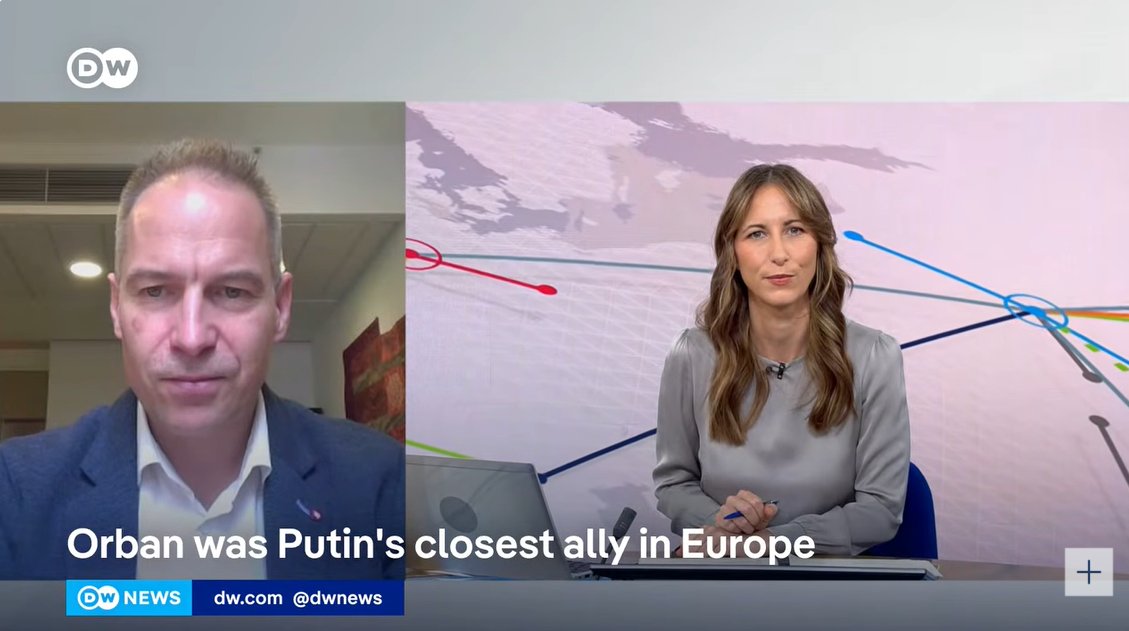
A blow to Putin? What does the Hungarian election result mean for Russia?
In a recent DW News report about the Hungarian elections, @peterkreko, director of @Pol_Cap commented:
“Despite the fact that it seemed for many years that Russian disinformation resonates well with the Hungarian public, right now, there was a clear obvious rejection and Orbán’s pro-Russian disinformation simply did not sell well in the public.”
📷 Watch the full discussion here: https://t.co/KmqhERsu3s
🇭🇺🗳️ This Sunday, #Hungary's widely anticipated national #election takes place in a highly polarised and polluted information space.
🎥 We asked @SzilardTeczar, Editor-in-Chief at @lakmusz_hu@HdmoHub, to unpack the defining elements of this election campaign.
👉 Watch the full video: https://t.co/2EhfE1zcUK
👉 Take a look at recent analyses by Lakmusz: https://t.co/y14vMBJOik
👉 Hungary’s opposition Tisza party, led by Péter Magyar, has won the election, bringing an end to Viktor Orbán’s 16-year grip on power. In the run-up to the election, Hungary saw a wave of AI-generated, state-funded billboards, videos, framing Péter Magyar as a danger to the country and a proxy of the EU and Zelenskyy.
✒️ As our hub's coordinator, @peterkreko noted in The Guardian:
“Tisza could win against all odds: help from the United States and from Russia, a massive state disinformation machinery, and all state institutions helping Fidesz.
(…) While the super-majority would help the party, the expectations would be huge and it will be difficult to deliver on some campaign promises due to fiscal constraints. But given that it was dominantly an anti-Fidesz vote, the new government can manage expectations.”
https://t.co/U1hka5PNfn