Patients deserve to know prices BEFORE they get their care. But still hospitals make it too difficult to find their prices. Our most recent report highlighting this problem with enforcement of an important consumer protection law. @PtRightsAdvoc@FamiliesUSA
North Carolina hospitals are now being incentivized to relieve and prevent medical debt. Learn more about this innovative program expected to help 2 million residents in new blog from @CKollerMilbank https://t.co/1EBiuP2LWN CC @NCDHHS
The Biden-Harris administration has announced the results of the first ever negotiation of drug prices in Medicare.
The best indicator of how successful the negotiations have been: 22% savings relative to current spending, net of current rebates.
https://t.co/JKQHlBWDjz
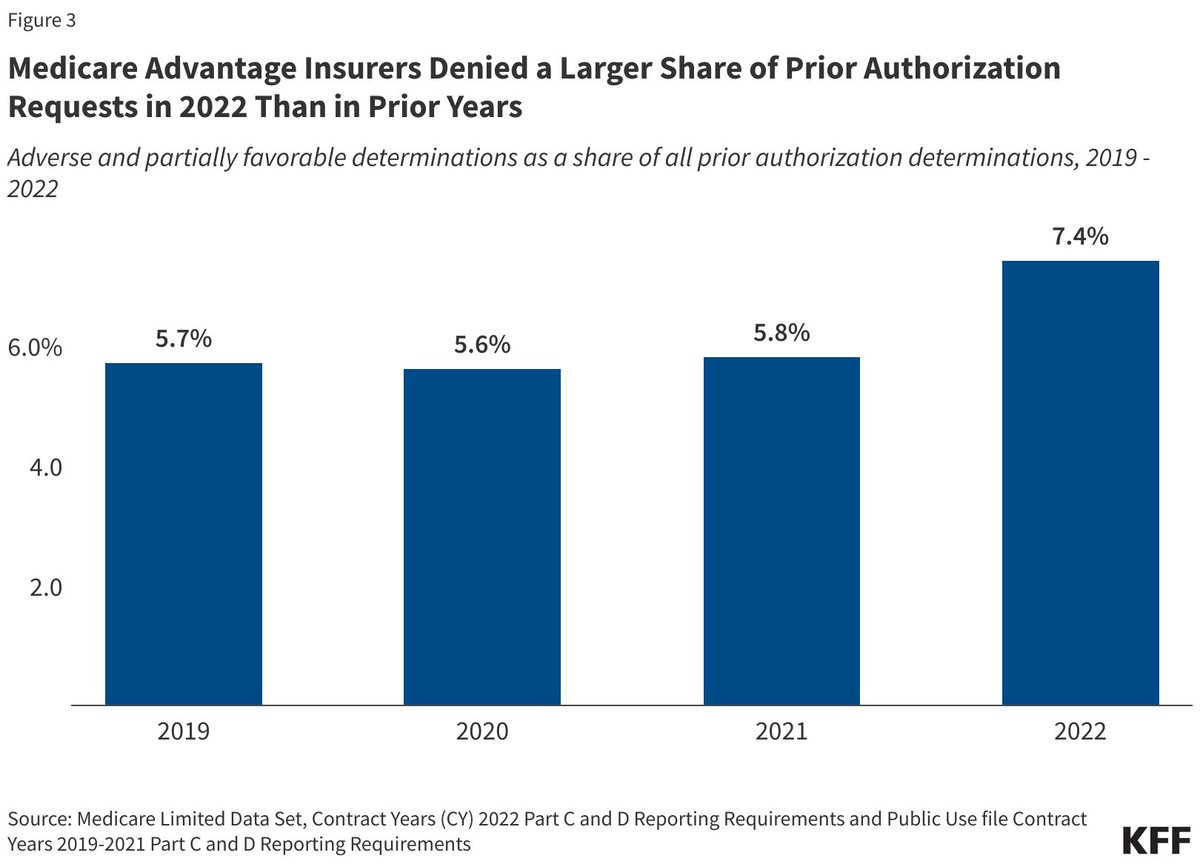
New: Prior authorization denials in Medicare Advantage plans are up.
This saves money for insurers, but creates access barriers for patients and hassles for providers.
https://t.co/P0kikapvmt
Efforts to reform health plans' use of prior authorization have been ramping up in states. @GtownCHIR took a look at how recent restrictions on this practice are affecting patients, providers, and health care costs. https://t.co/1Vc4srA0Ty @RachelE_Schwab@khemp64@RWJF
My colleague @SabrinaCorlette's examination of insurers' 2025 rate filings reveals one of the biggest flaws in our system: unit prices are driving up our premiums, but insurers are focused on reducing utilization rather than cutting better deals.
https://t.co/IG5Ln0jryB
Almost 1 in 4 American adults with frequent mental distress reported not seeing a doctor because of the cost, Mental Health America found in a new survey based on 2022 federal data. https://t.co/6bDlbxMQfB
Caitlyn Mai underwent cochlear implant surgery with her insurer’s approval, expecting it would be covered in full. Then she started getting bills for $139,000.
@RosenthalHealth, KFF Health News & @CBSNews. ⤵️ https://t.co/UlBabuvSPn
Medical debt is prevalent among US adults with common mental disorders, and this may contribute to the mental health treatment gap. https://t.co/X1ImSt8JU0
About 4 in 10 adults (41%) report having debt due to medical or dental bills — including debts owed to credit cards, collections agencies, family and friends, banks, and other lenders to pay for their health care costs. https://t.co/jP7rsTWn6n
Study found that after patients were required to pay out of pocket for telehealth visits, they had substantially fewer tele-mental health visits, and a larger fraction stopped seeing their mental health specialists. https://t.co/5BQuwRiib8
Older adults are concerned about #healthcare costs as many face an affordability squeeze, finds a new @UMich survey. Action is needed to protect the health and financial wellbeing of America’s fastest growing demographic. More in @KFFHealthNews: https://t.co/Hatjc6CxqQ
Did you know? 70% of recent Medicaid disenrollments were due to administrative errors, not ineligibility.
New rules seek to streamline the process and keep eligible beneficiaries covered. https://t.co/W329jswUJG
Permanently extending enhanced ACA premium subsidies -- which currently expire at the end of 2025 -- would result in 3.4 million fewer people uninsured per year at a net federal cost of $335 billion over a decade.
This is going to be a big issue next year.
Important NBER working paper shows rising health care prices cost jobs. So do price increases from mergers. https://t.co/KgSCwsvfVo Another example of what voters know -health care is a dimension of America’s economic issues, not a separate problem listed lower down on polls.
The job of pharmacy benefit managers is to reduce drug costs. Instead, they steer patients toward pricier drugs, charge steep markups on what would otherwise be inexpensive medicines and extract billions in hidden fees, The New York Times found. https://t.co/cqsX8IBiSl