A healthier world means a stronger America.
Diseases don’t respect borders, but we know how to keep them out of ours. The U.S. and @who track diseases, stop outbreaks, and prevent tomorrow’s health threats before they arrive. When we work together, we’re keeping the world healthy and keeping Americans safe.
#HealthForUS
It’s been a week of mixed news in the fight against Ebola in the DRC and Uganda.
We have four promising vaccine candidates, while potential treatments are also being tested. This is genuinely good news – but they’re still months away.
In the short term, we’re depending on the public health response, and it’s struggling to keep up. Cases are now over 1,100 and the virus is spreading rapidly.
@UNICEF is on the frontlines, providing vital supplies, supporting contact tracing, and preparing neighboring countries for potential spread. Please consider supporting these vital efforts: https://t.co/iDYYrCSb69
Why should you care about the New World screwworm infecting cattle in Texas and New Mexico?
It’s a growing issue for farmers and ranchers. But if the outbreak isn’t contained, it could send the cost of groceries like beef and milk soaring at a time when cost of living is already rising for many Americans.
USDA and state and local partners are mobilizing a massive, multilayered response. Getting this right isn’t just about protecting important industries – it’s about protecting the pocketbooks of American consumers.
Stay tuned for more on the screwworm outbreak and how federal, state, local, and international partners are working to stop it.
The Ebola outbreak in Africa is in the headlines, but did you know another rare disease is already spreading in parts of the US?
The New World screwworm is a flesh-eating parasite that usually affects livestock, but can in rare instances also attack people. There have now been 12 cases in livestock in Texas and New Mexico. Texas Governor Greg Abbott has activated the state emergency operations center to coordinate the response by state agencies and local partners including Texas A&M, while the USDA is also mobilizing a response.
The World Cup kicks off next week!
As the U.S., Canada, and Mexico prepare to welcome thousands of fans from all over the world, health officials are preparing to keep Americans safe from the risks of imported health threats.
Officials are reminding Americans to make sure they’re caught up on their vaccinations. They’re also prepping health facilities and increasing monitoring for invasive mosquitoes so we can catch malaria, West Nile, and other insect-borne diseases before they can harm Americans.
Check out the story from CBS: https://t.co/OLzvtSJM5d
The Ebola outbreak in the eastern Democratic Republic of Congo and Uganda continues to spread and remains a major concern. But we are seeing are some positives. We are making progress on vaccines, thanks to partners like @gavi, @CEPIvaccines, and @SerumInstIndia. And importantly, the U.S. and others are stepping up with significant contributions to frontline responders like@UNICEF.
There is still significant need. We need more PPE, medical supplies, tests, and staff to support contract tracing and community outreach.
The U.S. and others are stepping up. You can too. Please consider supporting UNICEF’s response: https://t.co/FXMrB7PHRY
The Ebola outbreak in eastern DRC and Uganda has now passed 1,000 cases. But @UNICEF is there on the frontlines, working hard to stop it.
Since the outbreak started, UNICEF has surged additional resources, emergency medical supplies, and expert outbreak response staff to the affected areas – all while ensuring vital humanitarian services continues to be delivered.
Faced with a rapidly spreading virus in a challenging humanitarian setting, this kind of rapid, comprehensive response is critical to ensuring health services continue while we work to contain the outbreak.
Read more about the response: https://t.co/dJVaHJDdqq
New outbreaks of two deadly, untreatable diseases mean we must remain vigilant about threats beyond our shores.
How America and the world respond to these outbreaks and learn real lessons from them will be the rea tests of our global health security in 2026 and beyond.
Here’s what you need to know about hantavirus and Ebola, plus four key lessons we're already learning: https://t.co/3XIPiRZHSP
It’s easy to think that global health is a concept far from home, but initiatives like those at Barnard College show that no community is immune to outbreaks.
That’s why fostering the next generation of health researchers here in the U.S. is more important than ever before; these will be the scientists that eradicate polio, #beatmalaria, and ensure a healthier world for all. #HealthForUS
From polio to HIV, researchers at the University of Pittsburgh are conquering some of the deadliest diseases known to man.
That’s home-grown health innovation, right here in the Keystone State. #HealthForUS
It’s thesis defense season at Duke University, and students like Amy are presenting research that will shape the future of global health.
Supporting American research is key to us healthy, both at home and beyond. #HealthForUS
At the College of St. Scholastica in Minnesota, students like Rutendo are learning about the history of disease transmission.
It’s conversations like these, fostered in American classrooms, that shape the doctors, scientists, and policymakers of our future. #HealthForUS
At the University of Alabama at Birmingham, innovation meets action with the global health case competition.
Efforts like this are the reason behind America’s leading role in global health research—and now is not the time to step down. #HealthForUS
Measles is the canary in the coalmine. When vaccination rates drop, it's the first disease to come roaring back—but it won't be the last. A quarter of 2025's total measles cases have already hit the U.S. in under two months. The world gave us a warning. Are we listening?
Swipe to see more diseases that may follow the canary.
Superbugs don’t respect borders—but good policy doesn’t either. The new bipartisan Pioneering Antimicrobial Subscriptions to End Upsurging Resistance (PASTEUR) Act, introduced by Reps. Earl L. “Buddy” Carter, Scott Peters, Nick Langworthy, Mike Levin, and Mike Carey, seeks to flip the script on antibiotic development.
With the world in an AMR crisis, the PASTEUR Act would create a subscription model for the developers of novel antimicrobials. Congress may be taking the matter into its own hands: when 35,000 Americans die from antibiotic-resistant infections every year, it’s clear the problem isn’t going away.
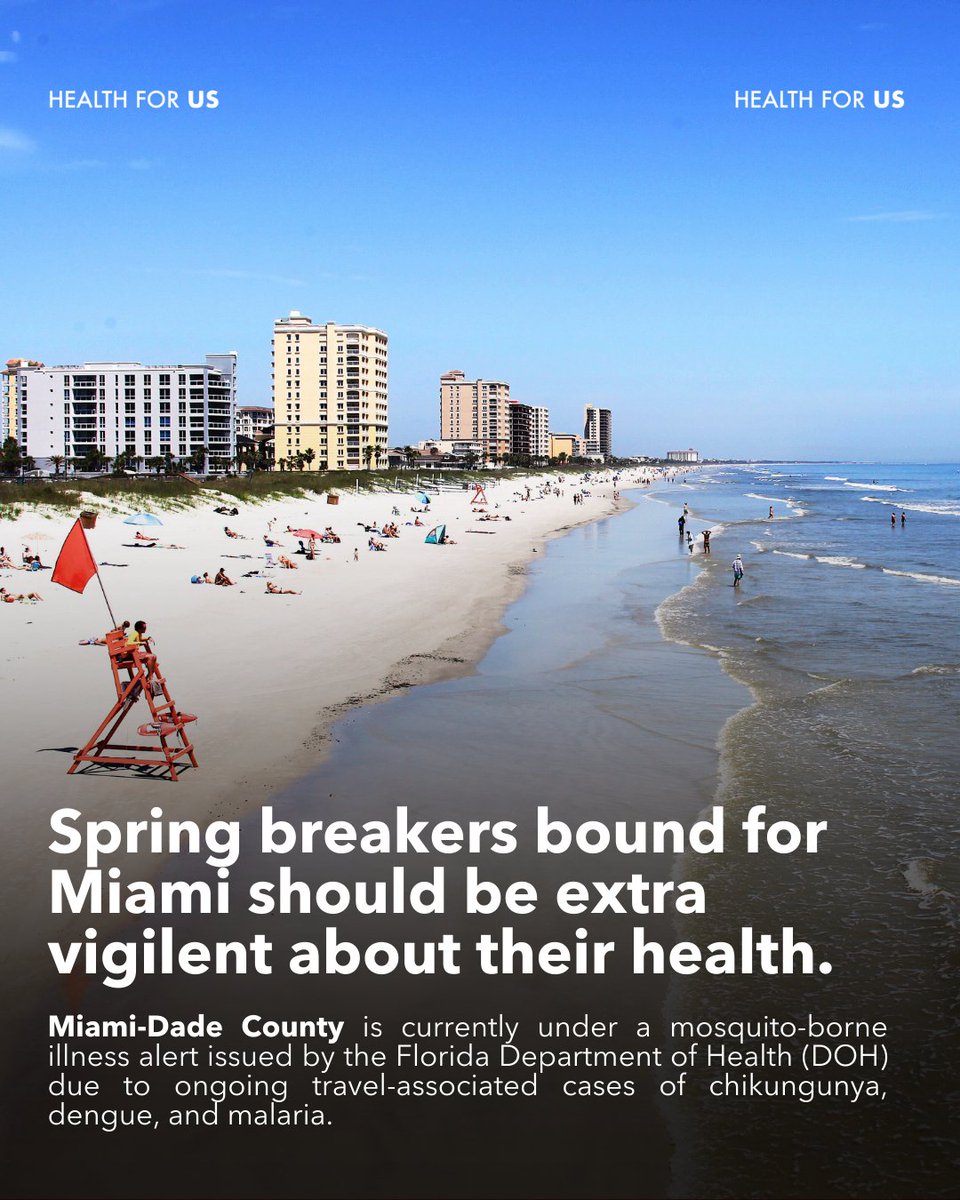
Spring breakers in Miami this year need to pack the sunscreen AND the bug spray. Miami-Dade County is currently under a triple mosquito-borne illness alert: dengue, chikungunya, and malaria have all seen cases in the area, with the situation being monitored by the Florida Department of Health.
The border between global health and local health is blurred in a world of increased travel. Addressing these diseases in the countries in which they’re endemic will help keep Floridians safe. #FightTheBite
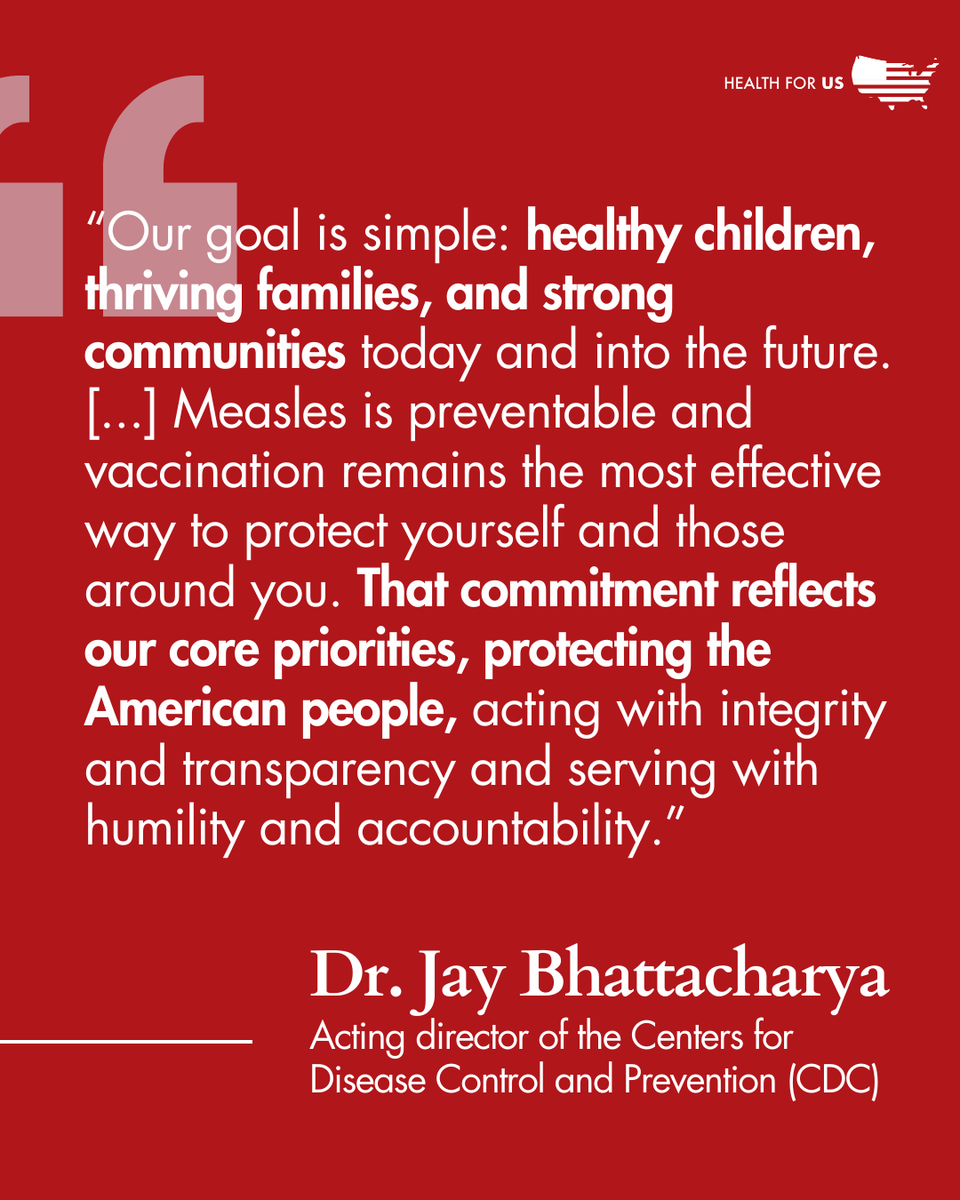
According to Dr. Jay Bhattacharya, appointed by President Trump as acting director of the Centers for Disease Control and Prevention (CDC):
“Measles is preventable and vaccination remains the most effective way to protect yourself and those around you. That commitment reflects our core priorities, protecting the American people, acting with integrity and transparency, and serving with humility and accountability.”
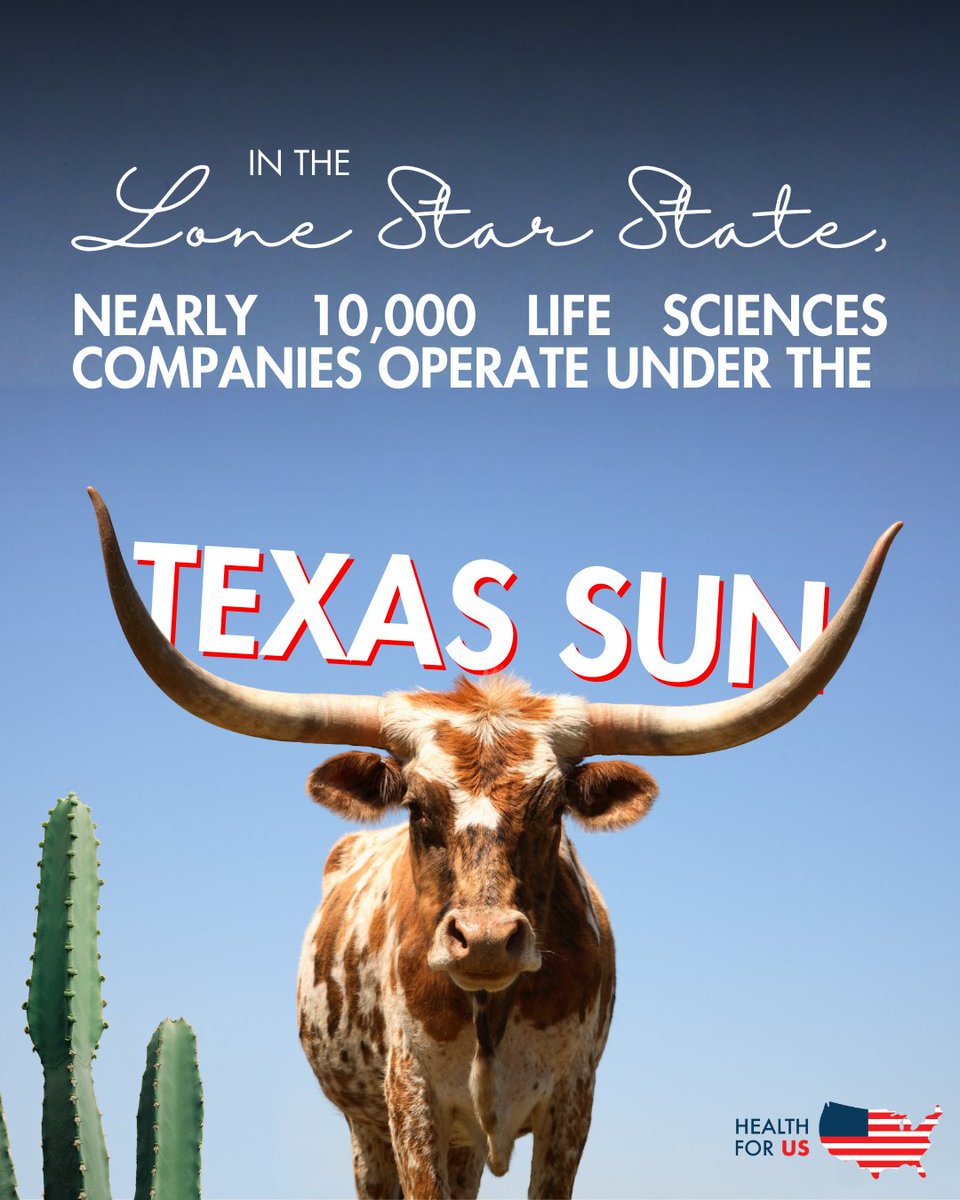
Nearly 10,000 life sciences companies operate under the Texas sun. ☀️
Texas’ premier research institutions are developing targeted insecticide interventions to reduce the global malaria burden. And schools like the University of Texas Health Science Center at San Antonio are trailblazing research, in this case on neutralizing antibodies to protect against malaria.
That’s 129,000 jobs created for Texans—and innovation serving those within the Lone Star State and far beyond its borders.
$1.5 billion a year to address something preventable? That’s a high price tag.
According to a new report from Yale School of Public Health [tag], the consequences of falling measles coverage go beyond human health. There are economic consequences, like lost workforce productivity, overrun public health departments, and more—all in addition to the medical cost of treating an infection.
$1.5B is our warning that prevention is not optional.
North Carolina has a superpower, and it's saving lives around the world.
From GSK's malaria vaccine developed in Zebulon to NC State's groundbreaking mosquito research, NC is at the forefront of one of the top killers of children under five.
And it's good for North Carolinians too: a $31.9B economic impact, over 56K direct jobs from global health organizations, and a $1B Merck investment on the way.
That makes for a healthy world—and a thriving Carolina.












![Healthfor_US's tweet photo. $1.5 billion a year to address something preventable? That’s a high price tag.
According to a new report from Yale School of Public Health [tag], the consequences of falling measles coverage go beyond human health. There are economic consequences, like lost workforce productivity, overrun public health departments, and more—all in addition to the medical cost of treating an infection.
$1.5B is our warning that prevention is not optional.](https://pbs.twimg.com/media/HCfxKiRaQAAqMYJ.jpg)


