Menstrual health is a right.
And for many girls and women in Gaza, that right is denied constantly amid violence and lack of sufficient aid.
More aid at scale must be let in. A lasting ceasefire must be reinstated.
#MenstrualHygieneDay
Thanks to LCol Jonathan Hubble for his insights on Chemical, Biological, Radiological, and Nuclear threats on the Canadian Army Podcast. CBRN is a complex business where, as he explains, an ounce of prevention is worth a pound of cure.
Over 1,500 years ago, this church was hewn into a vertical cliff face 650 feet above ground - and it's still in use today.
A thread of churches in astonishing places... 🧵
We’re “greening” temporary military camps! The Innovation for Defence Excellence and Security program recently declared a winner in a contest to develop more efficient and environmentally sustainable energy, water, and waste management systems for our camps. #DefenceIDEaS
https://t.co/WbNSS51IhK
I’m in awe every day as to how our CF Real Property Operations Group members continually manage over 20,000 bldgs with minimal resources!
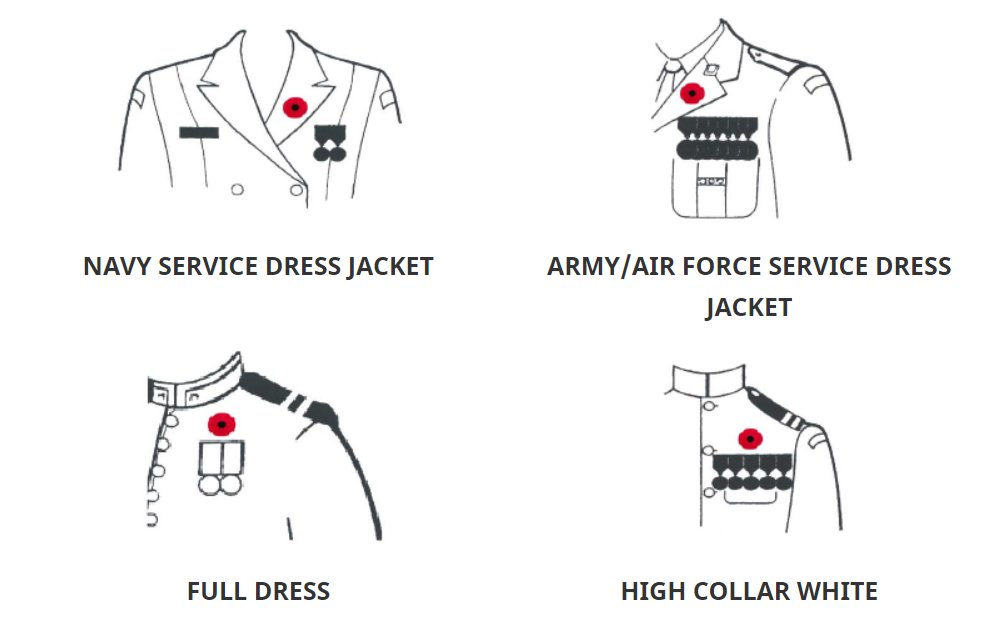
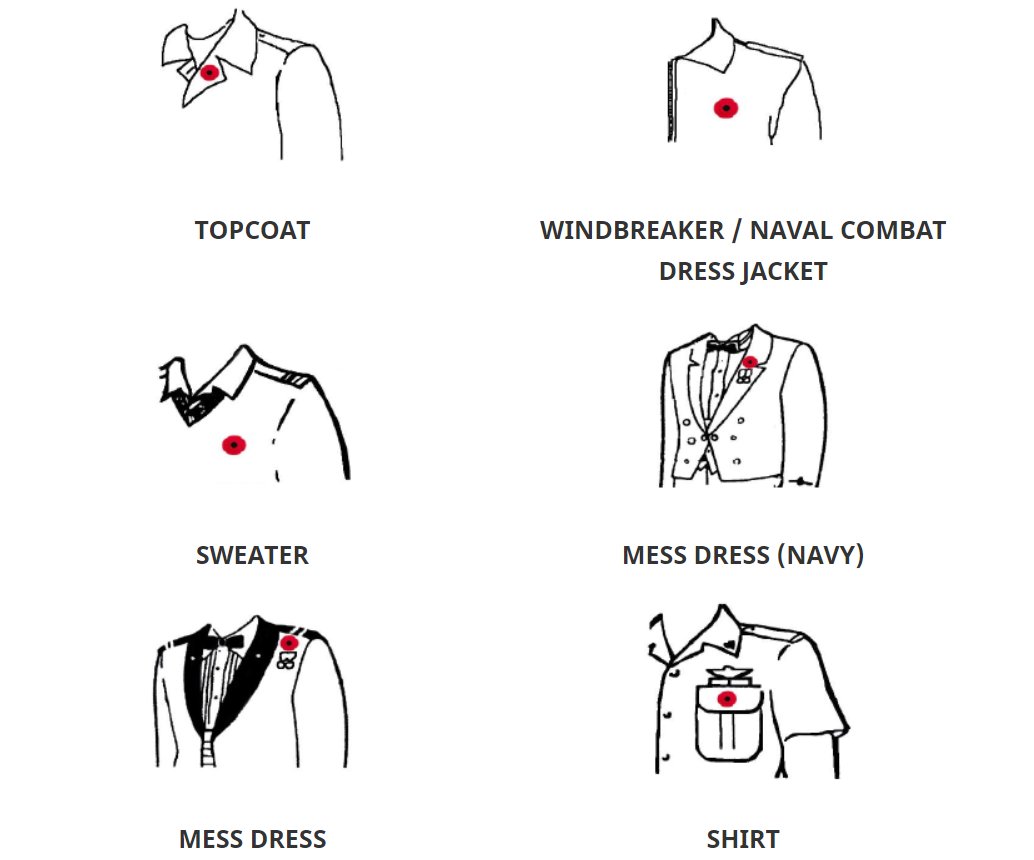
The poppy is an international symbol of remembrance to commemorate those who sacrificed so much. It's worn starting today until Remembrance Day. Here are the proper positions for poppies while in uniform.
1/ #CDSReads@SandraPerron22 shares an incredibly powerful and inspiring account of courage, resilience, and breaking barriers. As a trailblazer, she eloquently portrays her fight against a system as it struggled with much needed change.
It’s World Teachers’ Day! CSA astronaut Jeremy Hansen pays tribute to all educators and to those who helped propel him to the Moon – literally!
Thanks for your tireless dedication!
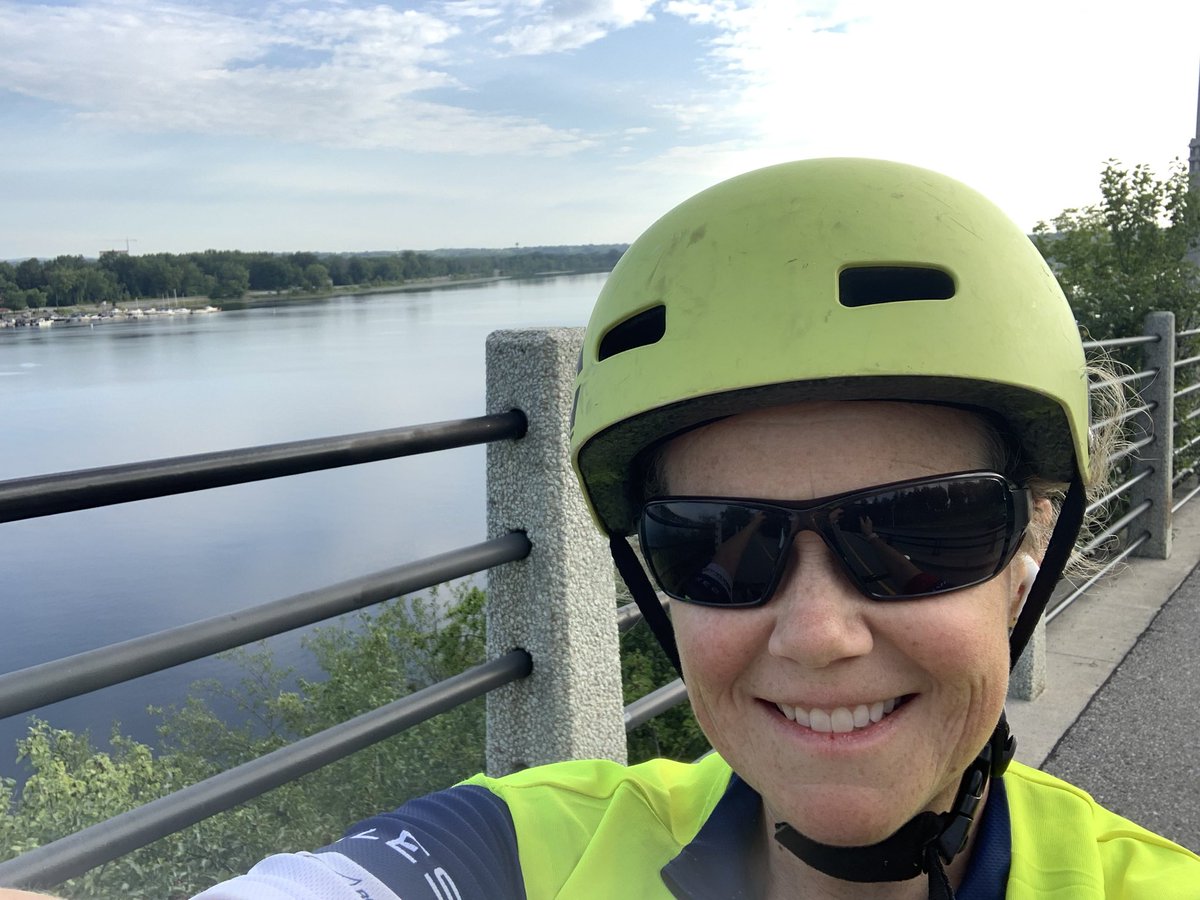
Hello beautiful Ottawa! A colleague of mine biked from Barrhaven downtown to this annual 2 day conference we have, impossible i thought- but with my e-bike, I managed in under an hour each way which I figured would have been comparable to traffic and was in my happy place! 🌿🌞🚴♀️
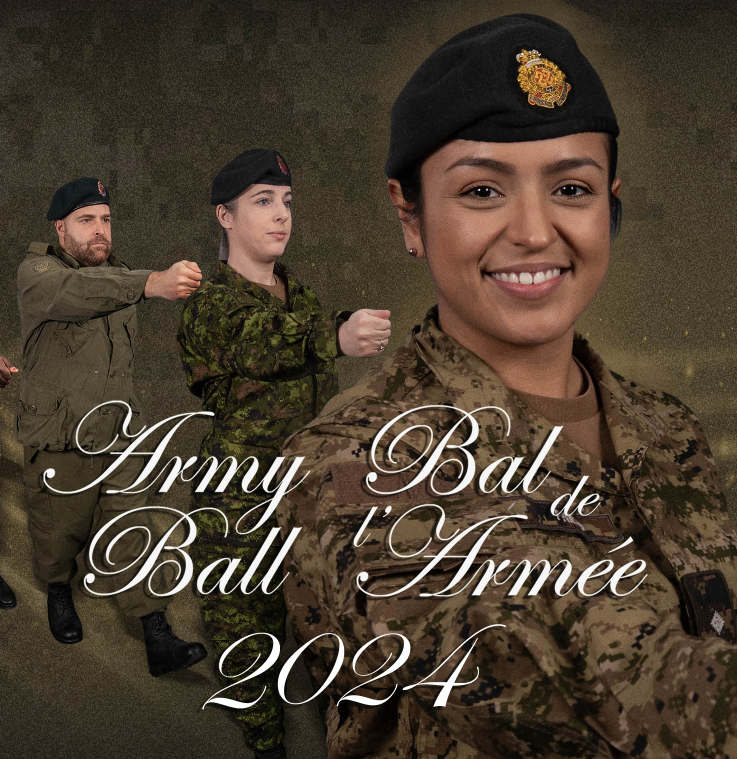
It's the late summer blockbuster you've been waiting for!
We're gearing up to share a whole week's worth of exclusive and awesome content from this May's #ExMAPLERESOLVE with you. Stay tuned to our channels next week so you don't miss out!
In 2009, Stanford business professor Tina Seelig split her class into groups and issued a challenge:
Each group had $5 and 2 hours to make the highest return on the initial money.
At the end, they'd give a short presentation on their strategy.
The results were fascinating...
Most of the groups followed a basic approach:
• Use the $5 to buy a few items.
• Barter or resell those items.
• Repeat
• Sell final items for (hopefully) more than $5.
These groups made a modest return on their initial $5.
A few groups ignored the $5.
They thought up ways to make the most money in the 2 hours of allotted time:
• Made and sold reservations at hot restaurants.
• Refilled bike tires on campus for $1 each.
These groups made a better return on their initial $5.
The winning group took an entirely different approach.
They had three core realizations:
1. The $5 was nothing more than a distraction.
2. The 2 hours of time was not enough to make an attractive, outsized return with a mini-business (like selling restaurant reservations or filling bike tires).
3. The most valuable "asset" was actually the presentation time in front of a class of Stanford students.
Realizing the value of this hidden asset, they offered the presentation time to companies looking to recruit Stanford students.
They struck a deal to sell the time slot for $650, netting a monstrous return on the $5 of initial capital.
The losing groups thought in linear, logical terms and achieved a linear, logical outcome.
The winning group thought differently.
So, what can we learn from this story?
There are two types of problems:
1. Low-Stakes: Lower potential, linear rewards. Decisions are easily reversible.
2. High-Stakes: Higher potential, asymmetric rewards. Decisions are not easily reversible.
With low-stakes problems, given the reward potential is low and the decisions are easily reversible, we can use shortcuts and heuristics to choose our path. We can take a logical, linear approach.
With high-stakes problems, the high, asymmetric reward potential means we need to think differently. We want to take a creative, non-linear approach.
Three steps to start thinking differently:
Step 1: Avoid the Distraction
There will always be an "obvious" solution that is simple, clear, and entirely wrong.
In the challenge, the $5 was nothing more than a distraction. It was a trap.
To find the best path, you have to avoid the distraction.
Step 2: Ask Foundational Questions
Ask and answer questions that expose and vet underlying assumptions and logic.
• What's the real problem you are trying to solve?
• What's your hypothesis? Why?
• What are your core assumptions? Why?
• What evidence do you have?
• What are your core options?
• What alternatives exist?
This takes time, but it's an essential exercise when facing a problem with the potential for non-linear rewards.
Step 3: Select the High Leverage Approach
Slow down and evaluate the options on the table.
Select the path most likely to generate the asymmetric, attractive risk-adjusted returns.
If the story teaches us one thing, it's this:
Creative, non-linear, asymmetric thinking generates creative, non-linear, asymmetric outcomes.
If you enjoyed this or learned something, follow me @SahilBloom for more in future.
Operation deconflict kids camp/svc couple work schedules is into its 2nd last week! I took a chance to bike from aviation museum to downtown where a bunch of amazing minds collaborated on how DND infrastructure can get to Net zero Carbon with associated risks and mitigations.
If you sit in back-to-back meetings at work, read this:
Microsoft's Human Factors Lab studied 14 participants across two days of video meetings.
• Day 1: 4 back-to-back 30-min meetings.
• Day 2: 4 30-min meetings with 10-minute breaks in between.
Participants wore EEG caps to monitor electrical activity in their brains.
The results were fascinating...
The two key takeaways:
Takeaway 1: Back-to-Back Meetings Promote Stress
Back-to-back meetings created an accumulating buildup of stress in the brain.
Anticipation of transitions caused further spikes.
Short breaks in between meetings allowed the brain to reset and never experience the stress buildup.
Takeaway 2: Breaks Promote Performance
Back-to-back meetings resulted in negative levels of frontal alpha symmetry, a brain state connected to lower levels of engagement.
Short breaks in between meetings resulted in positive levels, meaning participants performed better.
Conclusion: Take More Breaks
The conclusion of the study seems to be that short breaks in between meetings are necessary:
• Eliminate stress buildup
• Improve performance
• Reduce impact of attention residue
I started implementing 25-minute meetings into my schedule (a built in 5-minute break) and immediately noticed a positive impact.
A short walk or some movement in that window provided a clear reset.
25-minute meetings also eliminate the 5 minutes of “how about the weather” low value chit chat most meetings open with.
If you set the tone to dive in and stay focused, there are few things that take more than 25 minutes.
Try it!
If you enjoyed this or learned something, follow me @SahilBloom for more in the future.