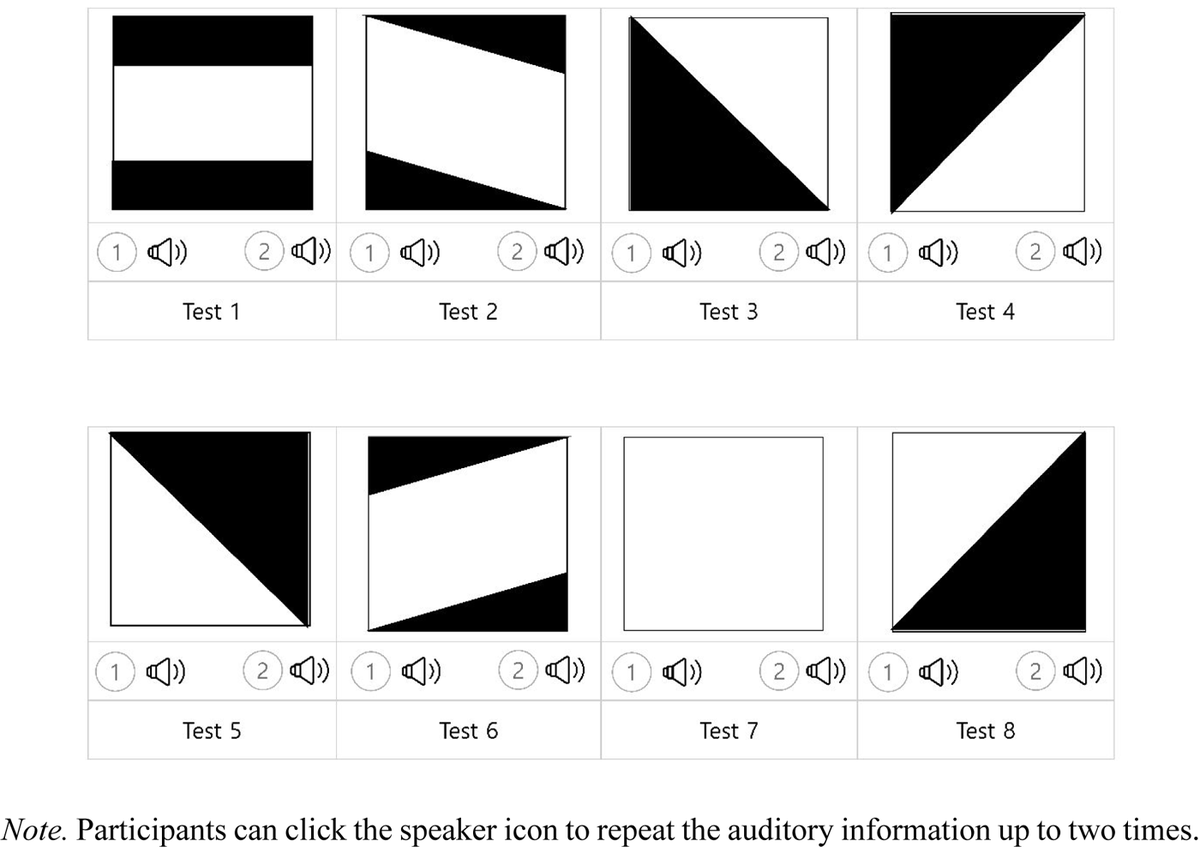
Individualized closed-loop acoustic stimulation suggests an alpha phase-dependence of sound-evoked and induced brain activity measured with electroencephalogram (EEG) recordings.
SUMMARY. Healthy adult brains generate alpha oscillations and individual subjects have unique alpha oscillation frequencies, which impacts how they dynamically process, ignore, and attend to sensory information. Our study uses a novel closed-loop technology and individualized approach to play sounds at physiologically distinct peak or trough phases of ongoing alpha oscillations. We find sounds played phase-locked to trough versus peak alpha phases measured with electroencephalography (EEG) elicit distinct brain potentials and changes in alpha oscillations. This study supports the feasibility of using a novel individualized, closed-loop, neuromodulation to investigate and potentially improve abnormal alpha and other oscillation activity associated with multiple neurological disorders. Congratulations to the research team! @tylor_harlow, Samantha Marques, Scott Bressler. https://t.co/NXKPcl4jej
How some skills become second nature https://t.co/fJ37HK1hMD "Patterns of gaze and attention can reveal how some people unconsciously figure out how to master a task"
New results! The prefrontal cortex uses a low-dimensional “coding space”. Info can be captured in just 3–6 dimensions. The brain compresses what we remember.
Low-dimensional prefrontal representations of objects during working memory
https://t.co/kUONPmdNnD
#neuroscience
Perceptions of visual-to-auditory sensory substitution (VASS) technology among students with visual impairments and special educators https://t.co/aYyuhN2X0e "applies The vOICe algorithm to convert visual images into auditory input"; #ETRI#V2A#VASS#BCI#blindness
After wrapping up an R01 submission, this felt like the perfect Friday neuroscience paper. As a vision scientist, I never get tired of a good illusion. Two simple rotating circles become a 3D cylinder in the mind's eye, revealing how the brain constructs perception from ambiguity
New results!
Theta rhythms flexibly routing information based on behavior and feedback, organizing local and long-range neural communication.
Theta gates and routes information in the frontal cortex
https://t.co/kPk4vmwwBZ
#neuroscience
Building the future of sleep intelligence.
Hiring:
→ Data Scientists
→ UX Engineers
AI, neuroscience, sleep science, data, design.
Work directly with Dr. Matt Walker.
https://t.co/4jYzWaZFzH
Very cool analysis of the degree to which brain signals can be predicted by backprop signals. One issue though is confounding. Not sure there is a way to correct.
Thalamic recordings show a rhythm that’s strong in wake and REM and absent in deep sleep: An electrophysiological signature of conscious states.
https://t.co/BcTbuVJmRy
#neuroscience
OFC encodes option values while LPFC tracks spatial locations during both overt (eye movements) and covert (internal) attention.
Effects of overt and covert attention on decision-making dynamics in prefrontal cortex
https://t.co/TW57wZkIbf
#neuroscience
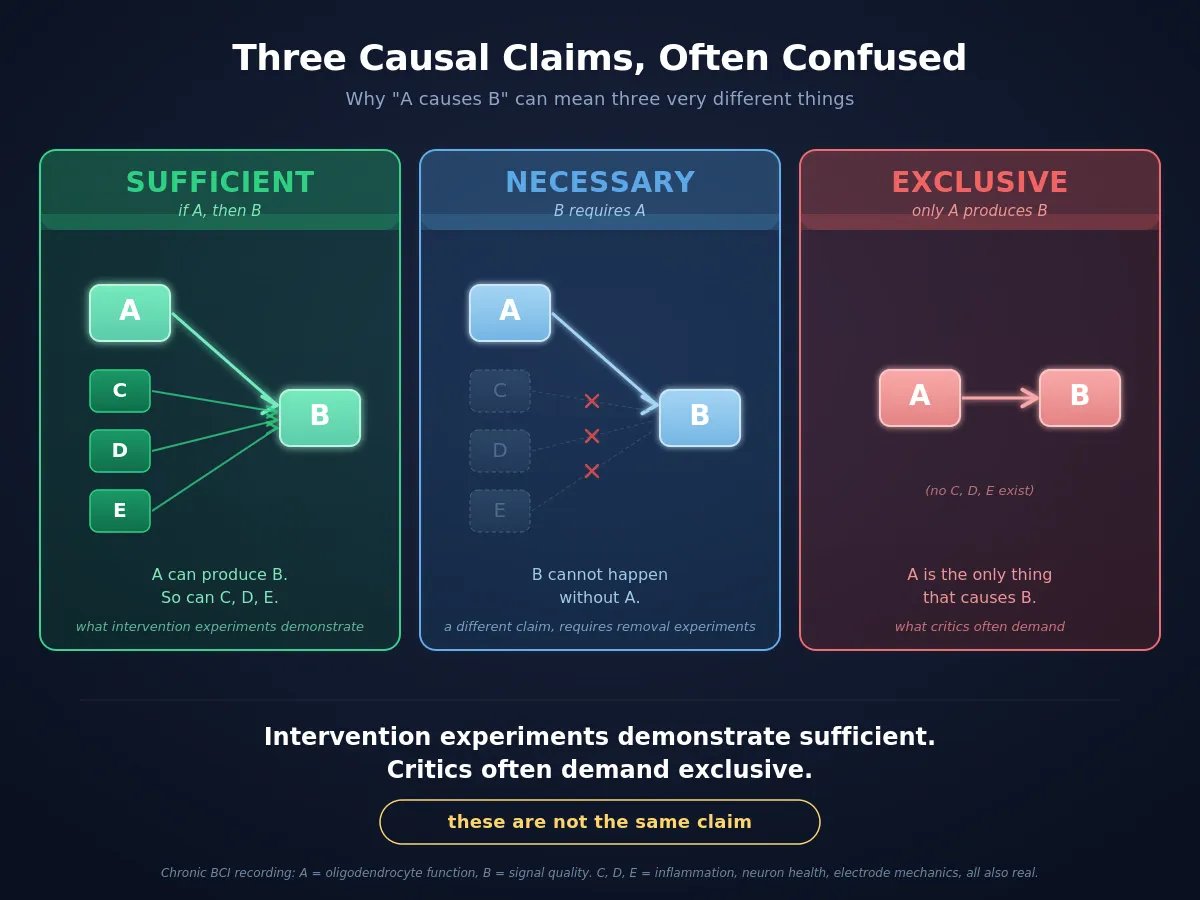
🧠 A logic failure that costs decades. Why BCIs fail: post 12b https://t.co/5Fa9l1Rpia by @BIONIC_Lab; "Inflammation matters. Neuron death matters. Oligodendrocyte function matters." #BCI#NeuroTech
Being a scientist and an engineer, I have to insist that they both actually *are* identities. And if you are either you will feel it. It is not merely that you engineer. You *are* an engineer. You don't merely research. You *are* a scientist. And @ylecun always will be both.
Patient preferences for the PRIMA retinal prosthesis for vision restoration for dry age-related macular degeneration: an international survey study https://t.co/xU5UWGAua5 retinal implant