🎉 Congratulations to the 2026 recipients of the #EFSD & @LillyDiabetesIn Young Investigator Research Award! 6 outstanding early-career researchers recognised for their work in basic & clinical #diabetes research.
Well done to all 🏆👏
Learn more: https://t.co/lCbvEHtXyd
@Gonzalez_JT@HenryJMartyn@JamesyMorton@japplphysiol PS. @Gonzalez_JT also nice to see that - even with 120g/h of CHO - blood glucose is very, very well-maintained (stable and not above 5.2 mmol/L) -> BG homeostasis = priority for the human body. (relevant findings in the "CGM debate" imho)
@Gonzalez_JT@MCRiddell1@LouiseMBurke@HenryJMartyn@JamesyMorton@japplphysiol +reducing glycolytic flux (enzymatic inhibition) and reducing glucose utilization in general due to "substrate competition" with the increased circulating ketone bodies. That's why (although may sound contradictory) exogenous ketones may be interesting in T1D! (imo) @MCRiddell1
@jem_arnold I agree, but would add "and burning as much carbs as possible" (RER 1,00). So, purely theoretically, if an athlete just wants to crush his FTP in a lab test, aim for very high CHO intake to suppress fat oxidation and maximize total CHO oxidation....
@jem_arnold Agree (with regard to VO2) BUT the small RER-differences does lead to 10W difference at FTP...., which is relevant. (still, I think the variation in RER at FTP is smaller between athletes, purely based on lab experience, and also often times close to 1,00).
Our latest paper as part of the UCI series on Sports Nutrition in Professional Cycling is out: "Nutritionally Relevant Technological Advancements in Professional Cycling." We discuss CGM, portable sweat and lactate analyzers, ultrasound, ... @UCI_cycling
https://t.co/E733SnsyAC
@SitkoSebastian Let's ignore frontal area - E.g.
- Rider A (63kg) rides at LT2 of 315W with headwind, the latter which causes him to "lose output" ~30W or 9.5%.
- Rider B (80kg) rides at LT2 of 400W with headwind, the latter which causes him to "lose output" ~30W or only 7.5%.
@SitkoSebastian For me, it all comes down to the fact that "a lighter rider 'loses' relatively more of his power output due to air resistance compared to a heavier rider" (since his absolute power is lower = hence a greater %-reduction in speed output for his power). Do you agree?
New paper led by @timpodlogar@gareth_wallis
A personalised dose of carbs can result in comparable ingested carb oxidation with lower gut symptoms vs standard 90 g/h dose
A thread
https://t.co/DGa0hQKJX3
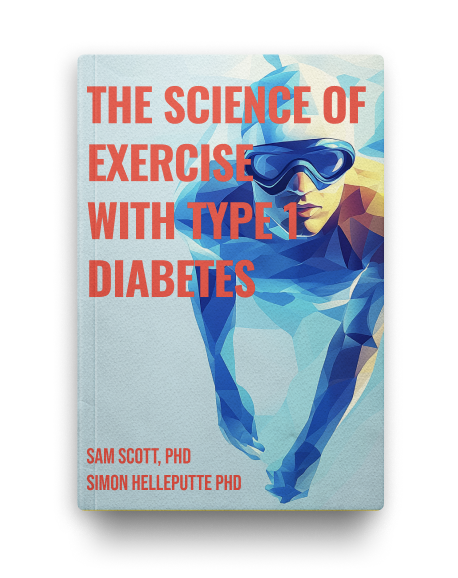
In the coming weeks, we will be releasing our new book, "𝗧𝗵𝗲 𝗦𝗰𝗶𝗲𝗻𝗰𝗲 𝗼𝗳 𝗘𝘅𝗲𝗿𝗰𝗶𝘀𝗲 𝘄𝗶𝘁𝗵 𝗧𝘆𝗽𝗲 𝟭 𝗗𝗶𝗮𝗯𝗲𝘁𝗲𝘀."
Now, we need your help!
We've narrowed down the book cover art to a few options, and we'd love for you to vote for your favourite.
We are thrilled to announce our upcoming book on Diabetes and Exercise!
After months of spending most of our evenings and weekends writing it, “𝗧𝗵𝗲 𝗦𝗰𝗶𝗲𝗻𝗰𝗲 𝗼𝗳 𝗘𝘅𝗲𝗿𝗰𝗶𝘀𝗲 𝘄𝗶𝘁𝗵 𝗧𝘆𝗽𝗲 𝟭 𝗗𝗶𝗮𝗯𝗲𝘁𝗲𝘀”, will be released as a paperback and eBook.
💻 Ken jij onze 'From Science to Practice Webinars' al?
🎬 Dr. Simon Helleputte ging tijdens dergelijke webinar in op het belang en de toepassing van fysieke activiteit en sport bij type 1 diabetes en vertelt tijdens dit interview meer over de meerwaarde van dit navormingsformat.
Our recent @IJSNEMJournal paper provides evidence that ingested glucose oxidation correlates with body size
Inferences:
Body size is the only factor - ❌
Body size is the most important factor- ❌
Body size is an important factor - ✅
https://t.co/h0pzCtrZod
Are you an athlete with type 1 diabetes? Please consider this wonderful app, providing Strava, glucose, HR and power in one overview📈 Gain insights into your fueling effects and try out different exercise strategies, and learn how to maintain stable blood glucose throughout!
💥💥 BIG UPDATE! 💥💥
We are officially in Open BETA, which means you can now access our App and join the Enhance-d community!
Go https://t.co/soutVu7sX1 and you can receive a direct link to download the BETA App
#diabetes#exercise#t1d#training#diabetesmanagement#app#beta
Therefore, regular PA and limiting sedentary time should be encouraged to improve metabolic and cardiovascular health in this population. Future longitudinal studies should explore mutual interactions and synergistic effects of PA on these outcomes. (2/2)
Main conclusion: Higher levels of PA, lower sedentary behaviour and greater exercise capacity are favourably associated with long-term glycaemic control, body composition, insulin dosage, estimated insulin sensitivity and arterial stiffness in adults with T1D.