Some translations of ancient texts are good, some not so much, and others completely hide important words that change the context entirely.
My latest article explores why the original language matters.
#AncientHistory#History#Translation
https://t.co/WoYEjbR4CK
@ProfTCSchmidt Steven J. Green, in his commentary on Ovid’s Fasti (2004, p. 91), interprets bruma as the winter solstice. Hijmans (2003, pp. 395–396) distinguishes cosmic symbolism from religious observance. Neither my argument nor the evidence supporting it relies on a pagan festival.
What is missing from Schmidt’s new paper is engagement with Hijmans, Lehoux, Ovid’s Fasti and the parapegmata. Establishing the earliest Christian textual attestation of 25 Dec is one thing; explaining why that particular date was chosen is quite another.
🎄 Christmas Discovery! 🎄
I’ve just published new research identifying the earliest known reference to Jesus being born on December 25.
The reference is so early that it predates the Roman pagan celebration of Sol Invictus on December 25—meaning the date of Jesus’s birth could not have been chosen simply to imitate that pagan festival.
The Institute for Christian Reflection has made the full academic article freely available, follow the link below to read:
https://t.co/A2cfXBMWaU
Please Share!
I’ll be discussing the discovery in several interviews in the coming weeks.
✨ Stay tuned—and Merry Christmas! 🎄
@noah_nonsense@ProfTCSchmidt Schmidt himself uses ‘could have’ several times in the very article we are discussing. Biblical and classical scholarship are full of historical hypotheses. Why should expressing a possibility be a problem here but not elsewhere?
@ProfTCSchmidt Ovid explicitly uses bruma (the winter solstice), which Columella (9.14.12) dates to around 25 Dec. My argument does not require a pre-274 pagan festival, only that existing Roman calendrical symbolism could have influenced the selection of the date.
@ProfTCSchmidt Agreed, but Genesis does not identify 25 Dec. Ovid has Janus connect the renewal of Phoebus with the beginning of the year. My point concerns the significance attached to a specific date in the Roman calendar, not merely the observation of seasonal changes.
@ProfTCSchmidt Thanks. Ovid (Fasti 1.163–164) associates the winter solstice with the renewal of the sun. The parapegma of Antiochus records 25 Dec as ‘Birth of the sun, light increases’ (Lehoux 2007, p. 343). Calculation and inherited solar symbolism need not be mutually exclusive.
A fair point. But how welcome is different thinking when it challenges established assumptions within academia itself? Intellectual openness should apply just as much to Classics and biblical studies as to the ancient world we study.
"If you spend half an hour on social media, one thing you will know for sure is that we need to learn what it might be like to think differently.”
Dame Mary Beard explains why ancient Roman and Greek history remains “surprisingly modern” and a tool for learning in today's world.
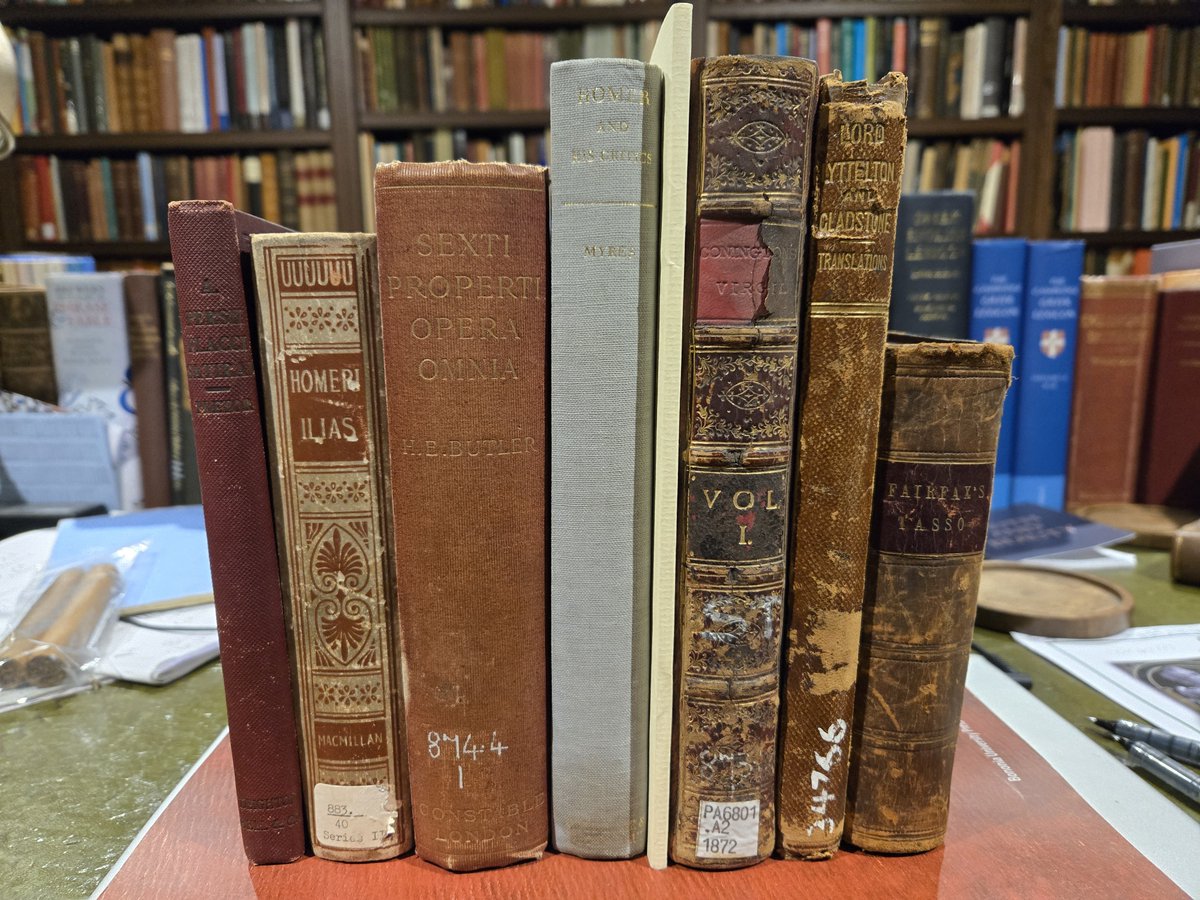
Our latest free books give-away, open to all worldwide. This time it's 8 books from the last 200 years, and 8 people will be drawn to pick their choice. Retweet this and you're in for the random draw on Sunday 11 October. Proper books these. Details to follow over next few hours!
Translations are essential, but they can also hide what an ancient text actually says. Sometimes checking just one word in the original Greek, Latin or Hebrew can completely change what you notice.
#AncientHistory#Classics#Translation
https://t.co/WoYEjbR4CK
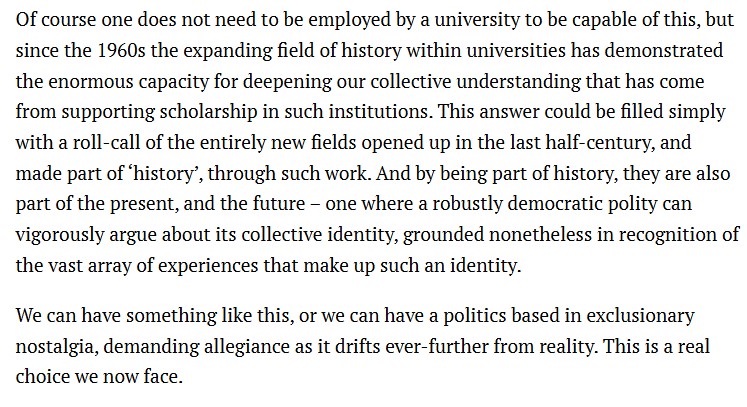
And although I agree that university research is very important, Andress also says, “Of course one does not need to be employed by a university to be capable of this.”
Exactly. Serious history depends on evidence, method and argument, not institutional position.
In this History Today piece, David Andress defines academic history as originality, significance, rigour, direct contact with evidence, new interpretation, and scrutiny by experts. I agree, but that view of how research is accepted needs to be applied consistently.
The study of history at UK universities appears to be under existential threat. Should anyone care?
🔓 This article is free for 7 days
https://t.co/Axa8mNyDD8
Another nice second-hand bookshop find today. A 1939 first edition of Isaiah Berlin’s Karl Marx: His Life and Environment, published by Thornton Butterworth. It was Berlin’s first book.
#KarlMarx#BookHistory#History
Latest book find. 25 working volumes printed by OUP and CUP during the preparation of the New English Bible, including confidential Joint Committee copies, Westminster Abbey agenda, C. H. Dodd material and handwritten translation notes.
#BookHistory#BibleTranslation#RareBooks
The historian in me immediately asks: fixed for whom? Vespasian certainly restored stability to the imperial state after 69, but from Judaea the view of that ‘restoration’ would have looked rather different.
@Lindsay_Powell True, but surely the absence of a Roman naval academy doesn’t make Agrippa self taught? If he relied on experienced deputies for guidance, then he was learning from them.
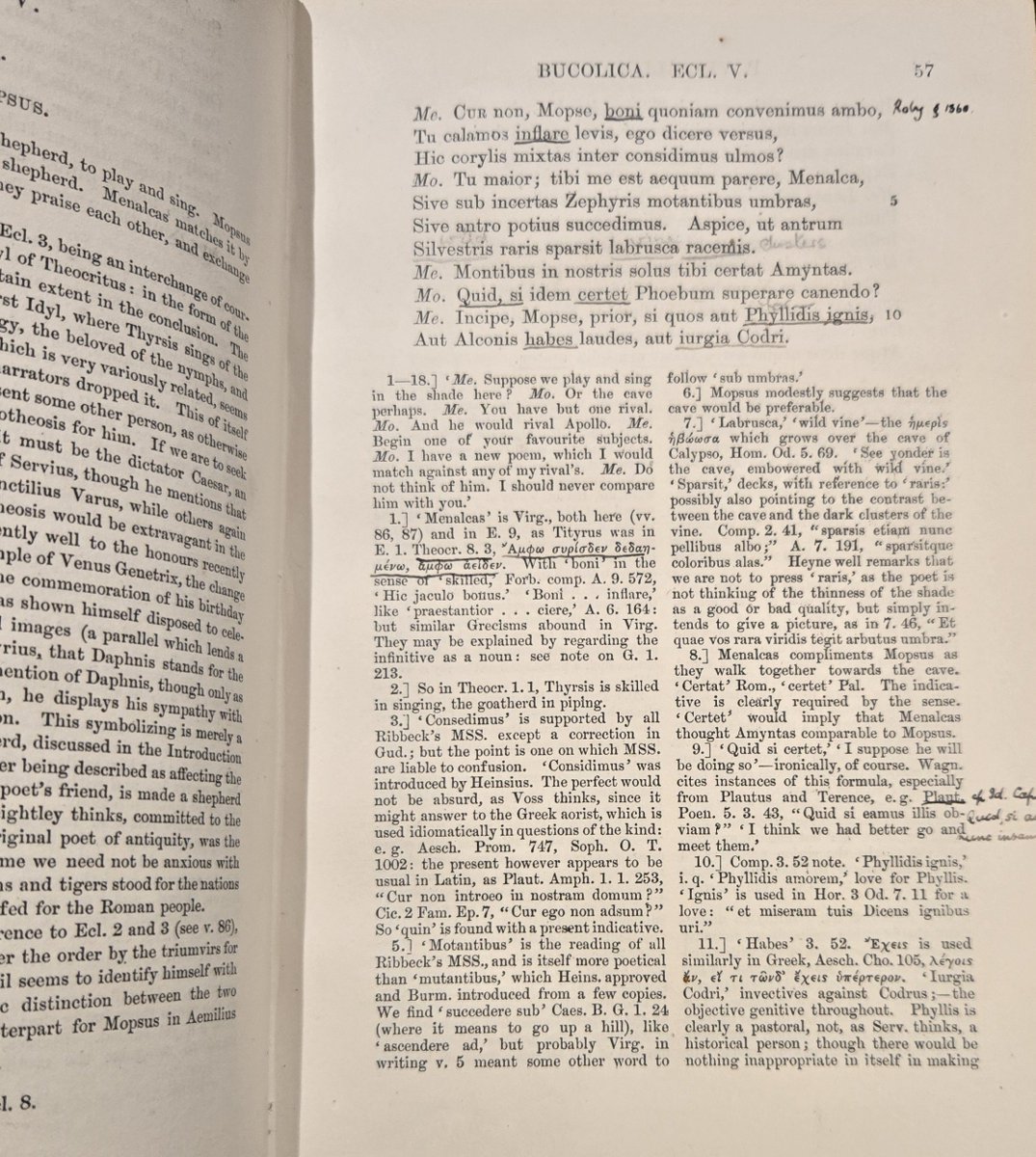
@AntigoneJournal I love seeing marginalia like this. I picked up a 1929 copy of Godley’s Histories of Tacitus today, with ownership marks from the 1930s and 40s, and found pages of underlining and notes. There’s something wonderful about seeing how people actually worked through the Latin.