🚨 PhD opportunity in evolutionary microbiology!
Join our lab to study how horizontal gene transfer drives host–microbe symbioses and ecological function
✉️ [email protected]
Apply: https://t.co/TkeHml0X11
#PhD#Microbiology#Ecology#Evolution
1. New paper out in @MolBioEvol 🧬🦠
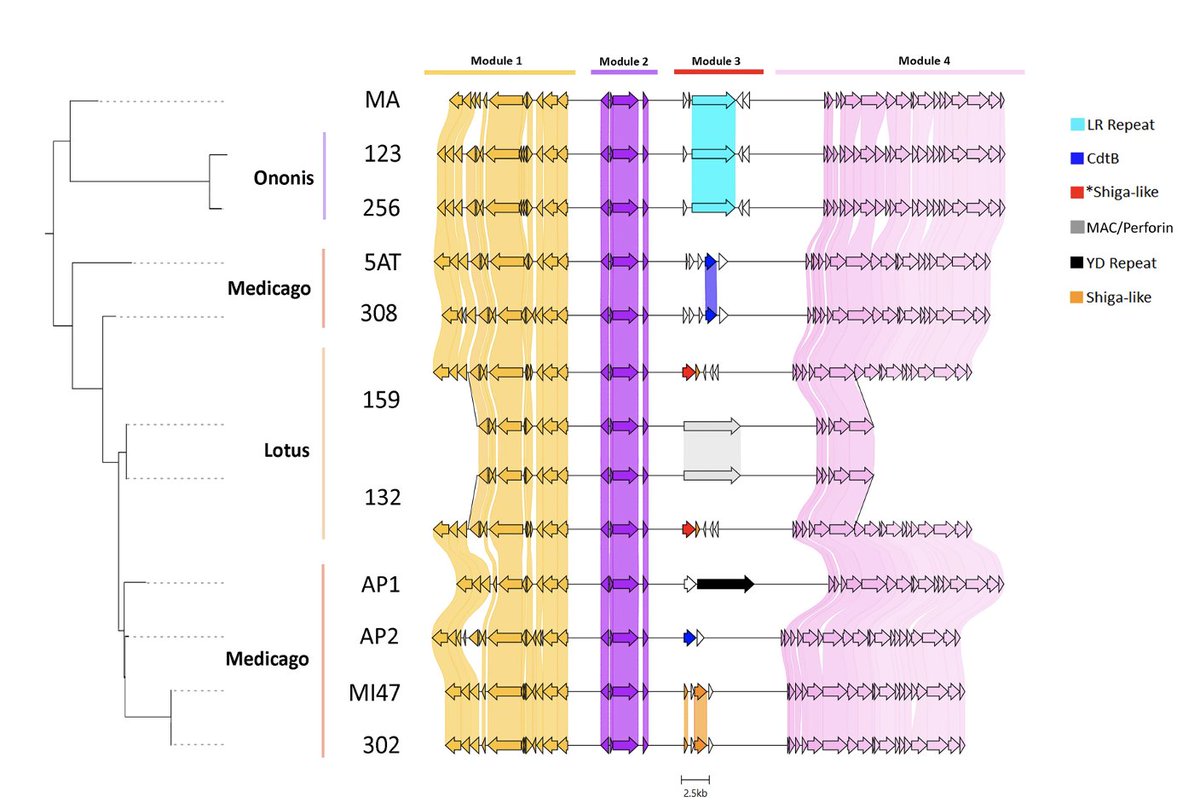
We show phage toxin diversity in protective symbionts isn’t random—toxin families are linked to defense against different parasitoid species.
This suggests toxin diversification is a major force shaping symbiont functional evolution.
3. One big surprise was finding multiple cointegrated APSE phages with distinct toxins at a single genomic locus.
Rather than evolving defenses sequentially, symbionts may rapidly expand their arsenal by combining phage-encoded toxins.
New preprint! How do host regulate ancient symbioses to optimise benefits? We show 🐜 actively regulate symbionts, switching between symbiont-derived and environmental nutrients to thrive under changing diets. 👏 Well done @PhoebeHazel93 and team!
https://t.co/WW7cucd54m
Happy New Year! 🎉 New preprint out now: Defensive symbionts don’t protect against all enemies equally they are often highly specific. We show that toxin type drives which parasitoid species are killed, and reveal some truly wild new toxins! Read below. https://t.co/bFaR5Gdkrt
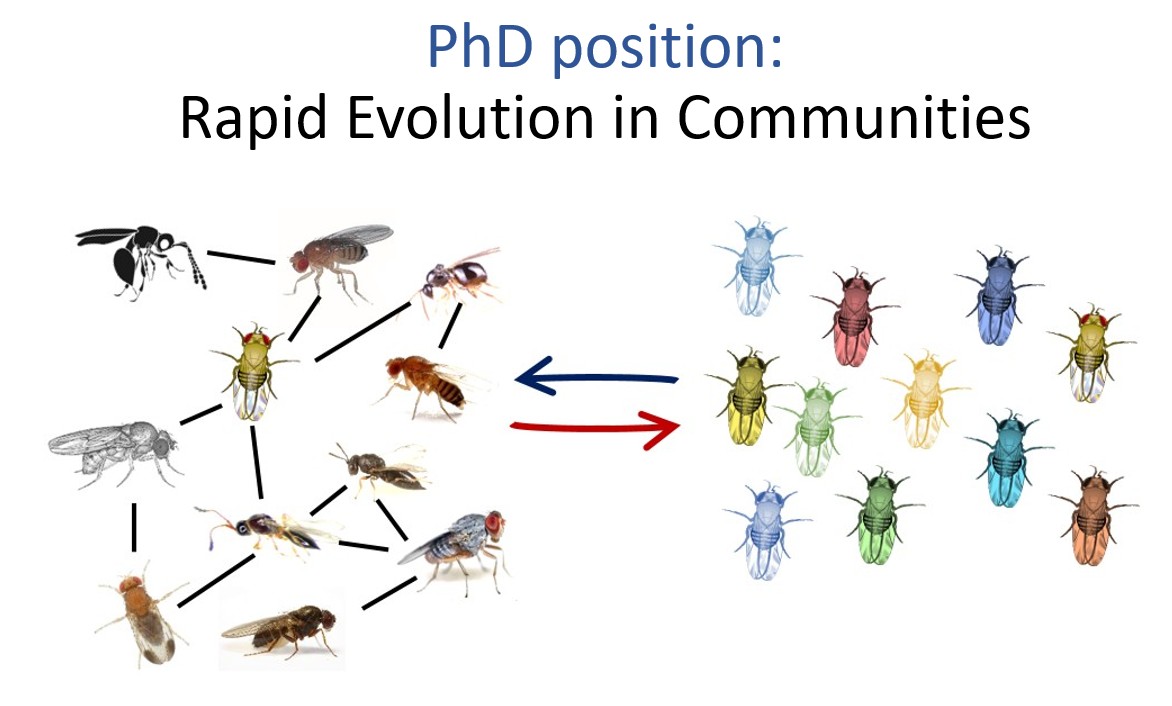
I invite applications for a PhD position. Join our team exploring how rapid evolution in communities allows maintenance of genetic variation and species diversity! @ERC_Research See https://t.co/Fav2K7AMmJ
Our long-lasting research project on an amazing stinkbug-fungus relationship "Defensive fungal symbiosis on insect hindlegs" finally comes out in Science! https://t.co/J3y9mLJHuR #symbiosis#insect#fungus#stinkbug
Our long-lasting research project on an amazing stinkbug-fungus relationship "Defensive fungal symbiosis on insect hindlegs" finally comes out in Science! https://t.co/J3y9mLJHuR #symbiosis#insect#fungus#stinkbug
A rare carnivorous caterpillar, previously unknown to biologists, stalks spiderwebs for food whilst dressed in the remains of its prey, researchers report in Science.
This unique new species, dubbed the “bone collector,” is found only on a single mountainside on the Hawai’ian island of Oa’hu. https://t.co/nCQYz2x4Mo
NEW PAPER! What explains associations with defensive symbionts? In @Ecology_Letters we show symbiont occurrences align with sharing the same parasitoids, but not plants, highlighting enemies as key selective agents shaping symbioses in nature🦠
https://t.co/kHgCzko1CW
Join my lab @blizard_inst for a 3 year @BBSRC funded post-doc exploring how glycans shape the skin microbiome and colonisation resistance in #amphibians!!!! https://t.co/N5smEEtEqU
@IzazAhm01611301 @MAG_Porras Hi Izaz! We have great MSc programs at QMUL where students can do projects tied to this research. For example, in our biodiversity and conservation, and bioinformatics Masters programmes. More information here https://t.co/xNdxNbqkSn
⭐️Fully funded PhD in our lab through BBSRC LIDo⭐️
If you are interested in studying how symbionts can be used to block vector borne disease contact us! 🪲🦠 Info and link to apply below (please re-Tweet! 🙏):
https://t.co/i8R1KKTRvo
Beetles are masters at coopting microbial genes, enzymes & metabolites.
In this @TrendsMicrobiol article, @MarlenyGarciaL1 & I review how microbes shaped one of the most successful animal radiations, thru horizontal gene transfer & symbiosis:
https://t.co/KBjwTlUCxz