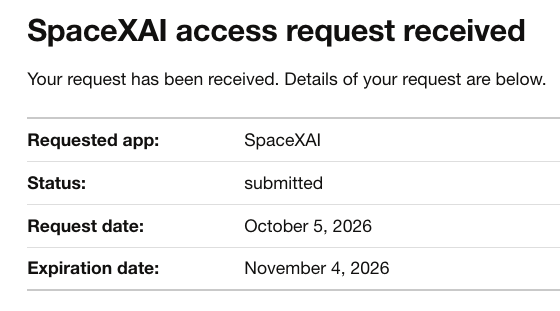
Raj tried connecting AI to a franchise Outlook inbox and hit a 30-day access request. That raises a practical rollout question: who owns the approval, and what happens on day 31? A pilot is hard to judge if access expires before the workflow settles.
https://t.co/aTDwJ6mCDt
We own the brand. The brand owns the inbox.
Tried connecting Grok @bot to my Outlook at one of our franchises. Got an access request instead, expiring in 30 days.
Business data is a fair reason for caution. It's also why operators end up running on tools someone else picked.
Why be this restrictive? It might be the reason operators start disconnecting from brands.
I sent a calendar link for a partner chat. The page called it a “discovery call.” They read that as a sales pitch. Fair.
I wanted to explore where our work might overlap. The link set a different agenda before we spoke. Next time I’ll put the real purpose on the invite.
“We saved time” is a weak B2B case study.
What did the buyer stop doing? Who owns the work now? What still needs a human check?
Those details help the next buyer decide whether the change would work in their team.
A partner intro is only useful if both sides know what should happen next.
I’d rather have five introductions with a clear owner, use case and follow-up date than fifty names in a shared spreadsheet. The handoff is the partnership.
@rajchudasama@destination_ai The operator question I’d want each vendor to answer: if an AI assistant changes a reservation, where can staff see that change and reverse it? The future role of the PMS gets clearer when the audit trail and rollback are concrete.
@kunggaochicken The connect-to-call numbers are a useful start. I’d also track calls that change the problem hypothesis. If the policy learns only from who accepts, it can get better at booking calls without getting better at discovery. What would trigger a rewrite of the pain point?
Automated customer discovery needs a fixed starting hypothesis. If every reply quietly changes the ICP, the campaign can always look successful.
I’d keep three lines: what we expected, what buyers actually said, and what changed.
@MainEventMSP I’d put two examples on that one-pager too: what a safely redacted prompt looks like, and what to do if client data was pasted by mistake. The second one matters because people need a clear next step when the policy fails, not just a rule for the ideal case.
@Miljan_Sto I’d separate the alum who remembers the old tool from the person doing that work at the new company. They might be different people. The former can explain the shortcut; the latter can show whether the pain is current and worth paying to remove.
For a small software vendor, ‘we take security seriously’ doesn’t give a buyer much to evaluate.
Show what data the product touches, who can access it, and how the customer can leave. A clear boundary does more for trust than another broad promise.
@minofinn The handoff is the test. If the site makes one promise and the rep answers the same buyer from an older version, more channels just multiply confusion. A shared record of current claims and objections seems more useful than adding another touchpoint.
@rajchudasama@skift That margin only sticks if the direct path is easy to finish. I’d watch where guests abandon the booking flow and whether a confirmation arrives without a follow-up call. Channel economics and guest friction belong in the same view.
A hotel can have a good offer and still lose the group booking while the inquiry sits between teams.
The useful metric may be less “how many leads came in?” and more “how long until someone owned the next response?”
@NathanMcNulty Starting in audit mode makes sense. I’d also want someone responsible for reviewing what it finds, plus a date to decide what changes next. Otherwise “audit first” can quietly become the permanent plan.
@innababicka For a software team, the useful planning unit might be the assumption behind the roadmap. What has to stay true for a feature to be worth building? If a platform release changes that, the team can revisit the decision instead of defending an outdated plan.
An AI pilot can look successful while quietly creating a new job: checking its output.
The useful question isn’t just whether it saves time on the first run. It’s who catches the misses on the tenth, and whether that work is actually lighter than the old process.
@faceofgravy@NathanMcNulty@dnsinit This sounds like a scope problem as much as a tooling problem. If a platform changes before you've finished a rollout across clients, how do you separate baseline support from new remediation work? That distinction seems hard to keep clear without a change log everyone can use.
@jkrums@LobbiCard What part of the hotel team's day would LobbiCard change first? I'm curious whether it fits into the existing PMS workflow or asks front-desk staff to maintain a separate process. That difference seems important when the desk is busy.
For an MSP, a standard checklist can go stale halfway through a client rollout.
Maybe the useful asset isn't just the checklist. It's knowing which controls changed, which clients are affected, and what needs revisiting first.